
Aged care workers help older people with daily living, whether at home or in residential care. AI is unlikely to replace them for at least 30 years, because the work depends on physical care, human connection and trust. For career changers, it's one of the quickest ways into an AI-resistant career: many people start after a short course of a few weeks to a few months.
What Does an Aged Care Worker Do?
Aged care workers support older people to live safely and with dignity. Their work includes:
- Personal care: helping with showering, dressing, eating and moving around.
- Daily support: preparing meals, light housework and shopping.
- Companionship: conversation, activities and emotional support.
- Observation: noticing changes in health or mood and reporting them to nurses or families.
They work in residential care homes, clients' homes, community centres and hospitals.
Will AI Replace Aged Care Workers?
No. AI and robots may help with parts of the job, but people want care from people.
What AI can do: sensors can detect falls, apps can manage rosters and medication reminders, and some care homes are trialling robots for simple tasks like companionship or delivering items.
What AI cannot do:
- Physical care. Helping someone shower, dress or move safely requires gentle, skilled human hands.
- Human connection. Loneliness is a major issue for older people. A caring person can't be replaced by a screen.
- Judgment. Noticing that someone "isn't quite themselves" often comes from knowing them well.
With ageing populations across Asia-Pacific and North America, demand for aged care workers is growing fast. That's why aged care worker is rated Low AI impact. See how it compares in our full list of careers AI can't replace.
Can You Switch to This Career?
Yes, and it's one of the easiest careers to enter. People often come from:
- Hospitality and retail: customer service and people skills transfer directly.
- Parenting or family caregiving: caring for a relative is valuable experience.
- Cleaning and household work: practical skills and reliability are highly valued.
- Any job: what matters most is patience, kindness and reliability.
Not sure which of your skills transfer? A free career assessment can show how well you match.
Is it too late at 40, 50 or older? No. Aged care is one of the most welcoming careers for older career changers, and life experience is seen as a strength.
How to Start Over as an Aged Care Worker
- Try it first. Volunteer at a care home or community centre to see if the work suits you.
- Complete a short course. Most regions offer entry-level qualifications that take weeks to months.
- Get the required checks. Many regions require background checks and first aid certification.
- Grow your career. With experience, you can move into team leading, nursing assistant roles or nursing.
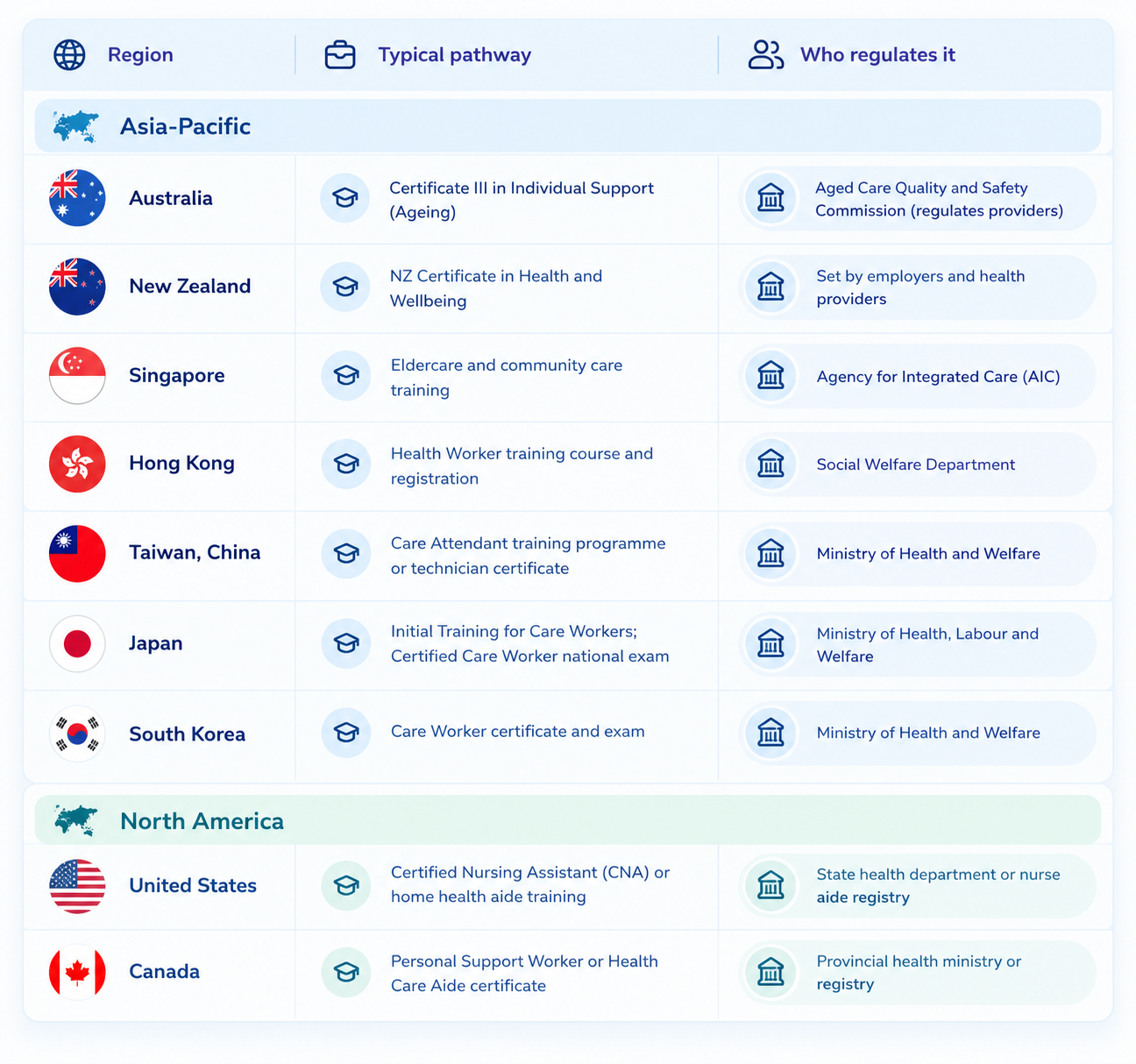
Requirements change, so always check with the relevant authority in your region before you enrol.
Is It Worth It?
Pros:
- Very fast entry, often within months
- Strong and growing demand
- Meaningful work that makes a real difference
- Flexible hours, including part-time and shift work
Cons:
- Pay is lower than many other careers
- Physically and emotionally demanding
- Shift work, including nights and weekends
It suits patient, caring people who want secure work and value meaning over high pay. Many use it as a stepping stone into nursing.
FAQs
How long does it take to become an aged care worker?
Usually a few weeks to six months, depending on the course.
Do I need experience?
No. Most entry-level courses include work placements.
Can I become an aged care worker at 50?
Yes. Older workers are welcome, and life experience is valued.
Can aged care lead to nursing?
Yes. Many aged care workers later study to become nurses.
Not sure if your current job is at risk? Check your AI risk score for free and see which careers match your skills. brigenai helps you find a career that lasts, with AI tools and real people to guide your switch.






