
Chefs prepare and cook food in restaurants, hotels, cafes and catering kitchens. AI and robots are appearing in some fast-food kitchens, but they're unlikely to replace skilled chefs for at least 20 years. Cooking well depends on taste, creativity, timing and teamwork in a busy, changing environment. For career changers, it's an accessible AI-resistant career: you can train on the job and progress quickly.
What Does a Chef Do?
Chefs make sure every dish is prepared well, safely and on time:
- Preparation: cutting, marinating and preparing ingredients.
- Cooking: making dishes to recipe and quality standards.
- Kitchen operations: managing orders, timing and stock.
- Food safety: keeping the kitchen clean and safe.
- Menu development: senior chefs create new dishes and manage costs.
Chefs work in restaurants, hotels, catering companies, hospitals, cruise ships and their own businesses.
Will AI Replace Chefs?
No. Automation will take over some repetitive cooking, but skilled chefs remain essential.
What AI and robots can do: fry, flip burgers and assemble simple meals in fast-food settings. AI can also forecast demand, manage stock and suggest recipes.
What they cannot do:
- Taste and adjust. Great food relies on human senses and judgment.
- Create. Developing dishes and menus is a creative skill.
- Handle a busy kitchen. Rushes, changing orders and teamwork are hard to automate.
- Deliver hospitality. Diners value food made by real people.
That's why chef is rated Low AI impact. See how it compares in our full list of careers AI can't replace.
Can You Switch to This Career?
Yes. Kitchens welcome career changers. People often come from:
- Hospitality: waiters, baristas and kitchen hands.
- Home cooking: passion and practice are a strong start.
- Retail and factory work: speed and working under pressure help.
- Any job: reliability and a willingness to learn matter most.
Not sure which of your skills transfer? A free career assessment can show how well you match.
Is it too late at 30 or 40? No. Many chefs start later, especially through short courses or kitchen jobs.
How to Start Over as a Chef
- Get kitchen experience. Start as a kitchen hand or commis chef.
- Get trained. Complete a cookery course or apprenticeship.
- Get food safety certification. Required in most regions.
- Progress. Move up from commis to chef de partie, sous chef and head chef.
Qualifications by region
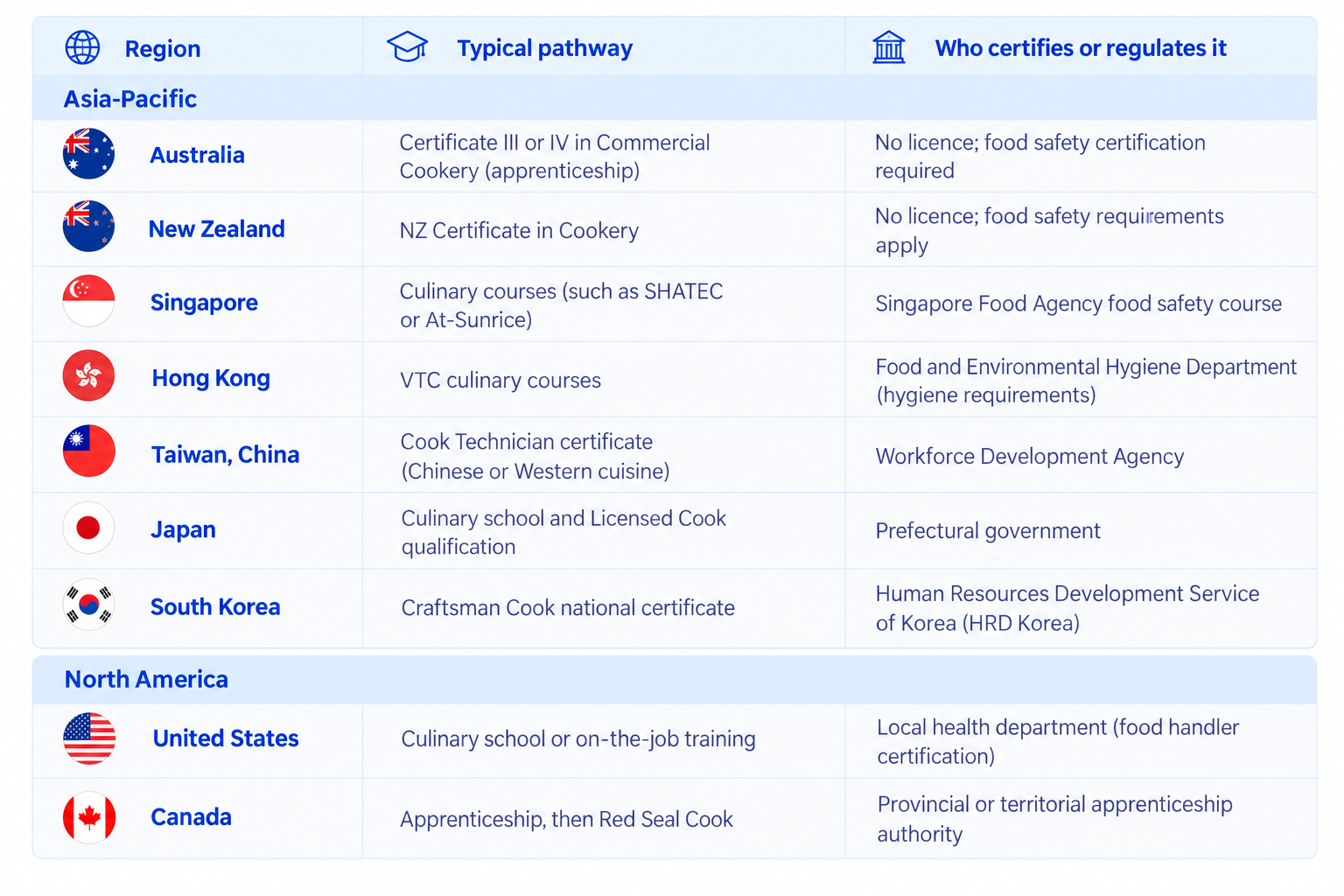
Asia-Pacific
- Australia: Certificate III or IV in Commercial Cookery (apprenticeship). No licence; food safety certification required.
- New Zealand: NZ Certificate in Cookery. No licence; food safety requirements apply.
- Singapore: Culinary courses (such as SHATEC or At-Sunrice). Food safety course required by the Singapore Food Agency.
- Hong Kong: VTC culinary courses. Hygiene requirements set by the Food and Environmental Hygiene Department.
- Taiwan, China: Cook Technician certificate (Chinese or Western cuisine), issued through the Workforce Development Agency.
- Japan: Culinary school and Licensed Cook qualification, issued by the prefectural government.
- South Korea: Craftsman Cook national certificate, issued through the Human Resources Development Service of Korea (HRD Korea).
North America
- United States: Culinary school or on-the-job training. Food handler certification through the local health department.
- Canada: Apprenticeship, then Red Seal Cook. Managed by the provincial or territorial apprenticeship authority.
Requirements change, so always check with the relevant authority in your region.
Is It Worth It?
Pros:
- Easy to start, with fast progression
- Creative, hands-on work
- Skills recognised worldwide
Cons:
- Long hours, including nights, weekends and holidays
- Hot, physically demanding work
- Entry-level pay can be low
It suits passionate, hard-working people who thrive under pressure.
FAQs
How long does it take to become a chef?
From a few months for entry-level roles to three or four years for a full qualification.
Will robots replace chefs?
Robots may handle some fast-food cooking, but skilled chefs are still needed for quality, creativity and busy kitchens.
Can I become a chef at 40?
Yes. Kitchens value reliability and work ethic at any age.
Not sure if your current job is at risk? Check your AI risk score for free and see which careers match your skills. brigenai helps you find a career that lasts, with AI tools and real people to guide your switch.






