
Electricians install, maintain and repair the electrical systems that power homes, businesses and infrastructure. AI is unlikely to replace them for at least 20 years, because the work is hands-on, happens in unpredictable environments and requires a licensed person to take legal responsibility for safety. For career changers, it is one of the most accessible AI-resistant careers: you can start with no degree, earn while you train, and qualify in about four years.
What Does an Electrician Do?
Electricians wire new buildings, upgrade old systems, find and fix faults, and make sure every installation meets local safety codes. The work covers three main settings:
- Residential: homes, renovations, switchboard upgrades, EV chargers and solar systems.
- Commercial: offices, shops, hospitals and schools.
- Industrial: factories, mines, power networks and data centres.
A typical day might include reading plans, running cable, testing circuits and explaining a problem to a customer. Many electricians eventually specialise or run their own business.
Will AI Replace Electricians?
No. AI will change parts of the job, but it cannot replace the electrician.
What AI can do: design software can plan circuit layouts, diagnostic tools can suggest likely faults, and quoting apps can speed up paperwork. These tools make electricians faster, not unnecessary.
What AI cannot do:
- Physical work in real buildings. Every site is different: old wiring, tight roof spaces, unexpected damage. Robots still struggle with work this varied.
- Safety judgment. Deciding whether an installation is safe requires experience and on-site checks.
- Legal responsibility. Across Asia-Pacific and North America, electrical work must be done or signed off by a licensed person. A machine cannot hold that licence.
Demand is also growing. The shift to EV chargers, solar panels, batteries, heat pumps and data centres all needs more electrical work, not less. That is why electrician is rated Low AI impact. You can compare it with other ratings in our full list of careers AI can't replace.
Can You Switch to This Career?
Yes, and many people do. Electricians often come from:
- Construction and trades: labourers, carpenters and HVAC technicians already understand job sites.
- Maintenance and factory work: experience with machinery transfers well.
- Military and emergency services: discipline and safety habits are valued.
- Office jobs: if you like solving problems and working with your hands, a desk background is no barrier.
Useful skills you may already have include basic maths, problem-solving, following technical instructions and dealing with customers. Not sure which of your skills transfer? A free career assessment can show how well you match.
Is it too late at 30 or 40? No. Mature-age apprentices are common, and employers often value their reliability. The real challenge is money: apprentice wages start low, so plan your savings before you switch.
How to Start Over as an Electrician
The path is similar everywhere: training, supervised work, then a licence. Most people qualify in three to four years.
- Try it first. Take a short pre-apprenticeship or introductory course, or spend a few days with a working electrician.
- Find an apprenticeship. Contact local electrical contractors, group training organisations or your regional trade body.
- Complete your training. You will study theory part-time while working on real jobs under supervision.
- Get licensed. Pass the required assessments and apply to your local regulator.
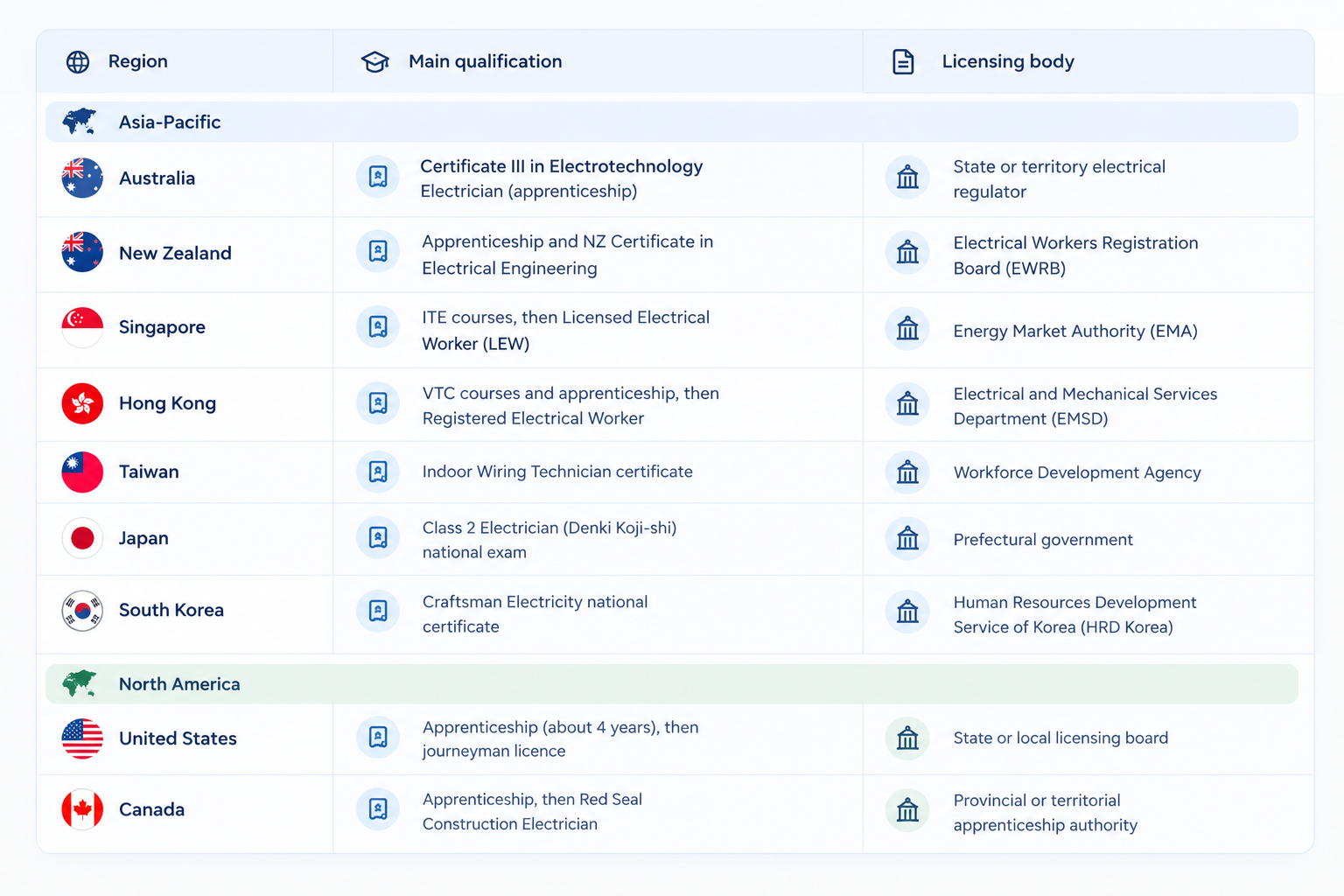
Requirements change, so always check with the licensing body in your region before you enrol.
Is It Worth It?
Pros:
- Strong, long-term demand that AI is unlikely to reduce
- Good income once qualified, with more for specialists and business owners
- Skills that transfer across countries and industries
- Clear path to running your own business
Cons:
- Low pay during the apprenticeship
- Physical work in heat, cold and tight spaces
- Real safety risks if procedures are not followed
It suits people who like practical problem-solving, want job security and don't mind a few lean years while training.
Not sure if your current job is at risk?Check your AI risk score for free and see which careers match your skills. brigenai helps you find a career that lasts, with AI tools and real people to guide your switch.
FAQs
How long does it take to become an electrician?
Usually three to four years through an apprenticeship.
Do I need a degree?
No. Most electricians qualify through an apprenticeship, not university.
Can I become an electrician at 40?
Yes. Mature-age apprentices are common. Plan for lower income during training.
Can I work as an electrician in another country?
Often yes, but you will usually need to have your licence assessed or complete extra training in the new country.
Not sure if your current job is at risk?
Check your AI risk score and see which careers match your skills.






