
Business & Finance

Will AI Replace Financial Advisors? AI Risk, Salary & Outlook

What does a financial advisor do, and is it a good career? See salary, key skills, how to become one, and whether AI will replace them.
AI Resilience
Moderate
60/100
How this career is affected by AI.
Low
Moderate
High
Run a full AI risk assessment in 5 minutes

Getting In

Training Time
3–5 years (degree + licence)
Education Required
Bachelor's Degree
Entry Difficulty
Medium

Pay & Outlook

Salary Range
$50,000–$200,000/year
Job Growth
+1.4% by 2035 (US)
Career Progression
Associate Advisor → Financial Advisor → Senior Advisor → Practice Owner
Simulate 5 years in this career

Job Fit & Work Style & Requirements

Physical Demand
Low
Human Interaction
High
Remote Work
Either
Best Countries
Australia, Singapore, United States
Visa Opportunity
Medium
Key Skills
Financial planning, investment knowledge, client relationships, regulatory compliance, communication

Financial advisors help people plan for their financial future, from saving and investing to retirement and insurance. AI won't replace financial advisors, but robo-advisers and AI planning tools are taking over simple, routine advice. The advisors who last will be those who build trust, handle complex situations and guide clients through big life decisions. The role is rated Moderate AI impact.

What Does a Financial Advisor Do?

Financial advisors give personalised advice about money. Their work includes:

  • Understanding goals: learning about a client's income, family and plans.
  • Creating financial plans: covering budgeting, investments, retirement and insurance.
  • Recommending products: choosing suitable investments and policies.
  • Ongoing reviews: adjusting plans as markets and life circumstances change.

They work in banks, insurance companies, advisory firms and their own practices.

Will AI Replace Financial Advisors?

Not fully, but AI is changing what clients pay advisors for.

What AI can do: robo-advisers manage simple investment portfolios at low cost, AI tools analyse spending and suggest savings plans, and software automates compliance paperwork.

What AI cannot do:

  • Build trust. Most people want a human to talk to about their life savings.
  • Handle complex situations. Business owners, inheritances, divorce and retirement often involve tax, family and emotional issues.
  • Guide behaviour. Advisors help clients avoid panic selling and stick to their plans.
  • Take responsibility. Across Asia-Pacific and North America, financial advisors must be licensed and are legally accountable for their advice.

Compare other ratings in our full list of careers AI can't replace.

How This Career Is Changing

  • Simple advice is automated. Basic investing is now cheap through apps and robo-advisers.
  • Focus on complex clients. Advisors increasingly serve people with more complicated needs.
  • More time with clients. AI handles research and paperwork.
  • Fee pressure. Clients expect more value for advice fees.

How to Stay Ahead

If you're already a financial advisor:

  • Specialise in complex areas, such as retirement, business owners or cross-border finances.
  • Use AI tools to spend less time on admin and more time with clients.
  • Build strong referral networks with accountants and lawyers.
  • Consider related roles such as Bank Relationship Manager.

If you're thinking of switching into financial advice: life experience and people skills are real advantages. Expect to complete a qualification and licensing exams. A free career assessment can help you see if it suits you.
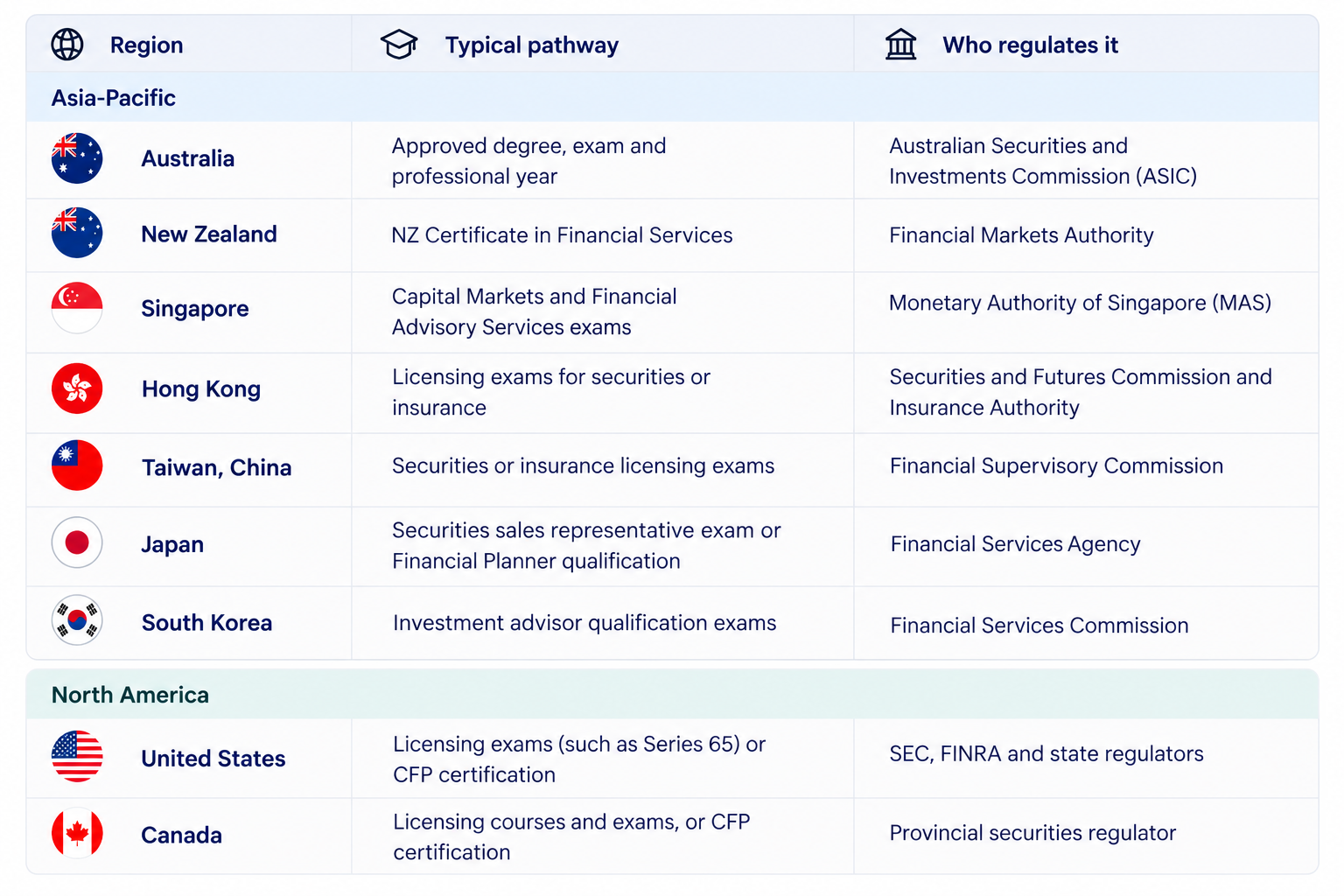
Requirements change, so always check with the regulator in your region before you enrol.

Is It Worth It?

Pros:

  • High earning potential with an established client base
  • Meaningful work helping people reach their goals
  • Life experience is an advantage

Cons:

  • Building a client base takes time
  • Simple advice is being automated
  • Heavy compliance and regulatory requirements

It suits trustworthy people who enjoy numbers and long-term client relationships.

FAQs

Will AI replace financial advisors?‍

No, but robo-advisers are replacing simple advice. Advisors who handle complex needs and build trust will remain in demand.

How long does it take to become a financial advisor?‍

From several months to a few years, depending on the region's requirements.

Can I become a financial advisor at 40?‍

Yes. Many advisors switch careers later, and life experience builds client trust.

Not sure if your current job is at risk? Check your AI risk score for free and see which careers match your skills. brigenai helps you find a career that lasts, with AI tools and real people to guide your switch.


Business & Finance
Share on
Training Providers

1. University of Melbourne (Australia)
2. University of Auckland (New Zealand)
3. National University of Singapore (Singapore)
4. University of Hong Kong (Hong Kong)
5. National Taiwan University (Taiwan)

Top Companies

1. Commonwealth Bank of Australia (Australia)
2. ANZ New Zealand (New Zealand)
3. DBS Bank (Singapore)
4. HSBC Hong Kong (Hong Kong)
5. Cathay United Bank (Taiwan)

Is this career right for you?

See how your skills match, how exposed your current job is to AI, and what it takes to make the switch.

AI resilience score
Free AI risk check
Personalized career matches
Step-by-step switch plan
Check your AI risk

Explore related careers

Technology
Low

AI Engineer

Salary
$100,000-$220,000+ USD
AI Resilience Score
80/100
Job Growth
+21.8% by 2035 (US)
Training Time
3–6 years (degree in CS or related)
View details
Technology
Moderate

Data Analyst

Salary
US: $65,000–$95,000/year (median ~$75,000); varies by country
AI Resilience Score
55/100
Job Growth
No official projection
Training Time
3–4 years (degree or bootcamp)
View details
Technology
Moderate

Cybersecurity Analyst

Salary
US median $124,910/year (BLS, May 2024); entry-level roles typically start around $70,000-$85,000
AI Resilience Score
72/100
Job Growth
+21% by 2035 (US)
Training Time
2–4 years (degree or certifications)
View details
Technology
Moderate

Data Scientist

Salary
$95,000-$165,000 USD
AI Resilience Score
65/100
Job Growth
+34.6% by 2035 (US)
Training Time
4–6 years (degree or master's)
View details
Technology
Moderate

Software Engineer

Salary
$95,000-$165,000 USD
AI Resilience Score
60/100
Job Growth
+10.2% by 2035 (US)
Training Time
3–4 years (degree or bootcamp)
View details
Technology
High

Junior Software Developer

Salary
$60,000–$95,000/year
AI Resilience Score
42/100
Job Growth
+10.2% by 2035 (US)
Training Time
3–4 years (degree or bootcamp)
View details
Free to start

Ready to build a career that lasts?

Check your AI risk, find careers that fit your skills, and get a clear plan to switch, with real people to help along the way.

Free AI risk check
170+ careers rated for AI impact
Expert guidance when you need it
AI Risk Check
Career Assessment
Career Pivot
Path Simulator
Skill Gap Analyzer

Ready to build a career that lasts?

Check your AI risk, explore career matches, and plan your switch for free. Upgrade only when you want deeper guidance.

Instant AI Guidance
AI Risk Check / Career Assessment / Country Match / AI Guide
Career Change Toolbox
brigenai QR code
Your next big decision, in your pocket.
Scan to continue on your phone, no download, no setup. Pick up your AI risk check and career plan wherever you are.
Ready to build a career that lasts?


