
HVAC technicians install, maintain and repair heating, ventilation, air-conditioning and refrigeration systems. AI is unlikely to replace them for at least 20 years: the work is hands-on, every building is different, and handling refrigerants and electrical components requires certified people. For career changers, it's one of the fastest-growing AI-resistant careers, with a clear training path and no degree required.
What Does an HVAC Technician Do?
HVAC technicians keep indoor air comfortable, safe and energy-efficient. Their work includes:
- Installation: fitting air conditioners, heat pumps, ducting and ventilation systems.
- Maintenance: servicing systems so they run efficiently and safely.
- Repairs: diagnosing faults in electrical, mechanical and refrigerant systems.
- Commercial refrigeration: looking after cool rooms and refrigeration in supermarkets, hospitals and warehouses.
They work in homes, offices, factories, hospitals and data centres, often travelling between job sites.
Will AI Replace HVAC Technicians?
No. AI will make the work smarter, but it cannot do it.
What AI can do: smart thermostats and building systems can monitor performance, predict failures and suggest likely faults. This helps technicians fix problems faster.
What AI cannot do:
- Physical installation and repair. Units sit on roofs, in ceilings and in tight plant rooms. Robots can't handle this variety.
- Complex diagnosis. Faults often involve electrical, mechanical and refrigerant issues at once.
- Certified work. Across Asia-Pacific and North America, handling refrigerants and electrical wiring requires certified or licensed people.
Demand is rising as buildings switch to heat pumps and energy-efficient systems, and as hotter summers increase the need for cooling. That's why HVAC technician is rated Low AI impact. See how it compares in our full list of careers AI can't replace.
Can You Switch to This Career?
Yes. People often move into HVAC from:
- Other trades: electricians, plumbers and construction workers already have useful skills.
- Maintenance roles: building and facility maintenance is a natural stepping stone.
- Manufacturing: experience with machines and mechanical systems transfers well.
- Office jobs: a desk background is no barrier if you enjoy practical problem-solving.
Useful skills include basic maths, mechanical aptitude, troubleshooting and customer communication. Not sure which of your skills transfer? A free career assessment can show how well you match.
Is it too late at 30 or 40? No. Mature-age apprentices and trainees are common. Plan for lower income while you train.
How to Start Over as an HVAC Technician
- Try it first. Take a short introductory course or shadow a working technician.
- Get trained. Complete an apprenticeship or a trade school programme.
- Get certified. Obtain refrigerant-handling certification and, where required, an electrical licence.
- Specialise. Heat pumps, commercial refrigeration and building automation often pay more.
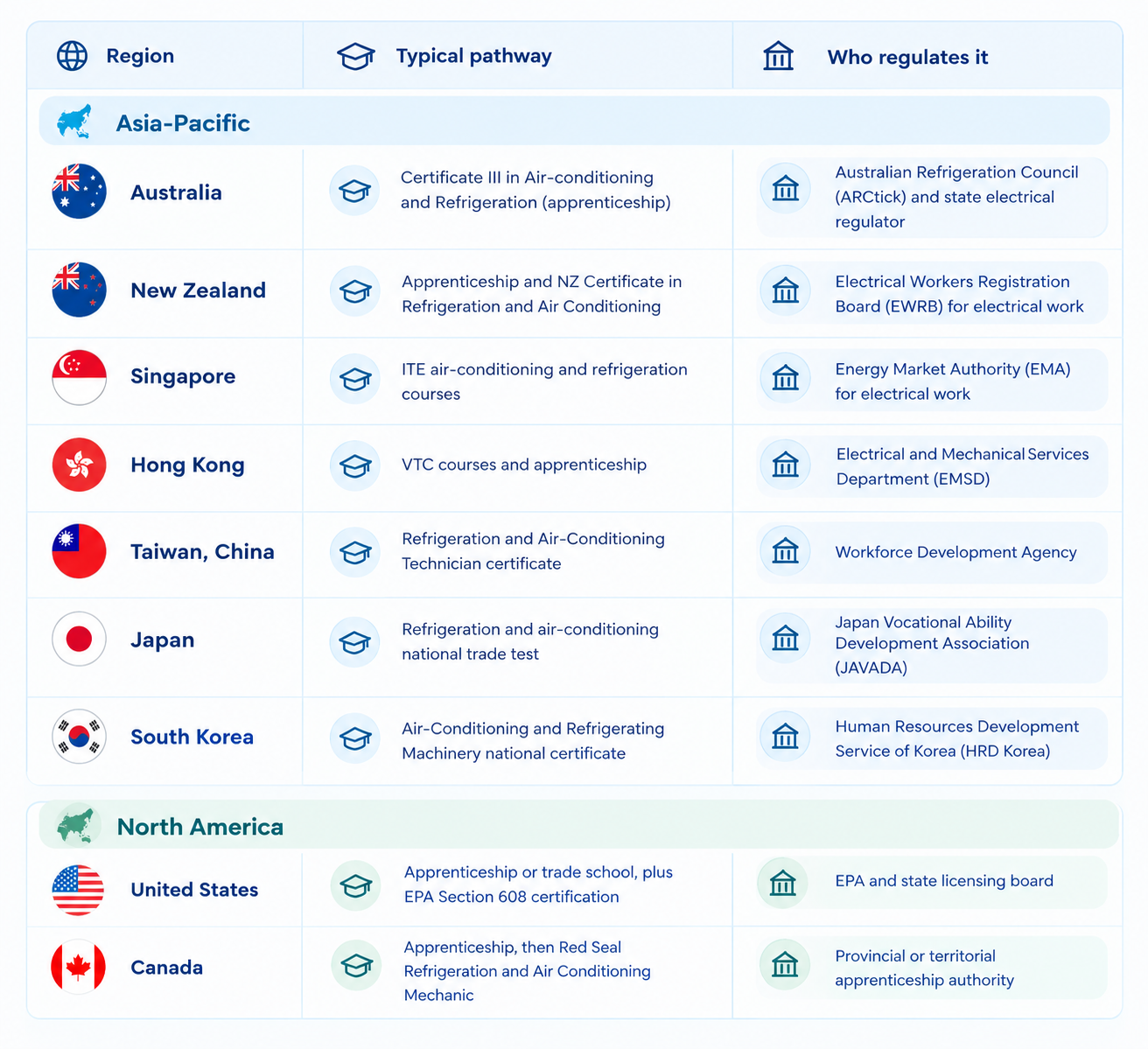
Requirements change, so always check with the relevant authority in your region before you enrol.
Is It Worth It?
Pros:
- Growing demand from heat pumps, energy efficiency and hotter climates
- Good income once qualified, especially in commercial work
- Year-round work: heating in winter, cooling in summer
- Clear path to running your own business
Cons:
- Physical work in roof spaces, heat and cold
- Busy seasons can mean long hours
- Some safety risks with electricity and refrigerants
It suits hands-on problem-solvers who want a secure, future-focused trade.
FAQs
How long does it take to become an HVAC technician?
Usually two to four years, depending on your region and training route.
Do I need a degree?
No. Most technicians train through apprenticeships or trade schools.
Is HVAC a good career for the future?
Yes. The shift to heat pumps and energy-efficient buildings is increasing demand.
Can I become an HVAC technician at 40?
Yes. Many people join later in life. Plan for lower pay during training.
Not sure if your current job is at risk? Check your AI risk score for free and see which careers match your skills. brigenai helps you find a career that lasts, with AI tools and real people to guide your switch.






