
Paralegals support lawyers by researching cases, drafting documents and managing legal files. AI is already doing much of this work, and entry-level paralegal roles are likely to shrink significantly within five years. The good news: paralegal skills, such as research, writing and knowledge of legal processes, transfer well to several more secure careers. This page explains what's changing and where you can go next.
What Does a Paralegal Do?
Paralegals handle much of the preparation work behind legal cases and transactions:
- Legal research: finding relevant laws, cases and regulations.
- Document drafting: preparing contracts, letters, court forms and briefs for lawyers to review.
- Case management: organising files, tracking deadlines and managing evidence.
- Client contact: gathering information from clients and keeping them updated.
They work in law firms, corporate legal departments, government agencies and courts.
Will AI Replace Paralegals?
In large part, yes. This is one of the roles most affected by AI.
What AI can already do:
- Search thousands of cases and summarise them in seconds.
- Draft standard contracts, letters and court documents.
- Review large volumes of documents in discovery and flag relevant ones.
- Track deadlines and organise case files automatically.
These tasks used to make up most of a paralegal's day. Law firms are already using AI legal tools to handle them, which means fewer paralegals are needed for the same volume of work.
What still needs a person:
- Talking to clients, especially in stressful situations.
- Checking AI output for errors, which remain common in legal research.
- Handling unusual cases and court procedures.
Some paralegal jobs will remain, but they will increasingly focus on client work and checking AI output. That is why paralegal is rated High AI impact. Compare it with more secure options in our full list of careers AI can't replace.
Where Can You Go From Here?
Your research, writing and legal knowledge are valuable. These careers build on them and are much harder for AI to replace:
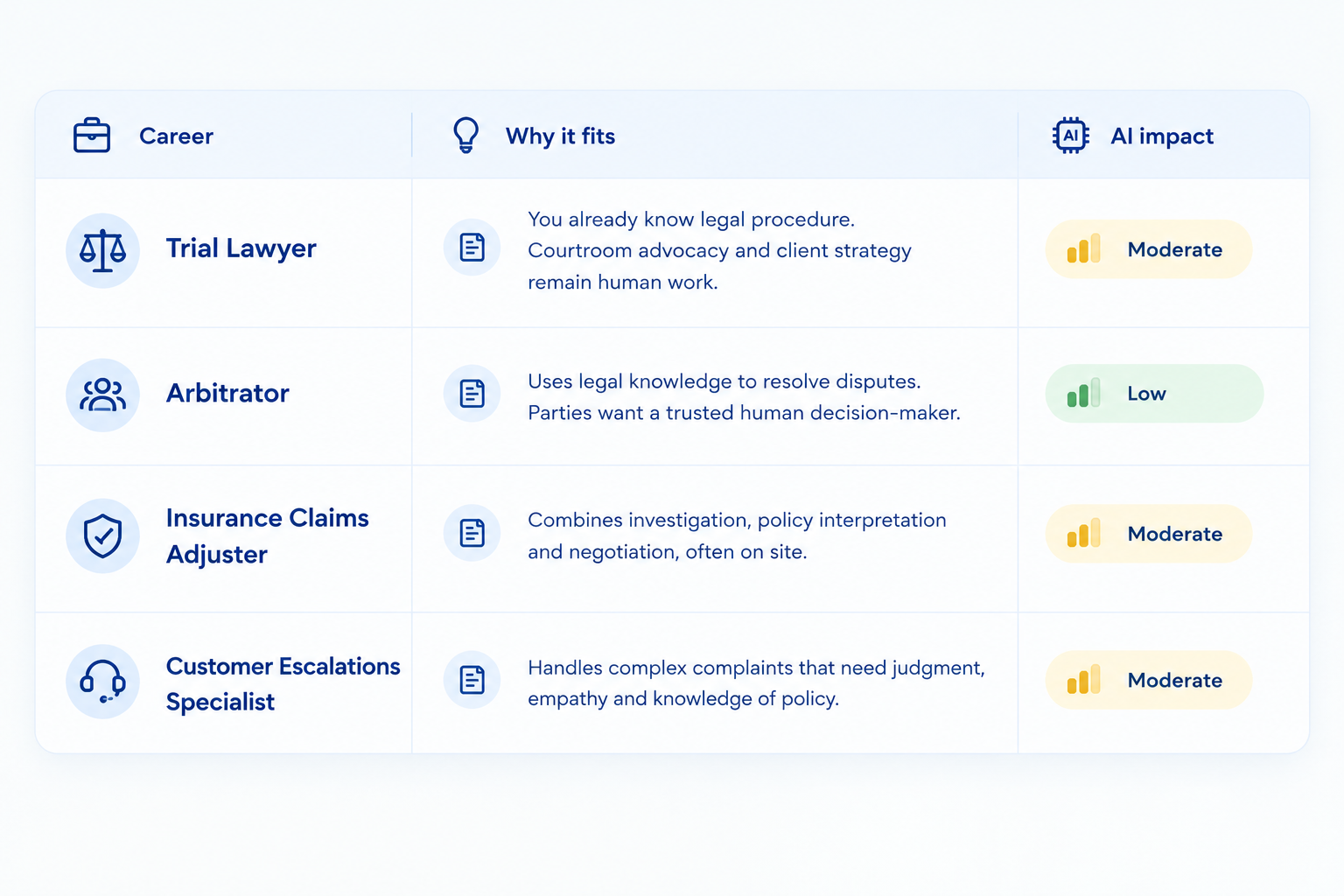
Not sure which direction suits you? A free career assessment matches your skills to careers that last.
How to Start Over
- List your transferable skills. Research, drafting, attention to detail, deadline management and legal knowledge all carry over.
- Choose a direction. Decide whether you want to go deeper into law, such as becoming a lawyer or arbitrator, or move sideways into insurance, compliance or dispute resolution.
- Get the right qualification. Becoming a lawyer requires a law degree and admission. Arbitration usually requires legal experience plus accredited arbitration training. Claims adjusting often needs only a short licence or certificate course.
- Use your current job. If you still work as a paralegal, ask to take on client-facing, dispute or compliance work to build relevant experience.
- Learn AI legal tools. Knowing how to use and check them makes you more valuable wherever you go.
Is It Worth Staying a Paralegal?
Reasons to stay (for now):
- Senior paralegals with specialist knowledge are still needed.
- It's a good stepping stone into law or compliance.
Reasons to plan your move:
- Entry-level roles are shrinking.
- Pay growth may stall as AI handles more of the work.
- The skills you have now are most valuable while you can still use them in a new role.
The best time to plan your switch is before your role changes, not after.
FAQs
Will AI replace paralegals?
AI will replace much of the routine work, and entry-level roles are likely to shrink. Paralegals who focus on client work, checking AI output or specialist areas will last longer.
What can a paralegal do instead?
Common next steps include becoming a lawyer, arbitrator, insurance claims adjuster or compliance officer.
Is it worth becoming a paralegal in 2026?
Only as a stepping stone. If you're starting out, consider going directly into a more AI-resistant role.
Do paralegal skills transfer to other jobs?
Yes. Research, writing, organisation and legal knowledge are valued in insurance, compliance, dispute resolution and government roles.
Not sure if your current job is at risk? Check your AI risk score for free and see which careers match your skills. brigenai helps you find a career that lasts, with AI tools and real people to guide your switch.






