
Paramedics respond to emergencies, treat patients on the spot and get them safely to hospital. AI is unlikely to replace paramedics for at least 20 years, because the work happens in chaotic, unpredictable situations that require fast, hands-on decisions. For career changers, it's a meaningful AI-resistant career with strong demand and clear training pathways.
What Does a Paramedic Do?
Paramedics provide emergency care outside the hospital. Their work includes:
- Emergency response: attending accidents, heart attacks, strokes and injuries.
- Assessment and treatment: checking vital signs, giving medication and managing airways.
- Transport: safely moving patients to hospital while continuing care.
- Handover: briefing hospital staff on the patient's condition and treatment.
Paramedics work for ambulance services, fire services, mining sites, events and air rescue.
Will AI Replace Paramedics?
No. AI may help with decisions, but emergencies need people.
What AI can do: dispatch systems can prioritise calls, and AI tools can help analyse heart readings and suggest treatments.
What AI cannot do:
- Work in chaotic scenes. Car crashes, homes and public places are unpredictable.
- Hands-on treatment. Managing airways, bleeding and fractures needs skilled hands.
- Calm and reassure. Frightened patients and families need human support.
- Take responsibility. Paramedics are registered or certified professionals accountable for patient care.
Ageing populations and growing pressure on hospitals keep demand rising. That's why paramedic is rated Low AI impact. See how it compares in our full list of careers AI can't replace.
Can You Switch to This Career?
Yes. People often move into paramedicine from:
- Healthcare support roles: nursing assistants and patient transport workers.
- Emergency services and the military: experience under pressure is highly valued.
- Fitness and sport: physical fitness and first aid knowledge help.
- Any job: calmness, empathy and resilience matter most.
Not sure which of your skills transfer? A free career assessment can show how well you match.
Is it too late at 30 or 40? No. Many paramedics start in their 30s. You'll need good physical fitness and to be comfortable with shift work.
How to Start Over as a Paramedic
- Get first aid experience. Volunteer with a first aid or ambulance organisation.
- Complete the required training. In some regions this is a degree; in others, a staged certificate pathway.
- Get registered or certified. Pass the required exams.
- Apply to ambulance services. Recruitment often includes fitness and driving tests.
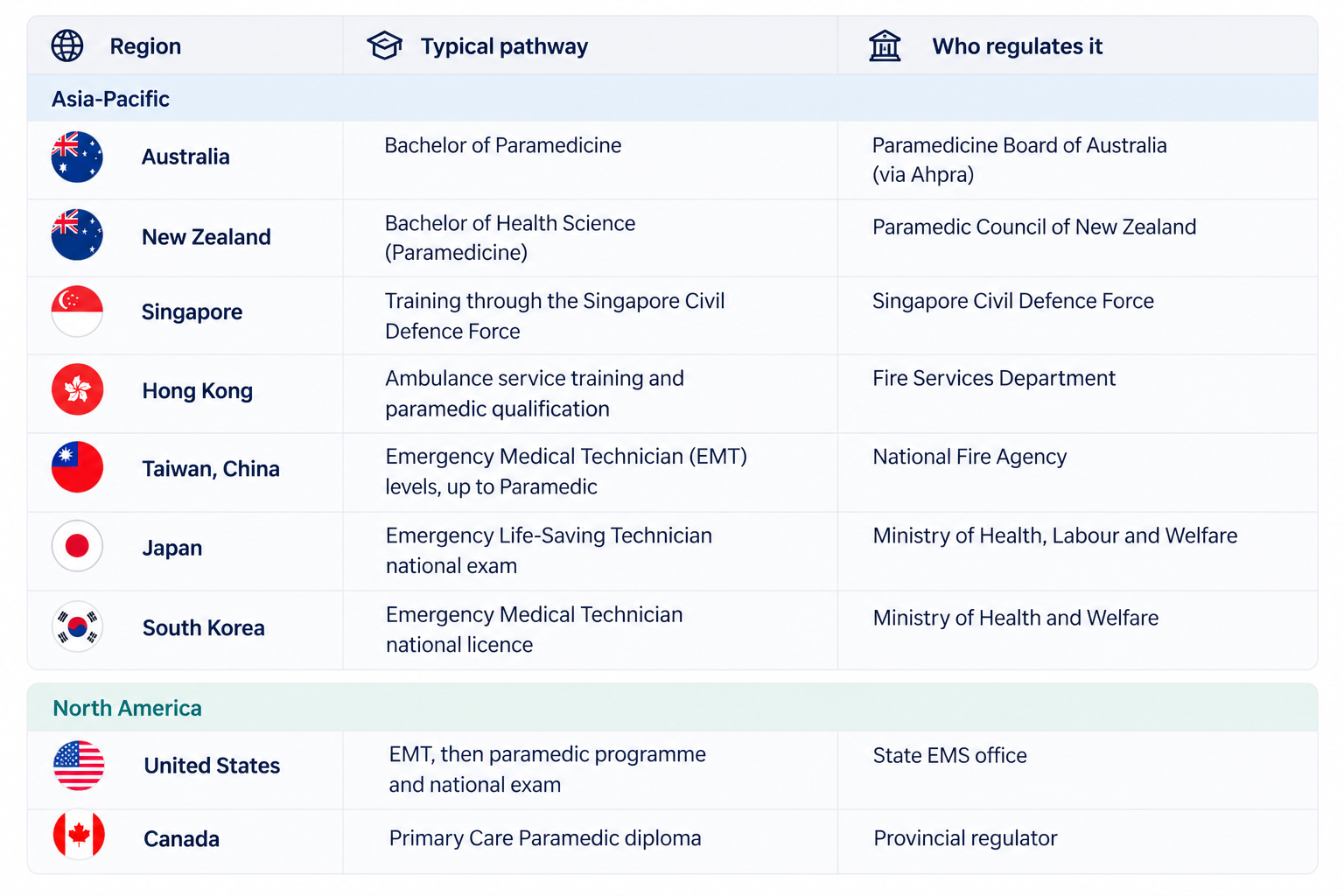
Requirements change, so always check with the regulator in your region before you enrol.
Is It Worth It?
Pros:
- Meaningful work saving lives
- Strong, growing demand
- Every day is different
- Clear pathways to advanced and specialist roles
Cons:
- Shift work, including nights and weekends
- Physically and emotionally demanding
- Exposure to traumatic situations
It suits calm, resilient people who want action-focused healthcare work.
FAQs
How long does it take to become a paramedic?
Usually two to four years, depending on the region and pathway.
What is the difference between an EMT and a paramedic?
EMTs provide basic emergency care. Paramedics have more training and can give advanced treatments and medications.
Can I become a paramedic at 40?
Yes, if you meet the fitness requirements.
Not sure if your current job is at risk? Check your AI risk score for free and see which careers match your skills. brigenai helps you find a career that lasts, with AI tools and real people to guide your switch.






