
Physical therapists, also called physiotherapists, help people recover movement and manage pain after injury, surgery or illness. AI is unlikely to replace them for at least 20 years, because the job depends on hands-on treatment, physical assessment and a trusting relationship with each patient. For career changers, it is a rewarding AI-resistant career in healthcare, though it requires a university degree and usually takes two to four years to qualify.
What Does a Physical Therapist Do?
Physical therapists assess how a patient moves, find the cause of pain or weakness, and design treatment to restore function. They work in:
- Hospitals: helping patients walk again after surgery, stroke or serious illness.
- Private clinics: treating back pain, sports injuries and joint problems.
- Aged care and community health: keeping older people mobile and independent.
- Sports teams: preventing and treating injuries in athletes.
A typical day might include assessing new patients, hands-on treatment, guiding exercises and writing progress notes.
Will AI Replace Physical Therapists?
No. AI will support the job, but it cannot replace the therapist.
What AI can do: motion-tracking apps can measure movement, software can suggest exercise programmes, and AI tools can reduce time spent on notes. These tools free therapists to spend more time with patients.
What AI cannot do:
- Hands-on treatment. Manual therapy and physically guiding a patient through movement require a skilled human.
- Complex assessment. Pain often has several causes. Working out what is really going on takes clinical reasoning and physical examination.
- Motivation and trust. Recovery depends on patients sticking with their programme. A therapist's encouragement and accountability make a real difference.
- Legal responsibility. Across Asia-Pacific and North America, physical therapists must be registered, and they are accountable for patient safety.
Ageing populations and rising rates of chronic conditions mean demand keeps growing. That is why physical therapist is rated Low AI impact. See how it compares in our full list of careers AI can't replace.
Can You Switch to This Career?
Yes, but it takes commitment. People often move into physical therapy from:
- Fitness and sport: personal trainers and coaches already understand movement and exercise.
- Healthcare support roles: nursing assistants and allied health assistants know how clinics and hospitals work.
- Science degrees: a background in biology, exercise science or health science can shorten your path.
- Other careers: many people switch in their late 20s or 30s after realising they want meaningful, people-focused work.
Useful skills you may already have include communication, empathy, patience and problem-solving. Not sure which of your skills transfer? A free career assessment can show how well you match.
Is it too late at 30 or 40? No. Graduate-entry programmes are designed for people who already have a degree, and many classes include mature students. The main challenges are the cost of study and time away from full-time work.
How to Start Over as a Physical Therapist
- Test your interest. Volunteer or work as an allied health or physiotherapy assistant for a few months.
- Check your entry route. If you already have a degree, look for a graduate-entry master's programme. If not, you will need a bachelor's degree in physiotherapy.
- Complete your degree. Programmes include supervised clinical placements in hospitals and clinics.
- Pass registration or licensing. Apply to your regional board, which may require a national exam.
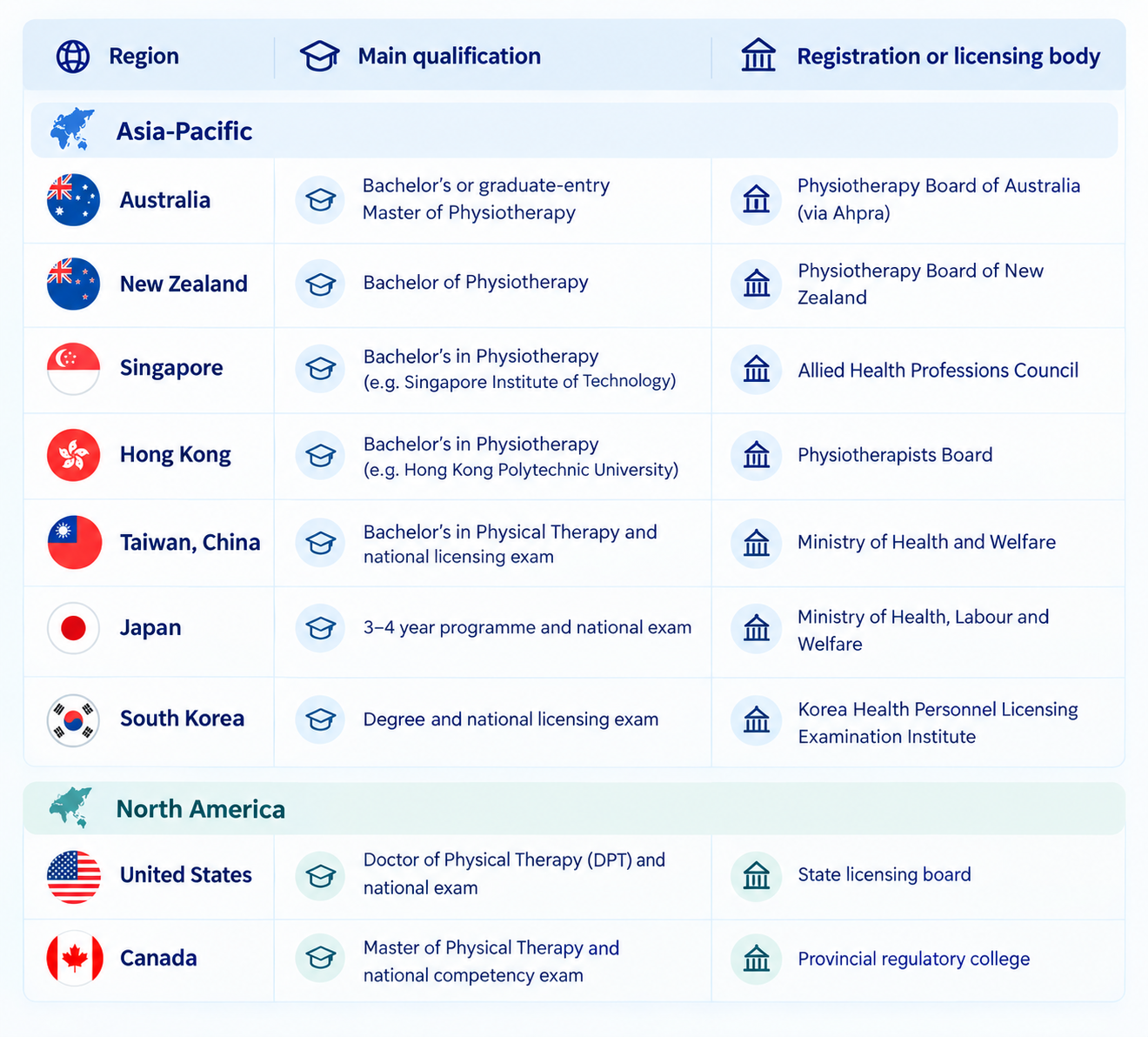
Requirements change, so always check with the registration body in your region before you enrol.
Is It Worth It?
Pros:
- Meaningful work helping people recover
- Strong demand driven by ageing populations
- Many settings to choose from, from hospitals to sports
- Option to open your own clinic
Cons:
- Requires a university degree, which takes time and money
- Physically demanding, especially in hospitals
- Private practice can involve sales and business pressure
It suits people who enjoy working closely with others and want a stable, respected healthcare career.
FAQs
How long does it take to become a physical therapist?
Usually two to four years, depending on whether you enter through a bachelor's or graduate-entry programme.
Is a physical therapist the same as a physiotherapist?
Yes. "Physiotherapist" is used in Australia, New Zealand, Singapore, Hong Kong and Canada. "Physical therapist" is common in the United States.
Can I become a physical therapist at 35?
Yes. Graduate-entry programmes commonly include career changers in their 30s.
Can I work in another country?
Often yes, but you will need to have your qualification assessed by the new country's registration board.
Not sure if your current job is at risk? Check your AI risk score for free and see which careers match your skills. brigenai helps you find a career that lasts, with AI tools and real people to guide your switch.






