
Radiologists are doctors who read medical images, such as X-rays, CT and MRI scans, to diagnose disease and guide treatment. AI will not replace radiologists, but it is already changing the job faster than in most medical specialties. Over the next ten years, radiologists who work well with AI tools will be in strong demand, while routine image reading becomes increasingly automated. The role is rated Moderate AI impact.
What Does a Radiologist Do?
Radiologists interpret medical images, write reports for other doctors, and advise on diagnosis and next steps. Their work includes:
- Diagnostic radiology: reading X-rays, CT, MRI and ultrasound scans.
- Interventional radiology: performing image-guided procedures, such as biopsies and blocked-vessel treatments.
- Consultation: discussing complex cases with surgeons, oncologists and other specialists.
Radiologists work in hospitals, private imaging clinics and, increasingly, remotely through teleradiology.
Will AI Replace Radiologists?
Not fully, but it is changing the job more than almost any other area of medicine.
What AI can do: AI tools can detect certain problems on scans, such as lung nodules, fractures and signs of stroke, and flag urgent cases so they are read first. Some tools already match human accuracy on narrow tasks.
What AI cannot do:
- Put findings in context. A radiologist combines the image with the patient's history, symptoms and other tests to reach a diagnosis.
- Handle complex and unusual cases. AI works best on common, well-defined problems. Rare conditions and messy real-world cases still need expert judgment.
- Perform procedures. Interventional radiology is hands-on and cannot be automated.
- Take responsibility. A licensed doctor must sign every report and is accountable for the diagnosis.
In 2016, AI pioneer Geoffrey Hinton suggested that hospitals should stop training radiologists. That prediction has not come true. Demand for imaging keeps rising, and many regions still report radiologist shortages. What is changing is the type of work: less routine reading, more oversight, complex cases and procedures. Compare other ratings in our full list of careers AI can't replace.
How This Career Is Changing
- AI as a first reader. Software increasingly screens scans and highlights areas of concern, while the radiologist confirms and interprets.
- More focus on complex work. Routine cases take less time, leaving more time for difficult diagnoses and multidisciplinary meetings.
- Growth in interventional radiology. Hands-on, procedure-based work is one of the most AI-resistant parts of the field.
- New oversight roles. Hospitals need radiologists who can evaluate, test and safely deploy AI tools.
How to Stay Ahead
If you are already a radiologist:
- Learn how AI tools work, including their limits and failure modes.
- Consider sub-specialising in complex areas, such as neuroradiology or oncology imaging.
- Build procedural skills in interventional radiology.
- Get involved in choosing and validating AI tools at your hospital.
If you are thinking of switching into radiology: be realistic. It requires a full medical degree plus four to six years of specialist training, so it is rarely a practical career change. If you want a faster route into medical imaging, consider becoming a radiographer (who performs the scans) or a sonographer. A free career assessment can help you find the best fit.
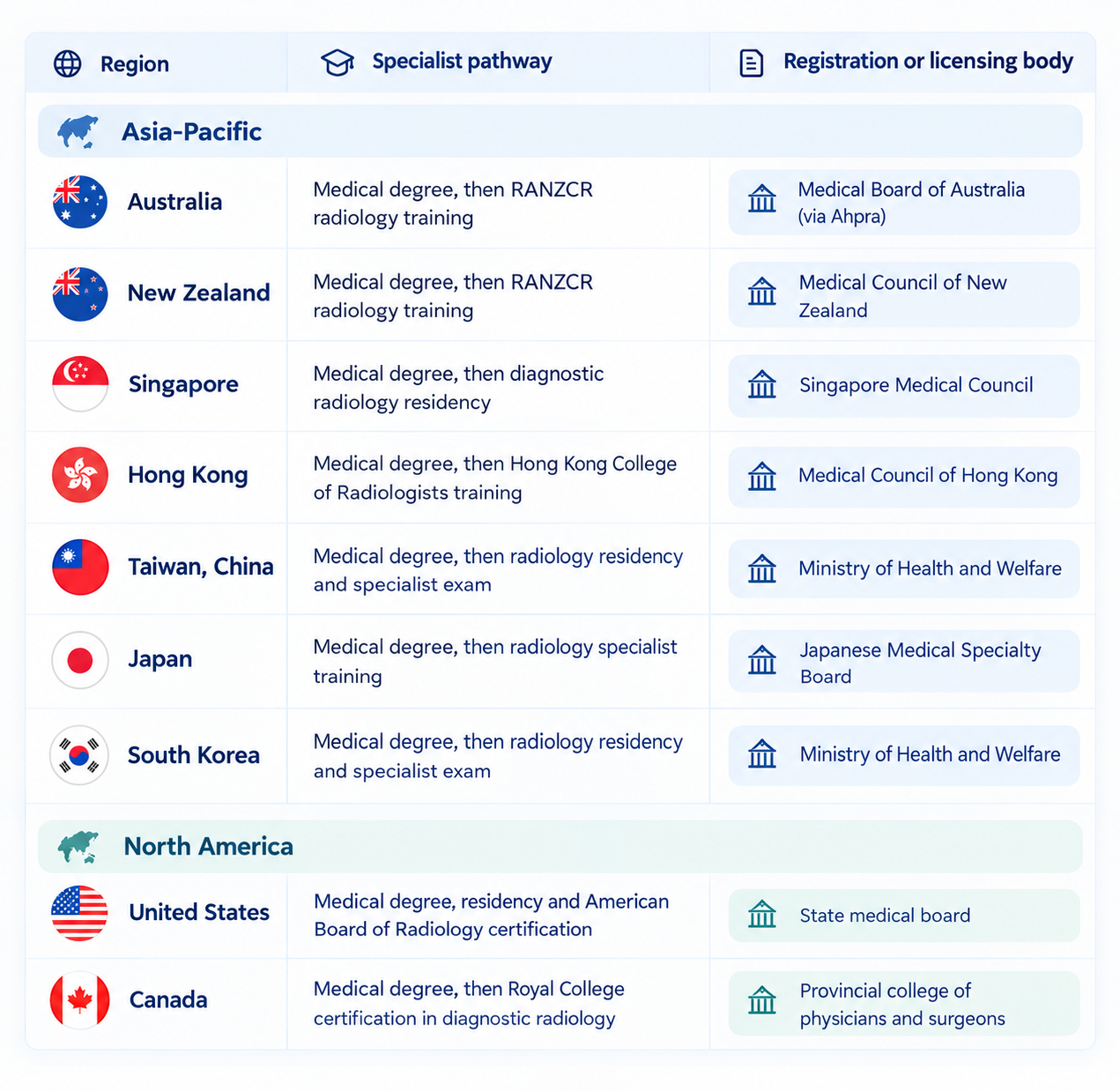
Requirements change, so always check with the relevant medical council in your region.
Is It Worth It?
Pros:
- One of the highest-paid medical specialties
- Strong demand as imaging use keeps growing
- Remote work is increasingly possible
- AI can reduce routine workload
Cons:
- Very long and expensive training
- The job is changing quickly, so ongoing learning is essential
- Less direct patient contact than most medical roles
It suits doctors who enjoy detailed analysis and are comfortable working alongside new technology.
FAQs
Will AI replace radiologists?
No, but it will automate much of the routine reading. Radiologists who adapt will remain in demand.
How long does it take to become a radiologist?
Usually 10 to 14 years, including a medical degree and specialist training.
What is the difference between a radiologist and a radiographer?
A radiologist is a doctor who interprets images. A radiographer is a health professional who performs the scans.
Is radiology still a good specialty to choose?
Yes, especially for doctors interested in AI, complex diagnosis or interventional procedures.
Not sure if your current job is at risk? Check your AI risk score for free and see which careers match your skills. brigenai helps you find a career that lasts, with AI tools and real people to guide your switch.






