
Real estate agents help people buy, sell and rent property. AI won't replace them, but it's changing how they work. Online listings, automated valuations and AI assistants now handle much of the routine work, so fewer agents may be needed. The agents who last will be those who excel at negotiation, local knowledge and building trust. The role is rated Moderate AI impact.
What Does a Real Estate Agent Do?
Real estate agents manage property transactions from start to finish:
- Listing properties: valuing homes, preparing listings and marketing them.
- Showing properties: running open homes and private inspections.
- Negotiating: getting the best price and terms for their clients.
- Managing the deal: coordinating contracts, lawyers, inspections and settlement.
Most agents work on commission, so income depends heavily on sales.
Will AI Replace Real Estate Agents?
Not fully, but AI is taking over parts of the job.
What AI can do: estimate property values, write listing descriptions, answer buyer enquiries with chatbots, create virtual tours and match buyers with suitable homes.
What AI cannot do:
- Negotiate. Reading people and handling emotional, high-stakes negotiations is a human skill.
- Build trust. Selling a home is one of the biggest decisions in most people's lives. People want someone they trust.
- Know the neighbourhood. Local insight, relationships and reputation take years to build.
- Take legal responsibility. Across Asia-Pacific and North America, agents must be licensed or registered.
The likely result is fewer, more productive agents. Compare other ratings in our full list of careers AI can't replace.
How This Career Is Changing
- Routine tasks are automated. Listings, valuations and enquiries take much less time.
- Buyers arrive better informed. Online data means clients expect deeper expertise.
- Pressure on commissions. Online and low-fee models are growing in some markets.
- Relationships matter more. Top agents win through reputation, referrals and local networks.
How to Stay Ahead
If you're already an agent:
- Specialise. Luxury, commercial, rural or investment property needs more expertise.
- Use AI tools. Let them handle admin so you can spend more time with clients.
- Build your personal brand. Reviews, referrals and local presence are hard to automate.
- Consider property management. Property Manager roles offer steadier income.
If you're thinking of becoming an agent: the entry barrier is low, but income can be unpredictable at first. Plan for six to twelve months of building your network. A free career assessment can help you see if it suits your strengths.
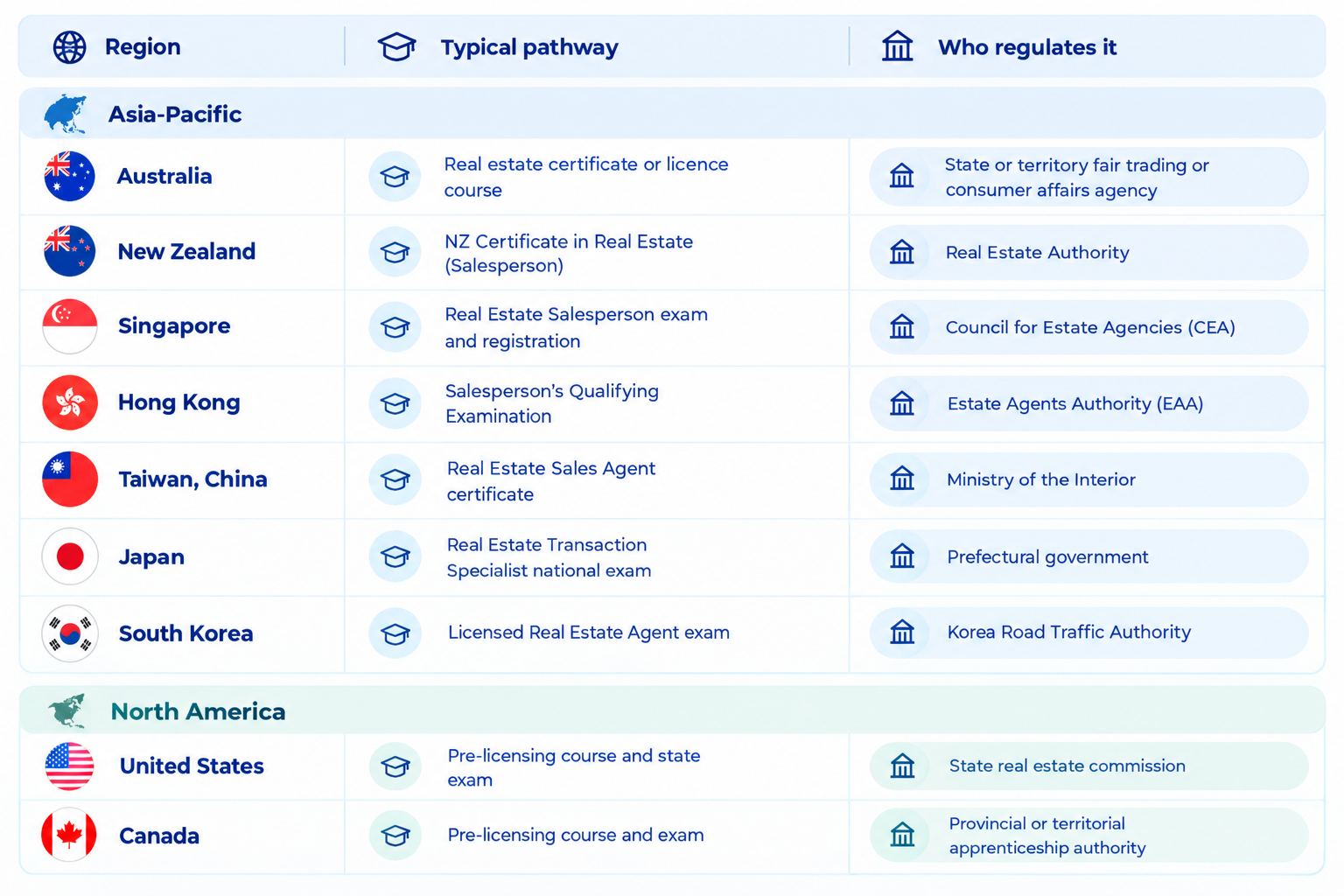
Requirements change, so always check with the regulator in your region before you enrol.
Is It Worth It?
Pros:
- Low barrier to entry, often within a few months
- High earning potential for successful agents
- Flexible schedule and independence
Cons:
- Commission-based income can be unpredictable
- AI and online platforms are reducing demand for average agents
- Evenings and weekends are often required
It suits confident communicators who enjoy sales, negotiation and building relationships.
FAQs
Will AI replace real estate agents?
No, but it will reduce the number of agents needed. Those with strong negotiation skills and local networks will do best.
How long does it take to become a real estate agent?
Usually a few weeks to a few months, depending on the region.
Do I need a degree?
No. Most regions require a short course and licensing exam.
Is real estate a good career change at 40?
Yes. Life experience and local networks are real advantages.
Not sure if your current job is at risk? Check your AI risk score for free and see which careers match your skills. brigenai helps you find a career that lasts, with AI tools and real people to guide your switch.






