
School teachers help children and teenagers learn, grow and develop the skills they need for life. AI will change how teachers work, but it is unlikely to replace them for at least 20 years. Learning depends on relationships, motivation, classroom management and care, which AI can't provide. For career changers, teaching is one of the most popular AI-resistant careers, with graduate-entry routes designed for people switching from other fields.
What Does a School Teacher Do?
School teachers plan and deliver lessons, assess learning and support students' wellbeing. Their work includes:
- Teaching: explaining ideas, running activities and adapting to different learners.
- Planning and assessment: preparing lessons and marking work.
- Classroom management: keeping students focused and safe.
- Student support: noticing when a student is struggling and working with families.
Teachers work in primary and secondary schools, in public and private systems.
Will AI Replace School Teachers?
No. AI will become a powerful tool, but students still need teachers.
What AI can do: create lesson materials, personalise practice exercises, give instant feedback and help with marking.
What AI cannot do:
- Build relationships. Students learn best from people who know and believe in them.
- Manage a classroom. Keeping 30 young people engaged and safe is a human skill.
- Support wellbeing. Teachers notice problems at home, bullying and mental health issues.
- Take responsibility. Teachers are registered professionals with a duty of care.
AI can reduce paperwork and give teachers more time to teach. That's why school teacher is rated Low AI impact. See how it compares in our full list of careers AI can't replace.
Can You Switch to This Career?
Yes. Teaching welcomes career changers, especially in high-demand subjects such as maths, science, technology and languages. People often switch from:
- Science, engineering and IT: your subject knowledge is in short supply.
- Business and finance: useful for commerce and economics.
- Tutoring, coaching or training roles: you already know how to explain things.
- Any degree: many graduate-entry programmes accept degrees in a range of subjects.
Not sure which of your skills transfer? A free career assessment can show how well you match.
Is it too late at 30, 40 or 50? No. Career changers bring real-world experience that students value.
How to Start Over as a School Teacher
- Get classroom experience. Volunteer, tutor or work as a teaching assistant.
- Choose a pathway. If you have a degree, look for a graduate-entry teaching qualification or an employment-based route.
- Complete your training. Programmes include supervised teaching placements.
- Get registered or certified. Apply to your region's teaching authority.
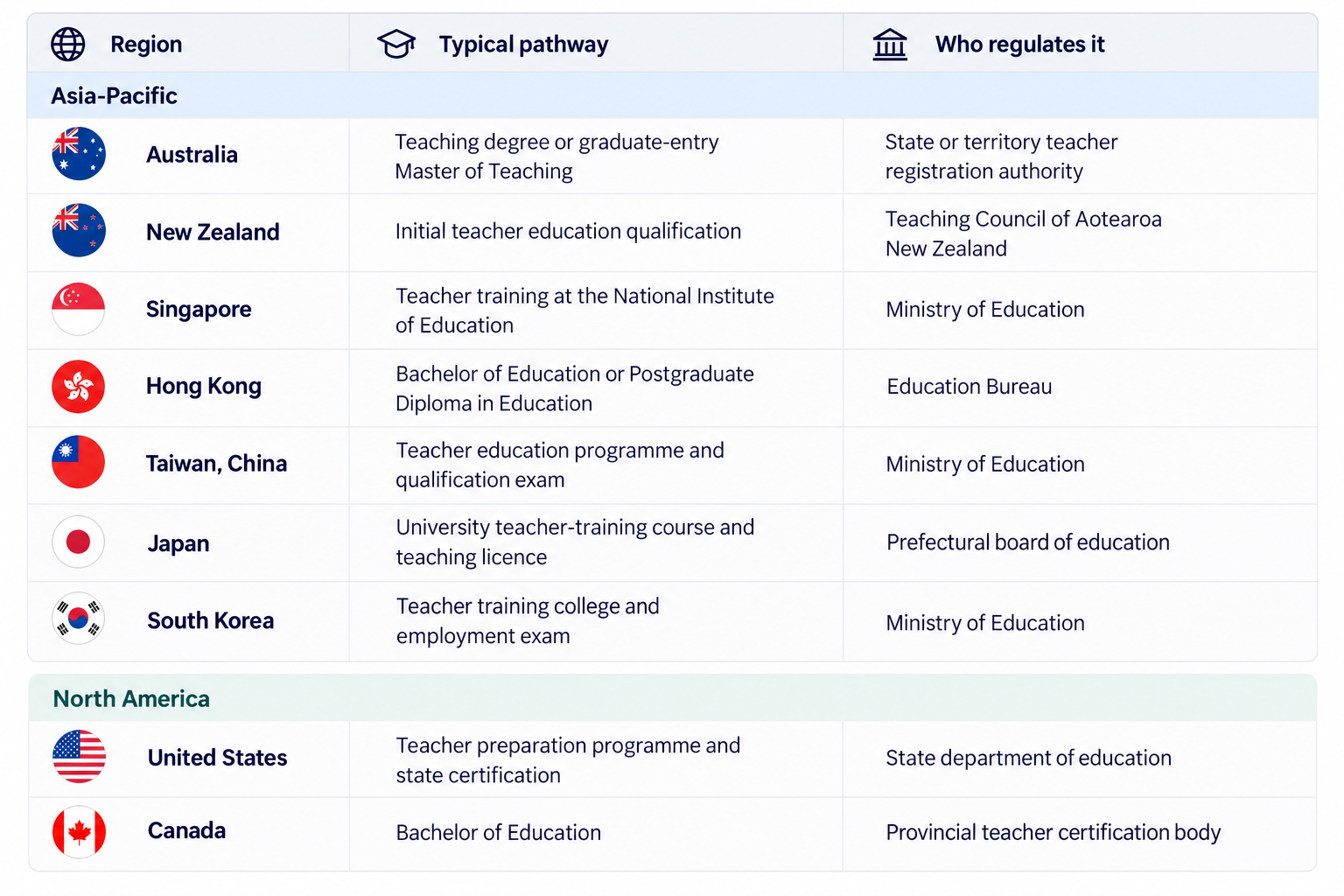
Requirements change, so always check with the teaching authority in your region before you enrol.
Is It Worth It?
Pros:
- Meaningful work shaping young people's futures
- Strong demand, especially in maths, science and languages
- Stable employment and school holidays
- AI tools can reduce admin over time
Cons:
- Heavy workload, including marking and planning outside class
- Managing behaviour can be stressful
- Pay may be lower than in some private-sector careers
It suits patient, energetic people who enjoy helping others learn.
FAQs
Will AI replace teachers?
No. AI will change how teachers work, but students still need human guidance, support and care.
How long does it take to become a teacher?
Usually one to four years, depending on whether you already have a degree.
Can I become a teacher at 40?
Yes. Career changers are common, and their real-world experience is valued.
Not sure if your current job is at risk? Check your AI risk score for free and see which careers match your skills. brigenai helps you find a career that lasts, with AI tools and real people to guide your switch.






