

A UX Designer career offers multiple pathways, from entry-level design roles to leadership positions such as Head of UX, VP of Design, and Chief Design Officer. Along the way, professionals can specialize in research, product design, accessibility, design systems, or user interface design while building skills that are increasingly valued across technology, healthcare, finance, education, and e-commerce industries.
Unlike many professions with a fixed progression, UX design is highly flexible. Designers can deepen their expertise in a specialty, transition into product-focused roles, or move into strategic leadership positions. Understanding the typical UX Designer career journey can help aspiring designers make better decisions about skill development and long-term career growth.
Understanding the Foundation of UX Design
Every successful UX Designer starts with a strong foundation in user-centered design principles. The primary goal of UX design is to understand user problems and create meaningful experiences that balance customer needs with business objectives.
Core foundational skills include:
- Empathy and user mindset
- Design thinking
- User research fundamentals
- Wireframing and prototyping
- Visual design basics
- Information architecture
These skills form the building blocks for nearly every UX-related role. Employers consistently rank user research and prototyping among the most important competencies for junior designers.
For beginners, tools such as Figma, FigJam, Miro, and Adobe XD are commonly used to practice these skills. Building a portfolio that demonstrates problem-solving abilities is often more important than obtaining formal design qualifications.
Early Career: Becoming a UX Designer
The first few years of a UX career focus on applying foundational knowledge to real-world projects.
Typical experience range: 0–3 years
Common entry-level positions include:
- Junior UX Designer
- UX Designer
- Product Design Intern
- UX Associate
During this stage, designers learn how to:
- Conduct user interviews
- Create wireframes and user flows
- Build prototypes
- Collaborate with developers
- Present design solutions to stakeholders
Many professionals enter UX from different backgrounds, including graphic design, psychology, marketing, customer service, and software development.
The transition into a full UX Designer role typically occurs after gaining practical experience through internships, freelance work, bootcamps, or personal projects.
Core UX Career Paths
Once designers establish themselves in the industry, several career directions become available.
UX Designer
The traditional UX Designer role remains one of the most common career paths. Designers focus on user journeys, usability testing, interaction design, and improving digital experiences.
Typical responsibilities include:
- User research
- Journey mapping
- Wireframing
- Prototyping
- Usability testing
Product Designer
Product Designers combine UX, UI, business strategy, and product thinking.
This role has become increasingly popular among startups and technology companies because it bridges design and business objectives.
UX Researcher
UX Researchers specialize in understanding user behavior through interviews, surveys, usability testing, and data analysis.
Their insights help organizations make evidence-based product decisions.
Interaction Designer
Interaction Designers focus on how users interact with products, emphasizing workflows, animations, and micro-interactions that improve usability.
Each of these paths offers strong career prospects and can lead to senior-level opportunities.
Choosing a Specialization
As UX professionals gain experience, many choose to specialize in a particular area.
Popular specialization tracks include:
UX Research
Focuses on user behavior, customer insights, and usability testing.
Ideal for individuals who enjoy psychology, data gathering, and qualitative research.
Product Design
Combines business strategy, UX, and product development.
Often considered one of the highest-demand design specialties today.
UI Design
Concentrates on visual design, interface systems, branding, and design consistency.
Strong visual design skills are essential for success.
Design Systems Specialist
Creates scalable design frameworks used across large organizations.
Companies such as Google, Microsoft, and Airbnb invest heavily in design systems to maintain consistency across products.
Accessibility Specialist
Focuses on designing products that are usable by people with disabilities.
Accessibility expertise is becoming increasingly valuable due to legal requirements and growing awareness of inclusive design.
Content Designer
Works on UX writing, information design, and content strategy.
Content Designers help ensure users understand and navigate digital products effectively.
Specialization allows designers to become highly valuable experts while maintaining strong career flexibility.
Advancing into Senior Roles
After gaining approximately 5–10 years of experience, designers often move into senior positions.
Common roles include:
- Senior UX Designer
- Lead UX Designer
- Principal UX Designer
- Design Manager
Senior designers are expected to:
- Lead major projects
- Mentor junior team members
- Influence product strategy
- Work closely with executives
- Drive design best practices
At this stage, technical skills alone are no longer sufficient. Communication, stakeholder management, and leadership become critical factors for career progression.
Many organizations increasingly view senior designers as strategic partners rather than execution-focused contributors.
Leadership and Executive Opportunities
Experienced UX professionals can progress into leadership roles that shape entire organizations.
Examples include:
Design Lead or Engineering Manager (Design)
Leads design teams and oversees project delivery.
Head of UX
Responsible for the overall user experience strategy within an organization.
Director of Design
Aligns design initiatives with broader business objectives.
VP of Design
Manages large design organizations and influences company-wide strategy.
Chief Design Officer (CDO)
The highest-level design executive responsible for ensuring design drives innovation and business success.
These leadership roles require expertise in:
- Team management
- Business strategy
- Product vision
- Organizational influence
- Executive communication
Many design leaders spend less time creating interfaces and more time building teams and shaping company direction.
Exploring Related Career Paths
A UX background opens doors to many adjacent professions.
Popular transitions include:
Product Manager
Many UX Designers move into product management because of their strong understanding of user needs and business goals.
Service Designer
Focuses on end-to-end customer experiences across multiple touchpoints.
User Research Manager
Leads research teams and develops customer insight strategies.
UX Writer
Specializes in product content and communication design.
Data Analyst or Insights Specialist
Combines customer behavior analysis with product optimization.
Brand Strategist
Applies user-centered thinking to branding and customer engagement.
These alternative paths demonstrate the versatility of UX skills in the modern workforce.
Most In-Demand UX Skills in 2025 and Beyond
The UX field continues to evolve alongside technology advancements.
The most sought-after skills include:
User Research
Still considered the most important UX competency by employers.
Wireframing and Prototyping
Essential for transforming ideas into testable experiences.
Interaction Design
Increasingly valuable as products become more sophisticated.
Figma Expertise
Figma has become the dominant design platform used by teams worldwide.
Information Architecture
Critical for organizing complex digital experiences.
Design Systems
A growing specialization as organizations seek consistency and scalability.
Accessibility
Accessibility knowledge is becoming a standard expectation rather than a niche skill.
Data-Informed Design
Understanding analytics and user behavior metrics helps designers make stronger decisions.
Additionally, AI literacy is rapidly emerging as a competitive advantage. Designers who understand how AI affects user experiences, workflows, and product design will likely have stronger career opportunities in the coming years.
Salary Expectations Across the UX Career Journey
UX design remains one of the highest-paying creative professions globally.
Typical salary progression (global averages) often follows this pattern:\
Actual salaries vary significantly based on:
- Country
- Industry
- Company size
- Skill specialization
- Leadership responsibilities
Product Designers, Design System Specialists, and UX Leaders often command the highest compensation packages.
Industries Hiring UX Designers
UX talent is no longer limited to technology companies.
The largest hiring sectors include:
Technology
Technology companies continue to account for the largest share of UX opportunities.
E-commerce
Online retail businesses invest heavily in user experience to improve conversion rates.
Finance
Banks and fintech companies increasingly prioritize customer experience.
Healthcare
Healthcare organizations require user-friendly digital experiences for patients and medical professionals.
SaaS
Software-as-a-Service companies rely heavily on UX to improve adoption and retention.
Additional opportunities can be found in:
- Education
- Media and entertainment
- Consulting
- Travel and hospitality
- Government services
As digital transformation continues worldwide, UX skills are becoming valuable across nearly every industry.
Building an International UX Career
UX Designers are among the most globally mobile professionals.
Countries such as Australia, New Zealand, Singapore, Canada, and the United Kingdom frequently hire experienced UX talent. Product design and UX research skills are particularly transferable because user-centered design principles apply across industries and markets.
International professionals looking to work abroad should focus on:
- Building a strong portfolio
- Demonstrating business impact
- Developing communication skills
- Understanding local workplace culture
- Learning AI-assisted design workflows
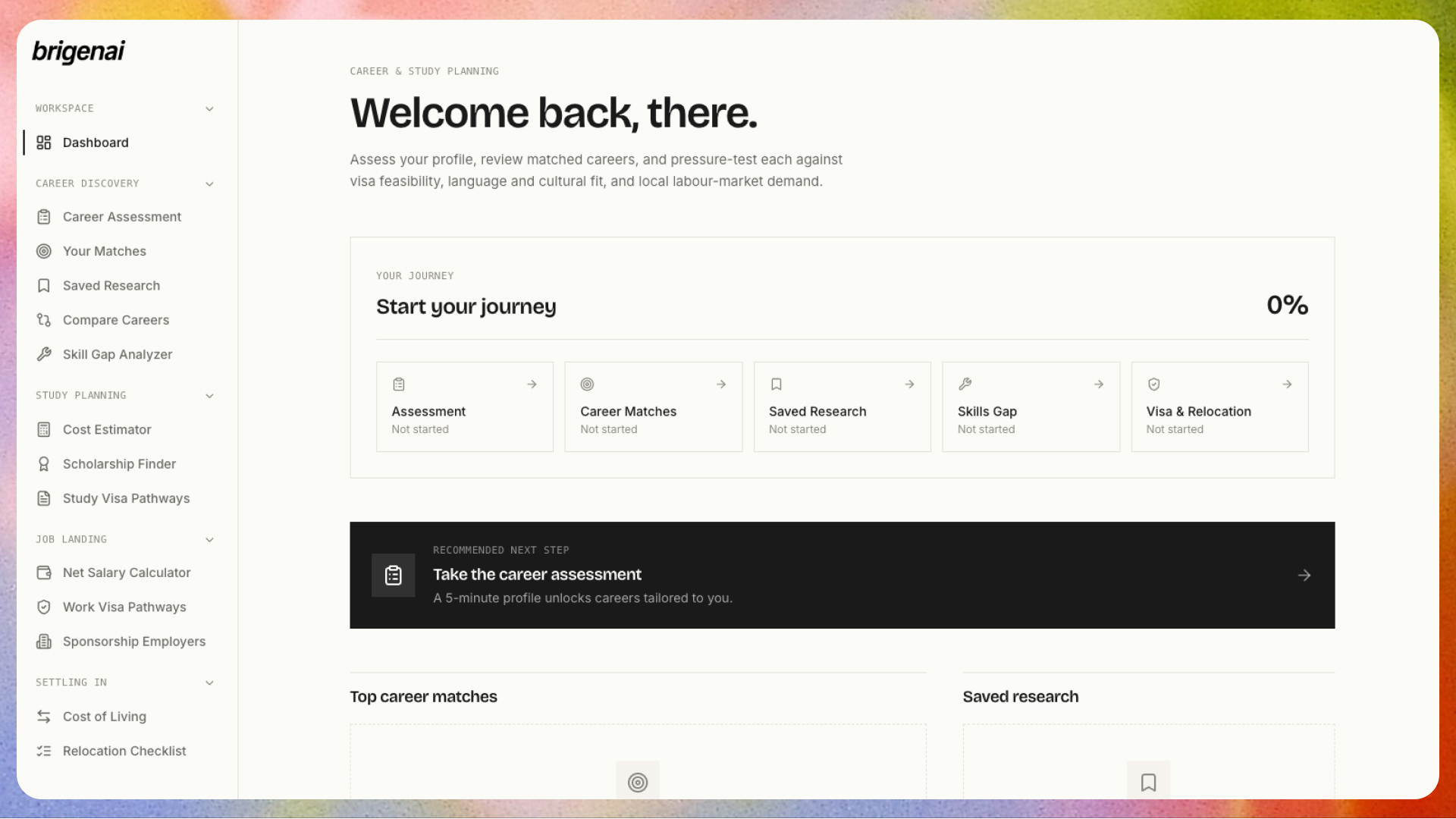
Platforms like BRIGENAI help international professionals understand career opportunities, workplace expectations, and relocation pathways across the Asia-Pacific region, making it easier to evaluate long-term career options abroad.
Bottom Line
The UX Designer career journey offers multiple growth paths, from foundational design work to specialist and executive leadership roles. Success starts with mastering core skills such as user research, design thinking, and prototyping before expanding into product design, accessibility, research, or management.
The profession continues to offer strong salary growth, global opportunities, and increasing demand across industries. Whether your goal is becoming a Principal Designer, Head of UX, Product Leader, or Design Executive, the most successful professionals continuously improve their technical, strategic, and leadership capabilities throughout their careers.