
What causes anxiety about the future and how does it affect you?
Anticipatory anxiety is fear or dread about an imagined future event that feels unpredictable and tends to last far longer than a typical fear response. Unlike phasic fear, which is a short-term reaction to a clear and present threat, anticipatory anxiety activates distinct brain regions and can persist for hours, days, or weeks. This distinction matters because the strategies that calm a sudden fright are not the same ones that resolve chronic future worry.
One of the key drivers of future anxiety is cognitive interpretation bias. A meta-analysis linking interpretation bias to anxiety found a medium effect size (g = 0.48), meaning people with anxiety consistently read ambiguous situations as threatening. This is not a character flaw. It is a learned pattern the brain uses to protect itself, and it can be unlearned with the right techniques.
The physical and emotional symptoms of future anxiety are wide-ranging:
“Worry is a mental behaviour, not just an emotion. Understanding that distinction is the first step toward changing it.”
When these symptoms persist across multiple areas of life for six months or more, the pattern may indicate generalised anxiety disorder (GAD) rather than situational worry. GAD requires professional assessment, not just self-help.
Which evidence-backed therapies work best for overcoming future anxiety?
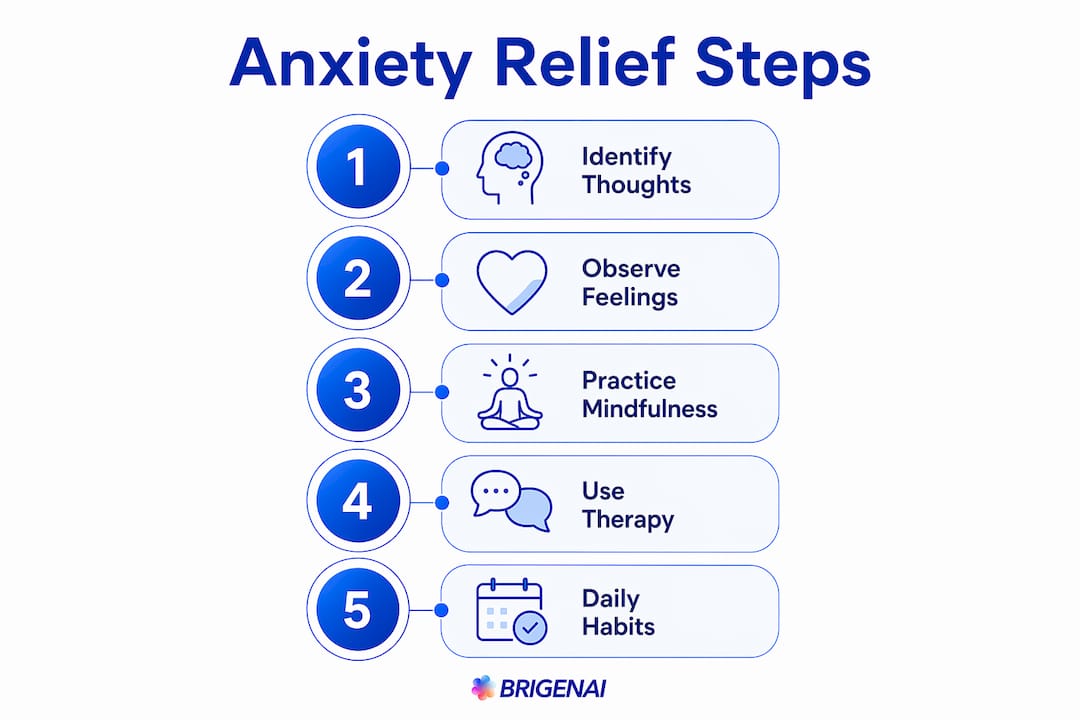
The two most researched psychological treatments for future-focused anxiety are CBT and ACT. They work differently, and understanding that difference helps you choose the right fit.
TherapyCore approachBest suited forCognitive behavioural therapy (CBT)Identifies and restructures negative thought patternsPeople who benefit from logical analysis of worryAcceptance and Commitment Therapy (ACT)Accepts thoughts without engaging them; builds value-driven actionPeople who struggle with thought suppressionMedication (SSRIs, SNRIs)Reduces neurological anxiety responseSevere or chronic anxiety alongside therapyMindfulness-based therapyTrains present-moment awarenessReducing rumination and worry cycles
CBT is the most researched psychotherapeutic approach for GAD and works by teaching you to identify distorted thinking, test it against evidence, and replace it with more balanced appraisals. A course typically runs eight to twenty sessions, with measurable improvement often visible within the first month.
ACT takes a different angle. Rather than challenging anxious thoughts, ACT teaches you to observe them without fusing with them. A meta-analysis across 91 studies with over 6,600 participants found ACT produced a meaningful reduction in psychological distress (effect size d = 0.46), with benefits remaining stable over time. The optimal dose was approximately eight sessions, making it a time-efficient option for many people.
Medication, typically SSRIs or SNRIs prescribed by a GP or psychiatrist, is often used alongside therapy for persistent severe anxiety. Symptom improvement generally begins three to six weeks after starting medication, so it is not a quick fix but a sustained support.
Pro Tip: If you are unsure whether CBT or ACT suits you better, ask a therapist to explain both in a first session. Many practitioners integrate elements of both, and the relationship with your therapist matters as much as the modality.
Mindfulness and behavioural experiments also play a supporting role. Mindfulness paired with exposure to feared situations can decrease anxiety and reduce reassurance-seeking behaviours. Behavioural experiments are structured exercises where you test a feared prediction in real life, then observe what actually happens. The evidence you gather is far more persuasive to your brain than any amount of reassurance.
What practical daily strategies help with dealing with anxiety about the future?
Therapy is the foundation, but daily habits are what sustain progress between sessions. These strategies are grounded in the same psychological principles as CBT and ACT, adapted for everyday use.
Pro Tip: Avoid Googling symptoms or worst-case scenarios as a form of reassurance. Reassurance-seeking feels calming in the moment but reinforces the anxiety loop. Set a rule: one credible source, one time, then close the tab.
Mindfulness practice does not require meditation retreats or lengthy sessions. Even five minutes of focused breathing, using a tool like the Insight Timer app, trains the brain to return to the present rather than projecting into an uncertain future. Consistency matters far more than duration.
How do you know when future anxiety needs professional help?
Self-help strategies work well for mild to moderate future worry. When anxiety crosses into clinical territory, professional support becomes necessary rather than optional.
Watch for these warning signs:
Persistent high-level worry for more than six months across multiple worry areas can indicate generalised anxiety disorder rather than transient anxiety. GAD affects a significant portion of the population and responds well to treatment. The key is that it requires professional diagnosis, not self-diagnosis.
The first step is a conversation with your GP. They can rule out physical causes, assess severity, and refer you to a psychologist or psychiatrist. In Australia, a Mental Health Treatment Plan from your GP entitles you to Medicare-subsidised sessions with a registered psychologist. Bulk-billing options exist, and platforms like Beyond Blue and Head to Health provide free referral support.
Combining CBT or ACT with medication and structured worry scheduling yields the most sustainable improvements for chronic future anxiety. Therapy and medication are not competing options. They address different aspects of the same problem and work better together than either does alone.
Seeking help is not a sign of weakness. It is the most evidence-based decision you can make when self-help has reached its limit.
Key takeaways
Effective anti future anxiety management combines evidence-based therapies like CBT and ACT with structured daily habits, and professional support when worry becomes chronic and pervasive.
PointDetailsAnticipatory anxiety is distinctIt activates different brain areas than phasic fear and requires targeted strategies, not just distraction.ACT and CBT are the strongest therapiesBoth show consistent evidence for reducing future-focused anxiety, with ACT optimal at around eight sessions.Worry scheduling reduces daily intrusionA 15 to 30 minute daily worry block, paired with noting thoughts, prevents anxiety from spreading across the day.Behavioural experiments break reassurance cyclesTesting feared predictions directly builds real evidence against catastrophic thinking and reduces avoidance.Professional help is needed for GADWorry lasting six or more months across multiple life areas warrants a GP referral and possible Medicare-subsidised therapy.
Why I think most anxiety advice misses the point
Most articles on reducing anxiety about the future tell you to breathe deeply and think positive. That advice is not wrong. It is just incomplete in a way that frustrates people who have already tried it.
The insight that changed how I think about this comes from ACT research. The goal is not to stop anxious thoughts. Trying to suppress a thought reliably makes it louder, a phenomenon psychologists call the rebound effect. The real target is cognitive fusion, the state where you become so identified with an anxious thought that you treat it as fact. When you learn to observe a thought as just a thought, its power over your behaviour drops significantly.
The second thing most advice gets wrong is reassurance-seeking. Googling your symptoms, asking friends repeatedly for comfort, or checking news obsessively all feel like problem-solving. They are actually anxiety maintenance. Each reassurance cycle teaches your brain that the threat was real enough to investigate, which raises the baseline anxiety level over time.
What I have found genuinely works is the combination of scheduled worry time with a physical containment behaviour, writing thoughts down rather than just deferring them mentally. The act of externalising the thought onto paper creates a small but real psychological distance. Pair that with one behavioural experiment per week, where you deliberately test a feared prediction, and you start accumulating personal evidence that your brain’s catastrophic forecasts are unreliable.
For professionals planning major life changes, like relocating internationally or shifting careers, the uncertainty is real, not imagined. The strategies above still apply, but the anxiety often reduces fastest when you replace vague dread with concrete information. Structured planning is itself a form of anti future anxiety work.
How Brigenai helps you plan through uncertainty
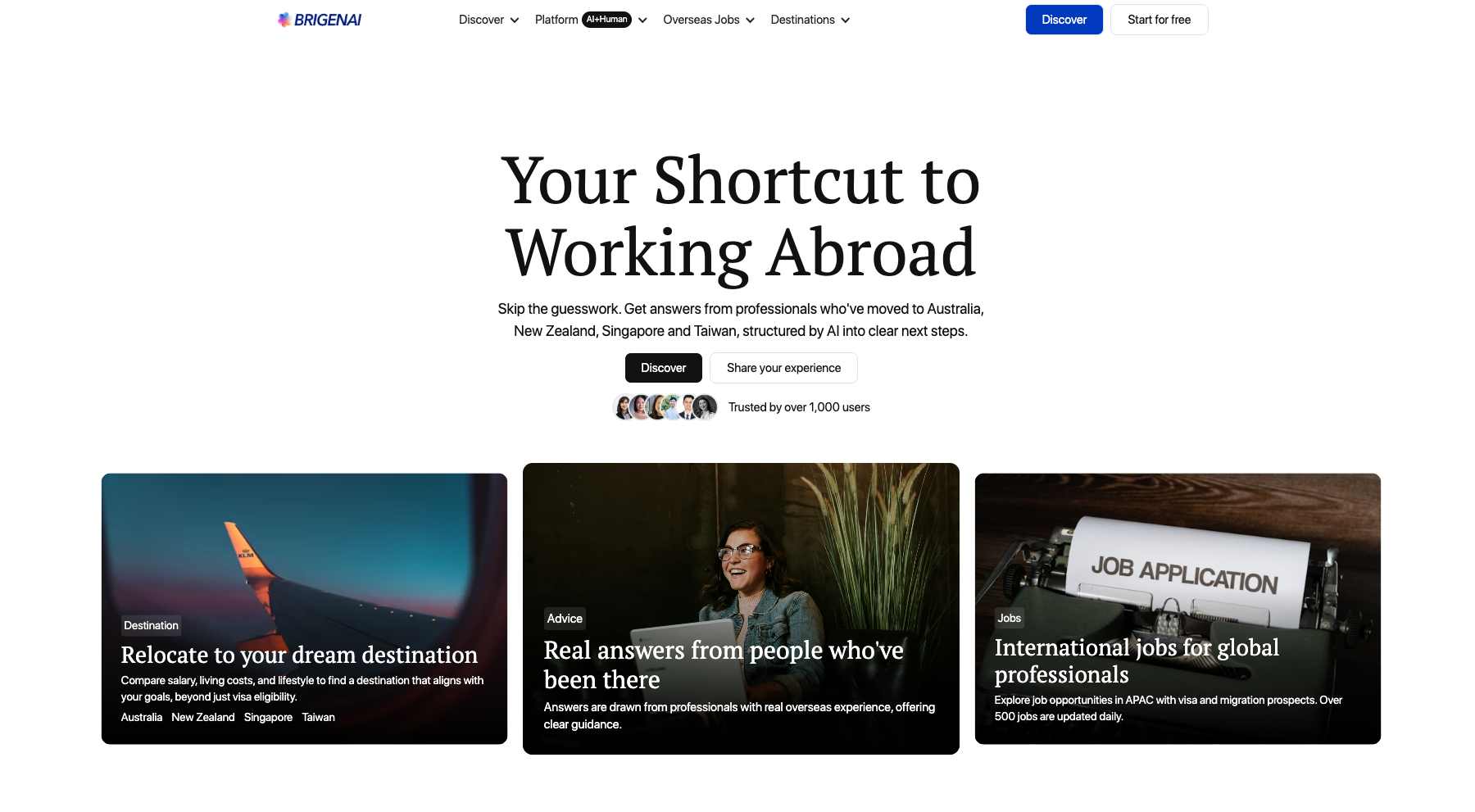
Future anxiety often intensifies when uncertainty is high and information is low. For professionals considering international relocation or a career shift abroad, that gap between “what if” and “what is actually true” is where worry takes root. Brigenai is built to close that gap.
Brigenai’s AI-powered platform provides localised intelligence on salaries, workplace culture, visa pathways, and cost of living across Australia, New Zealand, Singapore, and Taiwan. When you replace vague fear about the future with structured, experience-backed data, the anxiety has less to grip onto. Explore the skills in demand across Australia and New Zealand to see where your career fits, or browse Brigenai’s relocation tools to turn an overwhelming decision into a clear, manageable plan.
FAQ
What is anti future anxiety?
Anti future anxiety refers to the strategies, therapies, and daily habits used to reduce excessive worry about uncertain future events. The clinical term for this pattern is anticipatory anxiety, and it is addressed most effectively through CBT, ACT, and structured worry management techniques.
How long does it take for therapy to reduce future anxiety?
CBT and ACT typically show measurable improvement within four to eight sessions. Medication for severe anxiety generally begins reducing symptoms three to six weeks after starting, according to the MSD Manual.
What is the difference between normal worry and generalised anxiety disorder?
Normal worry is situational and resolves when circumstances change. GAD involves excessive worry across multiple life areas for six or more months, most days, and significantly impacts daily functioning. A GP assessment is the appropriate next step if this pattern sounds familiar.
Does mindfulness actually help with future-focused worry?
Mindfulness reduces anxiety by training present-moment awareness and interrupting the rumination cycle. When combined with exposure to feared situations, it also decreases reassurance-seeking behaviours, according to HelpGuide research.
Why does trying to stop anxious thoughts make them worse?
Thought suppression triggers a rebound effect where the suppressed thought becomes more intrusive. ACT addresses this by teaching acceptance and defusion rather than elimination, which research shows produces more stable reductions in anxiety over time.