

Australian work culture: structure and values
One of the most striking features of Australian work culture is how flat the organisational structure genuinely is. CEOs and junior staff routinely interact on a first-name basis, and formal titles are rarely used in daily conversation. This is not performative. It reflects a deeply held belief in egalitarianism, often called the “fair go” principle, which holds that every person deserves equal treatment and a genuine shot at contributing.
What this means in practice is that your ideas will be heard regardless of where you sit in the org chart. A graduate can push back on a senior manager’s proposal in a meeting, and this is not seen as insubordination. It is expected. Ideas judged on merit rather than rank is not just a nice phrase here. It shapes how teams make decisions every day.
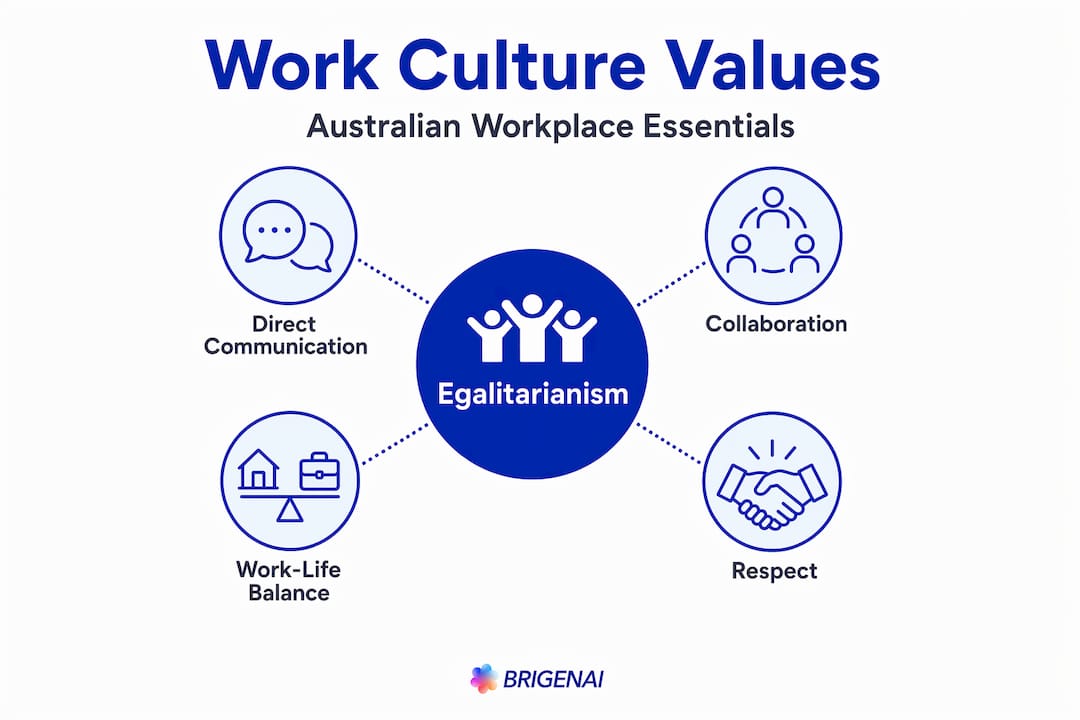
That said, do not mistake informality for a lack of accountability. Australian workplace values centre on respect, integrity, and individual responsibility. Showing up unprepared, missing your commitments, or taking credit for others’ work will damage your reputation quickly. Values-based leadership that models respect and accountability creates stronger trust and engagement across teams, and employees notice when leaders do not walk the talk.
The key points that define Australian workplace values include
“The flat structure is liberating, but it carries a responsibility. When everyone has a voice, you are expected to use it thoughtfully and constructively.” — common reflection from professionals transitioning into Australian workplaces
Pro Tip: When you join a new Australian team, introduce yourself informally, use first names, and ask genuine questions. Trying to be overly formal will actually make you stand out in a way that hinders connection.
Communication style and professional etiquette
Australian business communication style sits in an interesting middle ground. It is direct and friendly, which sounds simple until you realise that many cultures lean heavily one way or the other. Australians are comfortable with frank feedback and expect you to say what you mean. Hedging constantly or being overly deferential tends to read as evasiveness rather than politeness.
Emails follow this same pattern. You will rarely see “Dear Mr Smith” in a routine workplace message. “Hi Tom” is standard, and sign-offs like “Cheers” or “Thanks” are completely normal. Meetings are typically conversational, with space for informal chat before getting to business. This is not wasted time. It builds the rapport that makes collaboration function well. Professionals new to Australian offices sometimes rush past this and wonder why they feel excluded later.
Workplace humour deserves its own mention. Friendly banter serves as a social signal in Australian teams. Being able to give and take a light-hearted joke shows you are comfortable in the team. Common slang terms like “arvo” (afternoon), “arvo knock-off” (end of day), “no worries” (it is fine), and “reckon” (think/believe) will come up regularly and using them where natural helps you fit in.
Common pitfalls to watch for:
Pro Tip: If you are unsure whether a joke lands, observe first. Spend your first few weeks listening to the tone and style of banter in your specific team before jumping in.
Work-life balance and employee rights in Australia
The concept of work-life balance in Australia has been evolving into something more nuanced. The emerging idea is work-life integration, which recognises that work and personal life are not cleanly separate. Instead of a strict boundary between the two, integration allows people to manage their time with more flexibility and agency. Finish early on Tuesday, handle a personal commitment, and catch up later. The emphasis shifts to outcomes rather than hours logged.

The legal framework behind this is worth understanding before you start a role in Australia. Current employment law provides clear, enforceable protections:
EntitlementStandard provisionMaximum working week38 hours for full-time employeesAnnual leave4 weeks paid per yearPersonal and carer’s leave10 days paid per yearFlexible work requestsLegal right for eligible employeesRight to disconnectProtected under the Fair Work Act
The right to disconnect, introduced under the Fair Work Act provisions, is particularly significant. It means employees have a legal basis to not respond to work contact outside of agreed hours, and disputes can be escalated to the Fair Work Commission. This law reflects a cultural recognition that respecting personal time reduces burnout risk and improves long-term productivity.
The data on burnout makes this legislation feel urgent. Burnout affects up to 61% of Australian workers, exceeding the global average. And 76% of workers now prioritise mental health and work-life balance in career decisions, with 59% willing to accept lower wages in exchange for improved wellbeing conditions.
“The culture around wellbeing in Australian workplaces is shifting from a perk to a genuine expectation. Workers are making deliberate trade-offs and employers are responding.” — from work-life integration research, 2026
If you are working in Australia for the first time, understanding these entitlements upfront means you will not accidentally undervalue your own rights or overwork yourself out of cultural pressure.
Team collaboration and feedback culture
Collaboration is central to how Australian teams function. Cross-functional projects, shared accountability, and open contribution across departments are standard. You will rarely find a culture where one person owns a deliverable in isolation. Teams tend to be consultative, meaning input is genuinely sought before decisions are finalised, and people notice when contributions are dismissed without explanation.
Feedback culture is two-way and fairly regular. Most Australian employers use structured performance reviews and many organisations use 360-degree appraisal systems where peers and reports also provide input on your performance. Constructive feedback is given directly and received professionally. It is not personal. If you are not used to receiving candid feedback, this can take adjustment, but it is one of the most effective aspects of Australian workplace dynamics.
When it comes to interviews and self-presentation, Australian employers expect confident, concrete examples of your achievements. The STAR method (Situation, Task, Action, Result) is widely used and expected. What is different from some other cultures is the balance required. Australians value confidence but distrust arrogance. Walking into an interview and overstating your achievements or talking down to the interviewer will cost you the role.
Four soft skills that genuinely make the difference in Australian workplaces.
Pro Tip: When preparing for an Australian job interview, practise your STAR method examples out loud with a colleague or mentor. Modesty that reads as vagueness is a common mistake for candidates from cultures that value humility over self-promotion.
Practical tips for adapting to Australian workplaces
Knowing the theory of Australian work culture is useful. Applying it in your first few weeks is where it gets real. Here are the areas that trip people up most often, and how to handle them.
Pro Tip: If you are arriving from a work culture where asking questions is seen as showing weakness, reframe it. In Australian workplaces, asking for clarification is read as being thorough and engaged, not incompetent.
My honest take on adapting to Australian work culture
I have seen a lot of professionals struggle with the same thing when they first arrive. They assume informal means easy. They think that because everyone is friendly and the boss goes by their first name, the expectations must be lower. They are not. If anything, the informality makes accountability more visible, not less. There is nowhere to hide behind hierarchy or titles when the culture expects you to show up fully and contribute directly.
What I genuinely appreciate about Australian workplace values is the egalitarianism. It levels things out in a way that many high-context or hierarchical work cultures do not. A good idea from a new graduate gets heard the same way a good idea from a director does. That is rare and worth protecting when you find it.
The part that requires the most adjustment, in my experience, is the humour and directness combination. Australians can be blunt in a way that feels abrupt if you are not used to it, but they also soften a lot with humour. Learning to read that tone, to know when a direct comment is criticism and when it is just how someone speaks, takes time and patience.
My advice: invest in your relationships early, take your legal entitlements seriously, and do not confuse being casual with being complacent.
Ready to work in Australia? Brigenai can help
Making the transition into a new country’s work culture is genuinely complex, and the stakes are high when your career is involved. Brigenai is built specifically for professionals and students in your position, pulling together real workplace insights, employment guidance, and practical relocation support into one place.
Whether you need to understand your visa options, prepare for what Australian employers actually want, or simply get a clear picture of what life and work in Australia will look like day to day, Brigenai’s relocation services are designed to make that transition structured and clear. Students can also use the university matching tool to align their study pathway with real demand in the Australian job market. If you are mapping your move, start with the Australia destination guide to get an honest overview of salaries, costs, and workplace dynamics.
FAQ
What makes Australian work culture different from other countries?
Australian work culture combines a flat organisational structure, egalitarian values, and direct communication in a way that is genuinely distinctive. Unlike many cultures where hierarchy governs daily interactions, respect in Australia is earned through competence and behaviour rather than titles or seniority.
Is work-life balance in Australia really as good as its reputation suggests?
Australia has strong legal protections including a 38-hour workweek, four weeks of annual leave, and the right to disconnect under the Fair Work Act. However, burnout still affects up to 61% of Australian workers, which means knowing and using your entitlements matters as much as the laws themselves.
How should I handle professional etiquette in Australian workplaces?
Use first names, keep emails conversational, be direct but friendly, and do not shy away from light humour once you understand the team’s tone. Punctuality is treated as a mark of professionalism even when communication is informal.
What soft skills do Australian employers value most?
Australian employers consistently value clear communication, adaptability, self-awareness, and the ability to collaborate across teams. Confidence is expected in interviews and presentations, but it needs to be grounded in concrete examples rather than self-promotion without substance.
How do I adapt quickly to Australian work culture as a newcomer?
Observe the communication style and social norms in your specific team before mimicking them. Engage with workplace social activities, meet your commitments on time, ask questions openly, and take your legal entitlements without guilt. These four habits will accelerate your integration more than anything else.