
Top 10 pieces of best job advice
## 1. Prepare for interviews like it is a paid job
Most candidates underprepare. The research suggests you should plan for 3 to 5 hours of total preparation spread across multiple days, covering company research, role-specific preparation, and STAR story rehearsal. That is not excessive. That is what separates shortlisted candidates from offers.
## 2. Build your STAR stories before you need them
Interviews are essentially structured sales pitches. The best interview advice you can act on right now is to prepare 3 to 5 STAR stories mapped to the problems the employer is trying to solve, each ending with a clear takeaway. Practise them out loud until they sound natural, not rehearsed. Vague answers lose offers. Specific stories with outcomes win them.
## 3. Optimise your resume for 11 seconds
Hiring managers spend an average of 11 seconds on an initial resume scan. Before a human ever reads it, an AI system has already filtered it. Your resume needs to work on both levels. Use keywords from the job description, lead each bullet point with an outcome rather than a task, and remove anything that does not directly support your suitability for that role. Learning how to review your resume with AI tools before submitting is now a basic step, not an advanced one.

Pro Tip: Paste the job description into an AI tool alongside your resume and ask it to identify gaps. You will catch missing keywords and weak phrasing in minutes instead of hours.
## 4. Focus on transferable and meta-skills
Specific technical skills go out of date. Meta-skills, the ability to learn quickly, communicate clearly, manage your attention, and work well with others, compound in value over time. An A/B/Z career plan keeps you from over-investing in one narrow path: your ideal goal, a solid alternative, and a fallback plan. Review it every six months, not every five years.
## 5. Treat job searching as a sales process
Mass-applying to job boards is the equivalent of cold-calling strangers with no context. Generating leads through connections and demonstrating your ability through relevant work or visible output is far more effective. Think about who in your network is two steps closer to the role you want, and have a direct, specific conversation rather than a vague “catch-up.”
The numbers back this up. A significant proportion of roles are filled through referrals before they are advertised. If you are only applying to posted jobs, you are competing in the most crowded pool.
## 6. Seek mirror mentors, not just senior ones
This is one of the most underused pieces of guidance for job seekers. Mirror mentors, people who are two to five years ahead of you and share your interests and circumstances, shape early career trajectories more effectively than distant senior executives. They remember what you are going through. Their advice is actually applicable.
For graduates and career changers especially, finding someone who made a similar transition recently is worth more than a coffee with a C-suite leader who last hired entry-level staff a decade ago. Brigenai has covered alternative mentoring approaches in depth for exactly this reason.
## 7. Build resilience as a professional skill
Treating setbacks as learning opportunities and starting before you feel fully ready are behaviours that distinguish people who build careers from those who stall waiting for perfect conditions. This is not motivational filler. It is a pattern visible in the careers of people across industries.
Rejection from a role tells you something useful: about your positioning, your preparation, or the fit. Cataloguing that information and adjusting is what turns a discouraging search into a successful one.
## 8. Do not wait until you feel ready
Waiting for the “right moment” to apply, to negotiate, to pitch yourself for a stretch role is one of the most common ways capable professionals leave opportunity on the table. Resilience and starting before feeling ready are consistent themes in the career reflections of accomplished professionals across fields.
The role you feel 70% qualified for is often the one that accelerates your career the most. Apply anyway, and use the preparation process to close the gap.
## 9. Negotiate every offer, professionally
Most people accept the first number they are given. This is a significant career error. Negotiating compensation after an offer improves outcomes in the majority of cases, and rarely damages the relationship when handled professionally. Research market rates, frame your ask around the value you bring, and always express genuine enthusiasm for the role while making your request.
Even if salary movement is limited, you can often negotiate start dates, remote work flexibility, professional development budgets, or title adjustments. The offer is the beginning of a conversation, not the end of one.
## 10. Leverage continuous learning and internal mobility
Companies increasingly prioritise adaptability and internal mobility over tenure or static credentials. If you are already employed, do not overlook internal opportunities. A lateral move into a new team can build skills faster than staying comfortable for another two years. Actively signal your interest in stretch projects and new responsibilities.
A 1% improvement in career impact translates to roughly 800 extra hours of effective work over a career lifetime. That is the compounding argument for treating learning as a constant habit rather than a reaction to crisis.
Which advice suits your situation
Not every tip on this list carries equal weight depending on where you are in your career. This comparison table helps you prioritise.
AdviceGraduate or early careerExperienced professionalInternational job seekerSTAR story preparationHigh priorityHigh priorityHigh priorityResume keyword optimisationHigh priorityMedium priorityHigh priorityMirror mentoringVery high priorityMedium priorityHigh priorityInternal mobilityLow (no current role)Very high priorityMedium priorityOffer negotiationMedium priorityHigh priorityHigh priorityA/B/Z career planningHigh priorityHigh priorityVery high priorityNetwork-led job searchMedium priorityVery high priorityVery high priority
For international job seekers specifically, career change advice needs to factor in visa requirements, cultural workplace differences, and how credentials translate across borders. Tools like AI-powered job matching take much of the guesswork out of aligning your skills to in-demand roles in new markets.
Tailoring this advice to your circumstances
Generic advice collapses fast when applied to real situations. Here is how to adapt the core tips above to specific contexts.
If you are pursuing international employment, start by understanding how your current skills map to visa-eligible occupations in your target country. Salary expectations and hiring norms vary significantly between markets like Australia, Singapore, and New Zealand. Knowing how to network effectively within those markets means building connections before you arrive, not after.
If you are changing careers, treat every piece of relevant voluntary, freelance, or side work as direct evidence of your new direction. Hiring managers in a new industry cannot read into your old job titles. Show the output.
If you are in a fast-changing industry affected by AI, the meta-skills tip becomes your most important investment. Technical skills in AI-adjacent roles have a shorter shelf life than in most fields. Pair specific capability with strong communication and project skills to stay relevant through multiple waves of change.
If you are a first-time job seeker, prioritise the career copilot tools that help you understand which skills and roles match your profile before you start applying. Starting with clarity saves months of misaligned effort.
Pro Tip: If you are moving internationally for work, do not underestimate cultural context. How you present yourself in an Australian interview differs meaningfully from how you would in Singapore or Taiwan. Research workplace norms in your target market the same way you would research the company itself.
My honest take on career advice in 2026
I have spent a long time reading, writing about, and observing how careers actually develop. And if I am being straight with you, the biggest gap I see is not in the quality of advice available. It is in people’s willingness to act on things that feel uncomfortable before they feel ready.
The mirror mentor insight is the one I come back to most often. I have seen graduates dismiss it because they think they need the most impressive contact in the room. They do not. They need someone who remembers what starting out actually feels like and can give them a map that is less than five years old.
On AI and hiring: the candidates winning in this environment are not the most credentialed. They are the ones who understand how to position their experience clearly, both for systems and for humans. That is a learnable skill, not a talent.
The “follow your passion” advice bothers me more than most. Passion is real, but it is a terrible north star on its own. I believe in finding the overlap between what genuinely interests you, what the market values, and what you can actually get good at. That overlap is where careers with staying power are built.
Resilience is not a personality trait. It is a practised response to difficulty. Every professional who has navigated a career setback and come out stronger did so by treating the experience as data rather than verdict. That reframe is available to everyone.
Start your career move with the right tools
If the advice above has clarified what to work on, the next step is having the right resources to act on it. Brigenai is built specifically for professionals and graduates navigating international careers, combining real-world insights, AI-powered matching, and practical tools to take you from clarity to action.
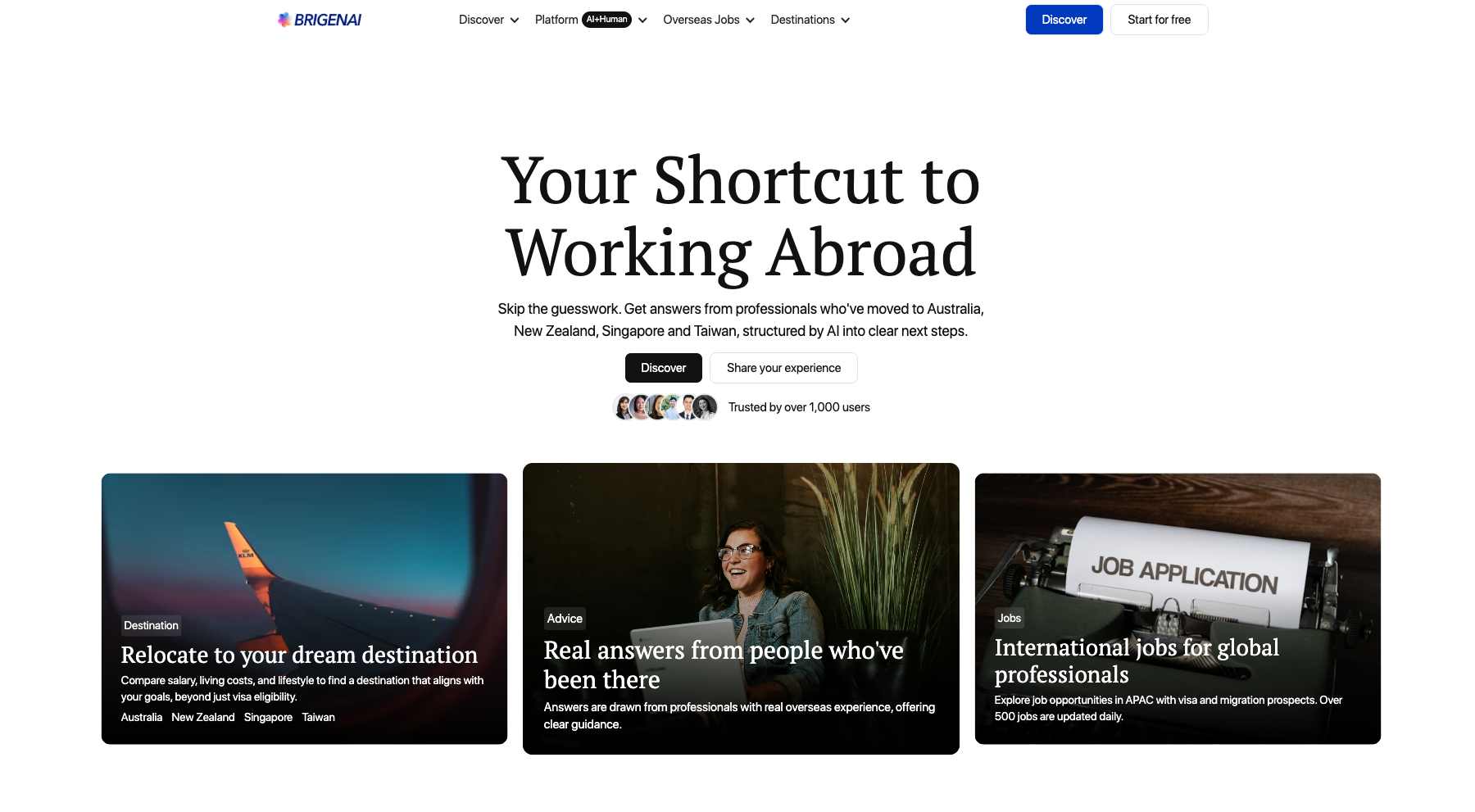
Whether you are assessing in-demand roles using the skills list for ANZ visas, working through relocation logistics with the international relocation checklist, or exploring AI tools that match your skills to curated global opportunities, Brigenai organises everything in one place. The platform is designed to make the complex parts of international career moves genuinely manageable, based on real experiences from people who have done it before you.
FAQ
What is the single most important piece of job advice?
Prepare specifically, not generally. Research the company, map your STAR stories to their actual problems, and tailor your resume to the role. Broad preparation rarely converts to offers.
How do I make my resume pass AI screening?
Use keywords directly from the job description, lead each point with a measurable outcome, and run your resume through an AI review tool before submitting. Hiring managers spend 11 seconds on a resume, so structure and clarity carry enormous weight.
How do I network effectively as an international job seeker?
Start before you relocate by connecting with professionals in your target market on LinkedIn and through industry communities. Prioritise specific, value-led conversations over generic outreach, and look for mirror mentors who have made a similar cross-border move.
Should I negotiate my job offer?
Yes, almost always. Negotiating after an offer improves outcomes in most cases and rarely damages your prospects when handled professionally. Research market rates beforehand and frame your request around the value you bring.
What career advice is different for career changers?
Focus on demonstrating output in your new direction before you have the formal title. Freelance work, visible projects, and direct evidence of capability matter far more than credentials when you are crossing industries. Pair that with a clear narrative about why the change makes sense.