
A career transition is defined as the deliberate process of moving from one professional role, industry, or country to another using transferable skills, targeted upskilling, and strategic positioning. This career transition guide 2026 is built for professionals who are not just changing jobs but changing contexts, including the country, the culture, and the expectations that come with it. Professionals average 3 to 4 career changes in their lifetime, and in 2026, skill-based hiring places 70 to 80% weight on verifiable competencies over job titles. That shift makes an international move more achievable than ever, provided you plan it correctly.
What does a career transition guide 2026 actually cover?
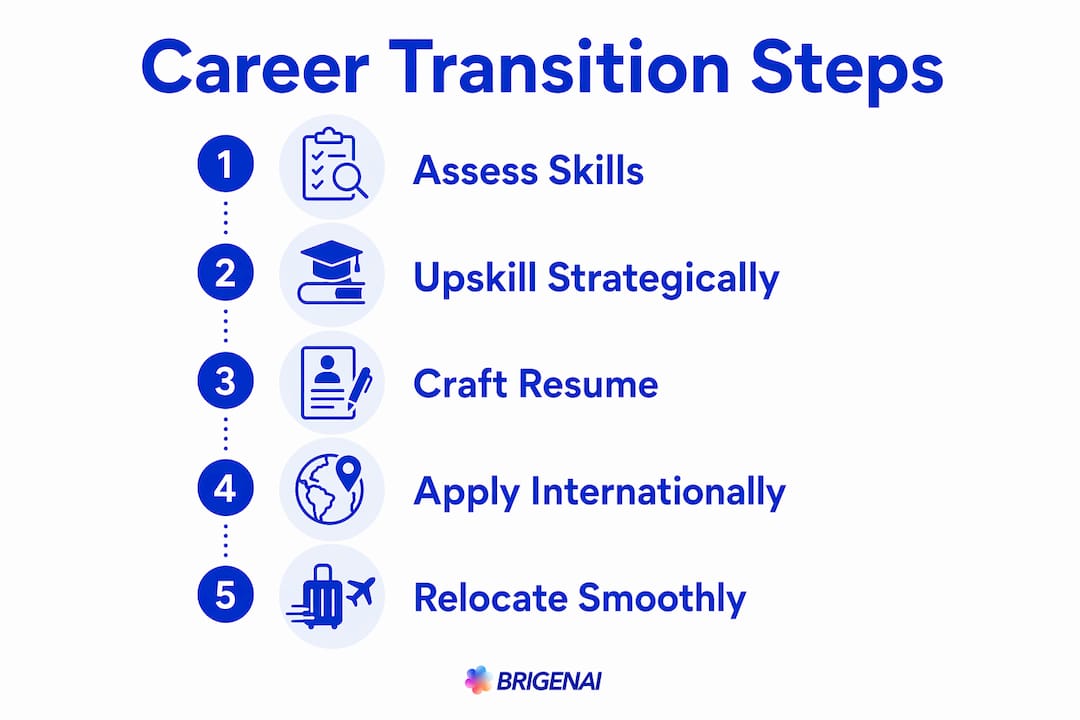
The term “career transition” is used loosely, but the recognised industry framework treats it as a multi-stage project: skills audit, upskilling, positioning, job search, and relocation. Each stage compounds on the last. Skip the skills audit and your resume will not survive an applicant tracking system. Skip the relocation planning and you will arrive in Sydney or Singapore without a realistic budget. This guide covers all five stages with specific tools, frameworks, and cultural considerations for professionals targeting Australia, New Zealand, Singapore, and Taiwan.
The 2026 job market trends that matter most for international movers are skills-based hiring, AI-assisted recruitment, and the continued growth of occupational shortage lists in countries like Australia and New Zealand. These lists directly determine which visa pathways are open to you. Understanding them before you apply for anything is the difference between a six-month transition and a two-year one.

How do you audit your skills for an international role?
The skills audit is the foundation of any effective job change roadmap 2026. Without it, you are guessing at your own value in a foreign market.
Start with a structured process:
Pinpointing two to three essential skills during a transition is more effective than attempting to close every gap simultaneously. That finding should change how you approach the next six months. Focus beats breadth every time.
Pro Tip: Run your current resume through SkillSyncer before you write a single new word. The gap report it generates is more honest than any self-assessment.
Which upskilling path gives you the best return?
Certificate-based reskilling costs between $500 and $3,000, while a degree-based transition can cost $15,000 to $90,000 or more. For most professionals targeting international roles in 2026, the certificate route wins on both speed and cost, provided you choose credentials that are recognised in your target market.
The platforms worth your time and money are:
PlatformCost rangeTime to completeBest forCoursera$50–$400/month3–6 monthsBusiness, data, techUdacity$400–$1,500 total3–4 monthsAI, cloud, productKhan AcademyFreeFlexibleFoundational skills
Portfolio projects matter as much as the credential itself. A data analyst who completes a Coursera certificate and publishes three real-world analysis projects on GitHub is significantly more employable than one who holds the certificate alone. Global employers in 2026 want evidence of application, not just completion.
Pro Tip: Before enrolling in any programme, check whether the credential appears on job descriptions in your target country. If it does not appear in at least three listings, choose a different one.
Balancing multiple credentials is a common mistake. Career experts recommend treating a career change as a repeatable, cyclical system rather than a single event. That means completing one credential, testing it in the market with freelance or contract work, then deciding whether to add another. Sequential beats simultaneous.
How do you write a resume that works across borders?
Effective career changers use a combination resume format that front-loads transferable skills while maintaining a clear chronological employment history. This structure satisfies both ATS systems and human recruiters, which is critical when you are applying from overseas and cannot rely on a local referral to get your application read.
The process for building an international resume looks like this:
The combination resume format also protects you from the most common ATS failure point: sparse keyword density in the work history section. By placing skills upfront, you clear the automated filter before a human ever reads your timeline.
How do you search for and land international roles?
The international job search requires a different approach to the domestic one. You are competing with local candidates who already have the right to work, the right network, and the right postcode. Your edge is specialisation and preparation.
Pro Tip: Record yourself answering behavioural questions on video before your first international interview. The gap between how you think you sound and how you actually sound is almost always larger than expected.
AI tools that map skills, curate learning paths, and rehearse interviews can compress a career switch to three to nine months. That is a meaningful reduction from the traditional twelve to eighteen month timeline, and it is achievable without quitting your current role before you have an offer.
For a broader view of which AI platforms are worth your time, Brigenai’s guide to AI career planning tools covers the most useful options available in 2026.
What does international relocation actually require?
International relocation planning must cover visa eligibility, cost of living, and cultural adaptation as a connected set of decisions, not separate checklists. Getting the visa right but underestimating Sydney’s cost of living is a common and expensive mistake.
The comparison below covers the four markets Brigenai specialises in:
DestinationVisa pathwayAverage monthly rent (1BR city)Workplace culture styleAustraliaSkilled Independent (189), Employer Sponsored (482)AUD $2,200–$2,800Direct, informal, flat hierarchyNew ZealandSkilled Migrant CategoryNZD $1,800–$2,400Collaborative, relaxed, consensus-drivenSingaporeEmployment Pass, S PassSGD $2,500–$3,500Formal, hierarchical, performance-focusedTaiwanEmployment Gold CardTWD $25,000–$40,000Relationship-driven, long-term oriented
Building a financial runway of three to six months before relocating reduces the pressure to accept the first offer you receive. That financial buffer also gives you time to test the market through freelance or contract work, which is one of the most effective ways to build a local reputation before committing to a permanent role.
Cultural adaptation is not a soft skill. It is a professional requirement. Professionals who bridge into similar roles within growing industries before switching functions entirely report faster integration and higher satisfaction. If you are a project manager moving from construction to technology in Singapore, start with a technology-adjacent project management role rather than jumping straight into a product management position.
How Brigenai supports your international career move
Brigenai is built specifically for professionals doing exactly what this article describes: moving careers and countries at the same time.
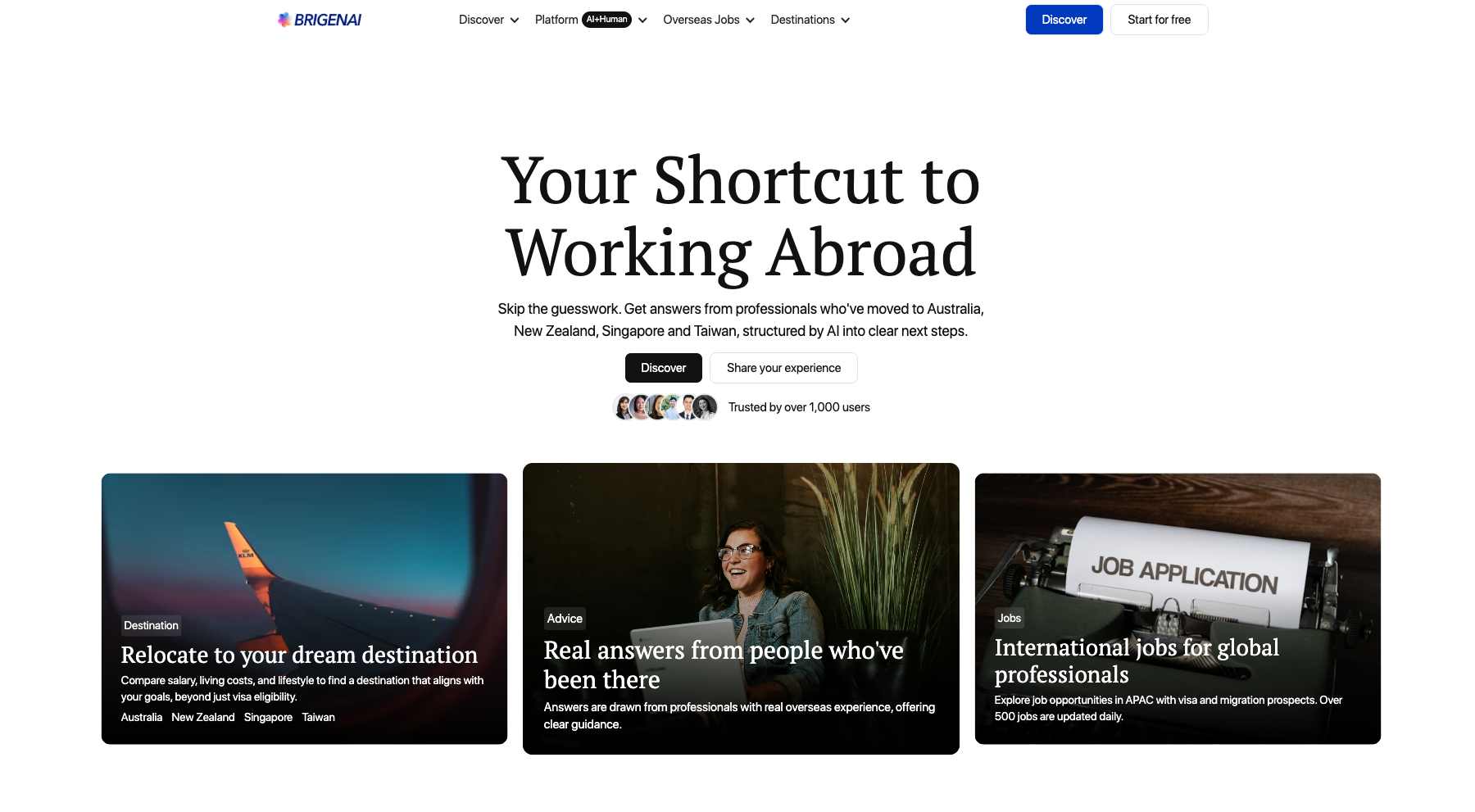
The platform gives you three tools that directly address the hardest parts of an international transition. The Australia and New Zealand skills list maps your occupation against current visa shortage lists, so you know your eligibility before you spend months preparing an application. The international relocation checklist organises every practical step from lease agreements to bank accounts across key destinations. The AI-powered job match tool connects your skills profile with live opportunities in Australia, New Zealand, Singapore, and Taiwan, filtered by visa compatibility and salary benchmarks drawn from real community experience. For professionals who want a broader view of how AI is reshaping international careers, Brigenai’s international career AI guide is the right starting point.
FAQ
How long does a career transition take in 2026?
The typical timeline for a mid-skill career pivot is four to six months using AI tools, and nine to twelve months for highly technical fields. International relocation adds two to four months for visa processing, depending on the destination.
What is the most cost-effective way to reskill for a new industry?
Certificate-based reskilling through platforms like Coursera or Udacity costs between $500 and $3,000, compared to $15,000 or more for a degree programme. Most employers in 2026 weight demonstrated skills over formal qualifications, making the certificate route both faster and more affordable.
Do I need a different resume for international applications?
Yes. Resume conventions differ significantly across markets. Australian employers expect two to three pages with a professional summary, while Singaporean employers often expect a photo and detailed skills section. Using a combination resume format with transferable skills front-loaded satisfies both ATS systems and cultural expectations across most markets.
How do I know if my occupation qualifies for an Australian or New Zealand visa?
Australia and New Zealand publish official skilled occupation lists that are updated regularly. Brigenai’s skills list tool maps your occupation against current visa pathways so you can confirm eligibility before committing to the application process.
What is the biggest mistake professionals make when changing careers internationally?
The most common mistake is skipping the financial runway. A buffer of three to six months of living expenses gives you the time to find the right role rather than the first available one, which is especially important when you are new to a market and building your local reputation from scratch.