

Finding career meaning abroad: the orientation framework
Before you update your LinkedIn profile with a new time zone, it helps to understand why some people thrive internationally while others feel hollow despite impressive titles. Research on how people relate to work identifies three distinct orientations: job, career, and calling. Roughly one third of workers fall into each category, and the distribution appears across income levels and professions, which means your orientation is not about what you earn or what sector you work in.
A job orientation means work is primarily a means to financial security or personal time. A career orientation means work is a vehicle for advancement, status, and achievement. A calling orientation means work is inseparable from identity and contribution. People with calling orientation report greater persistence and satisfaction and tend to build more resilient international careers because their motivation is not tied to external circumstances like salary brackets or job titles.
The practical implication is significant. If you are currently in a job orientation and you move abroad expecting the location to shift you into calling orientation, you will almost certainly be disappointed. The geography changes; the orientation does not, unless you work on it deliberately.
The craftsman mindset in international careers
One approach worth adopting is what some career researchers call the Craftsman Mindset: instead of waiting to find a role that feels like a calling, you build rare and valuable skills until the work itself begins to feel that way. Applied internationally, this means choosing destinations and roles where you can genuinely deepen your expertise, not just add passport stamps. Ask yourself honestly: does this role abroad let me get significantly better at something I care about? If the answer is no, the location is doing little for your career meaning.

Pro Tip: Before committing to any international opportunity, write down which of the three orientations currently describes your relationship with work. Then write down which orientation you are actively trying to build. The gap between those two answers is your development plan.
Your international job search, stage by stage
A purposeful career change overseas requires structure, not spontaneity. The professionals who land meaningful roles abroad tend to follow a deliberate sequence.
Pro Tip: Set a calendar reminder six months before your intended start date to begin the visa process. Many candidates lose genuine offers because immigration timelines catch them off guard.
Cultural intelligence: the competency nobody mentions
Technical skills get you shortlisted. Cultural intelligence (CQ) determines whether you thrive or quietly struggle once you are in the role. CQ has three measurable components: cognitive (understanding cultural norms and systems), motivational (genuine drive to engage across difference), and behavioural (adjusting your communication and conduct in real time). Research consistently shows that CQ predicts expatriate effectiveness better than qualifications alone.
Here is what building CQ actually looks like in practice:
“Successful expats build psychological flexibility and regulate identity stress to sustain career meaning abroad.” — Research on expatriate success
Before you relocate, write a purpose narrative. Not a company mission statement. Your own. Articulate at least three distinct reasons why this move matters to you, whether that is career exposure, skill acceleration, cultural adventure, or proximity to family. Multiple valid reasons guard against the discouragement that hits when one of those reasons temporarily disappears.
Pro Tip: Treat your first 90 days abroad like an anthropologist on field research. Suspend evaluation and focus on observation. You will understand the culture and the workplace far better by month four than if you spent those three months comparing everything to home.
Your job abroad is not your whole purpose
Here is an uncomfortable truth that few international career articles will say directly: your employer is not responsible for your sense of meaning at work. Expecting any organisation, regardless of how inspiring its mission might sound, to supply your personal sense of purpose is a recipe for disempowerment. This is true domestically and it is amplified when you are overseas, far from your established support networks.
The healthier mental model is this: your job serves your purpose, not the other way around. That distinction changes how you evaluate roles, how you respond to organisational changes, and how you sustain motivation when work gets difficult.
Some practical ways to maintain personal agency in finding fulfillment abroad:
“Expecting a singular organisational mission to provide universal meaning is unrealistic. Personal agency is the foundation of sustained career satisfaction.” — HR Leader
The professionals who report the deepest purpose-driven work abroad are almost always those who arrived with a clear personal why and used the international experience to test and refine it, rather than those who hoped the experience itself would provide one.
Structured pathways to meaningful international careers
Not every meaningful international career is built from scratch. There are structured pathways that embed purpose into the role by design, and they are worth knowing about.
PathwayWhat it offersKey considerationForeign Service OfficerPolicy, diplomacy, and development roles across 270+ embassies and consulates globallyCompetitive selection; strong family support structuresForeign Service SpecialistTechnical and administrative roles supporting diplomatic missions worldwideMore accessible entry points; broad skill categoriesStudy-to-work abroadDegree or postgraduate study that counts toward residency in countries like Australia and New ZealandMust begin employment pursuit before graduation; timing is criticalSkilled migrationAligning your occupation with visa occupation lists in target countriesOccupation and qualification recognition varies significantly
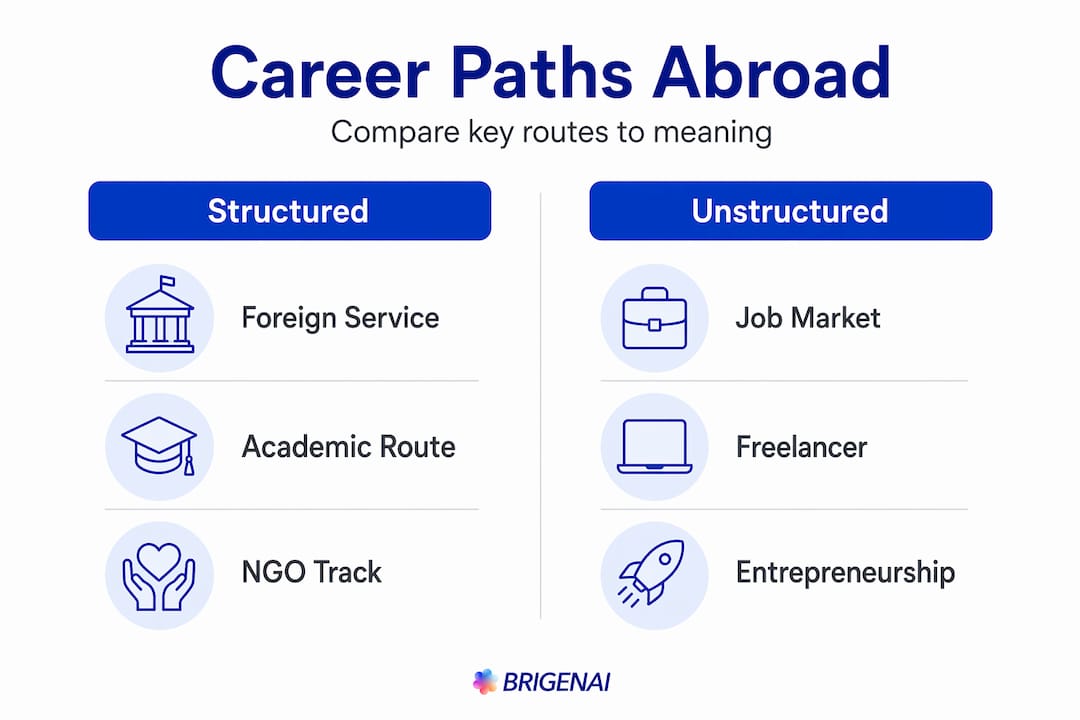
The education-to-employment pathway deserves particular attention. In several countries, time spent studying at a recognised institution contributes toward permanent residency eligibility. The critical mistake most candidates make is applying for jobs after graduation rather than building employer relationships from day one of their programme. If you are considering this route, your career strategy should begin the same week your study does, not the week your final exam ends. Explore career pathways for moving abroad to understand which options best match your background and goals.
My perspective: meaning is built, not found
I want to be direct about something that took me longer to understand than I would like to admit. For years I operated on the assumption that the right international role, in the right city, with the right company, would eventually produce a sense of career meaning. What I found instead is that meaning is something you construct through deliberate choices and honest self-examination. The location accelerates or complicates that process. It does not create it.
What genuinely changed my international career trajectory was developing cultural intelligence, not as a soft skill to list on a resume, but as a daily practice of curiosity about why people in different workplaces behave the way they do. Once I stopped experiencing cultural differences as friction and started treating them as information, my performance improved and, more importantly, so did my satisfaction with the work itself.
I have also learned to be sceptical of the idea that you need a grand, singular purpose before making an international move. In my experience, that framing paralyses more people than it helps. What works better is small experiments: one informational interview with someone already doing what you want to do, one application to a role that scares you slightly, one month in a city you are considering. Career path clarity comes from action, not from extended deliberation. Move. Observe. Adjust.
How Brigenai helps you design your move
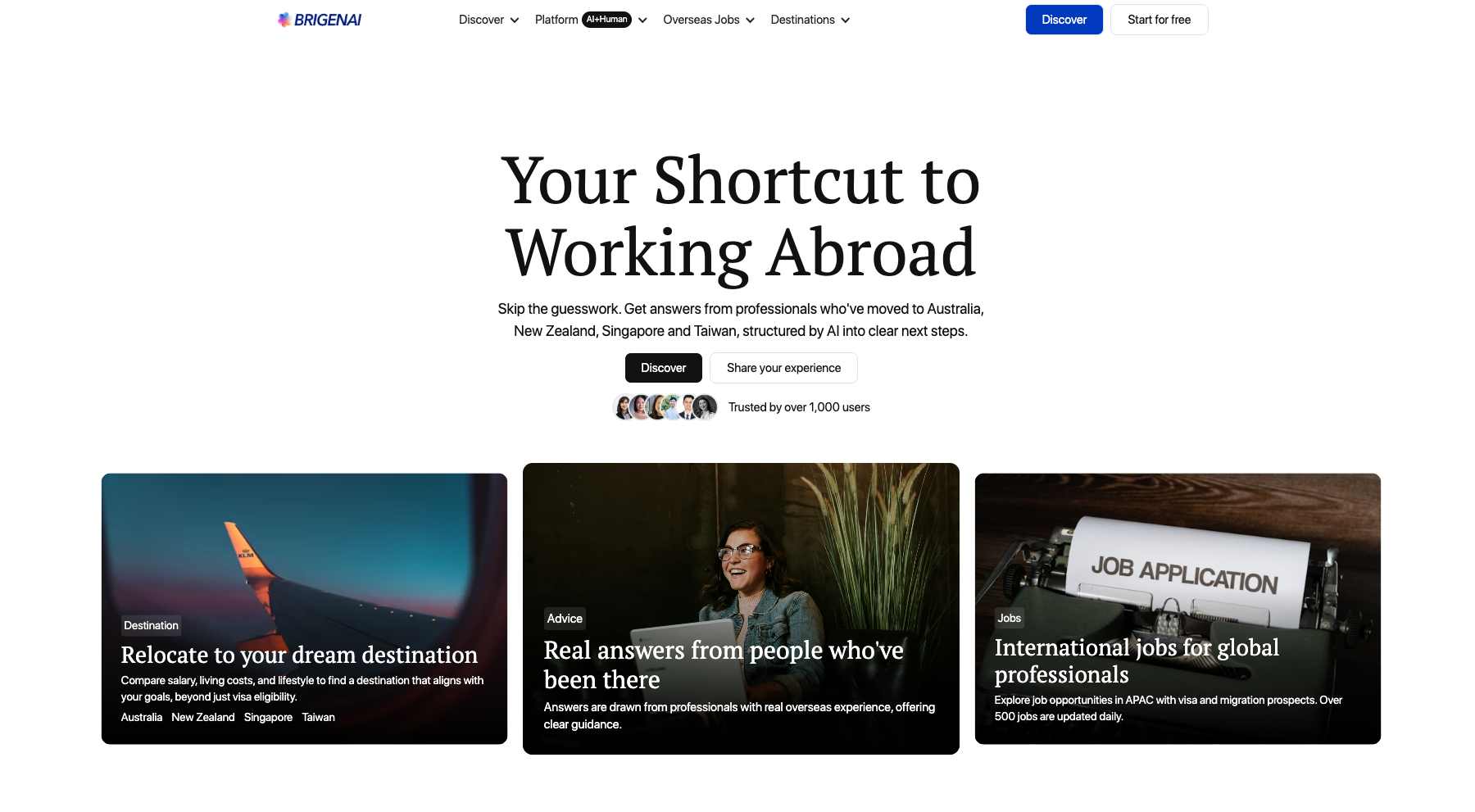
Brigenai is built specifically for professionals who want more than a list of overseas job ads. If you are serious about international career exploration, start with the Australia and New Zealand skills lists to confirm whether your occupation is eligible for skilled migration before you invest months in a search. For engineers, Brigenai’s engineering jobs overseas section combines curated opportunities with immigration pathways so you are not piecing together information from five different sources. Use the AI-powered job match analyser to understand how your current skills align with international roles, and the international relocation checklist to plan your move without missing the steps that matter most. Purposeful international careers require good intelligence. Brigenai puts it in one place.
FAQ
What does finding career meaning abroad actually involve?
Finding career meaning abroad means deliberately aligning your work orientation, cultural intelligence, and job search strategy to build a role that connects with your values, not just your qualifications. It is an active process, not a passive outcome of relocating.
How do I know if I have a calling orientation to work?
People with a calling orientation feel that their work contributes meaningfully to something beyond themselves and would likely continue doing it even without financial pressure. Research suggests roughly one third of workers operate from this orientation, and it can be developed through deliberate skill-building and role design.
How important is cultural adaptation for career success overseas?
Extremely important. Cultural intelligence predicts expatriate effectiveness more reliably than qualifications alone, covering your ability to understand, engage with, and adapt to different workplace norms and communication styles.
Should I study abroad to improve my chances of working overseas permanently?
Studying abroad can be a strong pathway to permanent residency in countries like Australia and New Zealand, where education time may count toward eligibility. The key is to begin your job search well before graduation, not after it.
How do I maintain a sense of purpose when working in a challenging international role?
Build a personal purpose narrative before you relocate, with multiple specific reasons the move matters to you. Research on expat success shows that articulating varied motivations, from growth to adventure to community, provides resilience when any single motivation becomes difficult.