

Maybe it crept up on you slowly, a semester of dragging yourself to class, grades that used to come easy now just okay. Or maybe it hit all at once, sitting in a lecture and suddenly thinking, wait, do I actually want to do this for a living? Either way, you're not being dramatic, and you're definitely not alone. A lot of students land somewhere around their second year and realize the major they picked at eighteen doesn't feel like them anymore.
Here's the hard part, though. Knowing you're unhappy doesn't tell you what to do next. Switch majors? Stick it out and figure out the career piece later? Change how you're studying instead of what you're studying? "I don't like this" is a real feeling, but it isn't a plan. So let's turn it into one.
First, figure out what you're actually reacting to
When someone says "I hate my major," it's tempting to assume the whole field is wrong for them. But if you sit with it for a minute, the dislike usually traces back to one of a few different things, and they don't call for the same fix.
Sometimes it's the material itself. You're in accounting, say, and it's not business you're bored by, it's the spreadsheets and the reporting. That's often a sign you picked the wrong lane within a field, not the wrong field entirely.

Sometimes it's how you're being taught. A program that's all theory and no hands-on work (or the other way around) can make even a subject you'd otherwise like feel like a slog. That's fixable without switching majors at all, sometimes just by switching programs or professors.
Sometimes it's the future you can't picture. You look up job listings, see thin postings and low pay, and quietly lose faith in where this is headed, even though the coursework itself is fine. That's a labor market problem, not a passion problem, and it deserves a different kind of research.
And sometimes, honestly, it's just life. Stress, a rough semester, family stuff, burnout. It's easy to blame the major for exhaustion that has nothing to do with it.
None of these are wrong reasons to feel stuck. But they lead to very different next steps, so it's worth being honest with yourself about which one (or combination) is actually going on before you do anything else.
Ask yourself these three questions before you decide anything
Once you've got a clearer read on what's bothering you, sit with these for a bit instead of reacting on impulse.
What would I actually want to learn if getting a job weren't part of the equation? Not what sounds impressive, what you find yourself reading about or watching videos on even when nobody's making you. That's usually a more honest signal than whatever's trending on a "best majors" list.
What am I good at that could realistically become a career? Interest and ability don't always overlap, but the choices that hold up long term tend to live where they do.
And the one people skip most, because it's the least fun to think about: can I actually get hired in this field a few years from now? So much of "this major is great" or "this major is a dead end" is just secondhand impressions, not real research into visa rules, hiring demand, or actual salaries.

Trade word of mouth for real numbers
This is where most people go wrong, honestly. Major decisions get made on vibes. Someone heard tech is always hiring. Someone else heard finance pays well. Someone's cousin regrets studying X. None of that is really data, and a lot of it is out of date the moment you hear it.
It gets even trickier if studying abroad, working overseas, or eventually relocating is part of your plan, which for a lot of readers here, it is. Visa rules, which employers actually sponsor international hires, realistic starting pay, all of that shifts a lot by country and by field. A generic "top majors" ranking pulled from a domestic context won't tell you much about any of it.
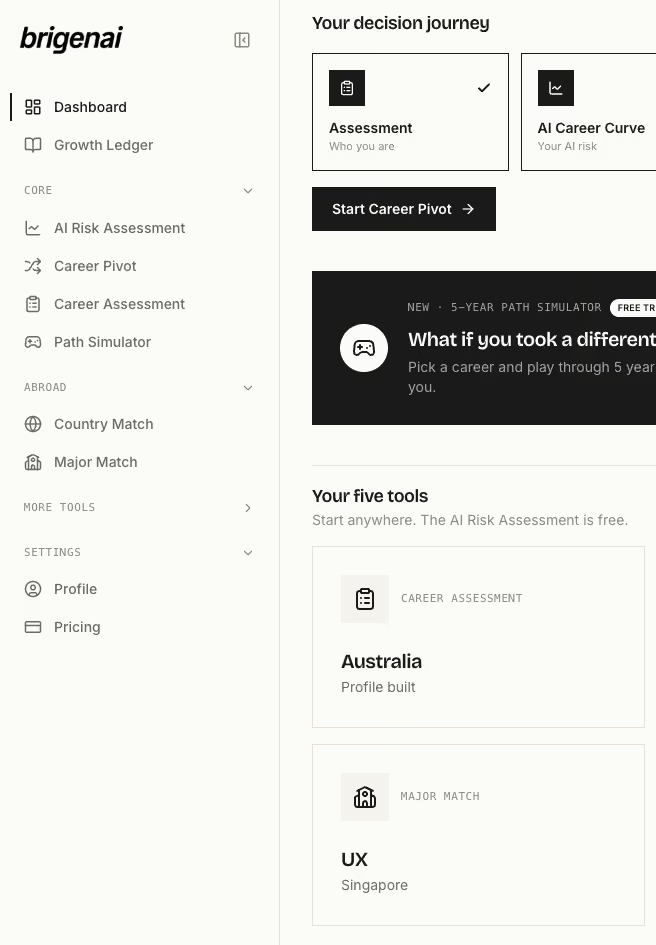
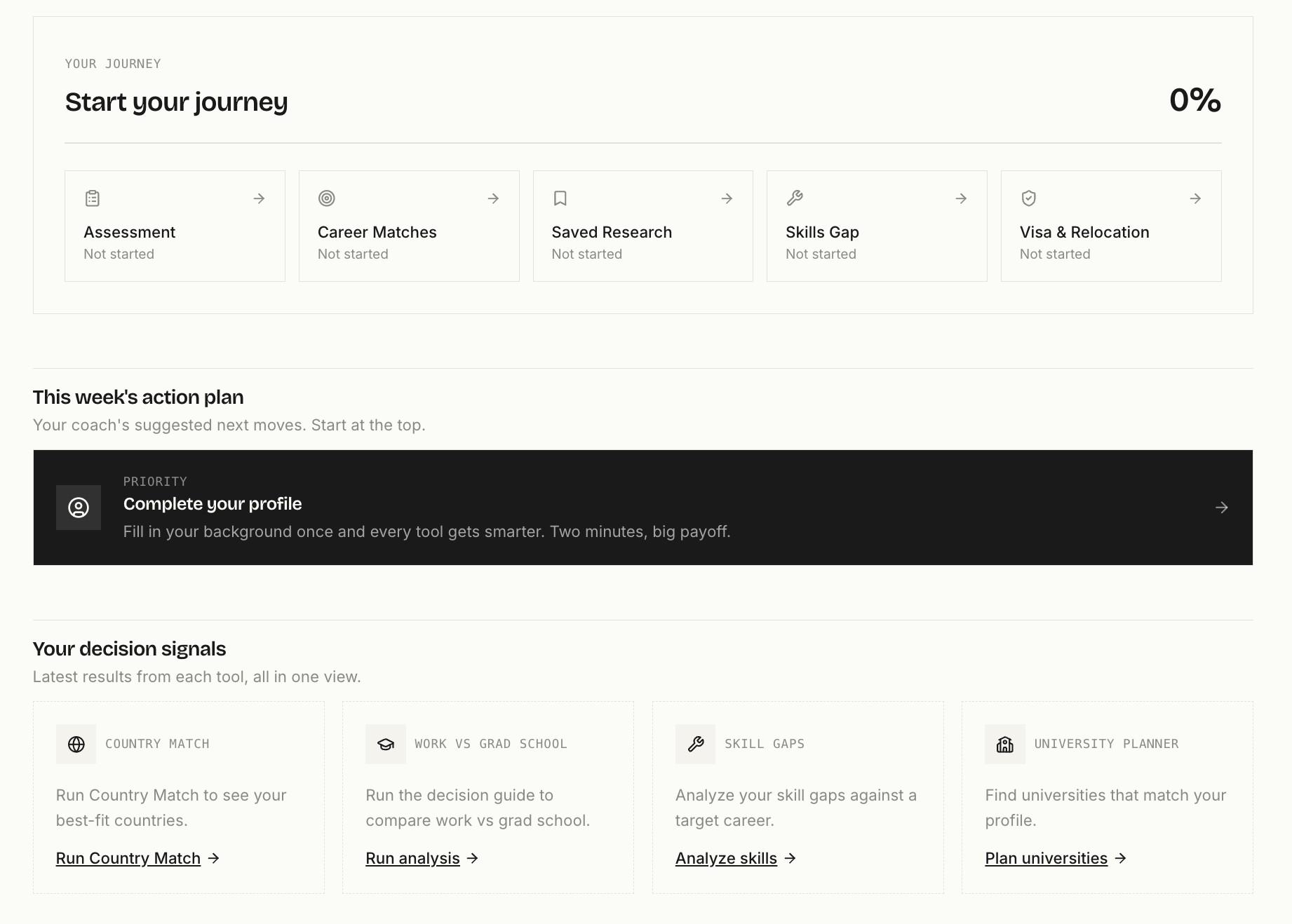
This is honestly the part I'd stop guessing on. brigenai's free Career Assessment looks at your background, interests, and goals and matches them to major and country combinations that are actually realistic, not a personality quiz, more of a feasibility check built on real visa pathways and job market data. And if you haven't even landed on a country or program yet, Find Your Dream Country and Choose Your Dream University can help narrow a huge, overwhelming list down to a few options you can actually sit down and compare.
Pick the path that costs you the least right now
Getting clearer on direction doesn't mean you have to march into the registrar's office tomorrow. What makes sense really depends on where you are in your degree.
If your school allows it and you're genuinely sure about the new direction, switching majors outright is the most direct route, just check first how many credits carry over and whether it pushes back your graduation.
If you're not ready to fully let go of your current major, a minor or some electives outside your department is a lower stakes way to test the waters, and it still adds something real to your resume.
If you're already a junior or senior, switching might cost more in time and money than it's worth. In that case, a lot of "my major doesn't match what I want to do" problems get solved through internships, side projects, certifications, or just teaching yourself the parts your coursework doesn't cover.
And if changing majors at home feels limited, studying abroad is honestly one of the cheaper ways to reset your direction, especially for coursework based master's programs, many of which are more flexible about what your undergrad degree was in than you'd expect.
Which of these fits depends on your year, your budget, your timeline, and how sure you actually are about the new direction's job prospects, which loops right back to doing that homework instead of skipping it.
The part worth remembering
Not liking your major right now doesn't mean you gave up too easily or didn't try hard enough. It usually just means it's time to check whether who you are, what you're good at, and what the world actually needs still line up the way they did when you were seventeen picking a major off a list. Instead of looping the same anxious thoughts, give yourself fifteen minutes to swap gut feeling for real information, and turn "I don't like this" into something you can actually act on.
If you're still not sure where to start, brigenai's free Career Assessment is a reasonable first move, or take a look through the rest of the free tools at the brigenai Tools hub for studying, working, and relocating abroad. Everything's free, nothing requires signing up, and you'll walk away with a direction grounded in something more solid than a feeling.