

Rahul, a 32‑year‑old software engineer in India, keeps a browser tab open with Sydney jobs every night. Sarah, a nurse in the UK, scrolls through Australian hospital roles during her commute. Both see huge opportunity, but the same questions keep circling: Which visa fits me? Do employers really sponsor? How long will this take?
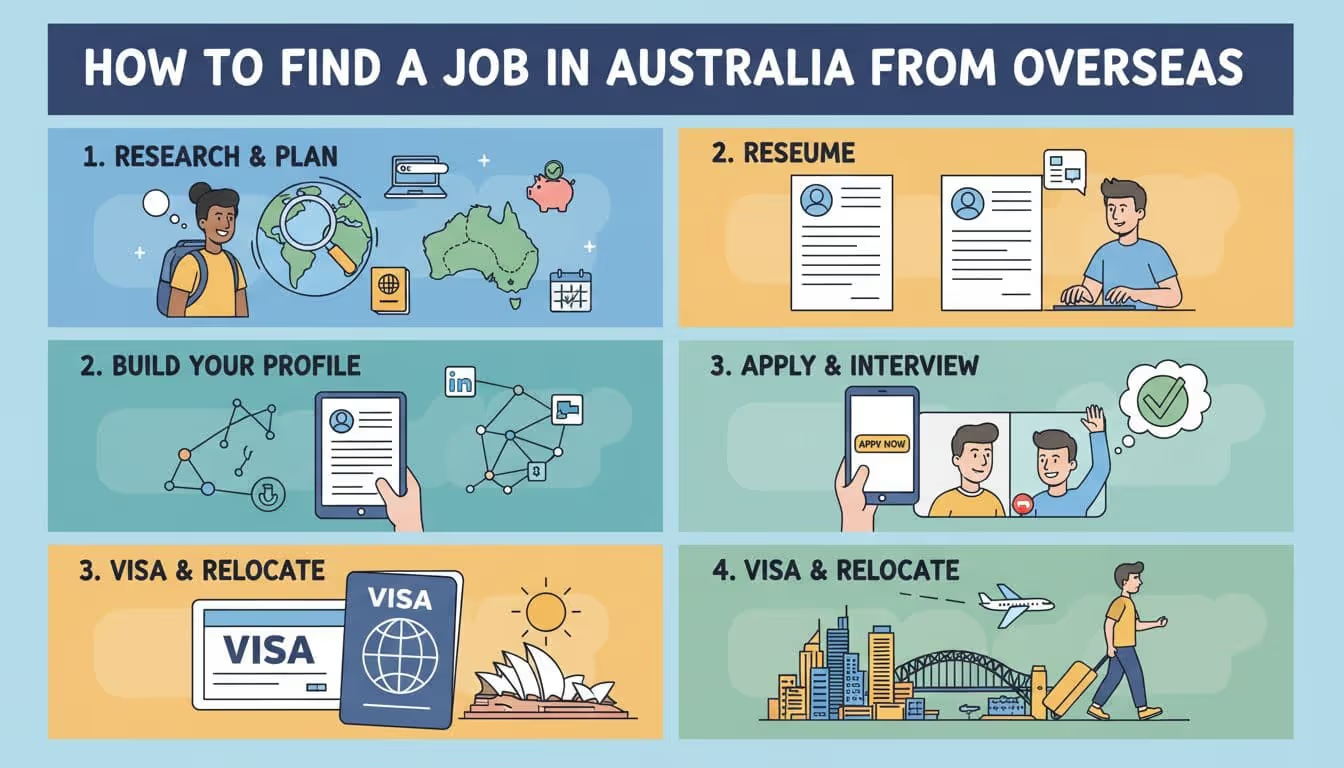
If you recognize yourself in that story, you are not alone. Finding International Jobs and Relocation Jobs in Australia is possible, but it is rarely quick. From first research to a signed offer, expect at least 3 to 6 months, and for many people it stretches closer to a year.
This guide is for skilled professionals with roughly 2 to 10 years of experience, good English, and a serious interest in Australia Jobs, with or without sponsorship. You will get a clear roadmap, starting with visa options, then skills checks, Australian‑style resumes and cover letters, smart remote job search, networking, and a simple action plan.
For deeper background on life and work in Australia, you can explore a full relocation guide such as the BRIGENAI destination Australia guide and also browse targeted relocation roles on specialist sites such as the BRIGENAI Australia relocation job boards.
Start With Visa Eligibility Before You Apply for Australia Jobs
Visa planning comes before job applications. If you skip this step, you risk applying for roles that can never lead to a visa, or you may miss better options that do not even need a job offer.
Your goal is simple: work out whether you should focus on sponsorship, skilled migration, or short‑term options like a working holiday.
Some visa pathways need a job offer. Others let you apply on your own, then use your visa status as a selling point in the job market. Knowing which group you are in shapes every part of your search.
Know the Main Visa Pathways for Skilled Workers
For most mid‑career professionals, three paths come up again and again:
1. Skilled independent or state‑nominated visas (subclass 189 and 190)
These are points‑tested visas. Age, English level, occupation, and experience all count. You do not need a job offer first. They suit people in high‑demand occupations who score well on points and want long‑term plans in Australia.
2. Employer‑sponsored visas (subclass 482 and 186)
Here, an Australian company sponsors you. The Temporary Skill Shortage visa (482) allows you to work for that employer in a listed occupation, often with a path to permanent residency via the 186 visa. These visas are common in healthcare, IT, engineering, and trades.
3. Working Holiday visas
If you are under 30 or 35 (depending on your passport), a working holiday visa can give you 1 to 3 years in Australia with work rights. It is popular for hospitality, seasonal work, and entry‑level roles, and sometimes serves as a bridge to skilled visas later.
For current details, always check official sources like the Department of Home Affairs site (immi.gov.au) rather than social media advice.
Check the Skilled Occupation Lists and Basic Requirements
Australia runs on skilled occupation lists. These lists show which jobs are in demand and which visa types they link to.
Your first task is to confirm that your occupation, for example registered nurse, software engineer, or electrician, appears on one of the Skilled Occupation Lists on the Home Affairs site. If it does not, classic skilled visas may not be open to you, and you will probably need employer sponsorship or a different strategy.
Many skilled visas share similar baseline requirements:
- An English test such as IELTS, PTE, or TOEFL at a set level
- Age limits, often under 45 at the time of invitation
- Health checks
- No major criminal record
Checking these early helps you see if Australia is realistic for your profile or if you should adjust your plan.
Decide if You Need Sponsorship or Independent Skilled Migration
Once you know your occupation and basic eligibility, decide where to focus:
- Independent skilled migration suits you if you have strong points, a listed occupation, and competitive English scores. For example, a 29‑year‑old software engineer with a degree and 5+ years of experience may be a strong candidate for subclass 189 or 190.
- Employer sponsorship is better if your occupation is in demand but your points are weak, or if you are older. A 42‑year‑old electrician or a 38‑year‑old nurse might rely more on 482 sponsorship from a hospital or trades company.
This choice shapes what you look for: either sponsored Relocation Jobs where a company will support your visa, or general Australia Jobs where sponsorship is helpful but not essential.
Get Your Skills and Qualifications Ready for the Australian Market
Experience alone is not enough. Australia often asks for proof that your skills match local standards. This can affect both visas and hiring decisions, so it pays to start early.
Understand Skills Assessments and Professional Registration
A skills assessment is an official review of your qualifications and work history by an approved body. In simple terms, it answers the question, “Does this person match Australian standards for this occupation?”
Examples:
- Engineers are assessed by Engineers Australia
- Teachers by teaching authorities
- Nurses by the Australian Nursing and Midwifery Accreditation Council or related bodies
Some fields, such as healthcare, teaching, and trades, also need local registration or licensing before you can practice. A positive skills assessment often supports points‑tested visas and gives employers more confidence in overseas candidates.
Check If Your Degree and Training Are Recognized
Many candidates worry that their overseas degree will not “count.” The answer varies by field.
Search Australian industry bodies and state regulators for your profession. Compare your degree length, course content, and practical training with local expectations. You may find that you:
- Already meet the standard
- Need a short bridging course
- Must sit a local exam or complete supervised practice
Be honest with yourself about any gaps in skills, English, or licensing. Plan the extra time and money into your move instead of being surprised later.
Collect Proof of Experience Employers Expect to See
Australian employers, and visa case officers, like evidence, not just job titles.
Start building a proof folder with:
- Detailed job descriptions for each role
- Reference letters on company letterhead, with dates, duties, and contact details
- Pay slips or contracts where possible
- Short summaries of major projects, with your role and outcomes
When you already have this ready, you can respond calmly to both job and visa document requests.
Prepare Job Application Materials for the Australian Hiring Style
Many skilled professionals miss out on interviews because their resume, cover letter, and referees do not match Australian expectations. Adjusting your style can quickly raise your hit rate.
Write an Australian‑Style Resume That Gets Noticed
Australian resumes sit between US one‑page resumes and very long CVs. A 2 to 4‑page resume is common for mid‑career professionals.
Key points:
- No photo, date of birth, or marital status
- Clear contact details, including a professional email and mobile
- A short summary at the top with your role, years of experience, and target sector
- Recent roles first, with bullet points that show results, for example, “Reduced system downtime by 20%”
- Keywords from the job ad, so both recruiters and AI screening tools spot a match
Treat every application as a small project. Tailor your resume to each role. This matters even more for International Jobs, since you are competing with local candidates.
Use Focused Cover Letters to Show Why You Fit Australia Jobs
Australian hiring managers still read cover letters, especially for skilled roles.
A strong cover letter should:
- Name the exact job title and company
- Explain in 1 or 2 lines why you want that role at that employer
- Link your top 3 to 5 skills to the selection criteria or main duties
- Briefly state your visa path and realistic relocation timeline
Keep it to one page, plain language, and no copy‑paste clichés. Be open about being overseas, but frame it as a planned step, not a problem.
For example:
“I am currently based in Mumbai and have started the skills assessment for a 189 visa. I am prepared to relocate within 3 to 6 months and have researched housing and costs in Brisbane.”
Prepare Referees and Reference Checks the Australian Way
Reference checks in Australia are usually phone calls, not just letters.
Choose 2 to 3 professional referees who:
- Supervised you recently
- Can speak in clear English about your work
- Are willing to take calls early in the morning or late at night in their time zone
Ask their permission, confirm their contact details, and brief them about the roles you are applying for. This avoids awkward surprise calls and builds trust with employers.
Use AI Job Matching Tools Without Losing Your Human Touch
AI Job Matching tools can help overseas candidates stand out in Australia Jobs.
You can use AI tools to:
- Scan job ads and suggest keywords for your resume
- Match your skills to open roles in your field
- Track applications and follow‑ups so nothing slips
Platforms such as the BRIGENAI AI‑powered job match service can support your search. Still, the human part matters most. You bring the stories, examples, and judgment about which Relocation Jobs really fit your career.
Use Smart Remote Job Search Strategies From Overseas
When you live outside Australia, you must search with intention. You are dealing with distance, time zones, and employer worries about relocation. A clear strategy turns a slow drip of random applications into a focused campaign.
Target the Right Job Boards and Australia‑Focused Platforms
Start with the main Australia‑focused job sites:
- SEEK
- Indeed Australia
- LinkedIn Jobs
Depending on your field, add sector sites, for example Jora, HealthcareLink, or tech and engineering boards. For AI and tech‑heavy roles, platforms such as the BRIGENAI AI jobs board can help you target companies used to hiring international talent.
Set job alerts for:
- Location set to Australia
- Your target cities
- Keywords like “visa sponsorship” or “relocation assistance”
This keeps a steady stream of relevant roles coming to you.
Optimize Your LinkedIn Profile for Australian Recruiters
Your LinkedIn profile is often the first impression for recruiters and Career Consultants.
Simple upgrades:
- Headline with your role plus “open to relocate to Australia”
- Location preferences set to your target cities
- An About section that sums up your experience, main tools or clinical areas, and relocation plans
- Bullet points under each role with outcomes, not just duties
Follow Australian companies in your field. Comment on their posts with short, thoughtful remarks. Send polite connection requests to recruiters who work on Australia Jobs, for example:
“Hi Jane, I am a civil engineer with 7 years’ experience in highways and bridges, planning to move to Perth in the next 6 to 9 months. I would value staying updated on roles your team is hiring for.”
Plan for Time Zones, Online Interviews, and Recruiter Outreach
Time zones are a practical barrier for anyone abroad.
- Keep early‑morning or late‑evening slots free in your week for calls in Australian business hours
- Use a quiet room, stable internet, and a simple background for video interviews
- Dress as you would for an in‑person meeting
For recruiter outreach emails or LinkedIn messages:
- Keep it short
- Mention your key skills and years of experience
- State your visa plan and realistic timeline
For example:
“Dear Mark,
I am a registered nurse with 6 years’ experience in ICU and emergency in London. My occupation is on the Skilled Occupation List, and I am open to both 482 sponsorship and skilled visas. I am targeting Melbourne within the next 6 to 9 months and would appreciate the chance to discuss any suitable roles in your hospital network.”
Focus on High‑Demand Sectors That Hire International Candidates
Some sectors hire from overseas more often and offer more Relocation Jobs:
- Healthcare: registered nurses, doctors, physiotherapists, radiographers, aged‑care specialists
- IT and technology: software engineers, data engineers, cloud specialists, cyber‑security roles
- Engineering: civil, structural, mechanical, electrical, mining engineers
- Trades and construction: electricians, plumbers, carpenters, welders, heavy‑diesel mechanics
- Education: secondary school teachers in math, science, and special education
Scan relocation job boards, such as the BRIGENAI Australia relocation jobs listings, to see live demand by city and sector. Focus your energy where employers are already open to sponsorship and international hires.
Build Australian Connections and Overcome Overseas Barriers
Skills and documents matter, but human connections often move your application from the pile to the shortlist.
Network With Australian Professionals Without Living There Yet
You can build real links from overseas:
- Join Australian LinkedIn groups in your field
- Follow local industry bodies and attend their webinars
- Join online meetups or Slack communities linked to Australia Jobs
Reach out to other migrants from your country who already work in Australia. Ask for 10 minutes of advice, not a job. Share your own knowledge, articles, or tools that might help them. People are more open when the conversation is two‑way.
Show Employers You’re Serious About Relocating
Employers fear that overseas candidates will change their mind. Your job is to show you have done your homework.
You can signal commitment by:
- Picking a target city or two, not the whole country
- Outlining a savings plan and realistic budget
- Reading relocation guides such as the BRIGENAI destination Australia content so you can speak about rent, travel times, and lifestyle
In cover letters and interviews, be ready to explain, “Why Australia, why this city, and why now?”
Handle the “No Local Experience” Question With Confidence
Many overseas candidates hear, “You do not have Australian experience.” Treat this as a concern to answer, not a personal rejection.
You can say something like:
“My experience is from Mumbai and Dubai, but the project standards and safety rules are similar to those used in Australia. For example, in my last role I followed international codes, worked in mixed teams, and reported risks daily to site managers. I am also taking a short course on Australian building codes to close any gaps.”
You can also build “Australian‑style” experience by:
- Doing remote freelance work for Australian clients
- Volunteering online with Australian non‑profits
- Taking short courses that focus on local rules, software, or clinical standards
Get Help From Career Consultants and Relocation Specialists
You do not have to do this alone. Career Consultants and relocation specialists who focus on Australia Jobs can:
- Review your resume and cover letters for the local market
- Help you pick between sponsorship and skilled migration paths
- Coach you through interviews and salary talks
Services like the BRIGENAI AI‑matched relocation consultant tool can match you with a consultant for a short, focused call about your profile and next steps. This can save months of trial and error.
Plan Your Timeline, Budget, and Quick Start Action Plan
A move from overseas to a job in Australia is not a weekend project. Treat it as a medium‑term plan with clear stages.
Set a Realistic 3 to 12 Month Timeline From Overseas to Offer
Everyone’s path is different, but a common pattern looks like this:
- Months 1 to 2: Research visa options, check Skilled Occupation Lists, start English test prep, review your finances
- Months 2 to 4: Begin skills assessment, collect documents, update resume and LinkedIn, set job alerts
- Months 3 to 6: Active job search on main boards and relocation platforms, remote interviews, networking, reference checks
- Months 6 to 12: Visa lodgment and processing, final negotiations, relocation planning and travel
These phases often overlap. The key is steady weekly effort, not waiting for luck.
Budget for Visa, Skills Assessment, and Relocation Costs
Moving countries to take up Relocation Jobs has real costs. Start planning early so money does not become the main barrier.
Track these in a spreadsheet. Build a savings target based on your field and family size. Some employers for sponsored roles pay flights or part of the costs, but many do not, so plan as if you need to carry most expenses yourself.
Quick Start Checklist: Your First 14 Days Toward an Australia Job
Use the next two weeks to move from “thinking about it” to real action.
In the first 14 days:
- Confirm your occupation on the Skilled Occupation List on the Home Affairs site.
- Read visa basics for 189, 190, 482, and 186 and pick a primary path.
- Start skills assessment research for your job and note required documents.
- Update your resume to an Australian style and cut any excess fluff.
- Refresh LinkedIn with a strong headline and “open to relocate to Australia” status.
- Set job alerts on SEEK, LinkedIn Jobs, and at least one specialist board for your sector, such as the BRIGENAI Australia relocation jobs or AI jobs board if you work in tech.
- List 10 to 20 target employers in your industry and cities of interest.
- Reach out to 3 to 5 people on LinkedIn who work in your field in Australia.
- If you want tailored support, book a short call with a relocation Career Consultant or coach.
- Block two or three 60‑minute slots each week for focused applications and outreach.
Repeat these weekly actions and track what yields interviews. Adjust based on results.
Conclusion
Moving into Australia Jobs from overseas is a real goal, not a fantasy, but it takes planning, proof, and patience. You need a clear visa path, recognized skills, sharp application materials, and a steady system for finding and winning Relocation Jobs that match your profile.
Many people before you have gone from late‑night job searches to a real contract and one‑way ticket. They used tools such as AI Job Matching, advice from Career Consultants, and above all, steady effort over months, not days.
Pick one or two actions from this guide and do them today. Check your occupation on the Skilled Occupation List, update your resume, set job alerts, or book time with a consultant. Each small step moves you closer to your goal of building a new life and career in Australia, and that is how international jobs turn into a real move.