

International career transition workflow: essential preparation
Most people treat preparation as a checklist they start the week before they fly. That is the single biggest mistake in any overseas career change strategy. Preparation is a multi-week process with hard dependencies, and starting late does not just cause inconvenience. It can legally delay your ability to work.
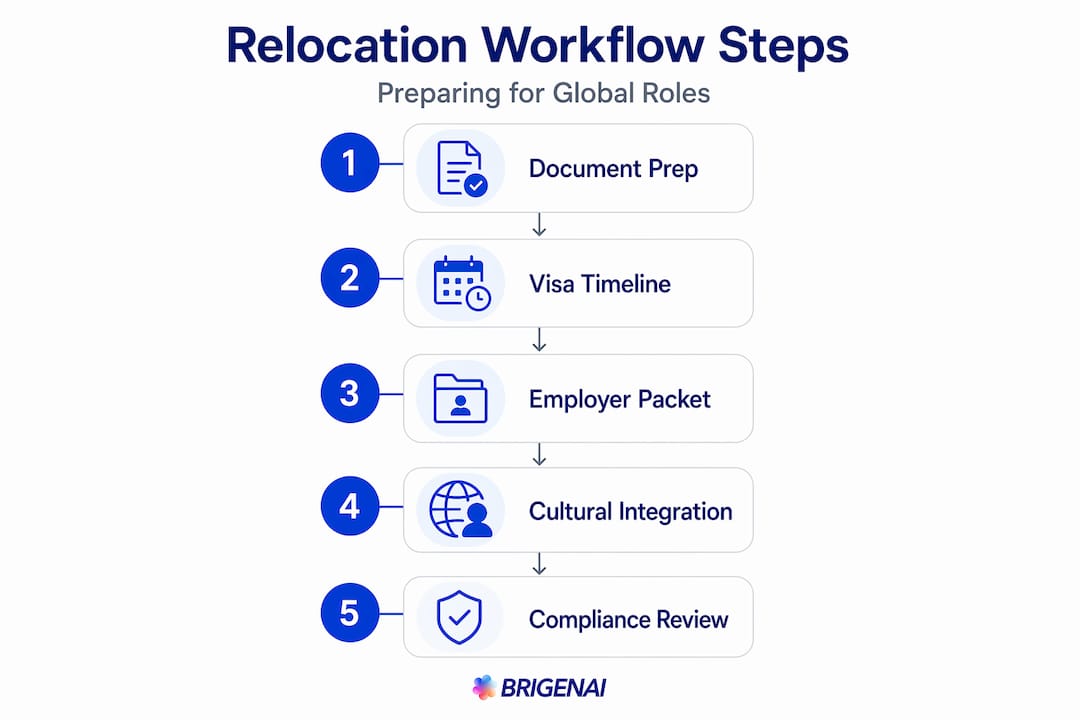
Visa and immigration timelines are non-negotiable. Immigration processing takes 6 to 12 weeks on average, and your visa approval is the gating factor for everything else. Payroll registration, tax residency, and even your formal employment contract cannot be fully processed until your right to work is confirmed. If you are considering destinations like Australia or New Zealand, checking your eligible occupation against the visa occupation lists early can save you weeks of uncertainty.
Document authentication is where most candidates lose time through entirely avoidable errors. The correct sequence is authenticate before you translate. Apostille or legalisation must be completed first because translating a document before authentication means the translation becomes void if the original document is later modified or re-certified. Separate your public record documents (birth certificates, academic transcripts, professional licences) from supporting private documents and process them through the appropriate authority before engaging a certified translator.
Beyond documents, this phase includes:
Pro Tip: Send a pre-arrival packet to your employer or HR contact 7 to 14 days before your start date. Include signed contracts, tax forms, bank details, and logistics questions. This shifts administrative load away from Day 1 and means you arrive ready to focus on people, not paperwork.
Probation period rules also deserve attention here. Probation periods vary significantly by country, and failing to track statutory conversion deadlines can create legal complications you did not anticipate. Clarify these terms in your local contract before signing.

Step-by-step execution of your career relocation
Once preparation is complete, the execution phase of your global job transition process requires sequencing rather than multitasking. Think of it as a dependency graph, not a linear checklist. Building workflow dependencies as a graph prevents sequence errors that cause administrative rework. Visa approval unlocks payroll registration. Payroll registration unlocks tax withholding setup. Each step has a parent.
Here is a practical sequence for the execution phase:
TaskDependencyRecommended timingVisa or work permit applicationNone8 to 12 weeks pre-startPre-arrival packet submissionOffer accepted7 to 14 days pre-startPayroll and tax ID registrationVisa confirmedWithin 1 week of arrivalEOR contract executionLegal entity confirmedBefore start dateHealthcare and housingLocation confirmed2 to 4 weeks pre-arrivalDay 1 onboarding blockAll pre-arrival completeDay 1, first 90 minutes
Pro Tip: Assign a named workflow owner for your transition, whether that is you, an HR contact, or a relocation specialist. Set automated reminders for each milestone. Without a named owner, tasks fall through the gaps at exactly the moments when everyone assumes someone else is handling it.
For professionals pursuing a career in Asia-Pacific, the dependency sequencing above is particularly relevant because registration timelines in markets like Singapore and Taiwan can be tight and bureaucratically precise.
Cultural adaptation and integration
You can execute every administrative step perfectly and still struggle in your first three months if you underestimate cultural integration. This is the part of the international employment roadmap that most professionals skip in their planning because it feels soft. It is not.
The most widely used framework for this phase is the 90-day integration roadmap. Cultural friction peaks around day 90, not day one when everything still feels exciting. The three phases break down as:
“Structured 90-day integration milestones meaningfully improve retention in international hires by identifying friction early before it becomes a reason to leave.” — First 90 days integration research
Scheduled check-ins are the mechanism that makes this roadmap work in practice. Structured feedback at 30, 60, and 90 days post-arrival identifies friction early and prevents assignment failure. These should be calendar events, not informal conversations that happen if there is time.
Family and spousal integration deserves its own plan. If your partner or children are relocating with you, schooling, language support, and social connection are not secondary concerns. They directly affect your ability to perform professionally. Professionals who ignore family integration during a cross-border job application and onboarding phase consistently report higher stress and lower performance in year one. Build this into your timeline explicitly.
Verification and compliance after relocation
The relocation is done. You are in the country, settled into work, and starting to feel normal. This is exactly when compliance risks peak because attention drops. Cross-border tax compliance in year one is critical. Early errors in tax residency status, payroll withholding, and social security contributions can trigger penalties and double taxation that take years to resolve.
Your first-year compliance priorities should cover:
Compliance taskRecommended timingWhy it mattersConfirm tax residency statusWithin 30 days of arrivalDetermines which country has primary tax rightsFile home country exit tax returnBefore or at first local filingCloses your prior tax obligations cleanlyVerify payroll tax withholdingFirst pay cyclePrevents over or under withholding from day oneSocial security registrationWithin first monthLocks in your coverage and contribution obligationsDocument retention setupImmediately on arrivalSupports audit defence and future visa applicationsAnnual compliance review10 to 11 months post-arrivalCatches issues before first full tax year closes
Record-keeping is not glamorous, but it is one of the most important habits you can build during a job search in foreign countries. Retain every document related to your visa, employment, housing, tax registrations, and salary for at least five years. This protects you in audits and supports future visa or permanent residency applications.
Scheduling a formal relocation retrospective at the six-month mark is something most professionals never do but consistently wish they had. Relocation retrospectives surface process gaps while they are still recent and help you build better habits for future moves or employment changes.
For Singapore-based professionals, understanding Singapore income tax rates early in your transition prevents the common mistake of budgeting based on home-country tax assumptions.
My honest take on getting this right
In my experience, the professionals who struggle most with international career transitions are not the ones who lack skills or ambition. They are the ones who underestimate how interdependent the administrative and cultural dimensions are. You cannot separate them.
What I have learned is that timing beats effort almost every time. I have seen highly motivated people spend enormous energy fixing problems that a two-week head start in document processing would have prevented entirely. Starting visa and authentication steps late is the single most common cause of delayed start dates and payroll errors.
The cultural side surprises people more than the admin does. Most professionals expect the paperwork to be hard and assume the culture part will sort itself out. The opposite is often true. Admin has deadlines and checklists. Culture has no deadline, which means it drifts unless you build in deliberate checkpoints.
My advice: treat your 90-day cultural integration roadmap with the same rigour you apply to your compliance checklist. Schedule the check-ins. Have the conversations with your manager and your family. Do not wait until you feel friction to address it. By the time friction is obvious, it has usually been building for weeks.
For mid-career professionals going global, the stakes are higher because the expectations are higher. You are not just onboarding. You are establishing a professional reputation in a new market. Structure gives you the space to do that well.
How Brigenai supports your move abroad
If you are working through the steps above and realising how much of this is fragmented across different sources, spreadsheets, and government websites, Brigenai was built specifically to solve that problem.
Brigenai’s platform brings together the tools you need for a structured, confident relocation. Start with the international relocation checklist to map every milestone from document preparation through to first-year compliance. Use the salary and cost of living comparison tool to stress-test your financial plan before you commit. For professionals targeting Australia or New Zealand, the visa occupation lists tool clarifies your eligibility at a glance. And for personalised support across the entire process, Brigenai’s relocation services connect you with experts who have navigated these markets firsthand.
FAQ
What is an international career transition workflow?
An international career transition workflow, also called a global mobility process, is the structured sequence of administrative, legal, and cultural steps required to move from employment in one country to employment in another. It covers visa processing, document authentication, payroll setup, and cultural integration.
How early should I start preparing to move abroad for work?
Begin at least 12 weeks before your intended start date. Immigration processing alone takes 6 to 12 weeks, and document authentication, tax registrations, and pre-arrival communications all require time that most professionals underestimate.
What is the biggest compliance risk in the first year after relocating?
Cross-border tax compliance is the highest risk area. Incorrect tax residency status, payroll withholding errors, and missed social security registrations in year one can trigger penalties and double taxation that are difficult and expensive to resolve.
Why does cultural adaptation matter in a career relocation plan?
Cultural friction typically peaks around day 90, not at arrival. Without scheduled check-ins and deliberate integration milestones, most professionals only address cultural challenges after they have already affected performance or wellbeing.
What does an Employer of Record do during an international relocation?
An Employer of Record acts as the legal employer in the destination country, managing local contracts, payroll processing, tax withholding, and statutory benefits. They are particularly useful when the hiring company does not yet have a registered legal entity in the new location.