
International relocation step by step is the structured process of managing your move abroad through a clear sequence of preparation, documentation, logistics, and settlement tasks that together produce a stress-free transition. Most people underestimate the administrative weight of moving overseas. Between visa paperwork, customs inventories, biometrics appointments, and post-arrival registrations, the process spans six to eighteen months and touches every part of your life. This guide walks you through each phase in order, so nothing falls through the cracks.
What are the critical preparatory steps before your international move?
The preparation phase is where most international moves succeed or fail. Starting twelve months out gives you enough runway to handle visa delays, document certification, and financial planning without panic.
Follow these steps in sequence:
-
Research your destination thoroughly. Investigate visa eligibility, local laws, housing costs, school options, and healthcare access. Destinations like Australia, New Zealand, Singapore, and Taiwan each have distinct skilled migration pathways, and understanding which visa category applies to you determines every subsequent step.
-
Begin your visa application early. Most skilled migration visas require skills assessments, English tests, and employer sponsorship letters that each take weeks to obtain. Starting six to twelve months before your intended departure date is standard practice, not excessive caution.
-
Organise and certify your documents. Birth certificates, marriage certificates, academic transcripts, and police clearances often require apostille certification or notarisation. Build a master folder with originals and certified copies. Check the visa occupation lists for your destination to confirm your qualifications are recognised.
-
Build your budget and emergency fund. Account for shipping costs, flights, temporary accommodation, visa fees, and at least three months of living expenses in your destination country. International moves routinely cost more than initial estimates.
-
Declutter before you pack. Every item you ship costs money and attracts customs scrutiny. Sell, donate, or dispose of anything you would not pay to replace. This step alone can cut your shipping volume by thirty percent.
-
Start language and cultural preparation. Even in English-speaking destinations, workplace culture, slang, and social norms differ significantly. Apps like Duolingo work for language basics, but community forums and expat networks give you the cultural context that textbooks miss.
Pro Tip: Register with your country’s foreign affairs department before departure. Australia’s Smartraveller registration, for example, allows consular staff to contact you in an emergency abroad.
How should you organise packing, customs documentation, and shipment logistics?
Customs clearance success depends entirely on the accuracy of your packing inventory. An itemised list that matches your customs declarations prevents delays at the border. Treat this inventory as a formal document, not a rough guide. Every item needs a consistent description, an estimated value, and a country of origin.
Key packing and logistics steps:
- Create an item-level inventory before a single box is sealed. List every item by category, quantity, and value. Customs authorities compare your declaration against your shipment, and discrepancies cause holds.
- Decide between owner-packed and professionally packed shipments. Owner-packed boxes are cheaper but carry higher risk of damage claims being rejected by insurers. Professional packers label fragile and heavy items correctly and assume liability.
- Verify electrical compatibility. Electronics built for 110V (common in North America) require transformers or replacement in 220V countries. Shipping incompatible appliances wastes money and creates safety risks.
- Check timber fumigation requirements. Many countries, including Australia and New Zealand, require wooden furniture and packing materials to be fumigated or heat-treated before entry. Your shipping agent should confirm this.
- Consult your destination embassy about restricted and prohibited items. Medications, firearms, certain foods, and cultural artefacts each have specific rules. Incomplete paperwork and restricted items are the two most common causes of shipment delays.
- Book your international mover at least eight to twelve weeks before your departure date. Reputable international freight companies fill their schedules quickly, and last-minute bookings attract premium pricing.
- Arrange marine cargo insurance separately from your mover’s standard liability cover. Standard liability is calculated by weight, not value, which means a damaged laptop worth $2,000 might be compensated at $40.
Pro Tip: Photograph every item of value before it is packed. Date-stamped photos serve as evidence for insurance claims and customs queries.
Owner packing vs professional packing: a quick comparison

| Factor | Owner packed | Professionally packed |
|---|---|---|
| Cost | Lower | Higher |
| Insurance coverage | Often limited | Typically full cover |
| Customs acceptance | Variable | Generally accepted |
| Time required | High | Low |
| Risk of damage | Higher | Lower |
What immigration and legal appointments must you manage during relocation?
Immigration compliance is non-negotiable, and missing a single appointment or deadline can set your entire move back by months. The most common immigration milestone after filing a visa application in the United States is the biometrics appointment.
-
Attend your biometrics appointment as scheduled. After filing, USCIS sends a Form I-797C appointment notice specifying the date, time, and location. Bring this notice and a valid photo ID. No legal representation is required at the appointment itself.
-
Do not attempt walk-ins. USCIS field offices operate strictly by appointment. Arriving without a scheduled notice will result in being turned away, and rescheduling adds weeks to your timeline.
-
Keep original documents with you at all times. Your passport, visa grant letters, birth certificates, and marriage certificates travel with you in a carry folder. Ship only certified copies with your household goods. If your shipment is delayed or lost, you still have the documents you need to enter your destination country and begin settlement.
-
Understand your tax obligations before you leave. This is the step most expats overlook until it becomes expensive.
US citizens living abroad receive an automatic filing extension to June 15, with a further extension to October 15 available via Form 4868. However, interest on unpaid taxes accrues from April 15 regardless of the extension. Plan your payments accordingly.
- Use a deadline tracking system. A shared calendar with alerts set sixty, thirty, and seven days before each deadline prevents the kind of missed milestones that derail otherwise well-planned moves. Brigenai’s international career transition guide includes a structured timeline you can adapt for your own move.
Pro Tip: Scan every immigration document and store copies in a secure cloud folder. If your carry folder is lost or stolen, you can access digital copies from any device.
How do you handle arrival and settlement tasks after relocating internationally?
The first two weeks after arrival are the most administratively dense period of the entire move. Completing these tasks quickly gives you a functioning life in your new country.
Post-arrival settlement checklist:
- Register your address locally. Many countries legally require address registration within two weeks of arrival. Germany, Japan, and the Netherlands, for example, mandate municipal registration. Failing to register can affect your ability to open a bank account or access government services.
- Open a local bank account. Bring your passport, visa grant letter, and lease agreement or proof of address. Some banks in Singapore and Australia allow pre-arrival account opening for skilled visa holders, which saves significant time.
- Get a local SIM or eSIM immediately. Without a local number, you cannot receive verification codes for banking apps, government portals, or rental platforms. Providers like Telstra in Australia or Singtel in Singapore offer prepaid options available at the airport.
- Register with a primary healthcare provider. Locate your nearest general practitioner and register before you need urgent care. In countries with public healthcare systems like Australia’s Medicare, registration is also how you access subsidised services.
- Locate your nearest embassy or consulate. Note the address, phone number, and emergency contact. This is the resource you need if your passport is stolen or a family emergency requires urgent travel documentation.
Key post-arrival tasks and typical timeframes
| Task | Recommended timeframe | Documents needed |
|---|---|---|
| Address registration | Within 2 weeks | Passport, lease agreement |
| Local bank account | Week 1 | Passport, visa, proof of address |
| Local SIM card | Day 1 | Passport |
| Healthcare registration | Week 2 | Passport, visa, address proof |
| Tax file number application | Week 1 to 2 | Passport, visa |
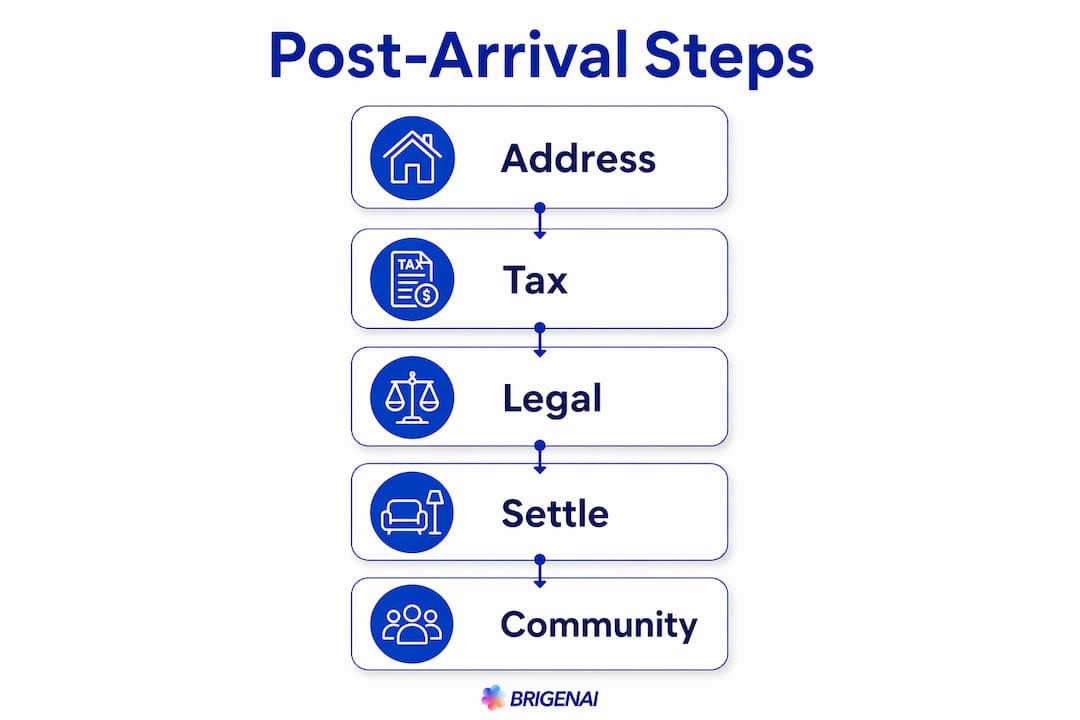
Pro Tip: In Australia, apply for your Tax File Number (TFN) through the Australian Taxation Office website within your first week. You need it before your first payslip, and processing takes up to 28 days.
What common mistakes should you avoid during an international move?
The most costly errors in international relocation are not dramatic. They are administrative oversights that compound into expensive delays.
- Booking movers too late. Reputable international freight companies book out weeks in advance. Last-minute bookings mean higher costs and less reliable service. Eight to twelve weeks lead time is the minimum for a well-managed move.
- Submitting incomplete customs inventories. Inaccurate declarations and restricted items are the leading causes of shipment delays at customs. Every item in your shipment must appear on your inventory with a consistent description and declared value.
- Shipping original documents. This mistake is more common than it sounds. Originals go in your carry folder. Copies go in the shipment. If the container is delayed by six weeks, you need your passport and visa to be in your hands, not on a ship.
- Ignoring tax obligations post-move. Many expats assume that leaving their home country ends their tax relationship with it. For US citizens, tax obligations continue abroad regardless of where you live. For a broader picture of how tax rates compare across destinations, Brigenai’s global tax comparison tool gives country-by-country data.
- Underestimating cultural adjustment time. Practical tasks get done in weeks. Feeling genuinely settled takes months. Build social activities and community connections into your first ninety days deliberately, not as an afterthought.
Pro Tip: Connect with destination agents or local expat communities before you arrive. Early contact with someone already living in your destination city prevents dozens of small but time-consuming mistakes.
For a detailed breakdown of the most common relocation errors and how to sidestep them, Brigenai has compiled real-world examples from expats across Australia, New Zealand, Singapore, and Taiwan.
Plan your move with Brigenai’s relocation tools
Managing an international move across six to eighteen months of preparation requires more than a checklist on a notepad. Brigenai’s international relocation checklist gives you a structured, trackable system covering every pre-departure and post-arrival task from visa filing through to healthcare registration.
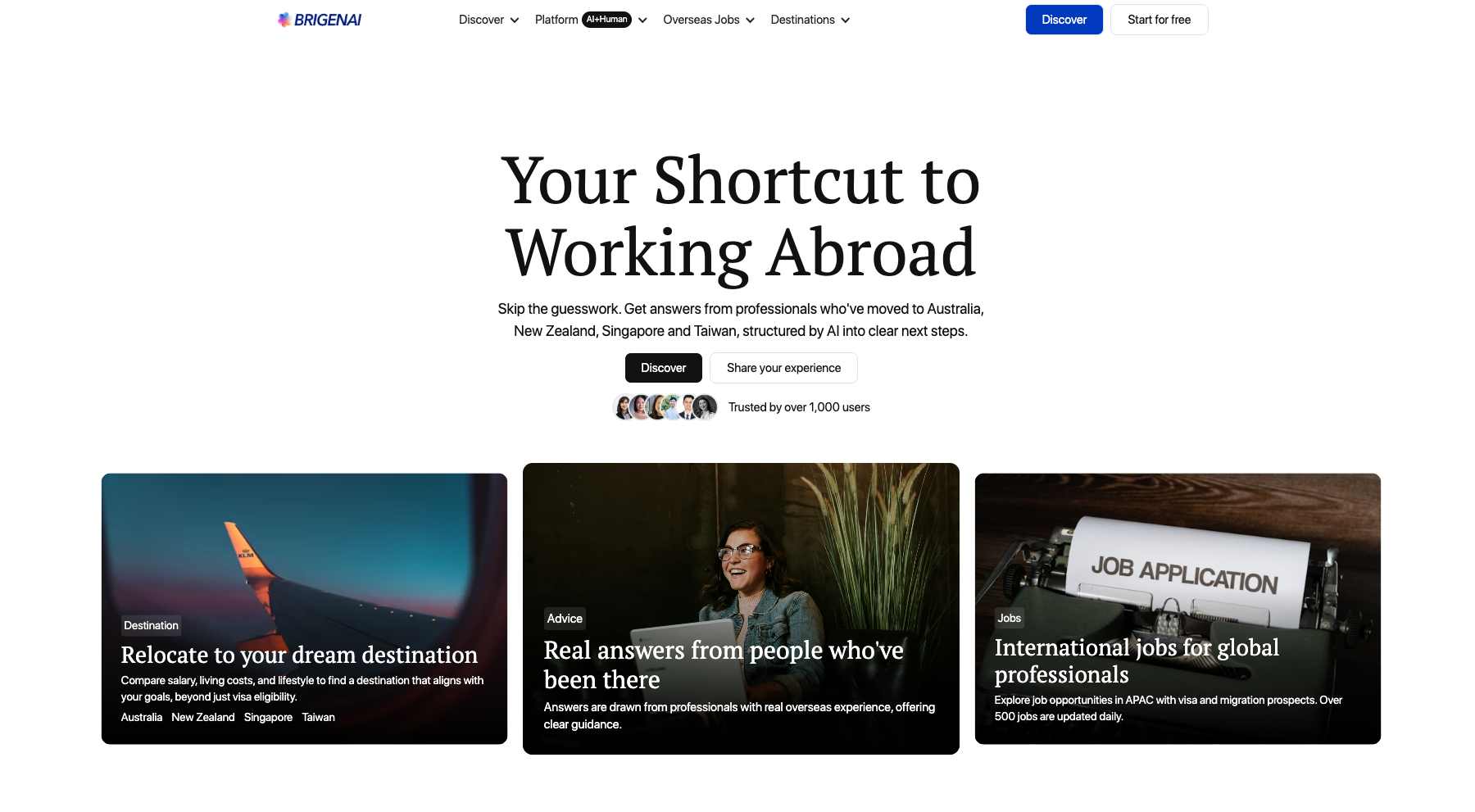
Beyond the checklist, Brigenai’s AI-powered expat tools let you compare salaries, cost of living, and career pathways across key destinations including Australia, New Zealand, Singapore, and Taiwan. Every insight on the platform comes from people who have actually lived and worked in these markets, organised by AI to give you practical, location-specific guidance. If you are serious about getting your move right, these tools cut weeks off your planning time.
FAQ
How far in advance should I start planning an international move?
Start at least six to twelve months before your intended departure date. Visa applications, skills assessments, document certification, and mover bookings each require significant lead time, and delays in one area cascade through the rest of your timeline.
Do I need a lawyer at my USCIS biometrics appointment?
No. USCIS biometrics appointments do not require legal representation. Bring your Form I-797C appointment notice and a valid photo ID, and follow the instructions on the notice exactly.
What documents should I carry with me rather than ship?
Carry originals of your passport, visa grant letters, birth certificates, marriage certificates, and any other critical legal documents. Ship only certified copies with your household goods inventory.
Will my tax obligations end when I move overseas?
Not necessarily. US citizens abroad receive an automatic filing extension but interest on unpaid taxes still accrues from April 15. Research the tax treaty between your home country and destination country before you move, and consider engaging a specialist expat tax adviser.
How soon after arrival must I register my address?
Many countries require address registration within two weeks of arrival, and some make it a legal obligation. Check the specific requirement for your destination country before you land, as failing to register on time can delay your access to banking and government services.