

Understanding work rights for international students
Before you send a single application, you need to know exactly what you are legally permitted to do. Getting this wrong does not just cost you a job offer. It can jeopardise your entire visa status.
Work authorisation rules differ significantly depending on where you are studying. In the United States, F-1 students apply for Optional Practical Training (OPT) to work in their field after graduation. The OPT filing window is strict: you must apply between 90 days before and 60 days after your programme end date, with the ideal window sitting at 75 to 80 days before completion. Miss that window and your application is denied. If you are in a STEM field, a STEM OPT extension of 24 additional months is available, but your employer must be enrolled in E-Verify and you must file a Form I-983 training plan. That brings total OPT duration to 36 months.
In Australia, student visa holders can typically work up to 48 hours per fortnight during the academic year. New Zealand, the UK, Canada, and Singapore each have their own specific conditions tied to course type and enrolment status. The key steps to get right are:
Pro Tip: Set calendar reminders for every key deadline related to your work authorisation. A missed filing window is not something career services can fix for you.
How to research the local job market
Knowing where to look, and understanding what employers actually want, separates students who get interviews from those who get silence.
Start with industry targeting. Technology and professional services are the most internationally open employers globally, with tech accounting for roughly 22% of international graduate hires and professional services at 16%, both with relatively high visa sponsorship rates. Healthcare, engineering, and finance also show strong demand in destinations like Australia, Canada, and Germany. The 12-month employment rate for international graduates sits at 93% in Germany, 89% in the Netherlands, 87% in Canada, and 85% in Australia. These numbers reflect country-specific labour policies as much as they reflect individual effort, which is why destination research matters before you even arrive.

CountryEmployment rate at 12 monthsKey strength sectorsGermany93%Engineering, manufacturing, ITNetherlands89%Finance, logistics, techCanada87%Healthcare, tech, professional servicesAustralia85%Mining, healthcare, education, tech
Once you know your target country and sector, use multiple sources to find roles:
Do not underestimate the unadvertised job market. Active social integration through cultural and professional communities consistently leads international students to roles that never appear on job boards. Attend industry meetups, join student professional groups, and connect with people already working in your target field.
Language is another market reality you need to face directly. Local language proficiency at B2+ improves employment rates by 18 percentage points in Germany and 34 percentage points in Japan. If you are targeting a non-English-speaking country, language investment is not optional. It is the most efficient thing you can do for your career.
Developing job search strategies and tailoring applications
Generic applications do not work in domestic job markets. They work even less when you are an international candidate. Here is a practical approach:
Pro Tip: Before applying, search the company’s LinkedIn for current international employees. If they have hired internationally before, they will do it again. If they have not, your application is fighting an uphill battle.
Preparing for interviews and workplace culture
Getting an interview is only half the challenge. How you present yourself, and how you adapt once you are hired, determines whether your international student employment experience becomes a long-term career.
Interview formats vary significantly by country. In Australia, behavioural interviews using the STAR method (Situation, Task, Action, Result) are standard. Germany often uses structured competency interviews with technical components. Japan and Singapore frequently assess cultural fit as heavily as technical ability. Research the dominant format before you prepare your answers.
A few things to get right before and after the interview:
Once you are hired, cultural adjustment is an active process, not a passive one. Students who engage with their teams socially, seek feedback openly, and invest in understanding workplace norms integrate faster and advance further. Explore Brigenai’s workplace culture insights for destination-specific guidance on what to expect day to day.
Verifying job offers and managing common pitfalls
A job offer is only valuable if it actually works with your visa conditions and genuinely represents the role described. This is where many international students make expensive mistakes.

Before you accept any offer, check the following:
What to verifyWhy it mattersHours and work type permitted by visaExceeding visa work limits can result in visa cancellationRole relevance to study field (for OPT)OPT requires employment directly related to your degreeContract term vs visa expiry dateA 12-month contract means nothing if your visa expires in six monthsEmployer E-Verify status (US)Required for STEM OPT; employers without it cannot legally employ you under this authorisationPayment method and award complianceSome exploitative employers target international students; check minimum wage and legal entitlements
Common pitfalls include misreading casual employment as a commitment, assuming verbal offers are binding, and failing to declare work to relevant authorities when required. In Australia, for example, you are responsible for tracking your own work hours even if your employer does not. If something in an offer feels unclear, contact your university’s international student services office or a registered migration agent before signing.
For broader guidance on finding the right support, Brigenai’s resource on finding a career counsellor covers how to choose professionals who specialise in your situation.
My honest take after watching students struggle
I have seen genuinely talented students spend months applying for roles and getting nothing back. The pattern is almost always the same. They treat the job search as an extension of their academic effort: research, work hard, submit, wait. But the international student job search does not reward effort alone. It rewards strategic effort.
The students who break through early are not necessarily the most qualified. They are the ones who sorted their visa paperwork before everyone else, who attended the industry event when they could have stayed home to study, and who asked a local colleague to review their cover letter instead of relying on a template. They understood that their international background was not a liability to apologise for, but a specific, demonstrable value to communicate confidently.
What I have learned is that the biggest mistake is treating cultural adaptation as something that happens automatically once you are hired. It does not. You have to pursue it the same way you pursue a role. The students who invest in language, relationships, and local knowledge before they have a job offer consistently have shorter search timelines and stronger outcomes. That is not a coincidence. It is a repeatable pattern.
How Brigenai makes your job search easier
Planning an international career involves more moving parts than most people anticipate. Brigenai was built specifically to reduce that complexity, combining career intelligence, workplace culture insights, and relocation guidance into one place.
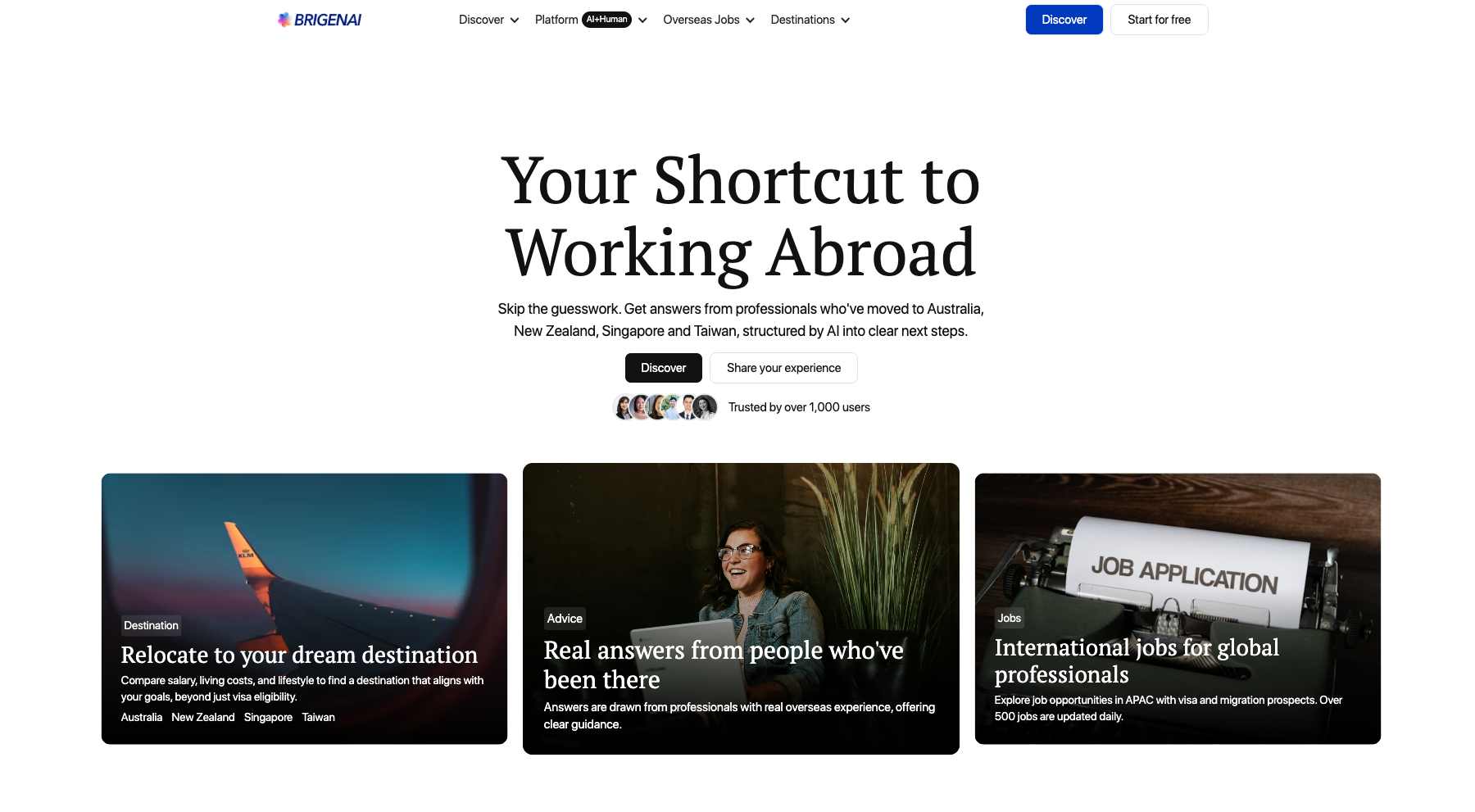
Whether you are trying to match your degree to the right career pathway, understand what working in Singapore versus Sydney actually looks like day to day, or simply get your relocation checklist sorted before you land, Brigenai’s tools are designed to give you real information, not generic advice. Use the career-oriented university matcher to align your study choices with genuine employment outcomes, work through the international relocation checklist to get organised before you arrive, and explore Brigenai’s relocation and career services for professional support tailored to international students and early-career professionals. The job hunt is hard enough without having to piece together fragmented information from a dozen different sources.
FAQ
What is the first step in the international student job search?
Confirm your visa work rights and gather your authorisation documents before applying anywhere. Knowing exactly what you are permitted to do, and for how long, shapes every other decision in your search.
Which industries hire the most international students?
Technology and professional services are the most internationally open sectors, with the highest rates of international graduate hires and visa sponsorship. Healthcare and engineering also show strong demand in Australia, Canada, and Germany.
Do I need to mention my visa status in job applications?
Yes. A clear, confident statement about your work authorisation removes a key reason employers filter out international candidates. Leaving employers to guess typically results in early rejection.
How important is language for jobs for international students?
In non-English-speaking countries, local language proficiency at B2 level or above can increase your employment chances by 18 to 34 percentage points depending on the destination. It is one of the highest-return investments you can make.
What should I check before accepting a job offer?
Verify that the role complies with your visa work conditions, that the employer meets any sponsorship requirements (such as E-Verify in the US), and that the contract terms align with your visa duration and local employment law.