

Moving overseas is rarely a sudden decision.
For most people in Taiwan, the idea of relocating begins quietly — perhaps after another long workweek, a stalled promotion, or a growing sense that life feels busy but not necessarily fulfilling. Over time, that question becomes clearer:
Is there a country where I can grow my career, live more sustainably, and still have a future worth building?
For an increasing number of Taiwanese professionals, graduates, and families, that country is New Zealand.
This guide is written specifically for people from Taiwan who are seriously considering relocation. It does not promise shortcuts or guaranteed outcomes. Instead, it explains why New Zealand is different, how it compares to other popular destinations, what visa pathways realistically look like, and how career decisions shape long-term success.
Why Are More People from Taiwan Considering Overseas Relocation?
For many people in Taiwan, relocation starts with one or more of these realities:
- Career growth slows after a certain level
- Long working hours and strong hierarchy culture
- Salary growth doesn’t always match rising living costs
- Desire for international experience and English work environment
- Planning a better long-term lifestyle for themselves or their family
Relocation is no longer just about earning more, but about living and working better.
Why Relocate to New Zealand Instead of Other Popular Destinations?
Taiwanese migrants often compare New Zealand, Australia, and Singapore before making a decision.
Let’s break this down honestly.
Why NZ wins:
✔ Healthier work-life balance
✔ Clear residency pathway
✔ English-speaking career capital
Moving overseas is rarely a sudden decision.
For most people in Taiwan, the idea of relocating begins quietly — perhaps after another long workweek, a stalled promotion, or a growing sense that life feels busy but not necessarily fulfilling. Over time, that question becomes clearer:
Is there a country where I can grow my career, live more sustainably, and still have a future worth building?
For an increasing number of Taiwanese professionals, graduates, and families, that country is New Zealand.
This guide is written specifically for people from Taiwan who are seriously considering relocation. It does not promise shortcuts or guaranteed outcomes. Instead, it explains why New Zealand is different, how it compares to other popular destinations, what visa pathways realistically look like, and how career decisions shape long-term success.
Why More People from Taiwan Are Considering Moving Overseas
Taiwan has many strengths: convenience, safety, strong education, and a highly developed urban lifestyle. However, when it comes to long-term career development and work culture, many professionals eventually face structural limits.
In certain industries, promotion opportunities narrow significantly after mid-career. Work hours are often long, and hierarchy can make decision-making slow or rigid. Salary growth, especially when adjusted for inflation and housing costs, may not always keep pace with expectations.
At the same time, younger professionals and international-minded workers increasingly value things that are harder to measure on a payslip: flexibility, autonomy, mental health, and time.
This does not mean people are trying to escape Taiwan. Rather, they are looking for a different life system — one that offers professional growth without constant burnout.
Why New Zealand Has Become a Serious Option for Taiwanese Migrants
New Zealand rarely markets itself as a “fast success” country. Salaries are not the highest globally, and the job market is relatively small. Yet for many Taiwanese migrants, New Zealand offers something far more valuable: clarity.
Clarity in immigration rules.
Clarity in work expectations.
Clarity in how effort connects to long-term outcomes.
Unlike some destinations where immigration policies shift rapidly or depend heavily on employer discretion, New Zealand operates a skills-based migration system designed to support long-term settlement. This alone makes it attractive to people who are planning years ahead, not just their next job.
New Zealand and Taiwan: Two Very Different Career Environments
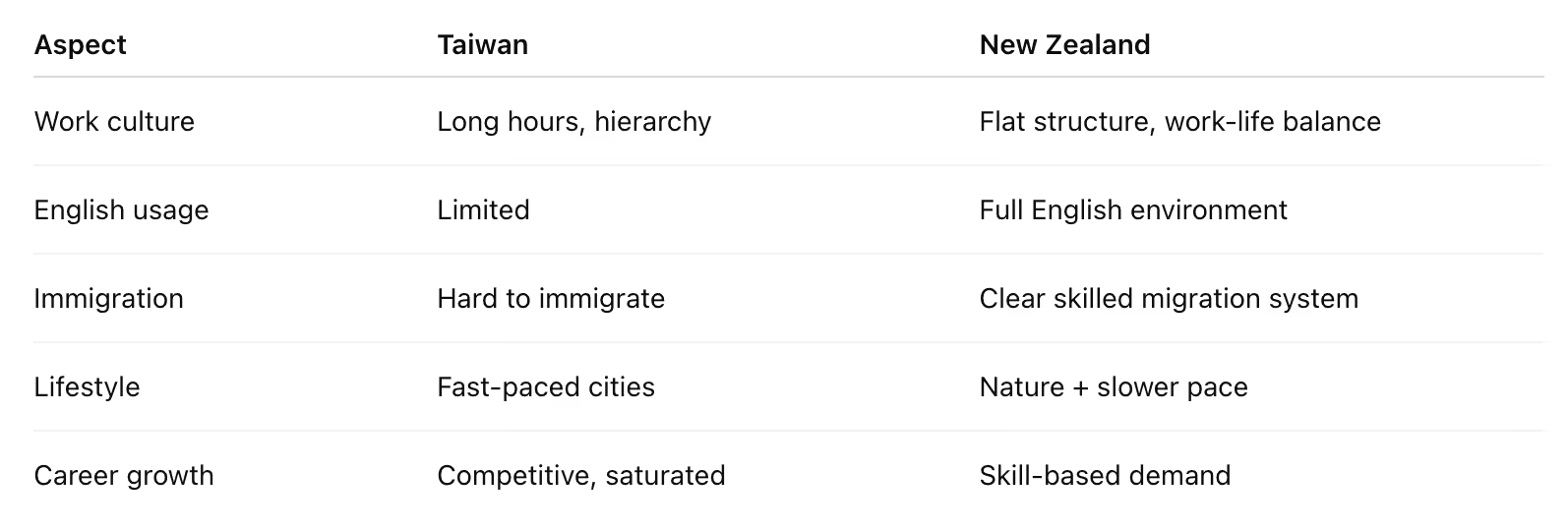
Comparing New Zealand and Taiwan highlights why relocation can feel transformative for some professionals.
In Taiwan, many workplaces still emphasize seniority, visible effort, and availability. Staying late is often normalized, even when productivity does not require it. Decision-making can flow top-down, and younger employees may feel limited in autonomy.
In New Zealand, the professional culture is noticeably flatter. Managers expect staff to manage their own time, communicate openly, and contribute ideas regardless of age or title. Performance is measured more by outcomes than hours.
This difference alone changes how people experience work. Many Taiwanese professionals in New Zealand describe feeling trusted earlier in their roles and less pressure to “prove” commitment through overtime.
Why Not Australia? A Common Question
Australia is often the first comparison people make, and understandably so. Its economy is larger, salaries are generally higher, and cities like Sydney and Melbourne are globally recognized.
However, size comes with trade-offs.
Australia’s job market is highly competitive, especially for skilled migrants. Immigration policies have tightened and shifted frequently in recent years, creating uncertainty even for well-qualified applicants. Cost of living in major cities has also risen sharply, reducing the real value of higher salaries.
New Zealand, by contrast, offers a smaller but more targeted market. Many industries face genuine skill shortages, and the government openly designs visa pathways to fill them. For Taiwanese professionals who prefer predictability and long-term planning, New Zealand often feels more navigable than Australia.
New Zealand Compared to Australia: Stability vs Scale
Australia may offer scale, but New Zealand offers alignment. Employers, immigration policy, and workforce needs are often better synchronized. While opportunities may be fewer in absolute number, they are also less saturated.
For migrants who value certainty over competition, this distinction matters deeply.
Why Singapore Is Not Always the Best Long-Term Fit
Singapore attracts many Taiwanese professionals with its proximity, efficiency, and high salaries. For short-term career acceleration, it can be an excellent choice.
However, Singapore’s system prioritizes economic contribution over settlement. Long-term residency is difficult, employer control is significant, and work intensity is high. Burnout is common, particularly in corporate environments.
New Zealand offers a different philosophy. It emphasizes integration, family life, and community stability. For those planning to build a life — not just a résumé — this difference becomes critical.
New Zealand vs Singapore: Pressure vs Sustainability
Where Singapore rewards speed and performance intensity, New Zealand rewards consistency and contribution over time. Neither is inherently better, but they serve different life goals.
The Core Reasons Taiwanese Professionals Choose New Zealand
One of the strongest reasons people relocate to New Zealand is its transparent skilled migration framework.
The country actively publishes occupation shortages and residency pathways, allowing migrants to plan strategically. Instead of guessing which visas might exist in the future, candidates can align their careers with clearly defined criteria.
Equally important is the cultural reality that career comes before visa in New Zealand. Employers hire for skills first, then support visa applications through accredited systems. This reverses the uncertainty seen in countries where visa status must be secured before meaningful job access.
Work-Life Balance in New Zealand Is Not a Myth
New Zealand’s work culture is one of its most understated strengths.
Standard working hours are respected. Annual leave is encouraged, not silently judged. Taking time off for family, health, or personal reasons is normalized. This does not mean people work less seriously — it means work is integrated into life, not the other way around.
For many Taiwanese professionals, this cultural shift improves not only mental health but also long-term productivity and creativity.
Building English Career Capital
Working in New Zealand places professionals in a fully English-speaking environment, which accelerates language confidence far more effectively than classroom learning.
This has long-term value beyond New Zealand itself. English work experience strengthens global employability and opens doors to future international roles.
Visa Reality for Taiwanese Citizens
Taiwanese passport holders can enter New Zealand for short visits, but this does not include work rights. This distinction is critical and often misunderstood.
To work legally, a proper work visa is required. The most common pathway for professionals is the Accredited Employer Work Visa, which requires a job offer from an accredited New Zealand employer.
This system exists specifically to streamline skilled migration while protecting local labor standards.
From Work Visa to Residency
What makes New Zealand attractive is not just the work visa itself, but what follows.
After gaining local experience, many migrants become eligible for residency through pathways such as the Green List or Skilled Migrant Category. These systems reward skill relevance, experience, and contribution rather than arbitrary timelines.
For Taiwanese professionals who plan carefully, residency is often a natural progression, not a distant hope.
The Student Pathway: Opportunity with Conditions
Many Taiwanese students come to New Zealand for education, followed by post-study work visas. While this pathway can work, it requires realistic expectations.
Studying alone does not guarantee residency. Outcomes depend heavily on field of study, job relevance, and post-graduation career planning. Students who treat education as part of a broader career strategy tend to succeed far more often than those who assume the system will work automatically.
Who Thrives Most in New Zealand
New Zealand tends to favor professionals who value adaptability, collaboration, and steady growth. Industries such as technology, engineering, healthcare, construction, finance, and design consistently seek skilled talent.
English proficiency matters, but attitude and willingness to integrate matter just as much.
Common Mistakes Taiwanese Migrants Make
Many relocation failures are not caused by lack of ability, but by incorrect sequencing. Choosing a visa without understanding the job market, or relocating without adapting CVs and interview styles, often leads to frustration.
Assuming that a “popular country” must be better is another common trap. What works for one person may not work for another.
A Smarter Way to Plan Your Move
Successful relocation usually follows a clear order: understanding your career position, comparing countries honestly, validating job demand, then pursuing visas aligned with real opportunities.
This approach reduces wasted time and emotional stress.
Is New Zealand Right for You?
New Zealand is not ideal for everyone. If maximizing short-term income is your only goal, other destinations may suit you better.
But if you value balance, stability, and the chance to build a meaningful international life, New Zealand offers one of the clearest paths available today.
Final Thoughts: Relocation as a Long-Term Decision
Moving from Taiwan to New Zealand is not simply a geographic shift. It is a decision about how you want to work, live, and grow over the next decade.
New Zealand may not promise speed, but it offers something far rarer: a system where effort, skill, and planning can realistically lead to a better life.
For many Taiwanese professionals, that is exactly what relocation is meant to achieve.