
Why many people regret migrating
Migration looks like freedom from the outside. You picture yourself thriving in a new city, advancing your career, and building a life that feels bigger than the one you left. What the brochure skips is the part where you feel profoundly out of place, where your credentials get overlooked, and where the culture you worked so hard to adopt suddenly feels like a costume you can never quite take off.
The reasons for migration regret are rarely singular. They tend to stack. Emotional dislocation compounds financial stress, which compounds social isolation, until the life you built abroad feels neither fully yours nor worth the cost of what you gave up.
The role of identity in post-migration struggles
One of the most underreported disadvantages of relocating is what it does to your sense of self. When you move abroad, you begin constructing a new identity shaped by your adopted country’s norms, language, and social codes. That process is gradual and often invisible until you try to go home or until you realise the person you’ve become no longer fits neatly in either place.
Reverse culture shock involves identity disorientation and difficulty reapplying to home relationships and routines after living abroad. People describe feeling like a stranger in their own suburb. Friends have moved on. Family dynamics have shifted. The inside jokes no longer land. That particular kind of loneliness is one that migration regrets stories rarely prepare you for.
Pro Tip: If you are struggling with identity after a move, try keeping a journal that tracks not just what changed around you, but how your values and priorities have shifted. It helps you separate what you actually want from what you assumed you would want.
A study in Romania found that life dissatisfaction predicts emigration intentions beyond specific socioeconomic factors. In other words, people who leave often carry their dissatisfaction with them, and when the novelty of a new country fades, that same dissatisfaction resurfaces in a different postcode.
For a deeper look at how to navigate this, Brigenai’s guide on coping with culture shock covers the emotional arc of adjustment with real examples.
Economic realities that fuel regret
The economic case for migration is often overstated by governments, recruiters, and by our own wishful thinking. The gap between expected and actual economic outcomes is where many migration regrets stories begin.
Skill mismatches and underemployment
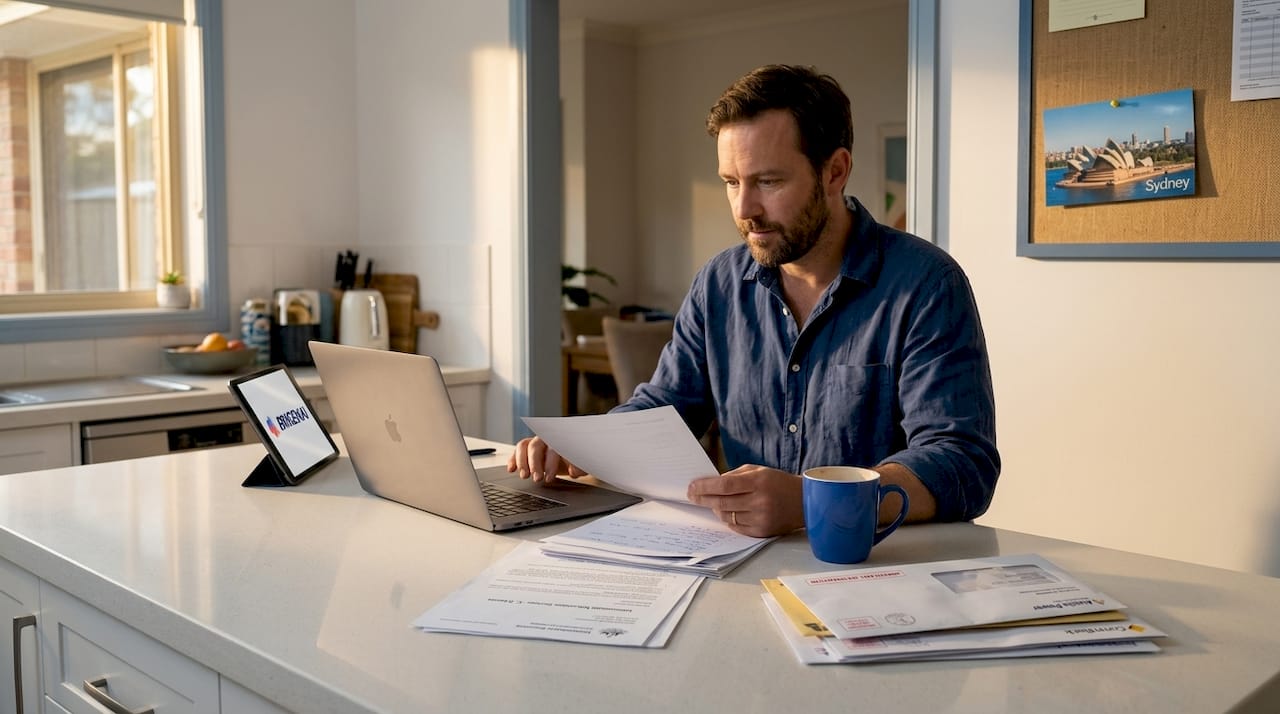
One of the most consistent patterns in post-migration struggles is the skill-context mismatch. You arrive with qualifications earned over years, only to discover they are not fully recognised, or that the roles you expected to step into are reserved for people with local networks you haven’t yet built.
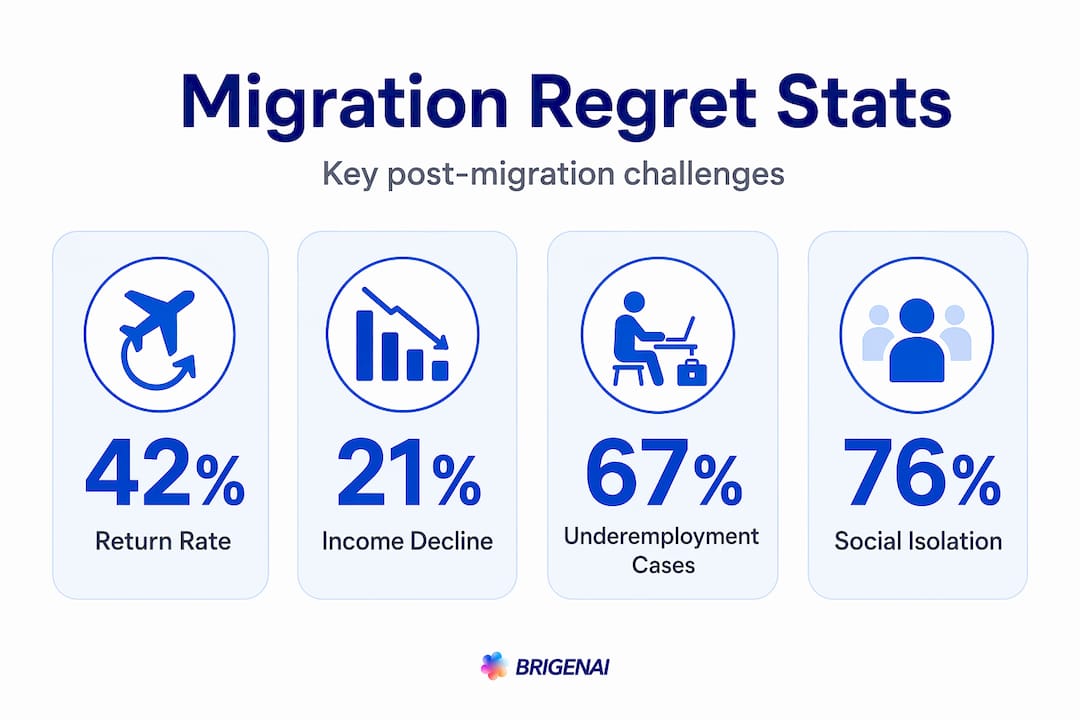
Research on Ukrainian refugees in Germany found that those intending to settle abroad are more economically disadvantaged and that their settlement intent is shaped by skill-context mismatches. This is not a refugee-specific problem. It applies to skilled professionals who migrate voluntarily and discover that their resume translates awkwardly across borders.
Economic challengeWhat migrants underestimateTypical impactCredential recognitionOverseas qualifications often need revalidationDelayed career entry, lower starting salaryCost of livingRent, childcare, and healthcare frequently exceed projectionsSavings deplete faster than plannedTax obligationsNew immigrants often face complex filing requirementsTax mistakes abroad can lead to penaltiesRebuilding livelihoodIncome systems and support structures differ widelyProlonged financial stress, especially post-returnGovernment assistance gapsPost-return support is often minimalRegret compounds without financial scaffolding
Post-return economic reintegration is particularly brutal. Research on Syrian returns found that economic reintegration is the dominant challenge post-return, with widespread need for cash and livelihood support and very few receiving meaningful assistance after going back. While the Syrian context is extreme, the underlying pattern holds across many migration experiences. When you return, you are not stepping back into the life you left. You are starting again, often with depleted savings and a career gap that local employers view with suspicion.
Refugee return data adds another layer. 42% of refugees who planned to return had done so by 2025, and a 21% decline in return intentions was linked to increasingly pessimistic expectations about conditions back home. When what you hoped to return to has changed, the option of going back stops feeling like a solution.
Social isolation and belonging
Economic hardship is measurable. Social isolation is harder to quantify, but migrants consistently describe it as the factor that wore them down the most over time.
Adjusting to a new country means rebuilding your social world from scratch. You lose the casual, low-effort connections that sustain everyday life. You lose your ability to read a room, to understand humour, to participate in the cultural shorthand that bonds people together. These are not small losses.
The post-migration struggles around social belonging are compounded when support networks are thin. Research confirms that reverse culture shock causes restlessness, feelings of being misunderstood, and social reintegration difficulties, with experts recommending at least six months to readjust after returning home or settling abroad.
The specific social challenges migrants face tend to cluster around a few themes:
The irony is that many people who migrate for a better quality of life find that social disconnection undermines everything else. A higher salary means less when you have no one to spend Saturday afternoon with.
Pro Tip: Before you move, identify at least two to three communities, whether professional, cultural, or interest-based, that you can connect with in your new location. Having those anchors in place before you arrive reduces the social free-fall period significantly.
Reducing regret through better planning
Understanding the disadvantages of relocating before you go does not make migration less appealing. It makes your decision more honest, and your preparation more effective.
Here is a practical framework for what to consider before migrating:
Pro Tip: Use a structured international relocation checklist to track not just logistics but emotional and social preparation steps. Most people cover the visa and the shipping. Very few plan for what week three alone in a new city actually feels like.
My honest take on migration regret
I’ve spent years talking to professionals who’ve moved countries, and the pattern I keep seeing is this: regret almost never comes from the move itself. It comes from the gap between what people imagined and what they prepared for.
What I’ve learned is that migration regret is not failure. It is a rational response to conditions that turned out differently than expected. The research backs this up. Migration regret often reflects rational updates to evolving conditions rather than a fundamental mistake. The problem is that most people don’t have a framework for updating their expectations as circumstances change. They either stay and suffer in silence, or return and find that home has moved on without them.
The piece I think gets overlooked most often is the emotional labour of the in-between. You are not quite from where you came, and not quite from where you landed. That liminal identity is genuinely hard, and there is not enough honest conversation about it before people make the leap.
My advice is this: go in with real information, not just optimism. Give yourself permission to find it harder than expected. And build your support systems before you need them, because by the time you realise you need them, you are already running on empty.
Plan your move with Brigenai
If this article has made you think harder about your relocation decision, that is exactly the point. The professionals who move abroad with the least regret are not the most fearless. They are the most prepared. Brigenai is built to help you be that person. From understanding workplace cultures in Australia and New Zealand to mapping out your finances and credentials, Brigenai’s AI-powered relocation tools bring together real-world insights to help you move with clarity. Start with the international relocation checklist to get a structured view of everything you need to think through before you go.
FAQ
What are the most common reasons people regret migrating?
The most common reasons for migration regret include social isolation, economic disappointment from skill mismatches or unrecognised qualifications, and the identity disorientation that comes from living between two cultures. These factors often compound rather than occur in isolation.
Is migration regret the same as reverse culture shock?
Not exactly. Reverse culture shock is a specific psychological experience of disorientation when returning home or adjusting after long periods abroad, while migration regret is a broader assessment of whether the move was worth it. Both are real, and they often overlap.
How long does it take to adjust after migrating?
Experts recommend allowing at least six months to begin meaningful adjustment after a significant move or return, though social realignment and identity integration can take considerably longer depending on the individual and destination.
Can better planning actually prevent migration regret?
Yes, significantly. Research shows that without ongoing monitoring of post-migration conditions, people fail to update their expectations, which increases dissatisfaction. Structured planning, realistic financial buffers, and intentional social preparation all reduce the risk of regret substantially.
Is it worth migrating despite the challenges?
For many people, yes. But is migration worth it depends entirely on how honestly you have assessed your reasons for leaving, your ability to handle social and economic disruption, and whether you have planned for the reality rather than the ideal version of life abroad.