

Relocation support is the structured assistance provided to professionals during a work-related move, covering financial, logistical, emotional, and family needs to protect both employee wellbeing and employer investment. Employees who receive inadequate relocation support are 40% more likely to leave within the first year after relocating. That single statistic reframes the entire conversation: relocation support significance is not a perk, it is a retention strategy. For professionals considering an international career move in 2026, understanding what good support looks like, and why moving assistance is so consequential, is the difference between a successful transition and an expensive failure.
Why relocation support matters for international professionals
Relocation support, formally known in HR circles as global mobility assistance, covers far more than a removalist truck and a plane ticket. It addresses the full complexity of uprooting a life: visa compliance, tax obligations across multiple jurisdictions, temporary housing, cultural orientation, and the career needs of a partner who is also leaving their professional network behind.
The financial stakes alone justify serious attention. Failed relocations cost employers between 50% and 300% of the employee’s annual salary. For a senior professional earning $150,000, that is a potential loss of up to $450,000 when you account for recruitment, onboarding, lost productivity, and the cost of the failed move itself. This is why the importance of relocation assistance has moved from an HR afterthought to a board-level concern at multinational organisations.

The complexity is real and often underestimated. A single international relocation touches visa processing, tax residency changes, school enrolments, property leases, banking setup, and cultural adjustment, all at once. Relocation management companies (RMCs) exist precisely because managing a single relocation in-house demands 40 to 80 discrete HR tasks over many weeks. Without professional coordination, errors compound quickly and the employee bears the burden.
Pro Tip: Before accepting an international role, ask the employer directly whether they use a relocation management company or manage moves in-house. In-house coordination without dedicated resources is a warning sign that support will be inconsistent.
What are the key components of effective relocation support?
Effective relocation assistance is not a single package. It is a set of layered services calibrated to the employee’s role, family situation, and destination. Understanding what to expect, or negotiate for, puts you in a far stronger position.
The financial components typically include:
That last point deserves emphasis. Multi-jurisdictional tax liabilities can derail otherwise successful moves. A professional relocating from Australia to Singapore, for example, may face overlapping tax obligations in both countries during the transition year. Without professional tax guidance built into the relocation package, that financial shock can sour an otherwise positive move.
Beyond finances, logistical coordination is where RMCs deliver the clearest value. They manage vendor relationships, compliance requirements, and employee communication in a structured sequence, reducing the HR team’s workload and the employee’s cognitive load simultaneously. For the professional, this means fewer decisions to make during an already demanding period.
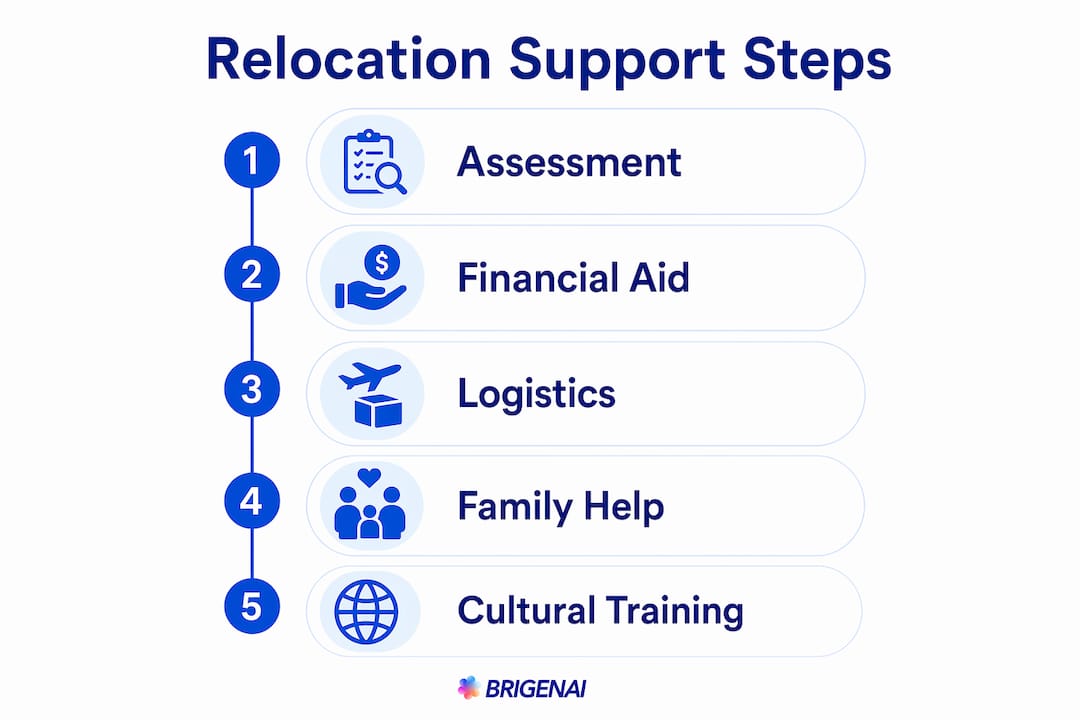
Family support is the component most commonly underestimated by employers and most keenly felt by employees. Children’s schooling, partner career prospects, and eldercare all heavily influence whether a relocation succeeds long-term. A package that covers the employee’s needs but ignores the family’s is a package that is likely to fail within two years.
Cultural orientation and settling-in services round out a well-designed programme. These include language training, community introductions, and guided orientation to local services. For moves to destinations like Singapore or Taiwan, where workplace culture differs significantly from Australian norms, this support accelerates the employee’s effectiveness in their new role.
How does relocation support improve employee retention and productivity?
The business case for investing in moving support is well documented and the numbers are striking. Companies investing in relocation assistance report productivity gains of approximately 13% within 18 months of the move. That figure reflects what happens when an employee arrives supported rather than overwhelmed: they focus on the job instead of managing a dozen unresolved logistical problems.
Business metricWithout adequate supportWith structured supportFirst-year turnover riskUp to 40% higherSignificantly reducedProductivity gain (18 months)Baseline~13% improvementCost of failed relocation50–300% of annual salaryLargely avoidedEmployee engagementDisruptedMaintained or improvedFamily satisfactionLowHigher, sustaining retention
The table above reflects findings from offshore staff retention research and corporate relocation studies. The pattern is consistent: structured support produces measurable returns, while gaps in support produce measurable losses.
“Relocation success relies on protecting the entire family’s wellbeing, not just the employee’s, for sustained focus and performance.” — NRI Relocation, Duty of Care Framework
The cognitive relief dimension is often overlooked in business cases. When a professional arrives in a new country with housing sorted, schools confirmed, and tax obligations understood, their mental bandwidth is available for the work they were hired to do. When those things are unresolved, cognitive overload is the result, and performance suffers regardless of the person’s capability or motivation.
Corporate relocation packages cost between $10,000 and $50,000 depending on move complexity and seniority. Framed against the cost of a failed relocation, that investment is straightforwardly rational. The challenge for many organisations is making that case internally before the failure occurs rather than after.
What challenges do professionals and families face during relocation?
Relocation disrupts nearly every stable system in a person’s life simultaneously. Understanding these challenges is the first step toward addressing them with appropriate support.
The psychological dimension is significant. Relocation disrupts routines, social circles, and identity, creating cognitive and emotional stress that structured support directly mitigates. This is not a soft concern. Disrupted routines affect sleep, decision-making, and interpersonal relationships, all of which affect job performance in the critical first months of a new role.
For families, the challenges multiply:
Pro Tip: Use Brigenai’s international relocation checklist before your move date to identify gaps in your support package early. Addressing missing elements three months out is far easier than scrambling after arrival.
Professional assistance addresses these challenges by creating structure where chaos would otherwise exist. An RMC or relocation platform that provides clear timelines, local contacts, and proactive communication transforms a disorienting experience into a manageable one. The impact of relocation help is most visible precisely in these moments of personal and family stress.
What are best practices for companies implementing relocation support?
Organisations that design relocation programmes well share several consistent practices. These are not aspirational ideals. They are operational decisions that directly affect outcomes.
Plan your international move with Brigenai
Brigenai is built for professionals who want clarity before they commit to an international career move. The platform combines AI-driven insights with real-world experience from people who have actually lived and worked in markets including Australia, New Zealand, Singapore, and Taiwan.
Whether you are assessing your eligibility for an Australian or New Zealand visa through the occupation skills list, exploring salary benchmarks, or mapping out the practical steps of your move, Brigenai gives you the structured intelligence to make confident decisions. The platform’s relocation services cover everything from cultural orientation to career pathway planning, so you arrive prepared rather than overwhelmed. Start with the tools designed for your situation and build your move on solid ground.
FAQ
What is relocation support?
Relocation support is the structured assistance provided to employees during a work-related move, covering financial aid, logistical coordination, family support, and cultural orientation. It is formally known as global mobility assistance in HR and corporate contexts.
How much does a corporate relocation package cost?
Corporate relocation packages typically cost between $10,000 and $50,000 depending on the complexity of the move and the employee’s seniority level. Senior international moves with family components sit at the higher end of that range.
Why does family support matter in relocation?
Ignoring a spouse or partner’s career needs often leads to the employee leaving within 12 to 24 months, making family-centred support a direct retention factor rather than a courtesy.
What is a relocation management company?
A relocation management company (RMC) is a specialist firm that coordinates all aspects of an employee’s move, from compliance and vendor management to employee communication, reducing the burden on internal HR teams.
How does relocation support affect productivity?
Companies that invest in structured relocation assistance report productivity gains of around 13% within 18 months post-move, as employees can focus on their roles rather than managing unresolved logistical and personal challenges.