

You can learn electrical theory online. You cannot become a licensed electrician online. Every state that licenses electricians expects thousands of hours of supervised work, and most people get those hours through a 4 to 5 year apprenticeship. So the real question is which online program gets you into the trade faster and cheaper.
We compared online electrician programs on five things: accreditation, how directly they lead to a license, price transparency, schedule flexibility, and track record. We dropped any program we could not verify. One school that still shows up on other "best of" lists, Ashworth College, has stopped taking electrician enrollments, so it is not here. You will get six options, from a $839 career diploma to paid union apprenticeships, plus a clear way to pick the right one for your situation.
Quick comparison
How we ranked these programs
We started with the programs that other "best online electrician school" guides recommend, then added options listed in state workforce directories and by industry associations. We kept a program only if it has run for at least two years and holds a recognition we could confirm on an official page. Each one was then scored from 1 to 5 on five criteria.
Here is how each program scored:
Two caveats. First, a high score does not mean "best for you." The union apprenticeship scores lower on flexibility only because it is competitive and full time, yet it is the most direct route to a license. Second, Penn Foster and Ashworth College belong to the same parent network, so Ashworth's electrician page now sends students to Penn Foster. We counted them once.
Before you enroll: what online training can and cannot do
According to the Bureau of Labor Statistics, most electricians learn through a 4 or 5 year apprenticeship with about 2,000 hours of paid on-the-job training per year. Most states also require a licensing exam. No online course replaces those hours. What a good online program can do is give you the theory, the National Electrical Code (NEC) basics, and a credential that makes you a stronger apprenticeship applicant.
The usual path looks like this:
- Learn the basics (online diploma, pre-apprenticeship course, or self-study)
- Get hired as an apprentice or helper, union or non-union
- Log your on-the-job hours plus classroom instruction, which is often delivered online now
- Pass your state's journeyman exam
- Keep your license current with continuing education (CE) hours
The programs below each fit a different step. Check which step you are on before you pay for anything.
Is electrician a safe career bet in the AI era?
The numbers say yes. BLS projects electrician jobs to grow 9% from 2025 to 2035, about three times the 3% average for all occupations, with roughly 72,700 openings a year. The 2025 median pay was $63,190. BLS also points to AI itself as a driver: data centers need more power, and the grid needs upgrades and new connections that electricians install.
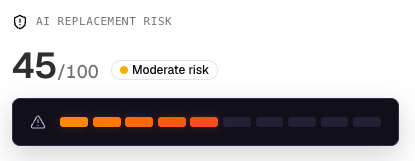
[BRIGENAI DATA: insert brigenai's AI risk score for Electrician from the Careers CMS, with one sentence on what drives the score and a link to the full career page.]
Not sure if your current job is exposed? Run it through brigenai's AI Risk Assessment before you decide to switch.
The 6 best online electrician programs, reviewed
1. Penn Foster Residential Electrician Career Diploma
[SCREENSHOT: Penn Foster course dashboard or enrollment page, taken by our team. Alt text: "Penn Foster online electrician school course dashboard"]
Penn Foster Career School runs a self-paced online diploma that covers electrical fundamentals, safety and tools, reading drawings and blueprints, troubleshooting, and the NEC. The program has 9 courses and 27 exams, worth 37.7 CEUs. Penn Foster says fast learners finish in about 7 months and the average student takes 11.
Rating: 4.4 / 5
Highlight: The only fully online, institutionally accredited electrician diploma we found with a public price under $1,200.
Pros
- Accredited by the Distance Education Accrediting Commission (DEAC)
- Every price option is published on the tuition page
- Full refund if you cancel within the first 6 days
- Low entry bar: age 16 and an 8th grade education
Cons
- Penn Foster states the curriculum does not meet licensing education requirements in 11 states: CA, CT, HI, MA, ME, MI, NC, NH, OR, VT, and WA
- No hands-on lab and no apprenticeship placement
- Residential focus only
Best for: Career changers outside those 11 states who want to test the trade on a small budget before applying for an apprenticeship.
Target region: United States (online)
Pricing: $839 if paid in full (promotional price ending October 14, 2026), $1,049 on monthly auto-pay ($59 a month, $20 down), or $1,139 standard. Taxes may apply.
Conclusion: Penn Foster is the cheapest accredited way to learn the theory and show employers you are serious. Treat it as a first step, not a shortcut to a license.
Official site: pennfoster.edu
2. Electrical Training Alliance (IBEW/NECA apprenticeships)
[SCREENSHOT: Electrical Training Alliance training center finder. Alt text: "Electrical Training Alliance online electrician apprenticeship finder"]
The electrical training ALLIANCE, formerly the NJATC, is the training arm created by the International Brotherhood of Electrical Workers (IBEW) and the National Electrical Contractors Association (NECA) in 1941. It writes the curriculum for local Joint Apprenticeship and Training Committees, which run more than 300 training centers in the US and Canada. Apprentices work paid jobs and complete part of their classroom work online through blended learning.
Rating: 4.3 / 5
Highlight: More than 350,000 apprentices trained to journeyman level, and you earn wages the whole time.
Pros
- The most direct route to a license on this list
- Paid on-the-job training from the start
- National apprenticeship standards approved by the US Department of Labor
- Online coursework frees up classroom time for hands-on labs
Cons
- Competitive entry; many locals require an aptitude test and algebra
- Application windows are set locally, so you may wait months
- Not fully online, and rules differ from one local to the next
Best for: People ready to commit to a full-time, 4 to 5 year apprenticeship.
Target region: United States and Canada, through local programs
Pricing: Set by each local program; no national tuition is published. Apprentices are paid while they train.
Conclusion: If you can get in, this is the strongest long-term choice. Use an online diploma or pre-apprenticeship course to make your application stronger.
Official site: electricaltrainingalliance.org
3. IEC Rocky Mountain Live-Online Program
[SCREENSHOT: IECRM Live-Online program page. Alt text: "IEC Rocky Mountain live online electrical apprentice training"]
IEC Rocky Mountain is a chapter of Independent Electrical Contractors, the non-union contractor association. It has operated in Colorado and Wyoming since 1981 and trains more than 3,500 apprentices and electricians a year. Its Live-Online Program, launched in 2009, streams the apprenticeship classroom: a live instructor teaches one evening a week, 5:30 to 9:30 pm Mountain Time.
Rating: 3.9 / 5
Highlight: Live, instructor-led apprenticeship classes from home, with the same curriculum and tuition as the campus program.
Pros
- Recognized by the US DOL Office of Apprenticeship and regulated by the Colorado Department of Higher Education
- Meets licensing requirements in Colorado and Wyoming
- GI Bill benefits accepted
- A hire list connects people without a job to member contractors
Cons
- Priority goes to students at least 40 miles from a campus
- The DOL-registered program is not available outside Colorado and Wyoming
- Tuition is not listed on the pages we checked, and books cost extra
- Requires a PC with a webcam; tablets and phones do not work
Best for: Working or soon-to-be apprentices in rural Colorado or Wyoming.
Target region: Colorado and Wyoming
Pricing: Paid per semester, two semesters a year, with books extra. Contact IECRM for current rates.
Conclusion: A strong option if you live in its two states and far from Denver. Elsewhere, ask your local IEC chapter whether it offers something similar.
Official site: iecrm.org
4. TPC Training and JADE Learning
[SCREENSHOT: JADE Learning free course start screen, taken by our team. Alt text: "JADE Learning online electrical continuing education course"]
TPC Training sells online technical training to industrial maintenance teams. Its electrical library runs from basic electricity and DC circuits to three-phase systems, motors, and control equipment. Its JADE Learning division serves licensed tradespeople with electrical continuing education, exam prep, and skills courses.
Rating: 3.9 / 5
Highlight: IACET-accredited lessons worth 0.1 CEU each, plus JADE CE courses accepted for electrical license renewal in 45 states and jurisdictions.
Pros
- IACET Accredited Provider
- Public pricing for the TPC Online Professional plan
- JADE courses are free to start; you pay only when you report hours to your state
- JADE has served more than 150,000 professionals over 20+ years
- Most electrical lessons have Spanish subtitles
Cons
- TPC content targets plant maintenance, not residential licensing
- We found no evidence that it counts toward apprenticeship classroom hours on its own
- Plans are billed annually
Best for: Maintenance technicians moving into electrical work, and licensed electricians who need renewal hours.
Target region: United States
Pricing: TPC Online Professional costs $29 per user per month for the Technical library or $44 for Technical plus Safety, billed annually. JADE CE is free to start, with a fee to report hours.
Conclusion: Pick TPC if you already work in a plant and want structured electrical skills. Pick JADE when you have a license to keep current.
Official site: tpctraining.com
5. Mike Holt Enterprises
[SCREENSHOT: Mike Holt journeyman exam prep page. Alt text: "Mike Holt online journeyman electrician exam prep"]
Mike Holt Enterprises was founded in 1975 by Mike Holt, a master electrician and longtime NEC educator. The company publishes electrical training books, videos, and online courses, and it is best known for exam prep for the journeyman, master, and inspector exams. Its CE courses cover the 2023 and 2026 NEC cycles.
Rating: 3.7 / 5
Highlight: Five decades of NEC-focused exam prep from one of the best-known code teachers in the US.
Pros
- CE courses approved in 32 states
- ICC Preferred Provider and approved for NABCEP solar CEUs
- Free state licensing board directory, code forum, and charts
- Updated for the 2026 NEC
Cons
- Not a school; no diploma or institutional accreditation
- Prices are not shown on the main exam prep pages, so you browse products or request a quote
- Built for people already in the trade, not total beginners
Best for: Apprentices within a year of their journeyman exam.
Target region: United States
Pricing: Varies by course, library, or state package. Contact for a personalized quote.
Conclusion: You will probably not start here, but many electricians finish here. Bookmark it for exam year.
Official site: mikeholt.com
6. Interplay Learning
[SCREENSHOT: Interplay 3D electrical simulation from a free trial, taken by our team. Alt text: "Interplay Learning 3D electrical training simulation"]
Interplay Learning, founded in 2016 in Austin, builds online and VR training for HVAC, plumbing, electrical, solar, and facilities work. Instead of only watching videos, you troubleshoot equipment in 3D simulations. Employers and community colleges use it to train new technicians.
Rating: 3.4 / 5
Highlight: 3D simulations let you practice diagnosing faults before you ever touch a live panel.
Pros
- IACET accredited since June 2021
- Hands-on style practice without a lab
- Listed as an approved online electrician program provider on Maine's state workforce site
- Individual plans available, not just team plans
Cons
- Individual pricing is not clearly listed on the official site
- Much of the catalog and its certifications (NATE, EPA 608) center on HVAC
- Some users report the 3D modules crashing on tablets
Best for: Visual, hands-on learners and new hires whose employer pays for training.
Target region: United States
Pricing: About $648 per year, based on a state listing dated April 2025. Confirm on Interplay's site.
Conclusion: A useful add-on to any option above, especially if you learn by doing. It will not replace an apprenticeship.
Official site: interplaylearning.com
Which online electrician program should you choose?
Start from where you are, not from the ranking.
If you live in California, Washington, Michigan, or one of the other states Penn Foster excludes, skip the diploma and go straight to an apprenticeship or a local community college program.
Still deciding whether electrical work is right for you at all? brigenai's Path Simulator lets you play through five years in a chosen career, one month at a time, so you can see what the apprenticeship years actually feel like before you commit. If you are leaving a job because of AI, the Career Pivot tool helps you plan the move from your current job. [EDITOR: confirm this one-line description matches what Career Pivot does.]
FAQ
Can you become an electrician completely online?
No. You can complete the theory and some apprenticeship classroom hours online, but every licensing path requires supervised on-the-job hours. BLS describes a typical apprenticeship as 4 to 5 years, with about 2,000 paid hours of on-the-job training each year.
Are online electrician schools legit?
Some are. Check for institutional accreditation (such as DEAC), registration with the US Department of Labor for apprenticeships, or IACET accreditation for continuing education. Then check whether your state accepts the program. Penn Foster, for example, lists 11 states where its diploma does not meet licensing education rules.
How much does online electrician school cost?
On this list, a full online diploma costs $839 to $1,139 at Penn Foster. Subscription training runs from about $29 a month at TPC to about $648 a year at Interplay. Union and IEC apprenticeships charge tuition set locally, but apprentices are paid while they train.
How long does it take to become an electrician?
A self-paced diploma takes 7 to 11 months at Penn Foster. A full apprenticeship takes 4 to 5 years, and you still need to pass your state's journeyman exam at the end.
Is electrician a good career to switch into because of AI?
It is one of the more resilient options. BLS projects 9% job growth from 2025 to 2035 and lists AI-driven data center demand as one reason electricians will be needed.
Sources and how we checked
We checked every page below on October 12, 2026. Sources already linked in the article above are not repeated here.
- Penn Foster tuition and curriculum pages (price options, course count, completion times)
- Ashworth College electrician page (enrollment closed, Penn Foster state exclusion list)
- American Compass case study on the IBEW apprenticeship system (DOL-approved standards, 300+ training centers)
- TPC IACET CEU page and JADE Learning overview
- Mike Holt continuing education and company history
- Interplay IACET announcement, Maine JobLink listing, and Capterra user reviews