

Last updated: October 12, 2026. Prices and program details were checked on each provider's official site or a state government listing on this date. We do not use affiliate links in this article, and no school paid to be included.
An online trade school will not make you a licensed electrician, plumber, or HVAC tech. What it can do is teach you the theory, get you an entry-level certification like EPA 608, and make you a stronger candidate for the apprenticeship or helper job where the real training happens. For a career changer, that is often the difference between getting hired and getting ignored.
We compared online trade schools on accreditation, how directly they lead to a license or certification, price transparency, flexibility, and track record. Eight made the cut, from a free Home Depot program to a $3,480 community college certificate. This guide covers what each one costs, which trades it teaches, and who it actually fits.
Quick comparison
| School | Our score | Trades | Best for | Price (USD) | Recognition |
|---|---|---|---|---|---|
| Penn Foster Career School | 4.3 | Electrical, plumbing, HVACR, construction, auto, more | Self-paced learners who want an accredited diploma | $839 to $1,139 per diploma (electrician, plumber) | DEAC (institutional) |
| PHCC Academy | 4.1 | Plumbing, HVAC | Future plumbing or HVAC apprentices on a tight budget | Free readiness course; about $29 pre-apprentice course | Curriculum by the PHCC Educational Foundation |
| Community college hybrid programs (example: College of DuPage) | 4.1 | HVACR (varies by college) | Career changers who want college credit and hands-on labs | $3,480 total, including books and tools | Regionally accredited college; EPA certification included |
| SkillCat | 3.9 | HVAC, plumbing, electrical, appliance repair | Getting EPA 608 certified cheaply, from your phone | About $10/month | IACET accredited |
| TPC Training | 3.8 | Industrial electrical, mechanical, HVAC, safety | Plant and building maintenance careers | From $29/month, billed annually | IACET Accredited Provider |
| ed2go career training | 3.6 | HVAC/R, electrical, plumbing, welding, maintenance | A university-issued certificate with exam vouchers | $3,199 (HVAC/R example, University of Central Missouri) | University certificate; HVAC Excellence and EPA exam vouchers |
| Interplay Learning | 3.5 | HVAC, plumbing, electrical, solar | Practicing in 3D before a real job site | $54/month (Solo plan) | IACET accredited since 2021 |
| Home Depot Path to Pro | 3.1 | Plumbing, electrical, HVAC, painting, drywall | Testing whether the trades are for you | Free | No accreditation; completion certificate |
How we ranked these schools
We started with the schools that other "best online trade school" guides recommend, then added options from trade associations and state workforce directories. We kept a school only if it has run for at least two years, teaches at least one skilled trade online, and has a price and recognition we could confirm on an official or government page. We left out schools that are mainly campus-based and providers that teach a single trade only, since our electrician and plumbing guides cover those.
| Criterion | Weight | What we checked |
|---|---|---|
| Accreditation and recognition | 30% | Institutional accreditation (DEAC or regional), IACET, or recognition by apprenticeship programs |
| Path to a license or certification | 25% | Does it lead to a credential employers require, such as EPA 608, or help you into an apprenticeship |
| Price transparency and value | 20% | Is the full price public, and what you get for it |
| Flexibility | 15% | Fully online and self-paced, or tied to a campus schedule |
| Track record | 10% | Years in operation and scale |
Here is how each school scored:
| School | Accreditation | License path | Price | Flexibility | Track record | Total |
|---|---|---|---|---|---|---|
| Penn Foster | 5 | 2.5 | 4.5 | 5 | 5 | 4.3 |
| PHCC Academy | 3.5 | 3.5 | 5 | 5 | 4.5 | 4.1 |
| Community college (College of DuPage) | 5 | 4 | 3.5 | 2.5 | 5 | 4.1 |
| SkillCat | 3.5 | 3 | 5 | 5 | 3 | 3.9 |
| TPC Training | 3.5 | 2.5 | 4.5 | 5 | 4.5 | 3.8 |
| ed2go | 3.5 | 3 | 3 | 5 | 4.5 | 3.6 |
| Interplay Learning | 3.5 | 2 | 4 | 5 | 3.5 | 3.5 |
| Home Depot Path to Pro | 1.5 | 2 | 5 | 5 | 4 | 3.1 |
A high score does not mean the school is right for you. A community college scores lower on flexibility because you have to show up for labs, but those labs are exactly what most online options lack. Use the decision table near the end to match a school to your situation.
Before you enroll: what an online trade school can and cannot do
Most skilled trades in the US are learned on the job. According to the Bureau of Labor Statistics, most electricians and plumbers train through a 4 or 5 year apprenticeship with about 2,000 paid hours of on-the-job training per year, and most states require a license exam at the end. No online school replaces those hours.
What online training does well depends on the trade:
| Trade | What you can do online | What still needs hands-on time |
|---|---|---|
| HVAC | Theory, troubleshooting practice, and the EPA 608 certification required to handle refrigerants | Installs, brazing, live diagnostics |
| Electrical | Theory, the National Electrical Code, exam prep | Wiring, apprenticeship hours, state license |
| Plumbing | Theory, codes, reading piping drawings | Pipe work, apprenticeship hours, state license |
| Industrial maintenance | Electrical and mechanical theory, safety | Working on real plant equipment |
HVAC is the trade where online training gets you furthest on its own, because EPA 608 is a federal certification you can study for and, with some providers, take online.
Are the trades a safe bet in the AI era?
The data is encouraging. BLS projects electrician jobs to grow 9% and plumber jobs 7% from 2025 to 2035, against a 3% average for all occupations. In May 2025, the median pay was $63,190 for electricians, $63,800 for plumbers, and $61,010 for HVAC mechanics and installers, compared with $50,980 for all workers. BLS also points to AI-driven data center demand as one reason electricians will be needed.
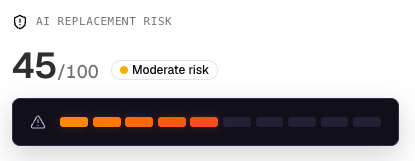
[BRIGENAI DATA: insert brigenai's AI risk scores for Electrician, Plumber, and HVAC Technician from the Careers CMS, ideally as a small comparison, with links to each career page.]
Not sure whether your current job is exposed to AI? Run it through brigenai's AI Risk Assessment before you choose a trade.
The 8 best online trade schools, reviewed
1. Penn Foster Career School
[SCREENSHOT: Penn Foster skilled trades program list or a course dashboard, taken by our team. Alt text: "Penn Foster online trade school skilled trades programs"]
Penn Foster is a long-running distance learning school with a skilled trades catalog that includes residential electrician, plumber, HVACR technician, construction trades, auto repair, and diesel mechanics. Every program is self-paced and fully online, using videos, simulations, and graded exams. The HVACR diploma, for example, has 8 courses and includes the cost of the EPA certification exam.
Rating: 4.3 / 5
Highlight: The widest choice of accredited, fully online trade diplomas on this list.
Pros
- Accredited by the Distance Education Accrediting Commission (DEAC)
- Many trades under one roof, so you can compare before committing
- Low entry bar: age 16 and an 8th grade education
- Full refund within the first 5 or 6 days, depending on the program
Cons
- No hands-on labs and no job or apprenticeship placement
- Some diplomas do not meet licensing education rules in certain states; the electrician program lists 11
- Sale prices change often, and two of its own pages showed different prices on the day we checked
Best for: Self-motivated career changers who want a recognized diploma before applying for trade jobs.
Target region: United States (online)
Pricing: The electrician and plumber diplomas list at $1,139, or $839 if paid in full during the current promotion (ending October 14, 2026). Monthly plans start at $59.
Conclusion: The safest all-round pick if you want an accredited credential and can study alone. Check your state's licensing rules before you enroll.
Official site: pennfoster.edu
2. PHCC Academy
[SCREENSHOT: PHCC Academy free Workforce Readiness course, taken by our team. Alt text: "PHCC Academy online plumbing and HVAC pre-apprentice course"]
PHCC Academy is the online training arm of the Plumbing-Heating-Cooling Contractors National Association's Educational Foundation. It offers short pre-apprentice courses for plumbing and HVAC that cover safety, basic science and math, systems, and customer service. A Workforce Readiness course for both trades is free.
Rating: 4.1 / 5
Highlight: Apprenticeship programs recognize it; PHCC of Nevada gives applicants extra selection points for completing it.
Pros
- Free readiness course and a pre-apprentice course listed at $29 in a 2026 state notice
- Developed by a contractors' association whose members hire apprentices
- Self-paced, with 120 days of access
Cons
- Plumbing and HVAC only
- The course itself is not accredited by an accrediting body
- An introduction, not a full program
Best for: Anyone planning to apply for a plumbing or HVAC apprenticeship who wants a cheap way to stand out.
Target region: United States, through PHCC state chapters
Pricing: Workforce Readiness course is free. The Plumbing Pre-Apprentice course was $29 in PHCC of Nevada's 2026-2027 enrollment notice; prices can vary by chapter.
Conclusion: The best value on this list for future plumbers and HVAC techs. Take it before you pay for anything longer.
Official site: phccacademy.org
3. Community college hybrid programs (example: College of DuPage)
[SCREENSHOT: College of DuPage HVACR certificate catalog page. Alt text: "College of DuPage hybrid HVACR certificate for career changers"]
Many community colleges now teach trade theory online and run labs on campus in the evenings or on weekends. College of DuPage in Illinois is a good example: its Entry Level HVACR Certificate takes one 16-week semester, covers 13 credit hours, and includes EPA certification. The credits stack toward more advanced HVACR certificates.
Rating: 4.1 / 5
Highlight: Real lab time and college credit, which no fully online school on this list offers.
Pros
- Regionally accredited college, so credits can count toward further certificates
- Hands-on labs with real equipment
- EPA certification included
- Day, night, and weekend options
Cons
- You have to live near the campus
- Semester start dates, not open enrollment
- Books, fees, and tools add about $1,400 on top of tuition
Best for: Career changers who live near a community college and want hands-on training without a private school price tag.
Target region: Illinois for this example; similar programs exist at community colleges nationwide
Pricing: $2,080 tuition plus about $1,400 in books, fees, and supplies, for $3,480 total, according to the Illinois workNet listing.
Conclusion: If you can get to a campus, check your local community college first. It is often the best mix of price, credibility, and hands-on time.
Official site: cod.edu
4. SkillCat
[SCREENSHOT: SkillCat app home screen and EPA 608 course, taken by our team on a phone. Alt text: "SkillCat online trade school app EPA 608 training"]
SkillCat is a mobile app founded in 2020 that teaches HVAC, plumbing, electrical, appliance repair, and maintenance through short, simulation-based lessons. Its best-known feature is EPA 608 certification, which you can study for and take through the app. It also offers OSHA-10 and trade school diplomas.
Rating: 3.9 / 5
Highlight: The cheapest way on this list to earn a certification employers actually require.
Pros
- IACET accredited, and recognized by NATE and the EPA
- Very low cost, with a free trial
- Learn entirely on your phone
- Includes OSHA-10, which many job sites ask for
Cons
- A newer company than most on this list
- Phone-sized lessons are no substitute for hands-on practice
- Its 98% EPA pass rate and user numbers are company-reported
Best for: Career changers aiming for HVAC who want EPA 608 certified fast and cheaply.
Target region: United States
Pricing: About $10 per month.
Conclusion: If HVAC is your goal, start here. EPA 608 on your resume makes you a much easier hire for a helper role.
Official site: skillcatapp.com
5. TPC Training
[SCREENSHOT: TPC Online electrical course catalog. Alt text: "TPC Training online industrial maintenance and electrical courses"]
TPC Training sells online technical training built for industrial and facilities maintenance. Its library covers electrical systems, motors, mechanical equipment, HVAC, and safety, and every lesson ends with a test. Its JADE Learning division adds continuing education for licensed electricians and other tradespeople.
Rating: 3.8 / 5
Highlight: A focused route into maintenance technician jobs, a trade many career changers overlook.
Pros
- IACET Accredited Provider, with 0.1 CEU per lesson
- Public pricing
- Includes OSHA 10-equivalent safety training in the safety library
- Most electrical lessons have Spanish subtitles
Cons
- Built for employers training their staff, not for licensing
- No diploma; you get course completions and CEUs
- Plans are billed annually
Best for: Career changers aiming for plant, warehouse, or building maintenance roles.
Target region: United States
Pricing: $29 per user per month for the Technical library, $15 for Safety, or $44 for both, billed annually.
Conclusion: A strong pick if you want maintenance work rather than a licensed trade. Otherwise, one of the options above fits better.
Official site: tpctraining.com
6. ed2go Career Training (through partner universities)
[SCREENSHOT: ed2go HVAC/R program page on a university site. Alt text: "ed2go online HVAC/R technician program through a university"]
ed2go, a division of Cengage, runs online career training programs that colleges and universities offer under their own names. Its trades catalog includes HVAC/R, electrical technician, plumbing, welding, and maintenance. At the University of Central Missouri, for example, the HVAC/R Certified Technician program is 330 hours, self-paced, and includes vouchers for HVAC Excellence and EPA 608 exams.
Rating: 3.6 / 5
Highlight: A certificate issued by a university, with certification exam vouchers built into the price.
Pros
- Many trades and many partner schools to choose from
- Open enrollment and fully self-paced
- Exam vouchers included in some programs
- Instructor and student advisor support
Cons
- Not eligible for federal financial aid
- Prices vary by partner school and change over time, so other guides may quote outdated figures
- The UCM HVAC/R Certified Technician program asks for one to two years of industry experience, so beginners should look for the entry-level version
Best for: People who want a university-branded certificate and can pay out of pocket or through workforce funding.
Target region: United States
Pricing: $3,199 for the HVAC/R Certified Technician program at the University of Central Missouri. Other schools and programs differ.
Conclusion: Worth it if exam vouchers and a university name matter to you. Compare a few partner schools first, since the same course can cost different amounts.
Official site: ucmo.edu
7. Interplay Learning
[SCREENSHOT: Interplay 3D simulation from a free trial, taken by our team. Alt text: "Interplay Learning online trade training 3D simulation"]
Interplay Learning, founded in 2016 in Austin, builds online and VR training for HVAC, plumbing, electrical, solar, and facilities work. Its courses combine short videos with 3D simulations where you diagnose and fix equipment, and contractors and community colleges use it to train new technicians.
Rating: 3.5 / 5
Highlight: Realistic 3D practice that a video course or textbook cannot give you.
Pros
- IACET accredited since June 2021
- Covers several trades on one subscription
- Some courses available in Spanish
- Monthly pricing on the Solo plan
Cons
- Built mainly for employers; the individual plan is less prominent
- HVAC has the deepest library; other trades have less content
- No diploma, and it does not count toward a license on its own
Best for: Hands-on learners, and new hires whose employer pays for training.
Target region: United States
Pricing: $54 per user per month on the Solo plan.
Conclusion: A useful add-on to any option above if you learn by doing. It works best alongside a job or apprenticeship.
Official site: interplaylearning.com
8. Home Depot Path to Pro
[SCREENSHOT: Path to Pro course list, taken by our team. Alt text: "Home Depot Path to Pro free online trade school courses"]
Path to Pro is a free skilled trades program from The Home Depot and The Home Depot Foundation, launched in 2021. Its Skills Program offers short, on-demand courses in English and Spanish, covering trade basics plus plumbing, electrical, HVAC, painting, and drywall. Adults can join the Path to Pro Network to connect with contractors who are hiring.
Rating: 3.1 / 5
Highlight: The easiest free way to sample several trades before you pick one.
Pros
- Completely free, with a completion certificate for each course
- Short courses; plumbing takes about 3 hours
- English and Spanish
- Free job network linked to Home Depot's contractor customers
Cons
- No accreditation, and no credit toward a license
- Introductory content only
- The job network is for adults 18 and older
Best for: Career changers who have not chosen a trade yet.
Target region: United States
Pricing: Free.
Conclusion: Start here if you are unsure which trade suits you. Then move to a paid option for the trade you like most.
Official site: pathtopro.com
Which online trade school should you choose?
Start from where you are, not from the ranking.
| Your situation | Start with | Why |
|---|---|---|
| Have not picked a trade yet | Home Depot Path to Pro | Free short courses in several trades |
| Aiming for HVAC | SkillCat | EPA 608 certification for about $10 a month |
| Aiming for plumbing or HVAC and applying for apprenticeships | PHCC Academy | Cheap, and apprenticeship programs give it credit |
| Want an accredited diploma and can study alone | Penn Foster | Widest choice of fully online trade diplomas |
| Live near a community college | Community college hybrid program | Labs, college credit, and often financial aid |
| Want a university certificate with exam vouchers | ed2go | University-issued certificate, self-paced |
| Aiming for plant or building maintenance | TPC Training | Industrial skills with IACET credit |
| Learn best by doing, or your employer pays | Interplay Learning | 3D practice across several trades |
A low-risk order for most career changers: sample trades for free on Path to Pro, pick one, earn the cheapest credential employers ask for (EPA 608 for HVAC, a PHCC course for plumbing), and then apply for helper jobs or apprenticeships. Pay for a longer program only if you need more structure.
Still deciding which trade fits you best? brigenai's Path Simulator lets you play through five years in a chosen career, one month at a time, so you can compare what the first years in each trade feel like. For a deeper look at single trades, see our guides to the best online electrician schools and online plumbing courses for beginners.
FAQ
Are online trade schools legit?
Some are. Look for institutional accreditation (DEAC or a regional accreditor), IACET accreditation for training providers, or recognition by apprenticeship programs. Then check whether your state accepts the program for licensing, since some trade diplomas do not meet every state's rules.
Can you learn a trade completely online?
You can learn the theory and earn some certifications online, such as EPA 608 for HVAC. You cannot finish a licensed trade like electrical or plumbing online, because states require years of supervised on-the-job hours.
What is the easiest trade to start online?
HVAC is the most online-friendly start. EPA 608 certification is federally required to work with refrigerants, and some providers let you study for it and take the exam online, which makes you easier to hire as a helper.
How much does an online trade school cost?
On this list, costs run from free (Path to Pro) and about $10 a month (SkillCat) to about $1,139 for a Penn Foster diploma and around $3,200 to $3,500 for university or community college certificates.
Can I use financial aid for an online trade school?
It depends on the school. Credit-bearing programs at accredited community colleges can qualify for federal aid, while most private online programs and ed2go certificates do not. Workforce (WIOA) funding and the GI Bill can cover some programs.
Sources and how we checked
We checked every page below on October 12, 2026. Sources already linked in the article above are not repeated here.
- Penn Foster electrician tuition, plumber tuition, and HVACR curriculum
- PHCC of Nevada 2026-2027 apprenticeship enrollment notice and PHCC Plumbing Pre-Apprentice syllabus
- Illinois workNet listing for the College of DuPage Entry Level HVACR Certificate (cost breakdown, hours, delivery)
- SkillCat on the App Store (price, certifications) and Service Magazine review of SkillCat
- TPC IACET CEU page and TPC instructors and course topics
- ed2go programs at a university partner (trades catalog)
- Interplay Learning IACET accreditation announcement and Interplay plan pricing
- The Home Depot: Path to Pro overview