

Last updated: October 12, 2026. Prices and course details were checked on each provider's official site or a state government listing on this date. We do not use affiliate links in this article, and no provider paid to be included.
You can start learning plumbing online for free tonight. You cannot finish becoming a plumber online. Most states want 2 to 5 years of supervised work plus an exam before you plumb on your own, and most people get there through a paid apprenticeship. A good online course does two things: it shows you whether you actually like the work, and it makes you a stronger apprenticeship applicant.
We looked at the online plumbing courses beginners are most likely to find and kept only the ones we could verify. Five made the cut, ranging from a free 3-hour intro to a $3,500 apprenticeship-level class. Below you will find what each one costs, what it leads to, and which one fits where you are right now.
Quick comparison
| Course | Our score | Best for | Price (USD) | Recognition |
|---|---|---|---|---|
| Penn Foster Plumber Career Diploma | 4.3 | Career changers who want a full, structured theory course before applying for an apprenticeship | $839 to $1,139 one-time | DEAC (institutional) |
| PHCC Academy Plumbing Pre-Apprentice Course | 4.1 | Beginners who want a cheap, industry-made course that apprenticeship programs recognize | Free readiness course; about $29 for the pre-apprentice course | Curriculum by the PHCC Educational Foundation |
| NCCER Plumbing Level 1 through ABC Illinois | 4.0 | People in Illinois ready to start formal apprenticeship training | $3,500 | NCCER credential; registered apprenticeship |
| Interplay Learning | 3.5 | Hands-on learners who want 3D practice before a real job site | $54/month (Solo plan) | IACET accredited since 2021 |
| Home Depot Path to Pro | 3.1 | Total beginners testing whether the trades are for them | Free | No accreditation; completion certificate |
How we ranked these courses
We started with the courses that other "best online plumbing course" guides recommend, then added options listed by trade associations and state workforce directories. We kept a course only if it has run for at least two years and its price and recognition could be confirmed on an official or government page. Each one was scored from 1 to 5 on five criteria.
| Criterion | Weight | What we checked |
|---|---|---|
| Accreditation and recognition | 30% | Institutional accreditation (DEAC), NCCER credentials, IACET, or recognition by apprenticeship programs |
| Path to a license | 25% | Does it count toward an apprenticeship, or help you get into one |
| Price transparency and value | 20% | Is the full price public, and what you get for it |
| Flexibility | 15% | Self-paced or scheduled, online only or tied to a location |
| Track record | 10% | Years in operation and scale |
Here is how each course scored:
| Course | Accreditation | License path | Price | Flexibility | Track record | Total |
|---|---|---|---|---|---|---|
| Penn Foster | 5 | 2.5 | 4.5 | 5 | 5 | 4.3 |
| PHCC Academy | 3.5 | 3.5 | 5 | 5 | 4.5 | 4.1 |
| ABC Illinois (NCCER) | 4.5 | 4.5 | 3.5 | 2 | 5 | 4.0 |
| Interplay Learning | 3.5 | 2 | 4 | 5 | 3.5 | 3.5 |
| Home Depot Path to Pro | 1.5 | 2 | 5 | 5 | 4 | 3.1 |
One caveat: the ranking is not a recommendation for everyone. If you have never touched a pipe wrench, the free options at the bottom of the list are the smarter first step. The decision table near the end of this article maps each course to a situation.
Before you enroll: how plumbers actually get licensed
According to the Bureau of Labor Statistics, most plumbers learn through a 4 or 5 year apprenticeship with about 2,000 hours of paid on-the-job training per year. Most states and some cities then require a licensing exam, often after 2 to 5 years of experience. Apprenticeships are run by unions such as the United Association (UA), trade associations such as PHCC and ABC, and individual contractors. BLS also notes that some people start with a pre-apprenticeship course, which is exactly where online training fits.
The usual path looks like this:
- Take an intro or pre-apprentice course to learn the basics and test your interest
- Get hired as a helper or accepted into an apprenticeship
- Log your on-the-job hours plus classroom instruction, which some programs now deliver online
- Pass your state or local journeyman exam
- Work toward master plumber status if you want to run your own business
The courses below each fit step 1 or step 3. None of them replaces steps 2 and 4.
Is plumbing a safe career bet in the AI era?
The work is physical, varied, and done inside real buildings, which tends to make it harder to automate than desk work. BLS projects plumber, pipefitter, and steamfitter jobs to grow 7% from 2025 to 2035, more than double the 3% average for all occupations, with about 42,000 openings a year. The May 2025 median pay was $63,800, and the top 10% earned more than $108,420.
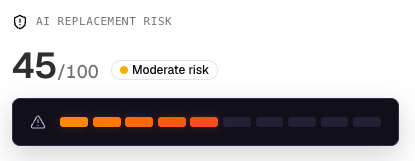
[BRIGENAI DATA: insert brigenai's AI risk score for Plumber from the Careers CMS, with one sentence on what drives the score and a link to the full career page.]
Not sure whether your current job is exposed to AI? Run it through brigenai's AI Risk Assessment before you decide to switch.
The 5 best online plumbing courses, reviewed
1. Penn Foster Plumber Career Diploma
[SCREENSHOT: Penn Foster plumbing course dashboard or lesson page, taken by our team. Alt text: "Penn Foster online plumbing course for beginners"]
Penn Foster Career School runs a self-paced online diploma that covers modern plumbing, an introduction to plumbing and pipefitting, and reading piping prints, along with installing and repairing fixtures. The program has 8 courses, 19 quizzes, and 1 graded project, worth 30.1 CEUs. Penn Foster says fast learners finish in about 6 months and the average student takes 9.
Rating: 4.3 / 5
Highlight: The most complete fully online, institutionally accredited plumbing course we found for under $1,200.
Pros
- Accredited by the Distance Education Accrediting Commission (DEAC)
- Low entry bar: age 16 and an 8th grade education
- Full refund if you cancel within the first 5 days
- Interactive simulations and how-to videos, not just reading
Cons
- No hands-on lab and no apprenticeship placement
- Promotional prices change often; on the day we checked, two Penn Foster pages showed different sale prices for the same program
- Uses US codes and Imperial units, so it is less useful outside the US
Best for: Career changers who want structured theory and a credential to show employers before applying for an apprenticeship.
Target region: United States (online)
Pricing: $839 if paid in full (promotional price ending October 14, 2026), $1,049 on monthly auto-pay ($59 a month, $20 down), or $1,139 standard. Taxes may apply. Check the tuition page for the current offer.
Conclusion: The best choice if you want a real course rather than a quick intro, and you can study on your own. Pair it with a pre-apprentice course or a helper job so you also get hands-on time.
Official site: pennfoster.edu
2. PHCC Academy Plumbing Pre-Apprentice Course
[SCREENSHOT: PHCC Academy free Workforce Readiness course, taken by our team. Alt text: "PHCC Academy online plumbing pre-apprentice course"]
PHCC Academy is the online training arm of the PHCC Educational Foundation, part of the Plumbing-Heating-Cooling Contractors National Association. Its Plumbing Pre-Apprentice course is built for entry-level workers and covers plumbing principles, customer service, jobsite safety, science and math, plumbing systems and products, and gas fixtures. A separate Plumbing and HVAC Workforce Readiness course is free.
Rating: 4.1 / 5
Highlight: Apprenticeship programs recognize it. PHCC of Nevada, for example, gives extra selection points to applicants who complete both courses.
Pros
- Very low cost: the readiness course is free and the pre-apprentice course was listed at $29 in a 2026 state notice
- Developed by a contractors' association whose members hire apprentices
- Self-paced, with 120 days of access
- PHCC also offers online apprentice classroom courses recognized by the US Department of Labor, so there is a clear next step
Cons
- The course itself is not accredited by an accrediting body
- Pricing and registration can run through state chapters, so the process varies by state
- It is an introduction, so expect breadth rather than depth
Best for: Beginners who plan to apply for a plumbing apprenticeship and want a cheap way to stand out.
Target region: United States, through PHCC state chapters
Pricing: Workforce Readiness course is free. The Plumbing Pre-Apprentice course was $29 in PHCC of Nevada's 2026-2027 enrollment notice; confirm the price for your state.
Conclusion: For most beginners, this is the best value on the list. Take it first, then decide whether a longer course is worth paying for.
Official site: phccacademy.org
3. NCCER Plumbing Level 1 through ABC Illinois
[SCREENSHOT: ABC Illinois plumbing program page or virtual info session sign-up. Alt text: "ABC Illinois NCCER Plumbing Level 1 online and hybrid course"]
Associated Builders and Contractors (ABC) is a national contractor association whose chapters run registered apprenticeships using the NCCER curriculum. ABC Illinois offers Plumbing Level 1, the first year of apprenticeship training, as a 160-hour, 40-week course that mixes online learning, night classes, and labs. You earn an NCCER credential that goes on a national transcript.
Rating: 4.0 / 5
Highlight: The closest thing on this list to the real first year of a plumbing apprenticeship.
Pros
- Industry-recognized NCCER credential
- Part of a registered apprenticeship program
- Approved for state workforce (WIOA) funding in Illinois, and GI Bill eligible
- Hands-on labs included, unlike fully online courses
Cons
- Requires NCCER Core first, plus a virtual information session before enrolling
- Labs and classes are in Illinois, so it is not fully remote
- Highest price on this list
Best for: People in the Chicago area who are ready to commit to a plumbing career now.
Target region: Illinois
Pricing: $3,500 tuition with no listed extra costs, according to the Illinois workNet program listing.
Conclusion: A strong choice if you live in Illinois and have already decided on plumbing. Elsewhere, ask your local ABC chapter about its NCCER plumbing program.
Official site: abcil.org
4. Interplay Learning
[SCREENSHOT: Interplay plumbing 3D simulation from a free trial, taken by our team. Alt text: "Interplay Learning online plumbing training 3D simulation"]
Interplay Learning, founded in 2016 in Austin, builds online and VR training for HVAC, plumbing, electrical, solar, and facilities work. Its plumbing courses mix expert-led videos with 3D simulations where you practice diagnosing and fixing problems, and contractors use it to train new apprentices. Individuals can sign up on the Solo plan.
Rating: 3.5 / 5
Highlight: 3D simulations give you practice reps that a video course cannot.
Pros
- IACET accredited since June 2021
- Plumbing learning paths for beginners through experienced techs
- Some courses available in Spanish
- Monthly pricing on the Solo plan instead of a large upfront fee
Cons
- Built mainly for employers, so the individual plan is less prominent on the site
- HVAC has the deepest library; plumbing content is smaller
- No diploma, and it does not count toward a license on its own
Best for: Visual, hands-on learners, and new hires whose employer pays for training.
Target region: United States
Pricing: $54 per user per month on the Solo plan, which works out to about $648 a year.
Conclusion: A good add-on to the PHCC course or Penn Foster if you learn by doing. It works best alongside an apprenticeship, not instead of one.
Official site: interplaylearning.com
5. Home Depot Path to Pro
[SCREENSHOT: Path to Pro plumbing course start screen, taken by our team. Alt text: "Home Depot Path to Pro free online plumbing course"]
Path to Pro is a free skilled trades program from The Home Depot and The Home Depot Foundation, launched in 2021. Its Skills Program offers short, on-demand courses in English and Spanish, starting with trade basics and moving into plumbing, electrical, HVAC, and other essentials. Adults can also join the Path to Pro Network to connect with contractors who are hiring.
Rating: 3.1 / 5
Highlight: The fastest free way to find out whether you even like plumbing work.
Pros
- Completely free, with a completion certificate for each course
- Short: the plumbing course takes about 3 hours
- Available in English and Spanish
- Free job network that connects you with Home Depot's contractor customers
Cons
- No accreditation, and it does not count toward any license
- Introductory only; it will not teach you to do plumbing work
- The job network is for people 18 and older
Best for: Total beginners and career changers who want to test the trades before spending any money.
Target region: United States
Pricing: Free.
Conclusion: Start here if you are unsure. If you finish it and want more, move on to the PHCC course next.
Official site: pathtopro.com
Which online plumbing course should you choose?
Start from where you are, not from the ranking.
| Your situation | Start with | Why |
|---|---|---|
| Not sure the trades are for you | Home Depot Path to Pro | Free, about 3 hours, no commitment |
| Planning to apply for an apprenticeship soon | PHCC Academy | Cheap, and apprenticeship programs give it credit |
| Want a full course and a credential before applying | Penn Foster | Accredited, self-paced, under $1,200 |
| Living in Illinois and ready to commit | ABC Illinois (NCCER) | First year of apprenticeship training with labs |
| Learn best by doing, or your employer pays | Interplay Learning | 3D practice to add to any path above |
A sensible low-risk order for most beginners: Path to Pro first (free), then the PHCC courses (free and about $29), then apply for apprenticeships. Only pay for a longer course if you want more structure while you wait.
Still weighing plumbing against other trades? brigenai's Path Simulator lets you play through five years in a chosen career, one month at a time, so you can see what the apprenticeship years feel like before you commit. If you are also considering electrical work, see our guide to the best online electrician schools.
FAQ
Can you learn plumbing online?
You can learn the theory online: codes, systems, tools, safety, and how to read piping drawings. You cannot learn the hands-on skills or earn a license online. BLS says most plumbers train through a 4 or 5 year apprenticeship with about 2,000 paid hours of on-the-job training each year.
Are there free online plumbing courses?
Yes. Home Depot's Path to Pro offers a free plumbing course of about 3 hours, and PHCC Academy offers a free Plumbing and HVAC Workforce Readiness course. Both give you a completion certificate, but neither counts toward a license.
Do online plumbing certificates count toward a license?
Usually not on their own. Licensing is set by each state or city and typically requires 2 to 5 years of supervised experience plus an exam. A certificate can help you get into an apprenticeship, which is what counts.
How long does it take to become a plumber?
An online course takes anywhere from a few hours (Path to Pro) to 6 to 9 months (Penn Foster). A full apprenticeship takes 4 to 5 years, after which you take your journeyman exam.
Is plumbing a good career to switch into because of AI?
It is one of the more resilient options. BLS projects 7% job growth from 2025 to 2035, and the work happens in physical spaces that are hard to standardize.
Sources and how we checked
We checked every page below on October 12, 2026. Sources already linked in the article above are not repeated here.
- Penn Foster plumber tuition and curriculum pages (price options, refund window, course count, completion times)
- PHCC Academy Plumbing Pre-Apprentice syllabus (topics, 120-day access)
- PHCC of Nevada 2026-2027 apprenticeship enrollment notice (course prices, extra selection points)
- PHCC eLearning apprentice courses recognized by the US DOL
- Illinois workNet listing for ABC Plumbing Level 1 (tuition, hours, prerequisites)
- Interplay Learning IACET accreditation announcement, Interplay plan pricing, and Service Magazine review (content depth by trade)
- The Home Depot: Path to Pro overview (launch year, languages, network)
- Path to Pro course lengths