


Salary Guide in New Zealand
*2026 NZ Estimates. All figures represent annual salary and base salaries (excluding bonuses/allowances), and are gross (pre-tax). Healthcare average annual salary: $99,755. Engineering average annual salary: $92,035. Includes impacts of the April 2026 Zealand minimum wage adjustment to approximately $24/hr. KiwiSaver employee and employer contribution rates will increase to 3.5% from April 1, 2026.
We’ve already filtered job opportunities specifically for global talent who want to work abroad. These roles can help you obtain a work visa more easily and support your next step in career planning.
💰Free 🔓 No sign-up

This guide helps international professionals and students explore:
- Typical salaries by industry and role
- Minimum wage and income standards
- Cost of living vs salary reality
- Visa salary thresholds (Green List, AEWV, SMC)
- Whether New Zealand is financially worth relocating to
So you can plan your career move with clarity, not uncertainty.
Why Are Salaries in New Zealand Attractive to Overseas Talent?
New Zealand offers:
- Transparent pay structures
- Fair labor laws and worker protection
- Clear migration-linked salary thresholds
- A balanced lifestyle with long-term residency pathways
These transparent pay structures and fair labor laws are designed to improve access to equitable opportunities in the workforce, helping to reduce structural barriers that can limit career advancement and wage equity.
For many migrants, New Zealand provides stable income, a safe living environment, and a clear path from work to residency. However, it's important to note that the cost of living in New Zealand is relatively high compared to average salaries, and roughly 68% of New Zealanders prioritize work-life balance over higher pay.
What Is the Average Salary in New Zealand?
NZD $80,000 – $95,000 per year
Average full-time salary
As of early 2026, the average weekly earnings for full-time employees reached $1,712, which equates to an annualized gross figure of roughly $89,024. The average monthly salary in New Zealand is 5,666 NZD (about USD 3,250). In the private sector, the average salary is approximately $85,700 as of 2025, which can be compared to the overall national average to highlight sectoral differences in earnings.
NZD $65,000 – $75,000 per year
Median salary
The median salary means that half earn more and half earn less than this amount. The difference between the average and median salaries shows the impact of higher earners on the average, with the median often considered a better indicator of what a typical worker earns. Median hourly earnings from wages and salaries reached $35.00 in the June 2025 quarter, and the median weekly income from wages and salaries was $1,380 in the same period.
Skilled roles in IT, healthcare, engineering, construction, and finance often exceed the median and meet migration salary thresholds.
Use free Pay and Salary Calculator to estimate your pay in NZ, Australia, Singapore, Hong Kong. Calculate income tax, ACC, KiwiSaver, and net salary instantly for 2026.
💰Free 🔓 No sign-up ⚡ Instant results

What Is the Minimum Wage in New Zealand?
National Minimum Wage 2026
National Minimum Wage 2026
The Zealand minimum wage is anticipated to rise to approximately NZD $24 per hour by April 2026. This rate applies to adult workers, while separate minimum wage rates are set for training and starting-out workers, which are typically lower and depend on age or experience. Minimum wage calculations are based on hours worked, usually assuming a standard 40-hour work week.
NZD $24 per hour
≈ NZD $960 per week (40 hours)
This applies to:
- International students
- Working holiday visa holders
- Entry-level overseas workers
Helping you evaluate your overseas living options before you make the move.
💰Free 🔓 No sign-up ⚡ Instant results

What Is the Minimum Wage in New Zealand?
National Minimum Wage 2026
Several key factors shape the average salary and salary growth in New Zealand. Education level is a major driver—according to the Household Labour Force Survey, workers with higher qualifications, such as a bachelor’s degree or above, consistently earn higher salaries than those without tertiary education. Experience also plays a crucial role, with more seasoned professionals typically commanding higher pay across most industries.
Occupation and industry are significant influences as well. For example, tech and healthcare sectors often offer higher salaries due to strong demand for skilled talent. Employers in these high-demand fields are willing to pay a premium to attract and retain top workers. Location matters too—salaries in major cities like Auckland and Wellington tend to be higher than in regional areas, reflecting differences in cost of living and local labour market conditions.
Ultimately, a combination of qualifications gained, years of experience, industry trends, and regional demand all contribute to the salary you can expect in New Zealand. Understanding these factors can help you benchmark your earning potential and negotiate with confidence.
Labour Market Conditions in New Zealand
The labour market in New Zealand is dynamic, with a healthy mix of full-time, part-time, and contract roles, as well as a growing gig economy. Stats NZ reports that in recent years, the country has enjoyed low unemployment rates and steady job creation, contributing to positive wage growth for many workers. However, challenges remain—most notably, the gender pay gap persists, with women earning less than men on average, and wage disparities are also evident among different ethnic groups.
The minimum wage in New Zealand is currently set at NZ$23.50 per hour and is reviewed annually to keep pace with the cost of living. This provides a safety net for entry-level and lower-paid workers, but wage growth can vary significantly by sector and occupation. Immigration policies also play a role, as they influence the supply of skilled workers and can impact overall wage rates in the labour market. By staying informed about these factors, workers and employers alike can better navigate the evolving landscape of pay and employment in New Zealand.
Highest Paying Jobs in New Zealand (By Industry)
IT & Tech
Software Engineer: $85k – $140k (annual salary, base salaries)
Data Engineer: $95k – $160k (annual salary, base salaries)
Cloud Architect: $120k – $180k (annual salary, base salaries)
Registered Nurse: $70k – $110k (annual salary, base salaries)
GP: $160k – $300k+ (annual salary, base salaries)
Physiotherapist: $75k – $120k (annual salary, base salaries)
Engineering & Construction
Project Manager: $100k – $160k (annual salary, base salaries)
Quantity Surveyor: $90k – $140k (annual salary, base salaries)
Accountant: $65k – $110k (annual salary, base salaries)
Trades (Green List & Shortage)
Electrician: $75k – $120k (annual salary, base salaries)
Plumber: $70k – $115k (annual salary, base salaries)
Construction Supervisor: $90k – $140k (annual salary, base salaries)
Notes:
- The average annual salary in healthcare is $99,755, and in engineering it is $92,035.
- High earners in executive and specialist roles can earn significantly more than the national average.
- Salary growth is strongest in the real estate sector, with annual growth rates up to 9.7%.
- The average salary in the Public Service was $103,300 in 2025, an increase of 1.6% from the previous year.
Salaries by City in New Zealand
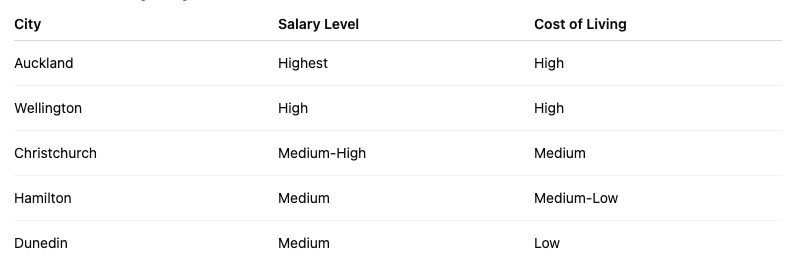
Annual Gross Salary (NZD)
All salary figures below are in New Zealand dollars (NZD) and represent annual salary or earnings.
Location
Wellington leads New Zealand in median earnings, followed by Auckland and Taranaki. Rural regions typically pay 15-20% less in annual salary compared to these main centres.
Job Market Trends in New Zealand
Current job market trends in New Zealand reveal a strong shift towards service-oriented industries, with increasing demand for skilled workers in tech, finance, and healthcare. Market insights show that employers are actively seeking talent with up-to-date skills, particularly in areas like data analysis, digital marketing, and administrative support. Administrative workers are especially in demand, as businesses look for professionals who can manage complex workflows and support digital transformation.
The job market is also being shaped by demographic changes, such as an ageing population, which is driving up demand for healthcare and social services workers. Employers are responding by investing in upskilling and reskilling programs to ensure their workforce can meet the evolving needs of the economy. As these trends continue, job seekers with relevant skills and adaptability will find strong opportunities in New Zealand’s growing and diverse labour market.
Can International Students Earn Enough in New Zealand?
Typical student pay: NZD $23–30/hour Graduate starting salary: NZD $55k–$75k
Entry-level and graduate salaries can vary by age, as salary progression is influenced by different age groups. The median salary in New Zealand is also shaped by the distribution of salaries across these age groups, with most workers reaching their peak earnings between ages 45 and 49.
Many students transition into:
- Green List occupations
- Accredited Employer Work Visa (AEWV) roles
- Skilled Migrant Category pathways
How Salary Affects New Zealand Work Visas
Salary directly impacts:
- Accredited Employer Work Visa (AEWV)
- Green List (Straight to Residence & Work to Residence)
- Skilled Migrant Category (SMC)
- Residence salary thresholds
Most residence-linked roles must meet or exceed the New Zealand median wage or industry-specific thresholds.
Your salary determines: ✔ Visa eligibility ✔ Sponsorship approval ✔ Residency speed ✔ Long-term settlement success
Browse All New Zealand Work Visas

Economic Impact of Salaries in New Zealand
Salaries and wages play a vital role in New Zealand’s economy, making up a significant share of the country’s GDP. According to Stats NZ, the average salary is approximately NZ$69,836 per year, though this figure varies widely depending on occupation, industry, and location. The gender pay gap remains a notable issue, with women earning about 16% less than men on average—a disparity that not only affects individual workers but also has broader economic implications.
The minimum wage, which is reviewed and adjusted annually, helps set the baseline for wage growth across the labour market. Government initiatives such as pay transparency and equal pay legislation are designed to address pay equity, reduce the gender pay gap, and promote fair compensation practices. By understanding the factors that influence salary—such as industry, qualifications, and regional differences—employers and policymakers can work towards a more equitable and sustainable labour market that benefits all workers and supports New Zealand’s long-term economic health.
Is New Zealand Financially Worth Relocating?
Before moving, overseas talent should evaluate:
- Will my salary meet visa thresholds?
- Can I afford rent, tax, and daily costs?
- Does my role lead to residency?
- Is long-term career growth strong in NZ?
It's important to consider the difference between the average salary and the cost of living in New Zealand, as the cost of living is relatively high compared to average salaries. This difference can impact your ability to save and maintain your desired lifestyle.
How BRIGENAI Supports Your Salary, Tax & Visa Planning
BRIGENAI helps you connect salary with:
- Visa pathways (Green List, AEWV, SMC)
- Local tax advisors and accountants
- Career and migration strategy
So you don't just find a job — you plan a financially safe, visa-compliant, long-term relocation.
See how your skills match, how exposed your current job is to AI, and what it takes to make the switch.