Career Advice

Best 10 Digital Marketing Career Tips From an Industry Expert For International Students and New Grads

June 24, 2026
Share on
Best 10 Digital Marketing Career Tips From an Industry Expert For International Students and New Grads
A digital marketing expert's real advice for international students and entry-level marketers breaking into the job market abroad — portfolio, visa, and interview tips that actually work.

Digital marketing looks like one of the more accessible entry points for international graduates — no licensing exam, no registration board, just skills and a portfolio. That accessibility is exactly why it's also one of the most crowded entry-level job markets. Every graduate with a laptop and a Canva account thinks they're a marketer now.

We asked a digital marketing lead who has hired junior marketers and interns across Australia, Singapore, and New Zealand for the advice she actually gives candidates — not the generic "get certified in Google Ads" line everyone repeats. Here are her 10 tips, sharpened for international students and entry-level professionals trying to land a first marketing role abroad.

1. Stop collecting certificates and start collecting results

A LinkedIn profile with twelve marketing certifications and zero real campaigns tells a hiring manager you're good at following a course, not at marketing. One real result — even a small one, like growing a university club's Instagram from 200 to 2,000 followers, or running a $50 ad test for a friend's small business — is worth more than a stack of badges. Pick one channel, run one real test, and be ready to explain exactly what you measured and what you'd do differently.

2. Build a portfolio around decisions, not deliverables

Junior portfolios show finished posts, ads, and email templates. Strong portfolios show the decision behind them: why you chose that audience segment, why you killed an ad after three days, what the data told you that changed your approach. A hiring manager scanning your portfolio in under two minutes needs to see you think like a marketer, not just execute like one. Trim your portfolio down to two or three real decisions explained well, rather than ten projects explained shallowly.

3. Localize your case studies to the market you're applying in

A case study about a campaign for a brand or audience back home can actually undercut you if the hiring team can't relate to the cultural or platform context. Where possible, reframe or rebuild a project around the local market you're applying in — local consumer behavior, local platform preferences, local seasonal moments. It signals you understand the audience you'd actually be marketing to, not just the tools.

4. Learn the platforms that matter in your target market, not just the ones you grew up on

Platform habits vary more by country than most international students expect — TikTok's role, the weight of LinkedIn versus Instagram for B2B, the continued relevance of email and SMS in some markets. Spend real time studying what's actually working in your target country's market right now, not assuming your home market's platform mix transfers directly. This single gap is one of the fastest ways international candidates get filtered out in interviews.

5. Translate your visa status into a one-line confidence statement

International candidates often bury their visa situation in HR paperwork instead of owning it upfront. If you have work rights — a post-study work visa, permanent residency pathway, or sponsorship eligibility — say so plainly in your resume header or cover letter: "Eligible to work full-time in [country], no sponsorship required for [X years]." This single line removes the biggest hesitation a hiring manager has before they've even opened your portfolio.

6. Treat your first marketing job as a data literacy bootcamp

Your first role shapes how analytically you think for years to come. A smaller team where you're pulling your own reports and reading your own dashboards will teach you more than a large agency where junior staff only build slides from data someone else already analyzed. When evaluating offers, ask directly: "Who builds the reporting, and would I have access to the raw data?" The answer tells you how much you'll actually learn.

7. Get comfortable with the "walk me through a campaign" interview format

Behavioral, story-driven interviews are not universal — many international candidates come from education systems that reward technical correctness over narrative. Practice walking through one campaign end-to-end out loud: goal, audience, channel choice, what happened, what you'd change. Record yourself once. You'll notice gaps in your story you didn't know were there.

8. Treat AI tools as your speed advantage, not your shortcut

Hiring managers are now actively testing whether junior marketers can use AI tools to move faster — copywriting drafts, audience research, campaign briefs — without losing strategic judgment. Show, don't just tell: mention in your interview a specific instance where you used an AI tool to speed up a task, and be ready to explain what you changed because the first draft wasn't right for your audience. That nuance is what separates "uses AI" from "depends on AI."

9. Don't filter job boards by "Digital Marketing" title alone

Entry-level marketing roles are increasingly bundled into broader titles — Growth Associate, Content Coordinator, Customer Marketing Intern, even Business Development with a marketing component. International students who filter by exact title alone miss most of the real opportunities. Search by skill and responsibility instead of title, and read the actual job description before ruling a role out.

10. Build your case for staying before you need one

In visa-dependent markets, the strongest negotiating position is the one you build quietly over your first six months: documented campaign wins, manager feedback in writing, a clear story of measurable impact. When a sponsorship or extension conversation comes up, you want evidence already sitting in your inbox, not a scramble to remember what you ran in March. Ask for feedback regularly and keep a simple log of results — it pays off twice, once for your confidence and once for your visa case.

The real takeaway

None of this advice is about working harder than local candidates. It's about closing specific, fixable gaps — market context, platform literacy, visa clarity, interview format — that have nothing to do with marketing talent. International students who treat the job search itself as a campaign, with its own targeting and testing, consistently outperform those who just send the same resume to more companies.

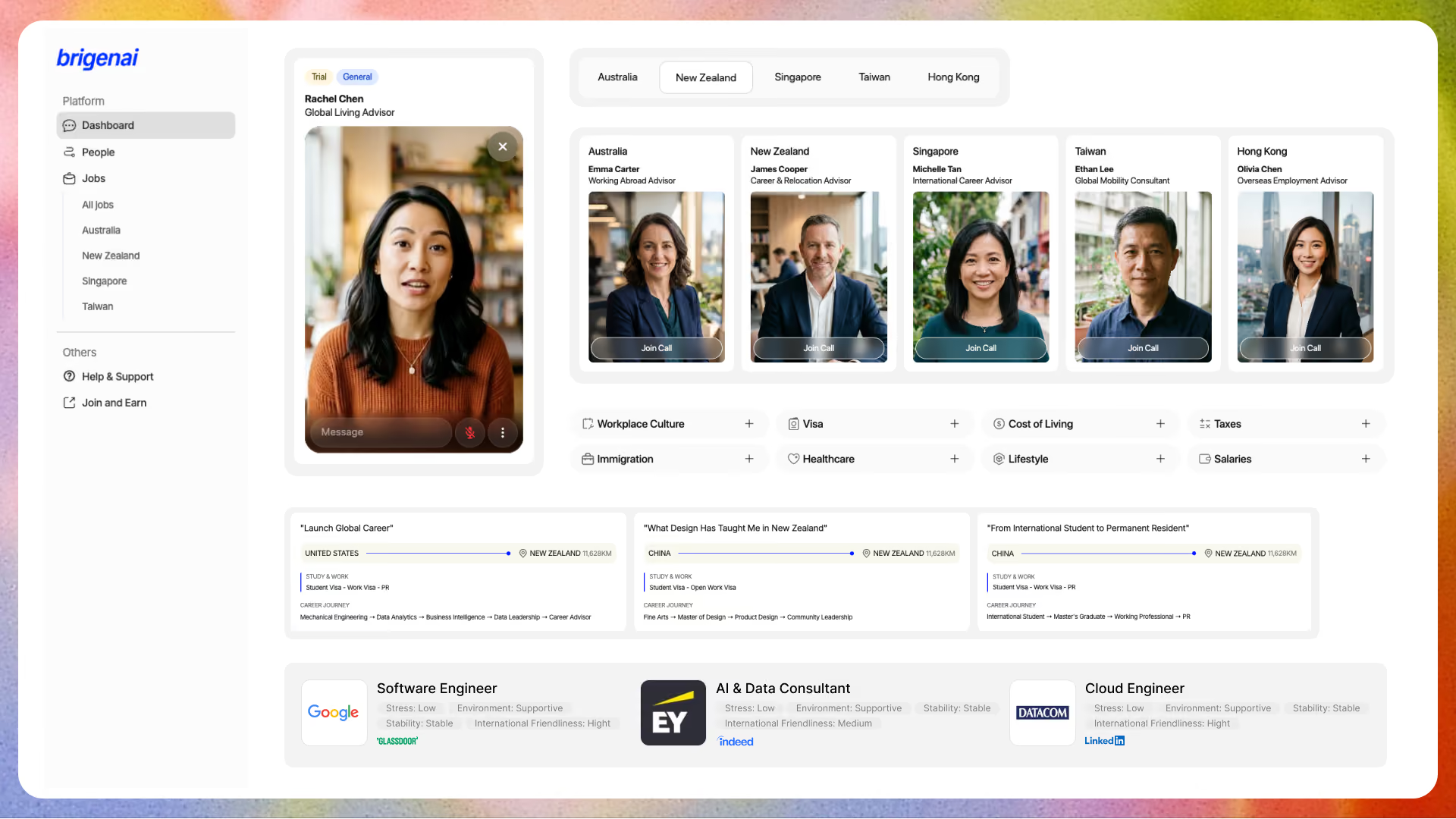
If you're navigating this search across multiple countries at once — comparing visa pathways, salary ranges, and entry-level demand across Australia, New Zealand, Singapore, and Taiwan — platforms built specifically for that comparison can save months of scattered research. BrigenAI pulls together real conversations from international students and working professionals across these markets, alongside AI-powered career guidance, so you're not piecing this together from fifteen different subreddits and forums.

Looking for entry-level, visa-friendly marketing and growth roles across APAC? Browse current listings on BrigenAI's jobs board, filtered specifically for international students and recent graduates.

Career Advice
Share on
Get more insights into overseas careers with our AI-powered advisor, enriched by genuine experience.

Use BRIGENAI to discover your favorite advisor working overseas in your dream career. Listen to their stories and ask anything about their career journey and living information.

Ai Advisor platform
Free to use
Career advisor
Global living advisor
Cancel anytime
Get started free