
I. Introduction
Are you a recent graduate in Singapore feeling the pinch of a competitive job market and the ever-rising cost of living in Singapore? Perhaps you're yearning for new horizons, a vibrant culture, and a career path that offers both growth and a better quality of life. If so, destination: Taiwan might just be the hidden gem you've been searching for. Often overshadowed by its more prominent neighbors, Taiwan is rapidly emerging as an attractive destination for young professionals, particularly those from Singapore, seeking to work abroad. Understanding why you should move abroad for work is the first step in this transformative journey. This guide will delve into why Taiwan presents a compelling alternative, offering insights into its burgeoning job market, streamlined visa processes, and a lifestyle that promises more bang for your buck.
II. Taiwan's Job Market: A Fresh Perspective for Graduates
Taiwan's economy is dynamic and diversified, presenting a wealth of opportunities for fresh graduates, especially in high-growth sectors. While Singapore's job market can be challenging for new entrants, Taiwan's talent pipeline is swelling, with a low unemployment rate of 3.35% in 2025, the lowest in 25 years. This indicates a robust demand for skilled professionals across various industries, and your international career in Asia Pacific could very well begin here.
Key Industries Hiring Foreigners:
Technology: Taiwan leads the world in technology, especially in hardware manufacturing and semiconductors. Companies such as TSMC (Taiwan Semiconductor Manufacturing Company) and MediaTek are always looking for new talent. The tech industry also has many startups and established companies working in software development, AI, and data science.
Semiconductor: As the heart of the world’s chip production, Taiwan’s semiconductor scene is buzzing with opportunities. Aside from local leaders, international companies such as ASML have a strong presence here, offering roles in engineering, research, and development.
Manufacturing: Beyond chips, Taiwan’s manufacturing sector is robust and covers electronics, machinery, and precision instruments, creating a steady demand for skilled workers.
Finance: The finance sector features a range of international banks and financial firms, with jobs in banking, investment, and analysis. While finance roles attract many, teaching English remains a viable option, especially for those just starting out or looking for something different.
Education: English language teaching is still a solid entry point, even if it’s not the main goal for most graduates. It’s a way to get a foot in the door and experience Taiwan’s culture up close.
Many multinational corporations in Taiwan operate with English as a primary business language, especially in tech and R&D departments, making it accessible for non-Mandarin speakers. Exploring relocation jobs in Taiwan is a great way to start your search. Platforms like 104 Job Bank (go.104.com.tw/expats/) specifically cater to international talents, listing foreigner-friendly jobs and providing resources on visa options and language requirements.
Top Companies for Career Growth:For graduates seeking strong career development, consider leading companies such as TSMC, MediaTek, and ASML in the tech and semiconductor sectors. Other notable employers include Foxconn, Winbond, Wistron, and ASE Group in manufacturing, and international financial institutions like HSBC, Citi, and Standard Chartered. These companies often offer structured career paths and opportunities for professional advancement.
III. Navigating Visa and Work Permit Options
Securing the right visa and work permit is crucial for any international move. Taiwan offers several pathways for foreign professionals, with some particularly advantageous for graduates.
A. The Taiwan Employment Gold Card:
This is a highly attractive option for high-skilled professionals. The Gold Card is a 4-in-1 card that includes a resident visa, work permit, Alien Resident Certificate (ARC), and re-entry permit. It allows holders to work for any company, start their own business, and stay for up to three years, with eligibility for tax benefits. Eligibility often depends on professional qualifications, such as holding a PhD from a top-500 university or having significant professional experience in specific fields.
B. General Work Permits:
For those who don't qualify for the Gold Card, a general work permit is the standard route. Employers typically sponsor these permits. The Ministry of Labor has an evaluation points system for foreign and overseas Chinese students. Applicants must score at least 70 points out of a possible 200, with points awarded for education, language proficiency, professional experience, and other factors. Understanding the international hiring process can help you navigate these requirements more effectively.
C. Special Provisions for Graduates from Top Universities:
Taiwan has specific policies to attract graduates from top global universities. A foreign national who has obtained a bachelor's degree or higher in the past five years from one of the top 200 universities worldwide (as announced by the Ministry of Education) can directly apply to the Ministry of Labor for a permit to engage in professional work. This permit is valid for a maximum of two years and cannot be extended or a repeat application made. This provides a valuable window for recent graduates to gain experience and establish themselves in Taiwan.
D. Employment-Seeking Visa:
This visa allows eligible individuals to enter Taiwan to seek employment. It's a temporary solution that can be converted into a work permit once a job offer is secured.

IV. Finding Your Dream Job: Strategies and Resources
Your job search in Taiwan will benefit from a multi-pronged approach and a solid guide to landing work and relocating.
A. Online Job Portals:
• 104 Job Bank (go.104.com.tw/expats/): A leading Taiwanese job portal with a dedicated section for international talents.
• LinkedIn: Essential for professional networking and finding roles in multinational companies.
• Careerjet.com.tw: Aggregates job listings from various sources in Taiwan.
• CakeResume: Popular for tech and design roles, often featuring English-friendly positions.
• Facebook Groups: Groups like "Foreigners In Taiwan" and "Jobs in Taiwan for Foreign Talents" are good resources for community insights and job postings.
B. Professional Networking and Recruitment Agencies:
Networking is crucial. Attend industry events, connect with professionals on LinkedIn, and consider exploring mentoring platforms for graduates to gain insider knowledge. Companies often work with headhunters to find suitable candidates, especially for specialized roles. Look out for events like the Global Talent Expo, which brings together top-tier companies actively hiring international talent.
C. Crafting a Taiwan-Ready Resume and Cover Letter:
Tailor your resume to highlight skills and experiences relevant to the Taiwanese job market. While English is common in multinational firms, having a Mandarin version or a professional translation can be an advantage. Emphasize any international experience or cross-cultural communication skills.
D. Interview Tips and Cultural Nuances:
Taiwanese workplace culture values respect, humility, and teamwork. Be prepared for multiple interview rounds, which may include technical assessments and behavioral questions. Research the company thoroughly and demonstrate genuine interest in their operations and the Taiwanese market.
V. Workplace Culture: Singapore vs. Taiwan
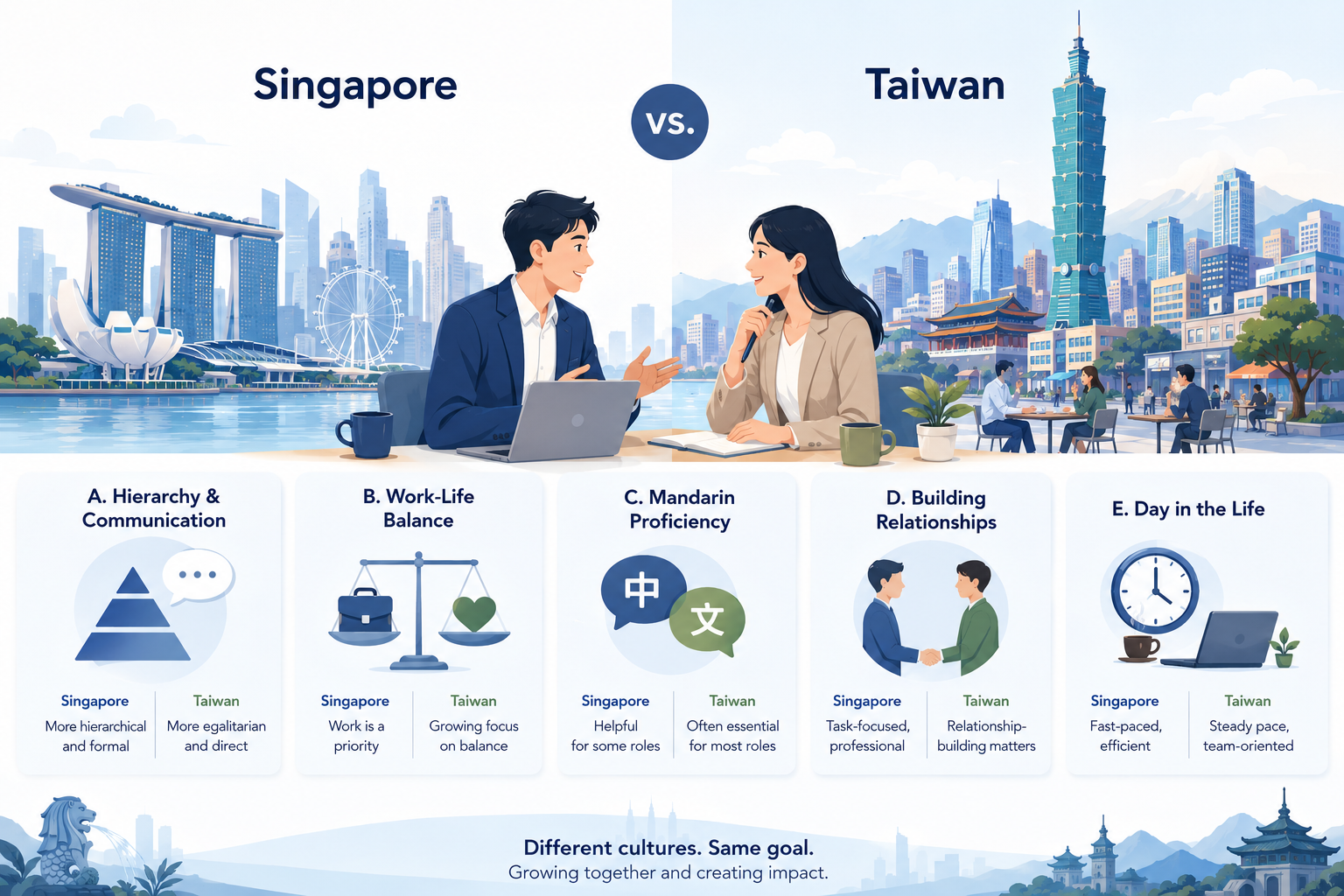
While both Singapore and Taiwan are Asian societies, their workplace cultures have distinct differences that Singaporean graduates should be aware of.
A. Hierarchy and Communication Styles:
Taiwanese workplaces tend to be more hierarchical than Singaporean ones, with a strong emphasis on respecting seniority. Communication can be indirect, and maintaining harmony is often prioritized. Singapore, while also hierarchical, often has a more direct communication style, especially in multinational corporations.
B. Work-Life Balance Expectations:
Singapore is known for its demanding work culture and long hours. While Taiwan also has its share of hard-working professionals, there's a growing emphasis on work-life balance, particularly among younger generations and in certain industries. The overall pace of life outside of work can feel more relaxed in Taiwan compared to the fast-paced environment of destination: Singapore.
C. Importance of Mandarin Proficiency:
While English is spoken in many international companies, basic Mandarin proficiency will significantly enhance your daily life and career prospects. It demonstrates a commitment to integrating into the local culture and can open doors to a wider range of opportunities, especially in roles that require interaction with local clients or colleagues.
D. Building Professional Relationships:
Building strong interpersonal relationships, known as Guanxi (關係), is paramount in Taiwanese business culture. This often involves socializing with colleagues outside of work, showing respect and consideration in all interactions, and fostering long-term trust. Understanding and nurturing Guanxi can significantly impact your career progression and overall integration into the workplace.
E. A Day in the Life: A Typical Work Scenario:
Imagine starting your day with a quick and affordable breakfast from a local street vendor, then taking Taiwan's efficient MRT to your office in Taipei's Xinyi District. Your workday might involve collaborative meetings with colleagues, often conducted in a mix of Mandarin and English, followed by focused individual work. Lunch could be a delicious and inexpensive bento box with colleagues. After work, you might join co-workers for dinner or explore one of Taipei's vibrant night markets. The emphasis is often on collective effort and harmony, with a noticeable shift towards valuing personal time outside of work compared to Singapore's often all-consuming corporate environment.
VI. Cost of Living & Salary Insights: Making Your Income Go Further
One of the most significant advantages of moving to Taiwan from Singapore is the drastically lower cost of living. This can translate into a much higher quality of life, even with potentially lower salaries in some entry-level positions. For a deeper dive, check out this cost of living in Taiwan guide.
According to Numbeo, the cost of living in Taipei is 41.0% lower than in Singapore (excluding rent), and the cost of living including rent is 54.0% lower . Rent prices in Taipei are a staggering 74.2% lower than in Singapore .
Note: Data based on Numbeo comparison between Singapore and Taipei as of July 2026 . Exchange rate used: 1 SGD = 24.89 NTD (approximate).
This significant difference means that your salary, even if numerically lower than in Singapore, can afford you a more comfortable lifestyle, better housing, and more disposable income. Groceries are also 18.0% lower in Taipei than in Singapore.
Average Salaries in Taiwan (2026): The average gross monthly salary in Taiwan is approximately NT$58,000, with a median of approximately NT$45,000. Including bonuses, total monthly compensation can often reach NT$70,000+.
Note: Salaries are for mid-level professionals in 2026, excluding bouses.
Salary by City: Salaries can also vary significantly by location. Hsinchu, a major semiconductor hub, often offers higher salaries for technical roles (NT$65,000-90,000) than Taipei (NT$55,000-75,000 for capital, financial, and services center roles), though Taipei has a higher cost of living in some respects.
VII. Understanding Taxes in Taiwan
Navigating the tax system is an important part of working abroad. Taiwan's income tax system differentiates between residents and non-residents.
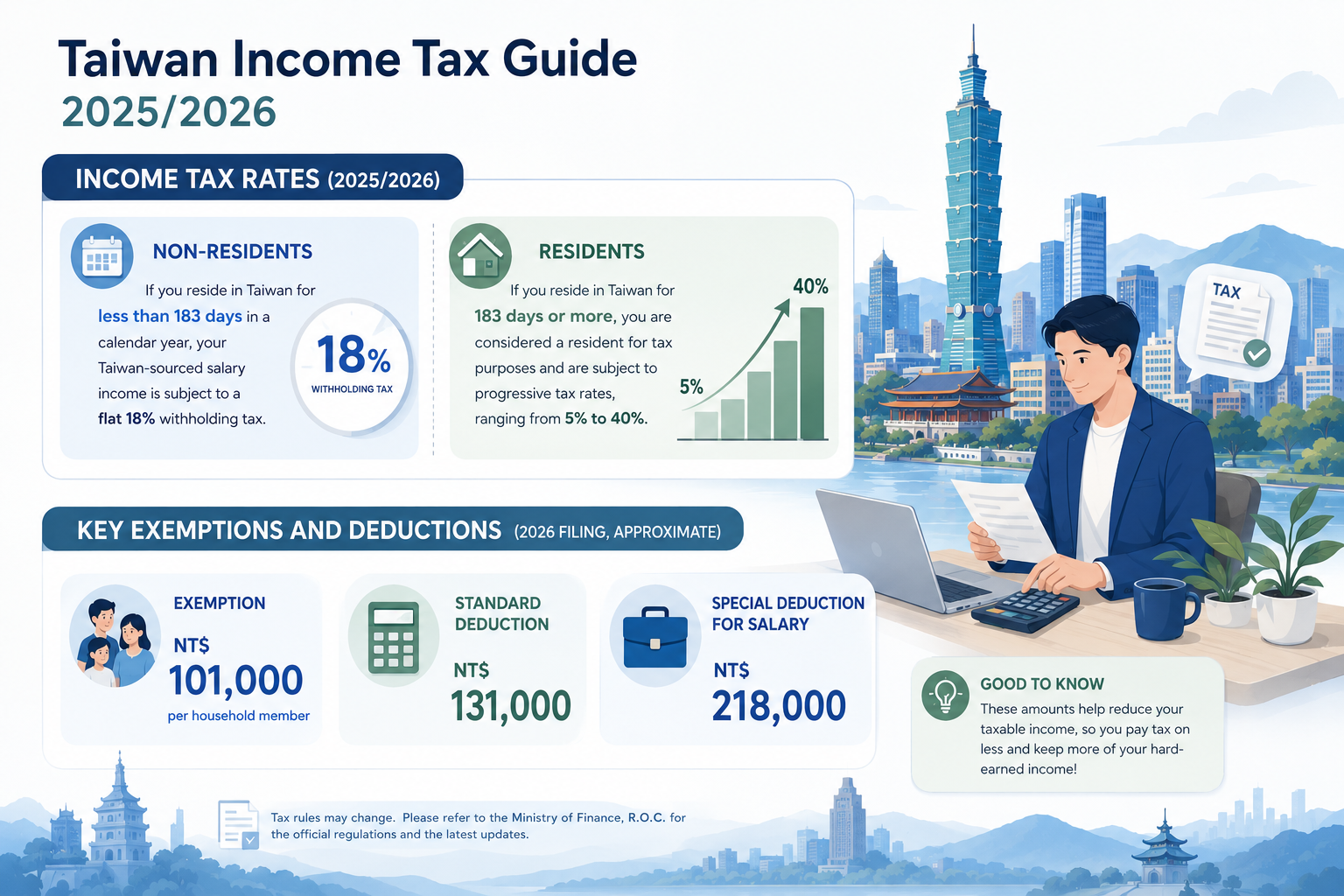
Income Tax Rates (2025/2026):
•Non-residents: If you reside in Taiwan for less than 183 days in a calendar year, your Taiwan-sourced salary income is subject to a flat 18% withholding tax .
•Residents: If you reside in Taiwan for 183 days or more, you are considered a resident for tax purposes and are subject to progressive tax rates, ranging from 5% to 40% .
Key Exemptions and Deductions (2026 Filing, approximate):
•Exemption: NT$101,000 per household member.
•標準扣除額:新台幣 131,000 元。
•薪資所得特別扣除額:新台幣 218,000 元。
雇主提撥:除了您的薪資總額外,台灣雇主通常會額外提撥 14-19% 的費用,用於支付勞工保險、全民健康保險(NHI)及退休金等強制性福利。在比較整體薪酬方案時,了解這些提撥項目非常重要。
VIII. 實用移居指南
A. 居住:尋找住所與熱門區域:
找到合適的住處對於順利適應新環境至關重要。線上平台如 591 房屋交易網(主要為中文介面)是熱門的租屋管道,但若能透過當地房仲協助,對英語使用者來說會更有幫助。建議抵達初期先入住短期住宿,讓自己有時間實地考察並尋找合適的長期租屋。在台灣租屋通常需要支付兩個月的租金作為押金。
台北適合年輕專業人士的熱門區域:
•信義區:以現代化、摩天大樓(台北 101)、購物中心及豐富的夜生活聞名。這裡是主要的商業區,並擁有極佳的公共交通網絡。
•大安區:備受青睞的住宅區,擁有大安森林公園等綠地、眾多咖啡廳與精品店,氛圍較為悠閒且具在地感。交通便利,深受當地人與外籍人士喜愛。
•松山區:在居住舒適度與城市機能之間取得良好平衡,前往商業區與休閒景點都十分方便。
•中正區:擁有許多政府機關與歷史古蹟,位於市中心且公共交通發達,融合了傳統與現代的生活氣息。
•南港區:新興的科技重鎮,提供較新的住宅選擇,環境相對不那麼擁擠,且與台北市中心連結緊密。
若您在新竹半導體產業聚落工作:
•建議考慮靠近新竹科學園區的區域,以縮短通勤時間。與台北相比,新竹的氛圍更具郊區感,且以科技與研發產業為核心。
B. 銀行與財務:
在台灣開立銀行帳戶通常需要準備您的外僑居留證(ARC)、護照,有時還需提供在職證明或地址證明。國泰世華銀行、中國信託銀行及玉山銀行等大型銀行通常對外籍人士較為友善。建議您事先查詢國際匯款手續費,若有將資金匯回新加坡的計畫,可考慮開立外幣帳戶。
C. 醫療體系與保險:全民健保(NHI)註冊與福利:
台灣擁有全球數一數二的醫療體系——全民健康保險(NHI)。所有居民(含外籍人士)在連續居住滿六個月後皆須強制納保。若您受僱於公司,雇主通常會在您入職時立即協助辦理健保投保。健保提供診所、醫院、牙科甚至中醫的全面且平價的醫療保障,讓您的健康需求無後顧之憂。
D. 交通:公共運輸與出行方式:
台灣的大眾運輸系統高效、完善且價格實惠。台北等大城市擁有極佳的捷運系統,並輔以綿密的公車網絡。高鐵(HSR)串聯了西岸的主要城市,讓跨縣市交通變得快速又便利。購買悠遊卡(EasyCard)或一卡通(iPass)是暢行大眾運輸的必備工具,不僅能搭乘捷運與公車,還能在部分便利商店消費。
E. 行動通訊與網路服務:
申辦行動通訊與網路服務非常簡單。主要的電信業者包括中華電信、台灣大哥大與遠傳電信。這些業者皆提供具競爭力的 4G 與 5G 資費方案,且訊號覆蓋率廣。申辦手機合約時,通常需要準備居留證(ARC)與護照。家用網路服務同樣穩定且價格親民。
IX. 長期居留與職涯發展
對於愛上台灣並希望在此長期定居的人來說,了解如何取得永久居留權及規劃職涯發展至關重要。
A. 金卡持有人與專業人士的永久居留(APRC)途徑:
台灣為外籍專業人士提供外僑永久居留證(APRC)。一般規定為在台合法連續居留滿五年,且每年居住超過 183 天。然而,金卡持有人可大幅縮短此路徑;只要符合每年居住 183 天的規定,連續居留滿三年即可申請 APRC。這項快速通道使台灣對高階人才更具吸引力。此外,畢業於台灣大專院校的國際學生,亦可根據學位等級,將申請 APRC 所需的居留年限縮短 1 至 3 年。其他要求包括須年滿 20 歲、無犯罪紀錄、具備相當資產或技能,並符合台灣國家利益。
B. 職涯發展與成長機會:
台灣充滿活力的經濟,特別是在科技與先進製造業領域,提供了強大的職涯發展機會。許多跨國企業提供完善的職涯路徑、培訓計畫以及國際交流機會。持續學習、適應在地商業慣例,並發揮您獨特的國際視野,將能帶來顯著的職涯成長。關鍵產業對創新與研發的重視,意味著專業人才總有晉升的空間。
C. 創業與開展事業:
台灣擁有支持新創與創業的生態系統,尤其是在科技領域。政府積極推動創新,並為新創企業提供各類獎勵與計畫。對於金卡持有人而言,無需額外申請工作許可即可創業,是一項重大優勢。這對於擁有創新想法與創業精神的畢業生來說,是一條令人興奮的途徑。
X. 文化適應與社交生活
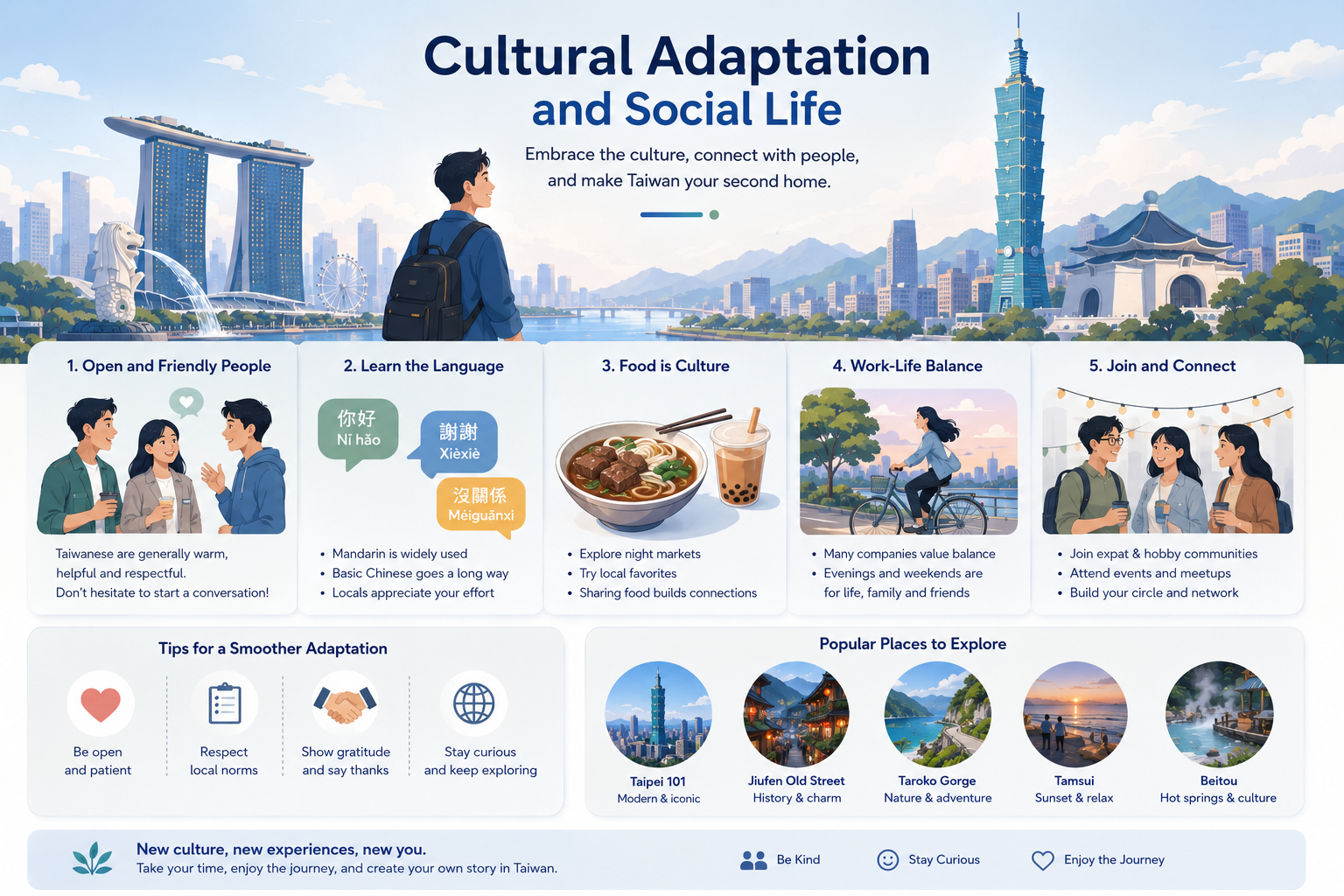
擁抱新文化是冒險的一部分,但您也應做好準備以 應對文化衝擊。台灣提供豐富的文化體驗,從熱鬧的夜市與美味的街頭小吃,到壯麗的自然景觀與歷史悠久的寺廟,應有盡有。
A. 融入在地風俗與傳統:
學習基本的中文短語、了解在地禮儀並對新事物保持開放態度,將能大幅豐富您在台灣的生活。台灣人普遍友善、有禮且熱情好客。主動參與在地文化,例如參加傳統節慶或體驗在地習俗,將會受到高度讚賞,並幫助您更順利地融入當地。
B. 建立社交網絡:
建立社交網絡是產生歸屬感的關鍵。您可以加入 Facebook 等社群媒體上的外籍人士社團,參與在地俱樂部或活動(例如登山社、語言交換聚會、運動隊伍),並在工作之餘與同事交流。許多城市都有活躍的國際社群,會舉辦各類活動並為新住民提供支援,讓您更容易結交新朋友。
C. 探索台灣:美食、自然與城市生活:
台灣是一座充滿體驗的寶庫。您可以盡情享受享譽全球的餐飲文化,從臭豆腐、蚵仔煎等夜市小吃到米其林星級餐廳應有盡有。探索太魯閣峽谷、阿里山和日月潭等令人屏息的自然美景。感受台北的繁華活力、台南的歷史底蘊,或是高雄的工業創新。台灣完美融合了傳統與現代,讓您總能發掘新鮮事物。
XI. 結語
從新加坡移居台灣工作對畢業生而言是一個重大決定,但這也蘊含著個人與職涯發展的巨大潛力。透過探索各種 海外職涯發展路徑 以及了解 學生未來就業趨勢,您將能做出明智的選擇。台灣擁有蓬勃發展的就業市場(特別是在高科技產業)、便捷的簽證管道、相對低廉的生活成本以及豐富的文化底蘊,對於追求充實職涯與精彩海外生活的專業人士來說,是一個極具吸引力的選擇。儘管挑戰難免,但收穫豐碩體驗的機會也相當多。勇敢跨出這一步,做好充分準備,在亞洲之心開啟一段精彩的新篇章吧。
常見問題 (FAQs)
Q1:新加坡畢業生在台灣容易找到工作嗎?
A1:雖然存在競爭,但台灣充滿活力的經濟環境(特別是在科技與製造業)為外籍畢業生提供了許多機會。專屬的簽證計畫以及比新加坡更低的失業率,使其成為一個極具吸引力的選擇。建立人脈並針對職位調整履歷是成功的關鍵。
Q2:新加坡與台灣的職場文化有什麼主要差異?
A2:台灣職場通常較為重視階級制度,傾向間接溝通並追求和諧,且非常看重「關係」。雖然新加坡也有階級觀念,但溝通方式通常較為直接。一般認為台灣的工作與生活平衡較佳,不過這仍會因產業與公司而異。
Q3:台北的生活成本與新加坡相比如何?
A3:台北的生活成本顯著低於新加坡。特別是租金方面,台北的租金大幅降低(約低了 74%),日常採買與外食也更為親民。這意味著您的薪資將擁有更高的購買力。
Q4:在台灣工作需要會說中文嗎?
A4:雖然許多跨國企業(特別是科技業)以英語運作,但強烈建議具備基礎中文能力。這將大幅提升您的日常生活品質、融入在地文化,並拓展職涯前景,為您開啟更多工作機會。
Q5:什麼是台灣就業金卡?
A5:台灣就業金卡是一種結合了居留簽證、工作許可、外僑居留證 (ARC) 與重入境許可的特殊簽證。它是專為外籍專業人才設計,讓持卡人能自由轉換雇主或自行創業,並享有潛在的稅務優惠。
Q6:台灣畢業生的平均薪資是多少?
A6:台灣的平均月薪總額約為新台幣 58,000 元,中位數則為新台幣 45,000 元。薪資會因產業與城市而有顯著差異,其中新竹的科技與半導體職位通常提供較高的薪酬。
Q7:外籍專業人士在台灣如何課稅?
A7:非居住者(在台居留未滿 183 天)的台灣來源所得需按 18% 的固定稅率課稅。居住者(在台居留滿 183 天以上)則適用 5% 至 40% 的累進稅率,並享有各項免稅額與扣除額。
Q8:在台灣申請永久居留證(APRC)的途徑為何?
A8:申請永久居留證的標準途徑是連續合法居留滿 5 年,且每年在台居住超過 183 天。不過,就業金卡持有人僅需 3 年即可申請。台灣大專院校的國際畢業生也可縮短 1 至 3 年的居留要求。
Q9:台北有哪些適合外籍人士居住的熱門區域?
A9:熱門區域包括信義區(現代化、商業中心、夜生活)、大安區(綠地多、生活氣息濃厚、交通便利)、松山區(生活機能均衡)、中正區(市中心、歷史底蘊深厚)以及南港區(科技重鎮、住宅較新)。
Q10:台灣的醫療體系對外籍人士如何運作?
A10:台灣擁有完善的全民健康保險(NHI)制度。外籍居民在台連續居留滿六個月後,或受僱後即可立即強制納保。該制度提供全面且負擔得起的醫療保障。