
Introduction
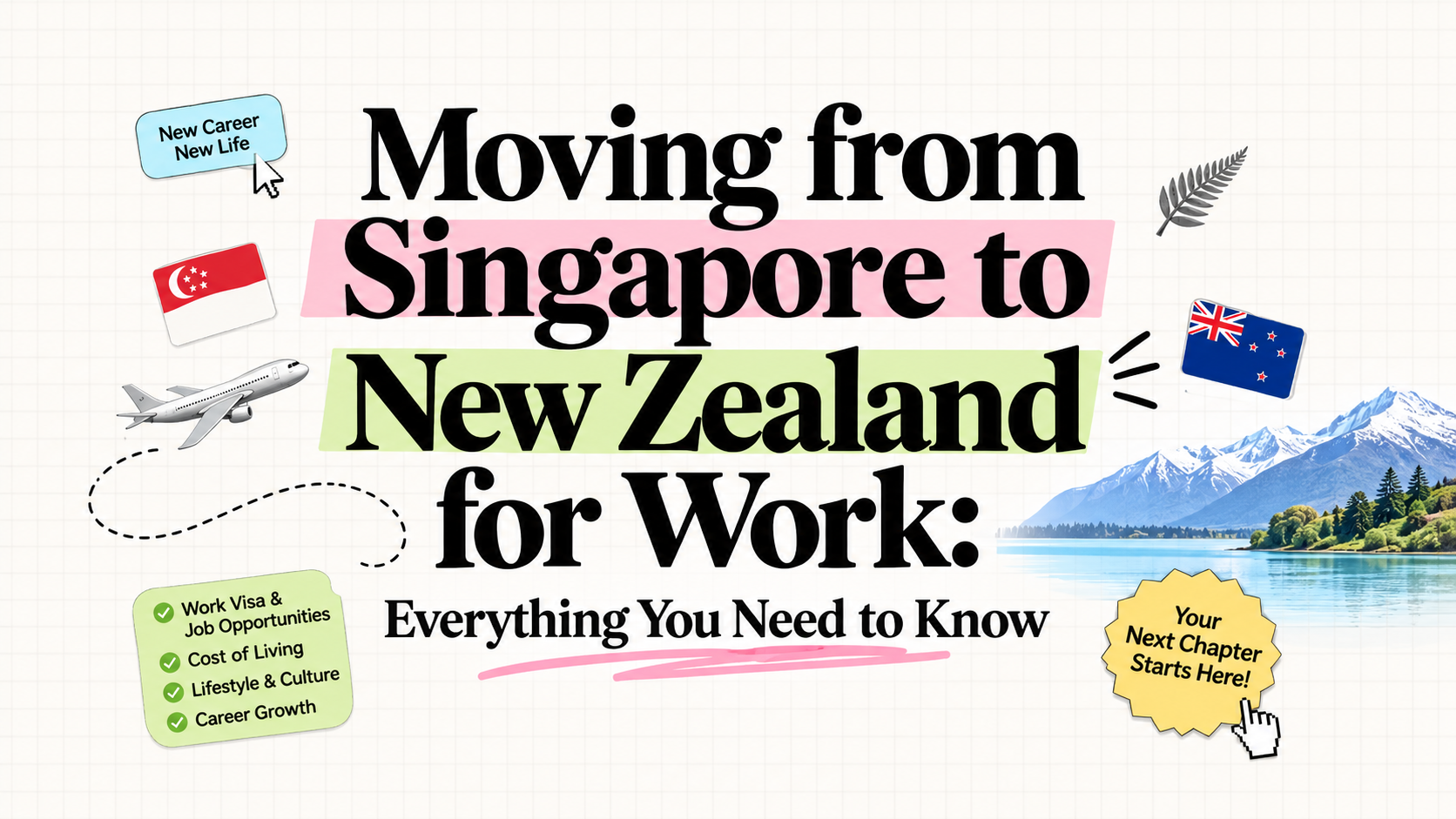
Considering a career move from the bustling metropolis of Singapore to the serene landscapes of New Zealand? This comprehensive guide is designed for professionals seeking to understand the intricacies of relocating for work. New Zealand offers a unique blend of career opportunities, a desirable work-life balance, and stunning natural beauty, making it an attractive destination for many Singaporeans. However, the transition involves navigating visa requirements, understanding the cost of living differences, and adapting to a new tax system. This article will provide a detailed overview of these crucial aspects, offering practical advice and insights to ensure a smooth and successful relocation. We will delve into the visa application process, compare living expenses between the two nations, clarify tax obligations, explore the New Zealand job market, and provide essential tips for a seamless move. For those looking to move abroad faster, planning is key.
1. Navigating New Zealand’s Work Visa Landscape for Singaporeans
For Singaporean professionals considering a move to New Zealand for work, understanding the visa landscape is paramount. New Zealand offers several pathways for skilled migrants, primarily focusing on roles that address skill shortages within the country. The most common routes include the Green List and the Accredited Employer Work Visa (AEWV). You can explore various NZ work visa options to find the best fit for your situation.
The Green List: Fast-Track to Residency
The Green List identifies occupations that are in high demand in New Zealand. If your profession is on this list and you meet the required qualifications, registration, or experience, you may be eligible for a fast-tracked residency pathway. Understanding what the New Zealand Green List and the specific Green List jobs available is the first step toward residency. The Green List is divided into two tiers:
•Tier 1: Occupations in this tier may allow for immediate application for a residence visa.
•Tier 2: Occupations in this tier may allow for application for a residence visa after two years of working in New Zealand.
It is crucial to check the official Immigration New Zealand website for the most up-to-date Green List occupations and their specific requirements. Some roles on the Australian and New Zealand Standard Classification of Occupations (ANZSCO) are recognized at a higher skill level for certain visas, including the AEWV and the Skilled Migrant Category Resident Visa (SMC).
Accredited Employer Work Visa (AEWV)
The AEWV is another significant pathway. To be eligible for this visa, you must have a job offer from an employer who has been accredited by Immigration New Zealand. This visa allows you to stay and work in New Zealand for up to three years. Many Singaporeans in fields such as technology, finance, engineering, and healthcare find this pathway suitable for their profiles .
Key Considerations for Visa Applications
•Skill Level: Ensure your job's skill level aligns with the Australian and New Zealand Standard Classification of Occupations (ANZSCO) or National Occupation List (NOL).
•International Qualification Assessment (IQA): You may need an IQA to demonstrate that your qualifications are recognized in New Zealand.
•Occupational Registration: Certain professions require registration with a specific New Zealand organization before you can apply for a work visa. This registration must be secured prior to your visa application.
For detailed information on specific visa options and the application process, refer to the official Immigration New Zealand website. You can also find more information on specific work visa options for skilled professionals.
2. Cost of Living: Singapore vs. New Zealand
One of the most significant considerations for anyone relocating is the cost of living. While Singapore is renowned for being one of the world's most expensive cities, New Zealand generally offers a more affordable lifestyle, particularly concerning housing. Understanding these differences is crucial for financial planning. You can use relocation tools to help estimate your expenses.
Overall Cost Comparison
According to Numbeo, the Cost of Living Including Rent in New Zealand is approximately 44.4% lower than in Singapore . This substantial difference is largely driven by housing costs. Rent prices in New Zealand are about 63.8% lower than in Singapore . For a more detailed breakdown, check our guide on the cost of living in New Zealand.
Source: Numbeo
Housing
Housing is where the most significant savings can be found. A 1-bedroom apartment in a city center in New Zealand can be up to 62.6% cheaper than in Singapore. For a 3-bedroom apartment in the city center, the difference can be even more pronounced, with New Zealand being approximately 70% cheaper . This affordability in housing contributes significantly to a lower overall cost of living.
Groceries and Dining
While overall groceries are cheaper in New Zealand (18.3% lower than Singapore), some items like eggs and tomatoes can be more expensive . Restaurant prices, however, tend to be slightly higher in New Zealand (5.1% higher than Singapore) . This suggests that while daily essentials might be more budget-friendly, dining out could be a more occasional treat.
Transportation and Utilities
Public transport passes are slightly more expensive in New Zealand, but gasoline is cheaper. Car prices, particularly for new compact cars, are drastically lower in New Zealand compared to Singapore . Basic utilities are comparable, but mobile phone plans and broadband internet can be significantly more expensive in New Zealand .
Lifestyle and Leisure
New Zealand offers more affordable fitness club memberships and generally cheaper entertainment options. Childcare and international primary school fees are also considerably lower in New Zealand, making it an attractive option for families . There are many reasons why you should choose New Zealand for your career, and the lifestyle is a major one.
In summary, while certain categories like dining out, mobile plans, and internet might be pricier, the substantial savings in rent and groceries make New Zealand a more affordable place to live overall for Singaporeans .
3. Understanding Taxation and Financial Implications
Relocating for work involves understanding the tax implications in both your home country and your new country of residence. Singapore and New Zealand have a Double Taxation Agreement (DTA) in place, which aims to prevent individuals from being taxed twice on the same income . For a detailed overview, see the New Zealand tax rates for people working abroad.
Double Taxation Agreement (DTA)
The DTA between Singapore and New Zealand dictates that income is generally taxed in the country where it is earned . This agreement helps to clarify which country has the primary taxing rights over various types of income, such as employment income, business profits, and pensions. The DTA entered into force on August 12, 2010, and applies to income earned during calendar years beginning on or after January 1, 2011 .
Tax Residency in New Zealand
Your tax residency status in New Zealand is crucial as it determines your tax obligations. You are generally considered a tax resident of New Zealand if you have a "permanent place of abode" in New Zealand or if you are present in New Zealand for more than 183 days in any 12-month period. These 183 days do not need to be consecutive, and your tax residency status is backdated to the first of those 183 days .
As a tax resident of New Zealand, you will generally be taxed on your worldwide income. However, the DTA with Singapore will help to mitigate double taxation on income earned in Singapore before or during your move. It is advisable to seek professional tax advice to understand your specific situation and ensure compliance with both Singaporean and New Zealand tax laws.
Tax Residency in Singapore
Conversely, if your stay in Singapore is less than 183 days in a calendar year, you will generally be regarded as a non-resident for tax purposes in Singapore . Singapore generally does not tax foreign income remitted into the country for individuals, which can be a consideration for those maintaining financial ties with Singapore .
Key Financial Considerations
•Bank Accounts: It is recommended to set up a New Zealand bank account before or shortly after your arrival to manage your finances effectively.
•Currency Exchange: Be mindful of exchange rates when transferring funds between Singapore Dollars (SGD) and New Zealand Dollars (NZD).
•Superannuation/KiwiSaver: Understand New Zealand's superannuation scheme (KiwiSaver) and how it might apply to you.
Understanding these tax and financial aspects is vital for a smooth transition and to avoid any unexpected liabilities. Consulting with a tax professional specializing in international taxation is highly recommended.
4. Job Market Insights and Opportunities in New Zealand
New Zealand's job market, while smaller than Singapore's, offers diverse opportunities, particularly in sectors experiencing skill shortages. Understanding the landscape and tailoring your job search strategy are key to securing employment. Your international career in Asia Pacific can find a new home here.
In-Demand Sectors and Roles
The Green List provides an excellent indication of sectors with high demand for skilled workers, including :
•Healthcare: Doctors, nurses, and allied health professionals are consistently in demand.
•Engineering: Civil, structural, electrical, and mechanical engineers are sought after. You can find more about relocation jobs for engineering in New Zealand in our dedicated guide.
•Information Technology: Software developers, cybersecurity specialists, and IT project managers are highly valued. For developers, we have a complete guide to becoming a software engineer in New Zealand.
•Trades: Various skilled trades, such as electricians and plumbers, are also on the Green List.
For a comprehensive list of in-demand occupations, refer to the Immigration New Zealand Green List . Additionally, resources like the New Zealand Pay Calculator can help you understand potential earnings in various roles .
Job Search Strategies
•Online Job Boards: Utilize popular New Zealand job portals such as Seek, Trade Me Jobs, and LinkedIn. Many Singaporeans find success through these platforms .
•Networking: Leverage professional networks and platforms like LinkedIn to connect with individuals in your target industry in New Zealand.
•Accredited Employers: Prioritize applying to companies that are accredited employers, as this simplifies the visa process .
•Tailor Your Resume/CV: Adapt your resume and cover letter to New Zealand standards, highlighting relevant skills and experience. Consider seeking guidance on how to plan for landing a job in New Zealand .
•Local Experience: While not always mandatory, understanding the importance of local experience in the NZ job market can be beneficial .
Work-Life Balance and Culture
New Zealand is often lauded for its emphasis on work-life balance, offering a stark contrast to Singapore's fast-paced corporate environment. The culture often promotes outdoor activities, community engagement, and a less hierarchical workplace structure. This can be a significant draw for those seeking a more relaxed lifestyle .
Overall, a proactive and well-researched approach to the job market will significantly enhance your chances of securing relocation jobs in New Zealand.
5. Practical Relocation Tips for a Smooth Transition
Moving to a new country involves more than just securing a job and a visa; it requires careful planning for the practical aspects of relocation. Using an international relocation checklist can help ensure nothing is missed.
Pet Relocation
If you plan to bring your pets, New Zealand has strict biosecurity requirements. All cats and dogs entering New Zealand must be microchipped with an ISO 11784/11785 compliant microchip. The process involves a series of vaccinations, health checks, and potentially a period of quarantine. It is crucial to start the pet relocation process well in advance, as it can take several months to complete . The Ministry for Primary Industries (MPI) provides a step-by-step guide for bringing cats and dogs to New Zealand .
銀行與財務
如前所述,強烈建議您在紐西蘭開設銀行帳戶。大多數紐西蘭的主要銀行都允許您在抵達前開戶,這能簡化您搬遷後的財務往來。請務必研究不同銀行的服務內容,找到最符合您需求的選擇。
醫療保健
紐西蘭擁有公費醫療體系,但您必須了解自己是否符合服務資格。身為工作簽證持有者,您或許有資格享有公費醫療,但建議您考慮購買私人醫療保險以獲得更全面的保障,特別是在剛抵達紐西蘭的初期。請務必熟悉紐西蘭的醫療體系,並在抵達後向當地的家庭醫生(GP)註冊。
運輸與物流
在搬運個人物品時,請考量您想攜帶物品的體積與價值。運輸方式包括海運與空運,海運對於大宗物品較為經濟,但所需時間較長。建議向多家國際搬家公司索取報價,以比較費用與服務。此外,請為您的物品建立詳細清單,以供海關查驗使用。
在紐西蘭開車
如果您持有有效的新加坡駕照,通常可以在紐西蘭駕駛長達 12 個月。超過此期限後,您需要將駕照轉換為紐西蘭駕照,這通常需要通過筆試與路考。
文化適應
紐西蘭的文化普遍比新加坡更為輕鬆隨性。請擁抱戶外生活方式,積極參與當地社區活動,並對新體驗保持開放態度。了解並尊重紐西蘭文化中不可或缺的毛利文化,也將讓您的生活更加豐富。
結語
從新加坡移居紐西蘭工作是一個重大的生活決定,它能為您帶來職業成長與生活品質提升的獨特結合。雖然這段轉變過程需要審慎規劃,特別是在簽證申請、了解生活成本差異以及處理稅務義務方面,但收穫將會非常豐碩。紐西蘭熱情的文化、對工作與生活平衡的重視,以及豐富的自然美景,為新加坡的城市高壓生活提供了一個極具吸引力的選擇。透過深入研究簽證途徑、做好財務調整準備、策略性地規劃求職,並妥善安排搬遷物流,新加坡專業人士定能順利且成功地開啟在紐西蘭的新生活。
常見問題 (FAQs)
問:紐西蘭的生活費比新加坡便宜嗎?
答:是的,整體而言,紐西蘭的生活成本顯著低於新加坡,這主要是因為租金便宜許多。雖然部分商品和服務的價格可能較高,但總體支出通常較低 。
問:新加坡人可以在紐西蘭工作嗎?
答:可以,只要符合簽證要求,新加坡人就能在紐西蘭工作。常見的途徑包括「綠色清單」(Green List)以及「認可雇主工作簽證」(AEWV) 。
問:新加坡人移民紐西蘭容易嗎?
答:移民的難易度取決於個人情況,特別是您的資歷、您的職業是否在「綠色清單」上,或是您是否已獲得認可雇主的工作錄取通知。紐西蘭擁有結構完善的移民系統,提供多種簽證選擇 。
問:新加坡與紐西蘭在生活方式上有哪些主要差異?
新加坡提供快節奏的城市生活,具備高效率與安全性;而紐西蘭則以步調悠閒、戶外生活、重視工作與生活平衡以及自然美景而聞名 。
問:新加坡人移居紐西蘭時,稅務制度是如何運作的?
答:新加坡與紐西蘭簽有《避免雙重課稅協定》(DTA),以防止個人就同一筆收入被重複徵稅。若您成為紐西蘭的稅務居民(通常指在 12 個月內居住超過 183 天),您將需就全球收入繳稅,但 DTA 有助於減輕雙重課稅的情況 。
問:在紐西蘭工作需要進行國際學歷評估(IQA)嗎?
答:視您的學歷與專業而定,您可能需要進行 IQA 以證明您的資歷在紐西蘭受到認可。建議您先查詢該職業的具體要求 。
問:紐西蘭有哪些主要的就業機會領域?
答:根據「綠色清單」(Green List)顯示,對技術人才需求較高的關鍵產業包括醫療保健、工程、資訊科技及各類專業技術工種 。