

Recent college graduates often need career guidance the most, but traditional career advisor services can be surprisingly expensive. Many career coaches charge hundreds of dollars per session, making professional advice difficult to access for graduates already dealing with student loans, relocation costs, and an uncertain job market.
Today, a growing number of graduates are looking for affordable alternatives that provide career support without the high hourly fees. The best option depends on whether you need personalized coaching, industry insights, job search support, or ongoing career guidance.
Why Career Advice Matters for New Graduates
The transition from university to full-time employment is often more difficult than graduates expect. Many students leave university with academic knowledge but limited understanding of job searching, networking, interviewing, salary negotiation, or long-term career planning.
Career advisors can help graduates avoid common mistakes, identify suitable career paths, and develop strategies for entering competitive industries. Research consistently shows that graduates who receive career guidance tend to feel more confident and make faster career decisions.
The challenge is affordability. Professional career coaching can quickly become one of the largest expenses during a job search.
How Much Do Traditional Career Advisors Cost?
Many well-known career coaching services charge premium rates.
Individual career coaches commonly charge between US$100 and US$500 per session. Comprehensive coaching packages that include resume reviews, interview preparation, LinkedIn optimization, and job search strategy often range from US$500 to US$5,000.
Services frequently recommended for graduates, such as Robin Ryan Career Coaching, Priority Candidates, and other private career coaches, typically provide highly personalized support but require a significant financial commitment.
For graduates who are still exploring career options, paying hundreds of dollars before even landing a first job can be difficult to justify.
Free and Low-Cost Career Advisor Options
Many universities continue offering career support after graduation. Alumni career centers often provide resume reviews, career workshops, and limited one-on-one appointments at little or no cost.
Public resources can also help. Organizations such as public libraries, workforce development centers, and nonprofit employment programs sometimes offer free career counseling services. The New York Public Library, for example, provides career coaching sessions that include job search assistance and resume feedback.
These services can be valuable, but they often have limitations. Availability may be restricted, appointment slots can be limited, and advisors may not have expertise in specific industries or international career pathways.
The Problem with the Traditional Career Coaching Model
Traditional career coaching follows a simple business model: users pay for an advisor's time.
This creates several challenges for recent graduates. Every additional question requires another session. Advice may depend heavily on the experience of a single coach. Once the coaching package ends, support usually ends as well.
Many graduates discover that career development is not a one-time event. New questions emerge during interviews, job offers, workplace transitions, promotions, and career changes. Paying for ongoing access can quickly become expensive.
This is one reason why many younger professionals are starting to look beyond traditional career coaching services.
How BrigenAI Provides a Lower-Cost Alternative
BrigenAI takes a different approach from traditional career advisor services.
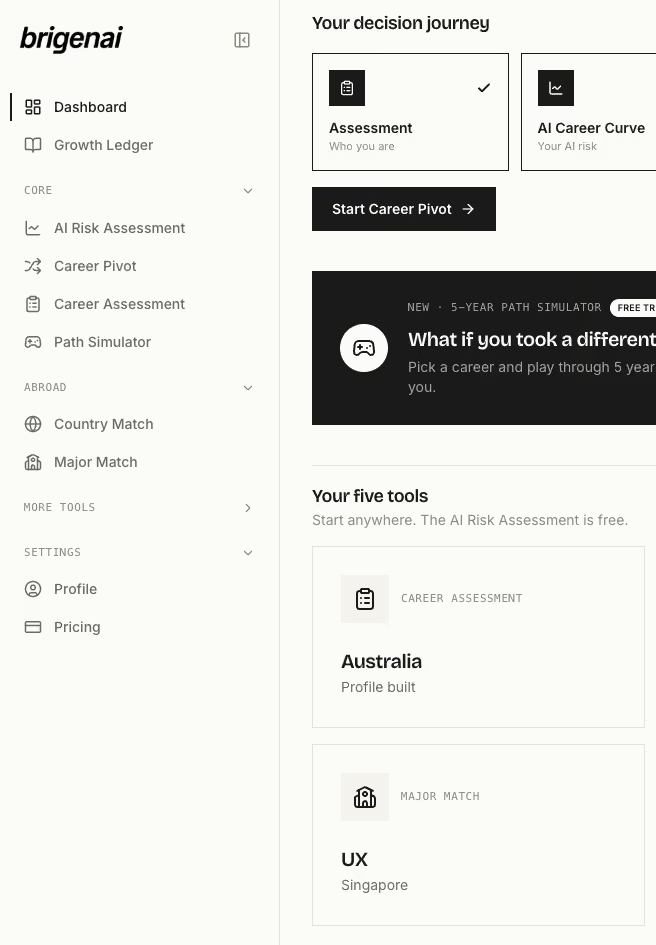
Instead of charging graduates for every hour of advisor time, BrigenAI combines AI-powered guidance with insights from people who have already completed similar career journeys. Users can access career advice, job search guidance, international career information, and real-world experiences without booking individual coaching sessions every time they need help.
For example, a graduate considering software engineering in Australia, data analytics in Singapore, or graduate programs in New Zealand can explore experiences from people who have already studied, worked, and built careers in those environments.
This model offers several advantages:
- Lower cost than traditional one-on-one coaching
- No hourly billing
- No limits on how often you can seek guidance
- Access to multiple perspectives rather than one advisor
- Available anytime instead of waiting for appointments
- Useful for both local and international career planning
For graduates who need ongoing support rather than occasional coaching sessions, this can provide significantly better value.
Which Option Is Best for Recent Graduates?
Traditional career advisors remain valuable when highly personalized coaching is required. If a graduate needs intensive interview preparation, executive-level guidance, or specialized industry coaching, a dedicated career coach may be worth the investment.
However, many graduates are still in the exploration stage. They are trying to understand industries, compare career paths, evaluate countries, improve resumes, and learn from people who have already achieved similar goals.
In these situations, affordable platforms that combine AI guidance with real-world career experiences often provide a more practical starting point.
The reality is that most graduates need ongoing access to information and advice rather than a few expensive coaching sessions.
Frequently Asked Questions (FAQs)
What is an affordable career advisor service?
An affordable career advisor service provides career guidance at a lower cost than traditional one-on-one career coaching. These services may include AI-powered advisors, online career platforms, university career centers, group coaching programs, or subscription-based career support tools.
How much does career coaching cost for recent graduates?
Career coaching costs vary widely. Individual sessions often range from US$100 to US$500, while comprehensive coaching packages can cost between US$500 and US$5,000 or more. Pricing typically depends on the coach's experience, specialization, and level of support.
Are career advisors worth it for college graduates?
Career advisors can be valuable for graduates who need help choosing a career path, improving their resumes, preparing for interviews, or developing a job search strategy. The return on investment depends on the quality of advice received and how effectively the graduate applies the recommendations.
What is the difference between a career advisor and a career coach?
The terms are often used interchangeably, but career advisors typically focus on providing guidance and information, while career coaches focus more on accountability, goal setting, and personal development. Many professionals offer a combination of both services.
Are there free career advisor services for graduates?
Yes. Many universities provide career services to recent alumni, including resume reviews, mock interviews, and job search support. Public libraries, workforce development programs, and nonprofit organizations may also offer free career counseling resources.
What is the cheapest alternative to traditional career coaching?
AI-powered career platforms are becoming one of the most affordable alternatives. Instead of paying for individual coaching sessions, users can access career guidance, resources, and insights through subscription-based platforms that cost significantly less than traditional coaching packages.
How is BrigenAI different from traditional career advisors?
Traditional career advisors typically charge based on time, such as hourly consultations or coaching packages. BrigenAI provides access to AI-powered guidance and real-world experiences from people who have studied, worked, or migrated internationally. This allows users to access career insights whenever they need them rather than paying for individual sessions.
Can BrigenAI help with international careers?
Yes. BrigenAI is designed for people exploring study, work, and migration opportunities across countries such as Australia, New Zealand, Singapore, and Taiwan. Users can learn from individuals who have firsthand experience building careers in these destinations.
Is AI replacing career advisors?
AI is not completely replacing career advisors, but it is changing how career guidance is delivered. Many job seekers now use AI for resume reviews, career exploration, interview preparation, and labor market research. Human advisors remain valuable for personalized coaching and complex career decisions, while AI provides affordable and scalable support.
What should recent graduates look for in a career advisor?
Recent graduates should evaluate an advisor's industry experience, client success stories, pricing structure, availability, and understanding of entry-level career challenges. They should also consider whether they need one-on-one coaching or ongoing access to career guidance resources.
Is paying for career coaching better than using AI career guidance?
It depends on your goals. Career coaching may be beneficial for highly personalized support, while AI career guidance often provides a more affordable solution for ongoing questions, career research, resume feedback, and job search planning. Many professionals use both approaches together.
How many career coaching sessions do graduates usually need?
Some graduates benefit from one or two sessions focused on resumes and interviews, while others seek ongoing support throughout their first job search. The number of sessions depends on career goals, confidence levels, and the complexity of the transition from university to work.
Bottom Line
Affordable career advisor services are becoming increasingly important as graduates face rising education costs and competitive job markets. While traditional career coaches can provide valuable expertise, their hourly and package-based pricing often places them out of reach for many early-career professionals.
Platforms like BrigenAI offer a different model. By combining AI-powered career guidance with real experiences from people who have successfully studied, worked, and relocated internationally, graduates can access career support at a fraction of the cost while benefiting from guidance that remains available whenever they need it.