

Moving to a new country as a skilled professional involves a tangle of visa categories, document requirements, salary benchmarks, and job market realities that vary wildly between destinations. Most people spend weeks bouncing between government websites, migration forums, and outdated blog posts, only to end up more confused than when they started. What many overlook is that AI chatbots have matured into genuinely useful tools for this exact problem. They can answer specific questions, translate documents, and flag the right professional to call next, saving you hours of frustrating research before you even book a flight.
Table of Contents
- What do chatbots actually help with when moving abroad?
- Comparing top chatbots: Which one best fits your move?
- Limitations: When do you still need a human expert?
- How to get the most out of a relocation chatbot
- Our perspective: AI chatbots are a smart first step, but not the whole journey
- Find your trusted relocation partner with BRIGENAI
- Frequently asked questions
Key Takeaways
| Point | Details |
|---|---|
| Instant support | Chatbots streamline visa, document, and job questions for fast, personalised help. |
| Not a legal replacement | Always double-check critical legal or migration steps with certified professionals. |
| Best for early stages | Use chatbots for first-pass info and research, then escalate complex cases as needed. |
| Choose tools wisely | Select chatbots based on your relocation task—visa, jobs, or language support. |
| Combine tech and experts | Migrants who succeed blend AI efficiency with professional advice. |
What do chatbots actually help with when moving abroad?
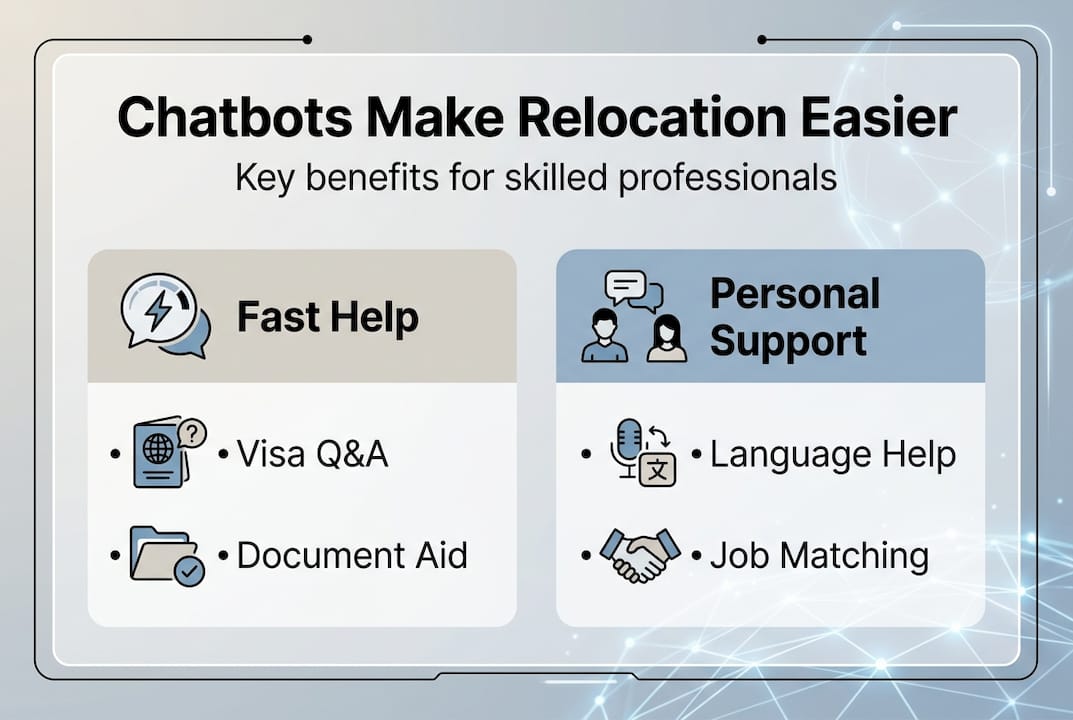
The first thing most people ask a relocation chatbot is something like, “What visa do I need to work in Australia as a software engineer?” That is a reasonable starting point, and modern chatbots handle it well. But their usefulness goes much further than a single visa question.
Here is a snapshot of what chatbots can realistically do for you right now:
- Answer visa eligibility questions based on your occupation, nationality, and destination country
- Translate documents such as employment contracts, tenancy agreements, and official letters
- Explain legal and contract basics in plain language, so you know what you are signing
- Recommend migration agents or career advisors based on your specific situation
- Summarise government requirements without you having to read 40 pages of policy documents
- Walk you through job search strategies for specific APAC markets
AskRudy.ai is built specifically for people moving abroad, offering visa guidance, document translation, and personalised advice tailored to your circumstances. That kind of focused functionality is a big step forward from general-purpose AI tools.

For skilled migrants, the time savings alone are significant. Instead of spending three hours on a government immigration portal, you can get a structured answer in minutes and know exactly what follow-up questions to ask a real professional.
That said, chatbots do have blind spots. Support for rare languages can be inconsistent, and image-based forms or scanned documents sometimes trip up even the best models. If your situation involves a less common visa pathway or a language outside the major ones, you may get incomplete answers.
Learn more about AI chatbot relocation help and how these tools are being used by people making real international moves. There is also a useful breakdown of AI chatbots for skilled migrants that covers specific use cases across different destination countries.
Pro Tip: Use chatbots for first-pass guidance and to prepare your questions, then take those questions to a licensed migration agent or career advisor for anything with legal or financial consequences.
Comparing top chatbots: Which one best fits your move?
Not all relocation chatbots are built the same way, and picking the right one depends entirely on what you need most. If your biggest concern is understanding your visa options and reviewing a contract, that points you toward one type of tool. If you are focused on finding a job with visa sponsorship in Australia or New Zealand, you need something different.
AskRudy.ai offers visa and legal support while BRIGENAI matches jobs and migration agents across APAC, including Australia and New Zealand, making them complementary rather than competing tools.
| Chatbot | Best for | Key features | APAC focus |
|---|---|---|---|
| AskRudy.ai | Visa, legal, document translation | GPT-4o powered, multilingual | General international moves |
| BRIGENAI | Job matching, agent referrals, career planning | Hybrid AI and human advisors | Australia, NZ, Singapore, Taiwan, HK, Malaysia |
| General AI (e.g., ChatGPT) | Broad research and drafting | Wide knowledge base | Not specialised |
The table above makes the choice clearer. If you are a nurse looking to move from the Philippines to New Zealand, AskRudy.ai can help you understand registration requirements and translate your employment history. BRIGENAI can then match you to roles with sponsorship pathways and connect you with a vetted migration agent who has done exactly this move before.
For professionals focused on career outcomes, exploring AI tools for job finding gives you a broader picture of what is available. The AI relocation tools hub is also worth bookmarking as a free starting point.
Pro Tip: Before choosing a chatbot, write down your top three priorities. Is it visa clarity, job leads, legal translation, or cost of living data? Match the tool to the task, not the other way around.
Limitations: When do you still need a human expert?
Chatbots are impressive, but they are not infallible. Understanding where they fall short will save you from making costly mistakes at critical points in your relocation.
The honest reality is that chatbots provide general information and can automate basic support tasks, but they cannot replace expert advice for complex or edge cases such as visa appeals or family sponsorship arrangements. That boundary matters a great deal when the stakes are high.
Here are the situations where you should always escalate to a human expert:
- Visa appeals or refusals: The rules are highly specific and the consequences of errors are serious
- Family sponsorship visas: These involve multiple applicants, relationship evidence, and strict documentation standards
- Regulatory changes: Immigration policy can shift quickly, and chatbots may not reflect the most recent updates
- Employer-sponsored pathways: Negotiating sponsorship terms with an employer requires human judgement and legal knowledge
- Health or character waivers: These are assessed case by case and require professional representation
“AI can point you in the right direction, but it won’t replace a migration agent when the situation gets complicated.”
The reliability of any chatbot also depends on the underlying model. AskRudy.ai runs on GPT-4o, which is currently one of the stronger models available, but even the best AI has knowledge cutoffs and cannot account for very recent policy changes.
For immigration-specific questions, the resource on chatbots for immigration questions is a practical guide to knowing when to trust the tool and when to pick up the phone.
How to get the most out of a relocation chatbot
Getting genuinely useful answers from a chatbot comes down to how you ask. Vague questions produce vague answers. Specific questions produce actionable ones.
Follow these steps to get the most from any relocation chatbot:
- State your context upfront. Include your nationality, current country, target destination, occupation, and visa type if you know it.
- Ask one question at a time. Chatbots handle focused queries better than multi-part questions bundled together.
- Request sources or next steps. Ask the chatbot to tell you which government body or regulation applies, so you can verify independently.
- Cross-check critical answers. For anything involving legal status, use two chatbots or confirm with a professional before acting.
- Save your conversation. Many chatbots do not retain history between sessions, so copy important answers into a document.
The accuracy of chatbot answers depends on the language used, image recognition capability, and the quality of the underlying model, which is why keeping your own records is essential.
Here is a simple tracking template to use alongside your chatbot sessions:
| Question asked | Chatbot answer summary | Verified? | Next action |
|---|---|---|---|
| Visa type for IT engineer, India to Australia | Skilled Independent (subclass 189) likely | Pending | Book migration agent consult |
| Document translation, employment contract | Completed via AskRudy.ai | Yes | File with application |
| Cost of living, Sydney vs Melbourne | Sydney higher by ~15% | Pending | Check BRIGENAI salary guide |
For career-specific planning, the AI career advisor copilot goes beyond visa basics into salary negotiation and job search strategy. If you are weighing up the financial side of a move, the finance copilot covers budgeting, tax implications, and cost of living comparisons.
Pro Tip: Treat your chatbot sessions like preparation for a doctor’s appointment. Go in with specific questions, note the answers, and bring those notes to your human advisor for confirmation and next steps.
Our perspective: AI chatbots are a smart first step, but not the whole journey
We have spent considerable time observing how skilled migrants actually use AI tools, and the pattern is consistent. The people who get the best outcomes are not the ones who rely entirely on chatbots, nor the ones who ignore them completely. They are the ones who use AI to get oriented quickly, then bring that clarity to a human advisor.
There is a misconception that AI will eventually make migration agents redundant. We do not see it that way. What AI does well is compress the learning curve. It turns a week of confused research into an afternoon of structured questions. That is genuinely valuable. But the judgement calls, the nuanced reading of a case officer’s likely concerns, the relationship with an employer navigating sponsorship for the first time, those still require human expertise.
The AI-powered expat tools available today are best understood as a first layer of support, not the whole structure. Skilled migrants who succeed abroad tend to combine digital efficiency with trusted human advisors, and that combination is where the real confidence comes from.
Find your trusted relocation partner with BRIGENAI
Chatbots give you a strong start, but the professionals who move most successfully are the ones who back that digital research up with real expertise.
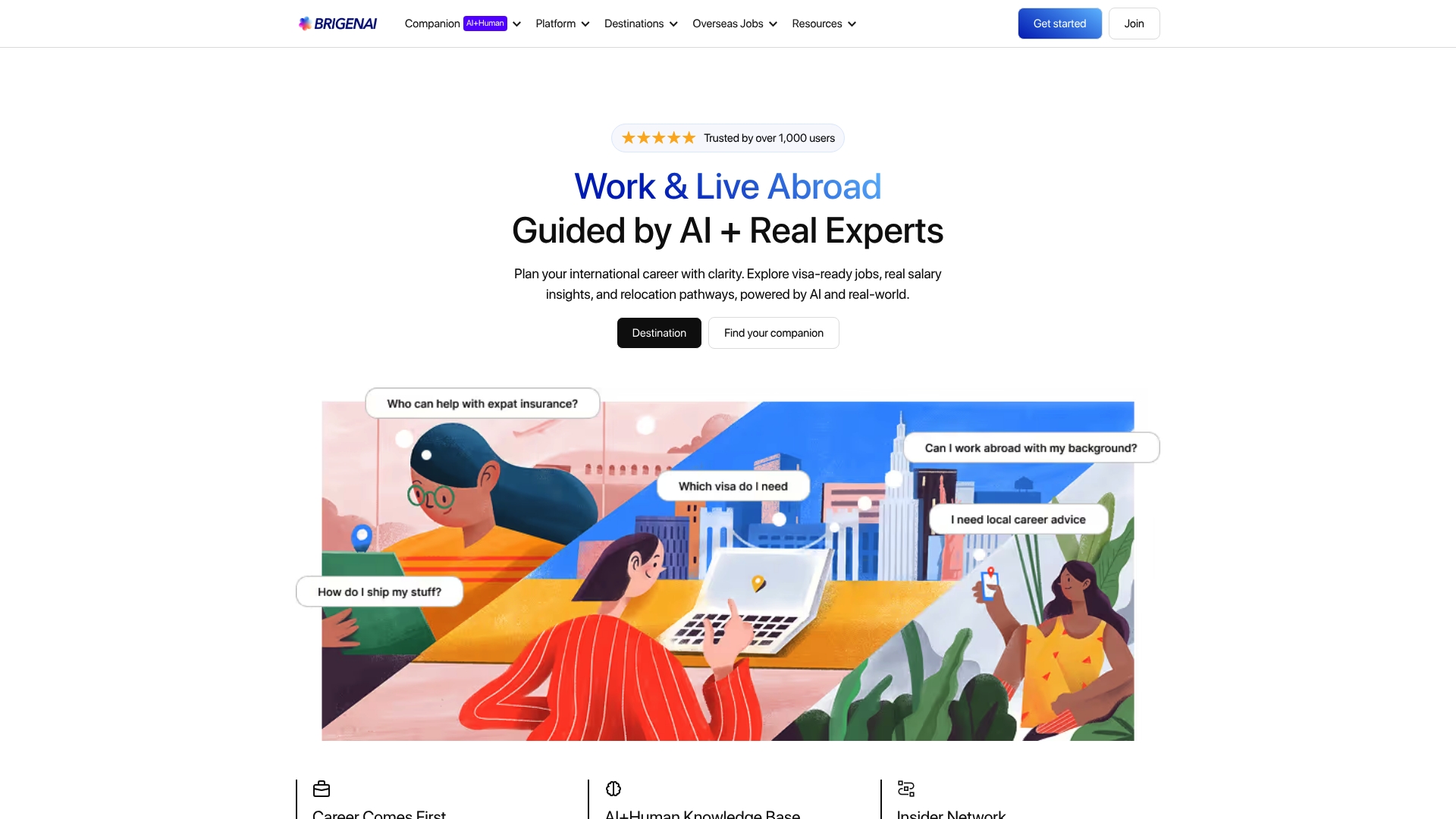
BRIGENAI connects skilled migrants with vetted job opportunities, migration agents, and career advisors across Australia, New Zealand, Singapore, and beyond. Our hybrid intelligence model means you get the speed of AI and the reliability of human experience in one place. Whether you need relocation services, visa and immigration help, or want to check the ANZ skills list to confirm your occupation qualifies, BRIGENAI is built to support every stage of your move. Start with the tools, then connect with the people who have been there.
Frequently asked questions
Are chatbot answers about visas legally binding?
No. Chatbot answers are for general guidance only and do not constitute legal advice. Always verify visa-related decisions with a registered migration advisor before acting.
Can chatbots help me find a job in Australia or New Zealand?
Yes. Platforms like BRIGENAI match professionals to jobs and migration agents in Australia and New Zealand, with sponsorship pathways clearly identified.
Do chatbot services support rare languages or document images?
Support for rare languages and images is limited and varies depending on each chatbot’s underlying model and training data.
How can I use a chatbot most effectively when preparing to move?
Be as specific as possible in your questions, include your occupation and target country, and use the chatbot’s answers to prepare focused questions for a human migration agent or career advisor.