
Studying abroad represents one of the most transformative experiences in a young person's life, but managing finances while pursuing education in a foreign country can be challenging. Jobs for international students not only provide financial support but also offer invaluable work experience, professional networking opportunities, and insights into local workplace culture. Understanding the landscape of available employment options, visa regulations, and strategic approaches to securing positions is essential for making the most of your study abroad journey. This comprehensive guide explores the best opportunities for international students in 2026, with specific focus on the APAC region and beyond.
1. On-Campus Employment Opportunities
On-campus jobs represent the most accessible entry point for international students seeking employment. These positions typically come with fewer visa restrictions and offer flexible schedules designed to accommodate academic commitments.
Understanding On-Campus Work Authorization
Most student visa programs allow limited on-campus employment without additional work permits. In the United States, F-1 students can work up to 20 hours per week during academic sessions and full-time during breaks. Similarly, Australian student visa holders can work unlimited hours during scheduled course breaks.
Popular on-campus positions include:
- Library assistants and research support staff
- Student union representatives and event coordinators
- Dining hall workers and campus cafe baristas
- IT helpdesk technicians and computer lab monitors
- Academic tutors and peer mentors
- Administrative assistants in various departments
The University of Illinois provides comprehensive information about on-campus employment regulations and opportunities that can help students understand their options.
Benefits Beyond the Paycheck
On-campus employment offers unique advantages that extend far beyond monetary compensation. These roles help students develop professional skills while remaining physically close to classes and study spaces. Additionally, supervisors often demonstrate greater understanding of academic pressures and exam schedules.
2. Curricular Practical Training and Academic Internships
Curricular Practical Training (CPT) and similar programs allow international students to gain work experience directly related to their field of study. These structured opportunities bridge classroom learning with real-world application.
What Qualifies as CPT
CPT refers to internships, practicums, or cooperative education programs that form an integral part of an established curriculum. The experience must be directly related to your major and typically requires faculty sponsorship or academic credit.
Northwestern University's international office offers detailed guidance on CPT requirements for students seeking to maximize their practical training opportunities.
Students pursuing jobs for international students through CPT programs should begin planning early. Most programs require approval before employment begins, and processing times can take several weeks.
Maximizing CPT Benefits
Strategic use of CPT can transform your academic experience and career trajectory. Consider these approaches:
- Start early conversations with your academic advisor about CPT possibilities in your first year
- Research companies known for hiring international students in your field
- Attend career fairs specifically targeting students with visa sponsorship needs
- Build relationships with faculty who have industry connections
- Document everything for future Optional Practical Training applications
The experience gained through CPT positions often becomes the foundation for securing full-time employment after graduation, especially when working with visa-friendly employers across the APAC region.
3. Optional Practical Training Opportunities
Optional Practical Training (OPT) represents one of the most valuable work authorization programs for international students, particularly those studying in the United States. This program allows recent graduates to work in their field of study for up to 12 months, with STEM extensions potentially doubling that duration.
OPT Application Strategy
Successful OPT applications require meticulous planning and timing. Applications must be submitted within specific windows, typically 90 days before program completion and no later than 60 days after graduation.
Critical OPT timeline milestones:
- 90 days before graduation: Begin gathering application materials
- 60 days before graduation: Submit OPT application to USCIS
- Upon approval: Receive Employment Authorization Document (EAD)
- 90-day unemployment limit: Secure employment within this window
- 12-24 months: OPT validity period (varies by major)
When searching for visa-friendly job opportunities, international students should prioritize employers familiar with OPT regulations and willing to provide necessary documentation.
STEM OPT Extensions
Students graduating with degrees in Science, Technology, Engineering, or Mathematics fields qualify for an additional 24-month extension beyond the standard 12-month OPT period. This extended authorization significantly improves chances of securing H-1B visa sponsorship.
The University of Texas at Dallas career center provides specialized resources for international students navigating OPT job searches and visa transitions.
4. Part-Time Off-Campus Employment
While more restricted than on-campus options, off-campus part-time employment offers international students exposure to local industries and potentially higher compensation. Understanding the regulations governing such work is crucial.
Eligibility Requirements for Off-Campus Work
Off-campus employment eligibility varies significantly by country and visa type. In Australia, student visa holders can work up to 48 hours per fortnight during study periods. Singapore's Student Pass holders must obtain approval from their educational institution before accepting off-campus positions.
Students exploring jobs for international students in the off-campus market should verify current regulations through official immigration channels and their institution's international student office.
High-Demand Part-Time Sectors
Certain industries consistently seek part-time workers and demonstrate greater willingness to navigate international student work restrictions:
- Hospitality and food service (cafes, restaurants, hotels)
- Retail positions (especially during holiday seasons)
- Tutoring services (language instruction, academic subjects)
- Freelance digital work (content creation, graphic design)
- Customer service roles (call centers, support desks
- Tutoring | 5-15 | $25-50/hour | Very High | | Digital Freelance | 10-20 | $20-40/hour | Very High | | Customer Service | 15-25 | $16-24/hour | Medium |
Understanding cost of living considerations in your study destination helps determine how many hours you need to work to maintain financial stability.
5. Remote and Freelance Opportunities
The digital transformation of work has created unprecedented opportunities for international students to earn income through remote and freelance arrangements. These flexible options often sidestep traditional visa work restrictions while building valuable portfolio credentials.
Navigating Legal Considerations
Remote work regulations for international students exist in a complex gray area. Generally, working for clients or companies based in your home country remains permissible, while local remote work may require standard work authorization.
Before accepting remote work, verify:
- Whether the work qualifies as self-employment under your visa
- Tax obligations in both your host and home countries
- Whether income affects visa renewal or status
- University policies regarding outside employment
- Required reporting to immigration authorities
San Diego State University's career services emphasizes the importance of understanding how different employment types affect visa status.
Building a Freelance Portfolio
Successful freelancing requires strategic skill development and portfolio building. International students should focus on marketable skills that translate across borders:
- Writing and content creation (blogs, copywriting, technical writing)
- Graphic design and video editing (social media content, marketing materials)
- Web development and programming (website building, app development)
- Virtual assistance (administrative support, project management)
- Language services (translation, interpretation, teaching)
Platforms connecting freelancers with clients have evolved significantly, with many offering payment processing that accommodates international students. Building a strong profile on these platforms can generate sustainable income throughout your studies.
6. Research Assistant and Teaching Assistant Positions
Graduate students and advanced undergraduates often find jobs for international students through research assistant (RA) and teaching assistant (TA) positions. These roles offer the dual benefit of financial support and academic advancement.
Research Assistant Opportunities
RA positions typically involve supporting faculty research projects, conducting literature reviews, managing data collection, or assisting with laboratory work. These positions often provide:
- Competitive stipends often exceeding standard on-campus wages
- Professional research experience valuable for graduate school applications
- Publication opportunities strengthening academic credentials
- Faculty mentorship building important professional relationships
- Flexible scheduling accommodating class commitments
Many departments prioritize funding their own students for RA positions, making proactive outreach to faculty members essential. Express interest in professors' research during office hours and demonstrate how your background could contribute to their projects.
Teaching Assistant Roles
TA positions involve supporting course instruction through grading, leading discussion sections, holding office hours, or managing laboratory sessions. Requirements and compensation vary by department and institution.
The USC Career Center's guide outlines how international students can leverage TA and RA positions for both financial support and professional development.
7. Industry-Specific Internship Programs
Certain industries have developed robust internship programs specifically designed to accommodate international students and provide pathways to full-time employment. Understanding which sectors actively recruit international talent helps focus job search efforts.
Tech Industry Opportunities
Technology companies, particularly in the APAC region, actively recruit international students due to global talent shortages. Many offer structured internship programs with potential for return offers:
Leading tech employers for international students:
- Major cloud computing providers (AWS, Azure, Google Cloud roles)
- Software development firms seeking diverse perspectives
- Cybersecurity companies facing talent gaps
- AI and machine learning startups, including AI engineering positions
- Data analytics and business intelligence firms
These roles often provide competitive compensation and valuable experience that translates across borders. Students should research companies with established sponsorship track records.
Finance and Consulting Sectors
Financial services and consulting firms frequently recruit international students for internship programs, particularly those studying at target universities. These sectors value diverse cultural perspectives and language capabilities.
8. Entrepreneurship and Student Startups
Some international students create their own employment opportunities through entrepreneurship. While visa regulations often restrict business ownership, certain structures and approaches remain viable.
Understanding Entrepreneurship Visas
Several countries have introduced startup visa programs or modified student visa conditions to encourage entrepreneurial activity. Australia's Post-Study Work stream allows business development, while Singapore offers Graduate Entrepreneur Passes for qualifying ventures.
When exploring entrepreneurship as one of the jobs for international students options, consider:
- University incubator programs offering resources and mentorship
- Competition winnings that don't count as traditional employment
- Co-founding with citizens who can hold ownership stakes
- Development phases that occur before monetization
- Transition planning to appropriate visa categories upon graduation
Campus Business Opportunities
Many successful student entrepreneurs start with campus-focused services that address fellow students' needs:
- Tutoring services connecting students with academic support
- Event planning for cultural celebrations and networking gatherings
- Import businesses bringing products from home countries
- Consulting services helping companies understand international markets
- Content creation focused on study abroad experiences
Kent State University's career development resources include guidance on entrepreneurial pathways for international students.
9. Strategic Job Search Approaches
Successfully securing jobs for international students requires strategic approaches that acknowledge both unique challenges and distinctive advantages international students bring to employers.
Highlighting Your International Perspective
Rather than viewing your international status as a limitation, frame it as a competitive advantage. Employers increasingly value:
- Multilingual capabilities serving diverse customer bases
- Cross-cultural competence essential for global operations
- International market insights informing business expansion
- Diverse problem-solving approaches fostering innovation
- Global professional networks facilitating international partnerships
Platforms like BRIGENAI help international students identify opportunities with employers who specifically value international talent and understand visa processes.
Networking Strategies That Work
Effective networking remains crucial for international students facing competitive job markets. Focus on building genuine relationships rather than transactional connections:
Western Illinois University's international student employment information emphasizes the importance of early career planning and strategic networking.
10. Visa Transition Planning and Long-Term Career Strategy
The most successful international students view their time abroad as part of a comprehensive long-term career strategy. Understanding how different jobs for international students contribute to future visa options and career advancement is essential.
Building a Visa-Friendly Career Path
Strategic career planning considers how each position strengthens your case for future work authorization:
- Document all achievements for future visa applications
- Choose employers with sponsorship track records
- Develop skills listed on shortage occupation lists
- Build professional networks who can advocate for sponsorship
- Understand timelines for different visa categories
Resources like BRIGENAI's skills lists help students identify in-demand occupations across different countries, allowing strategic skill development aligned with future immigration opportunities.
Regional Considerations Across APAC
Employment strategies vary significantly across the APAC region. Students should tailor approaches based on their study destination:
Australia offers post-study work rights ranging from 2-4 years depending on degree level and location. Understanding Australian cost of living helps plan financial sustainability during this transition period.
Singapore provides pathways through the Personalized Employment Pass and Tech.Pass for qualifying graduates. The city-state's competitive salary landscape attracts international talent across multiple sectors.
New Zealand features a straightforward post-study work visa system and clear pathways to residence. Exploring New Zealand's cost structure and tax implications helps with comprehensive planning.
Snow College's international career services provides guidance on transitioning from student to work visas across different countries.
Creating Your Personal Career Roadmap
Develop a comprehensive career plan that accounts for visa timelines, skill development, and financial goals:
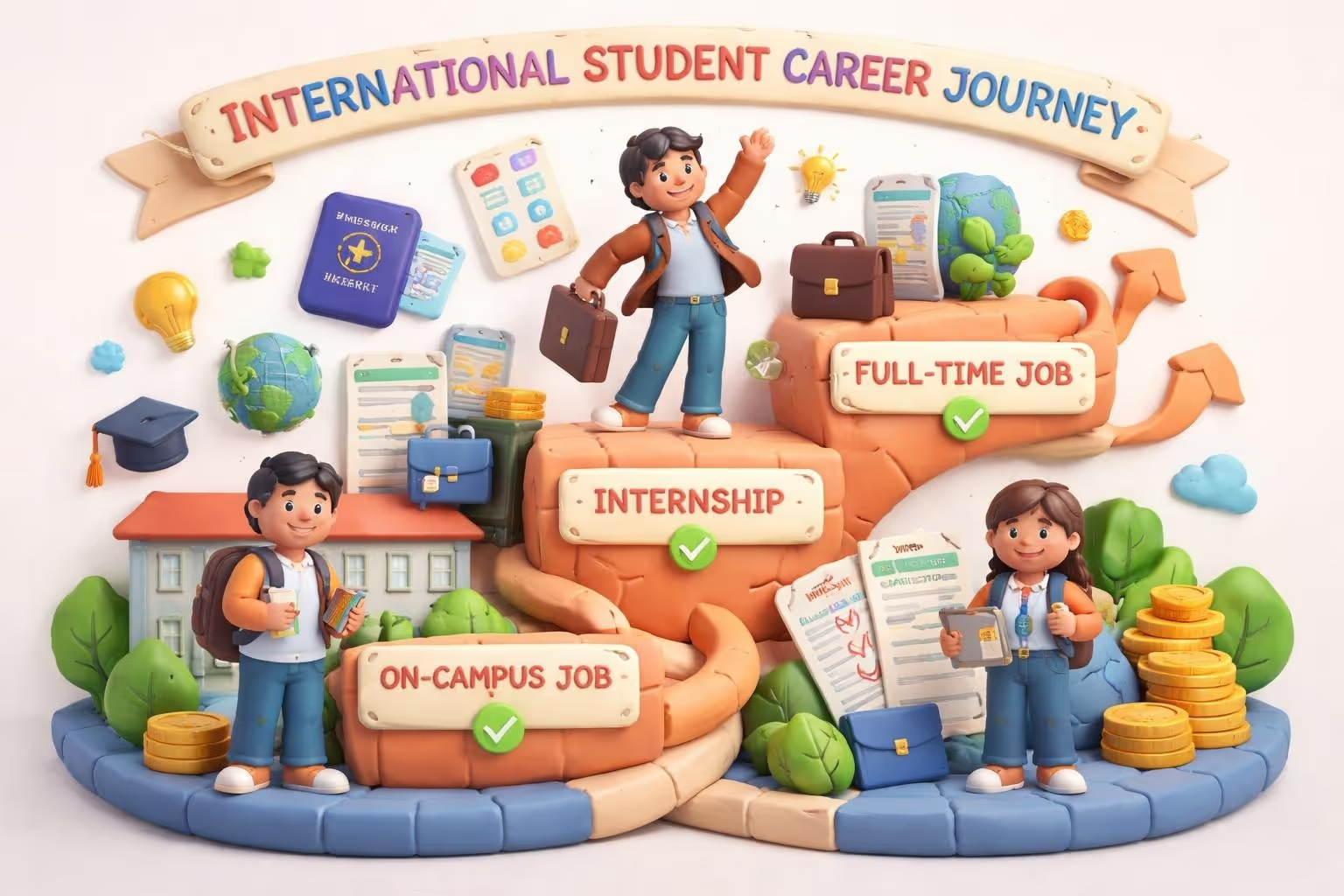
- Year 1-2: Focus on on-campus work and skill building
- Year 2-3: Pursue internships through CPT or equivalent programs
- Year 3-4: Secure competitive positions leading to graduation offers
- Post-graduation: Leverage OPT or post-study work rights
- Long-term: Transition to employer-sponsored work visas
Utilizing comprehensive platforms for visa and immigration assistance alongside career advisory services creates a coordinated approach to international career development.
Successfully navigating jobs for international students requires understanding regulations, identifying opportunities, and building strategic career pathways that extend beyond graduation. The combination of on-campus convenience, practical training programs, and strategic industry positioning creates multiple pathways to both financial sustainability and professional development. Whether you're exploring opportunities in Australia, Singapore, or New Zealand, BRIGENAI simplifies your journey with comprehensive tools for finding visa-friendly jobs, understanding salary expectations, navigating immigration requirements, and planning your international career with confidence.