

Figuring out the right major, job, or career path, especially when you're also planning to study or work abroad, is hard without a clear picture of your own strengths, interests, and work style. Career assessment tests won't make the decision for you, but a good one can narrow the field fast and give you language to explain your choices in applications and interviews. We compared six of the most established, most-used online career assessment tests (all free to start, with clear opt-in paid upgrades) based on how long they've been running, how many people have taken them, and how well they cover different angles: personality, interests, motivation, and strengths. Below is a quick-scan comparison table, followed by a closer look at each one so you can pick the test (or combination of tests) that fits your situation.
Comparison Table
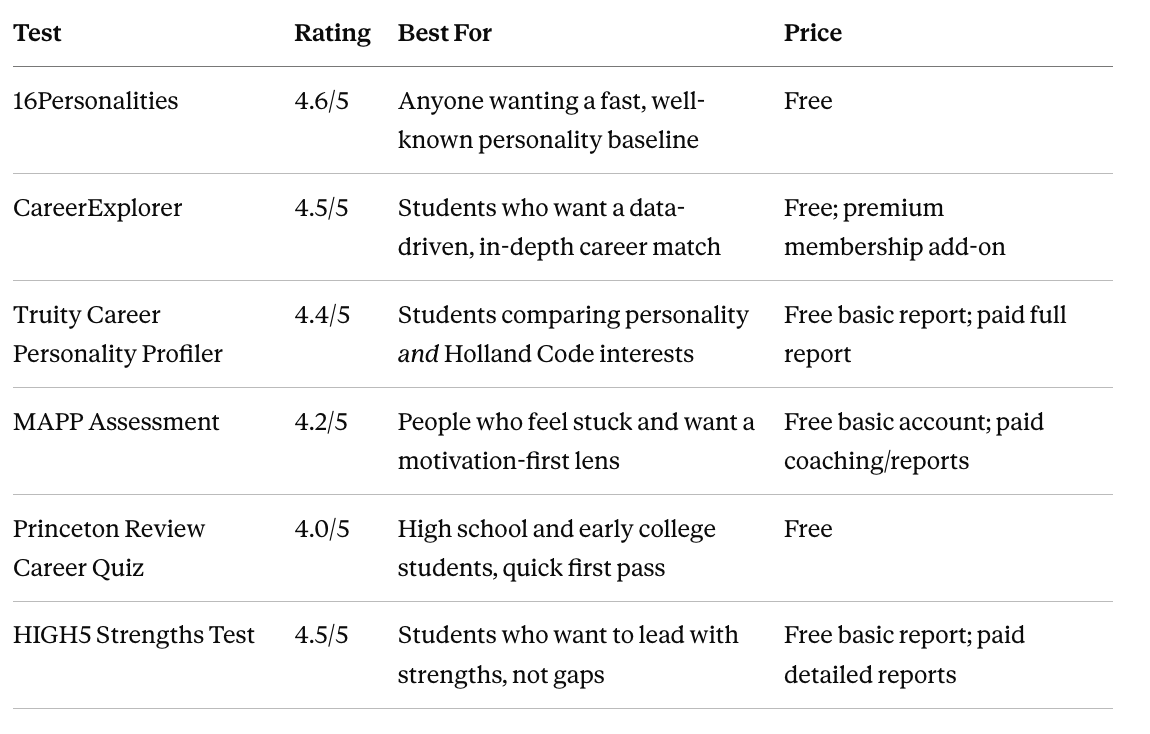
Ratings reflect a blend of user testimonials, completion volume, and third-party media coverage found on each platform's own site; none of the six charges for the core test.
How We Ranked These
We ordered the list by a mix of global name recognition, how long each test has operated (all are established, multi-year platforms rather than new entrants), and how well the group together covers the four main assessment angles (personality type, career interests, motivation, and strengths) so no single lens dominates the list.
1. 16Personalities
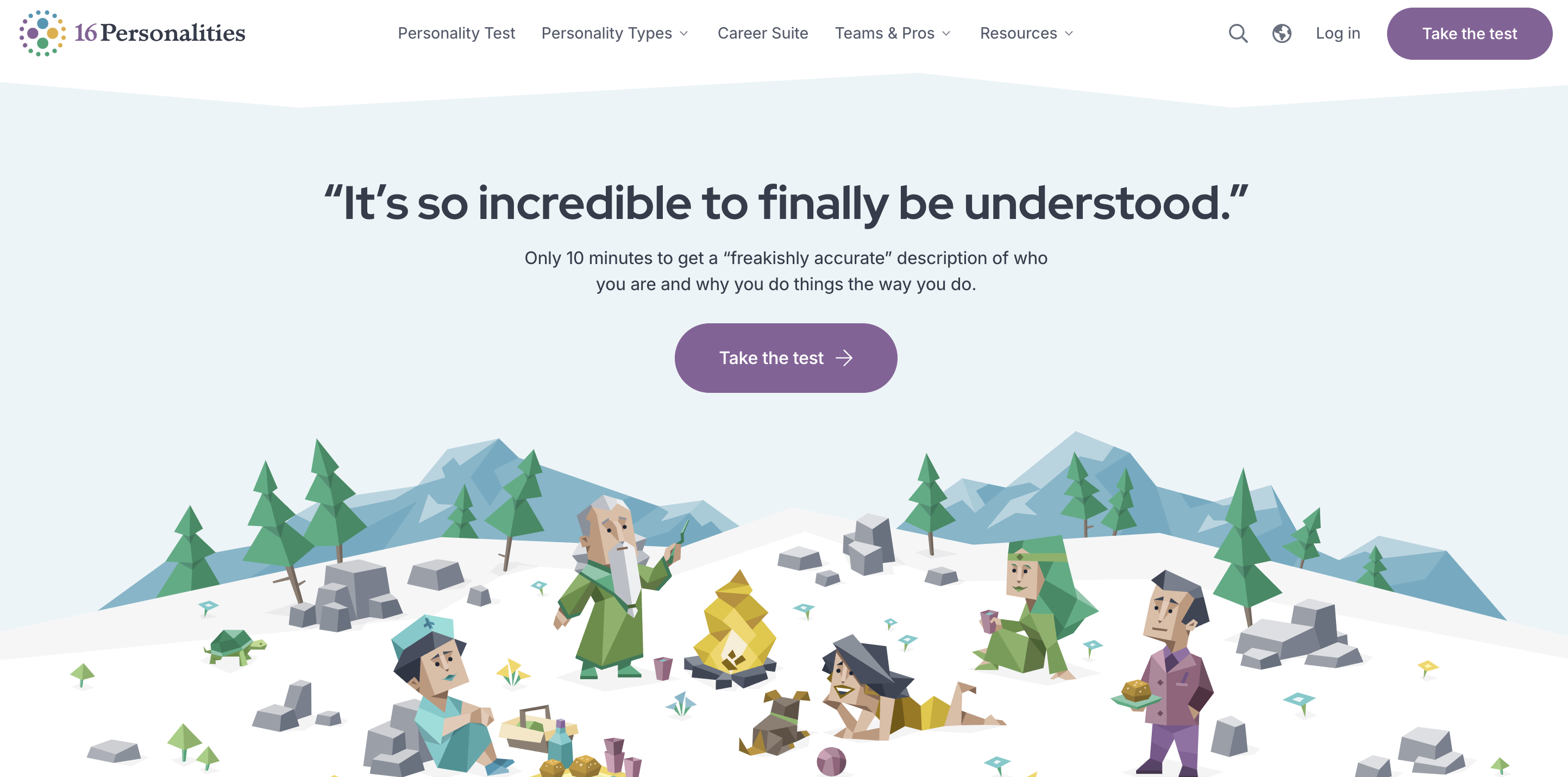
Description: 16Personalities is a free personality test built on a Myers-Briggs-style framework, sorting users into one of 16 personality types and explaining how that type tends to approach work, relationships, and decision-making.
Rating: 4.6/5, based on the volume of user testimonials and the sheer scale of repeat use the platform reports.
Highlight: Takes about 10 minutes and has reportedly been completed over 1.5 billion times globally, making it the most recognizable entry point on this list.
Pros:
- Completely free, no account required to see results
- Extremely fast (about 10 minutes)
- Results are easy to Google further, since tons of secondary content exists per type
Cons:
- Measures personality only, not career interests or skills directly
- Type labels can feel reductive if taken as the final word rather than a starting point
Best For: Students who want a quick, well-known personality baseline before diving into a more career-specific test.
Target Region: Global, available in dozens of languages.
Pricing: Free
Conclusion: 16Personalities is the best "day one" test on this list: fast, free, and a useful shared vocabulary. But it's a personality snapshot, not a career-matching tool, so pair it with one of the more career-focused options below before making decisions.
Official site: 16personalities.com
2. CareerExplorer
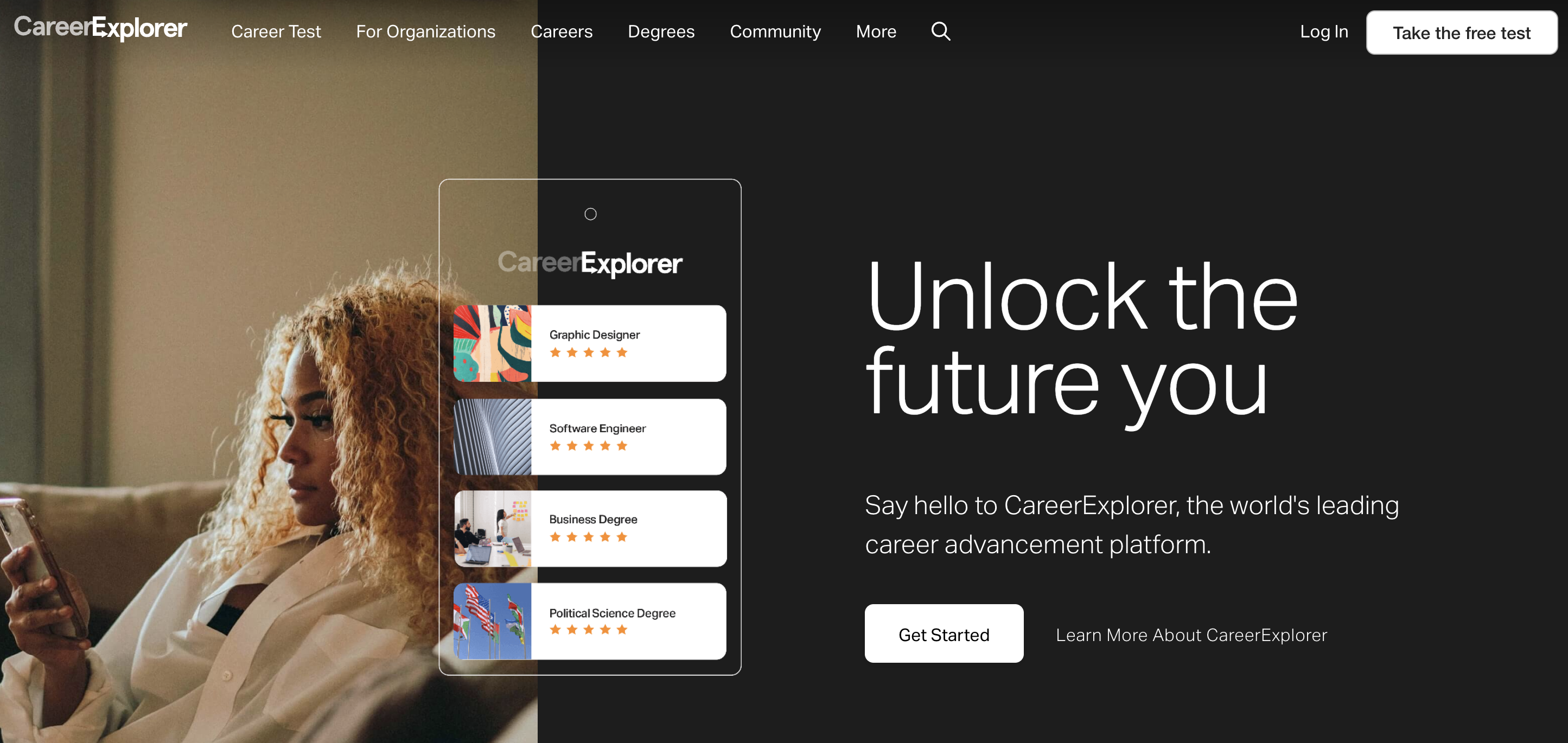
Description: CareerExplorer is a free, in-depth assessment that combines interests, personality traits, and workplace preferences into a "personality archetype," then matches that profile against a large database of specific careers.
Rating: 4.5/5, supported by a reported 70%+ completion rate and coverage in outlets like Forbes and Fast Company.
Highlight: Matches results against hundreds of specific careers rather than broad categories, which is useful for students trying to go from "I like this general area" to an actual job title.
Pros:
- Free assessment covers a genuinely wide set of careers
- Built by a team described as including data scientists and vocational-testing psychologists
- Clear no-data-selling privacy commitment
Cons:
- Full membership pricing isn't published upfront; you have to start the flow to see costs
- Longer than a quick quiz; not ideal if you want a five-minute answer
Best For: Students who want a detailed, career-specific match rather than just a personality label.
Target Region: Global, English-language platform with broad international use.
Pricing: Free core assessment; optional paid membership for deeper reports (exact price shown only after signup, so contact the site for current pricing).
Conclusion: CareerExplorer is the strongest option here if your goal is a specific career shortlist rather than a personality type, and it's substantial enough to justify the extra time it takes.
Official site: careerexplorer.com
3. Truity Career Personality Profiler
Description: Truity's Career Personality Profiler blends the Big Five personality model with the Holland Code (RIASEC) career interest system to recommend compatible careers, work styles, and day-to-day tasks.
Rating: 4.4/5, reflecting reported volume (500,000+ tests in a recent 30-day period) and coverage across outlets like Entrepreneur and Bloomberg.
Highlight: One of the few tests on this list that explicitly combines two validated frameworks (Big Five + Holland Code) instead of relying on just one.
Pros:
- Free tier gives real results without requiring an email address
- Based on two well-documented psychological models, not a proprietary black box
- Reasonably quick (94 questions, about 10-15 minutes)
Cons:
- The most useful detail sits behind the paid full report
- Recommended for ages 16+, so it's a better fit for late high school and college students than younger teens
Best For: Students who want both a personality read and a Holland-Code-style interest match in one test.
Target Region: Global, English-language.
Pricing: Free basic results; paid full report priced at checkout (contact site for current pricing).
Conclusion: Truity earns its spot for combining two respected frameworks in one test. It's a good middle option between a pure personality quiz and a full career-matching platform.
Official site: truity.com
4. MAPP Assessment
Description: MAPP (Motivational Appraisal of Personal Potential) takes a motivation-first approach, aiming to identify what actually drives you before suggesting career and education paths that fit.
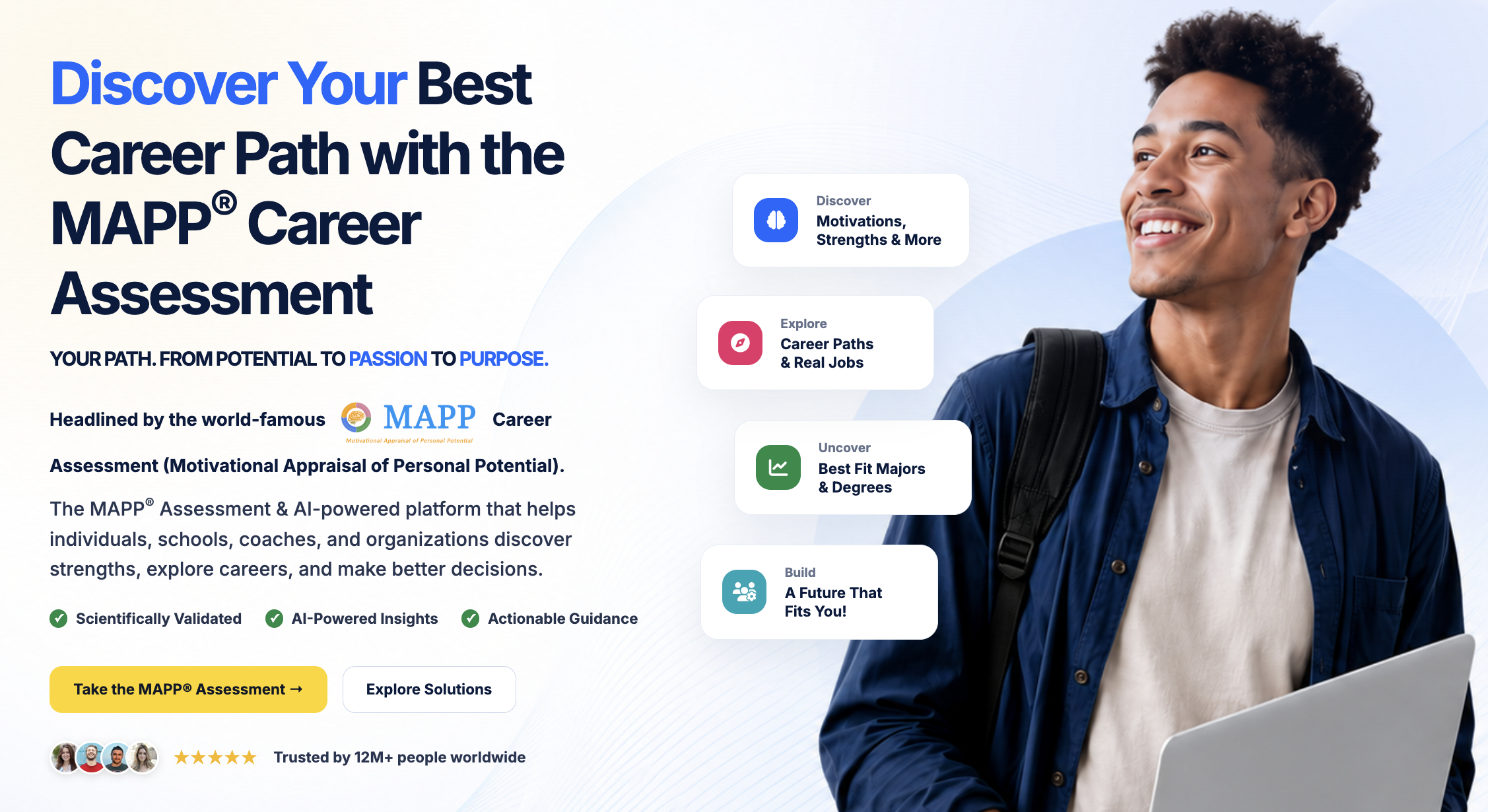
Rating: 4.2/5, based on scale (12M+ assessments completed) and long operating history (30+ years).
Highlight: Focuses on motivation rather than personality type or skills, which is a genuinely different angle if you've already taken a personality test and still feel unclear.
Pros:
- Large, long-running dataset (12M+ completions across 160+ countries)
- Free account option to get started
- Also used by schools, colleges, and career coaches, so it's built for guidance conversations, not just entertainment
Cons:
- Specific pricing for premium coaching/reports isn't listed publicly
- Framing (motivation over interests) can feel less intuitive if you're used to personality-style tests
Best For: Students or early professionals who feel stuck despite having already tried a personality-based test.
Target Region: Global, operating in 160+ countries.
Pricing: Free basic account; premium coaching and reports at paid tiers (contact for current pricing).
Conclusion: MAPP is worth adding if the personality- and interest-based tests on this list haven't clicked; its motivation-first lens can surface a different, sometimes clarifying, answer.
Official site: assessment.com
5. Princeton Review Career Quiz
Description: A short, free quiz from the well-known test-prep and admissions brand The Princeton Review, sorting users into color-coded "interest" and "style" profiles that map to broad career fields.
Rating: 4.0/5. It's the shortest and least detailed test on this list, reflected in a slightly lower score, but backed by a trusted education brand.
Highlight: At just 24 questions, it's the fastest way on this list to get a rough career-field direction, useful as a warm-up before a deeper test.
Pros:
- Completely free, no signup barrier to start
- Very fast, a genuine "first pass" tool
- Comes from a brand many students already know from test prep and college admissions content
Cons:
- Much lighter on depth than the other tests here: four broad "color" categories rather than specific careers
- Geared toward students already thinking about college/major choices, less useful for adult career changers
Best For: High school and early college students who want a quick starting point, not a final answer.
Target Region: Primarily US-focused, reflecting Princeton Review's core market.
Pricing: Free.
Conclusion: This is the lightest test on the list by design. It's good as a five-minute icebreaker before you commit time to CareerExplorer or Truity, not as your only data point.
Official site: princetonreview.com/quiz/career-quiz
6. HIGH5 Strengths Test
Description: HIGH5 is a free strengths-based assessment, grounded in positive psychology, that identifies your top 5 strengths out of a broader set rather than diagnosing weaknesses or personality flaws.
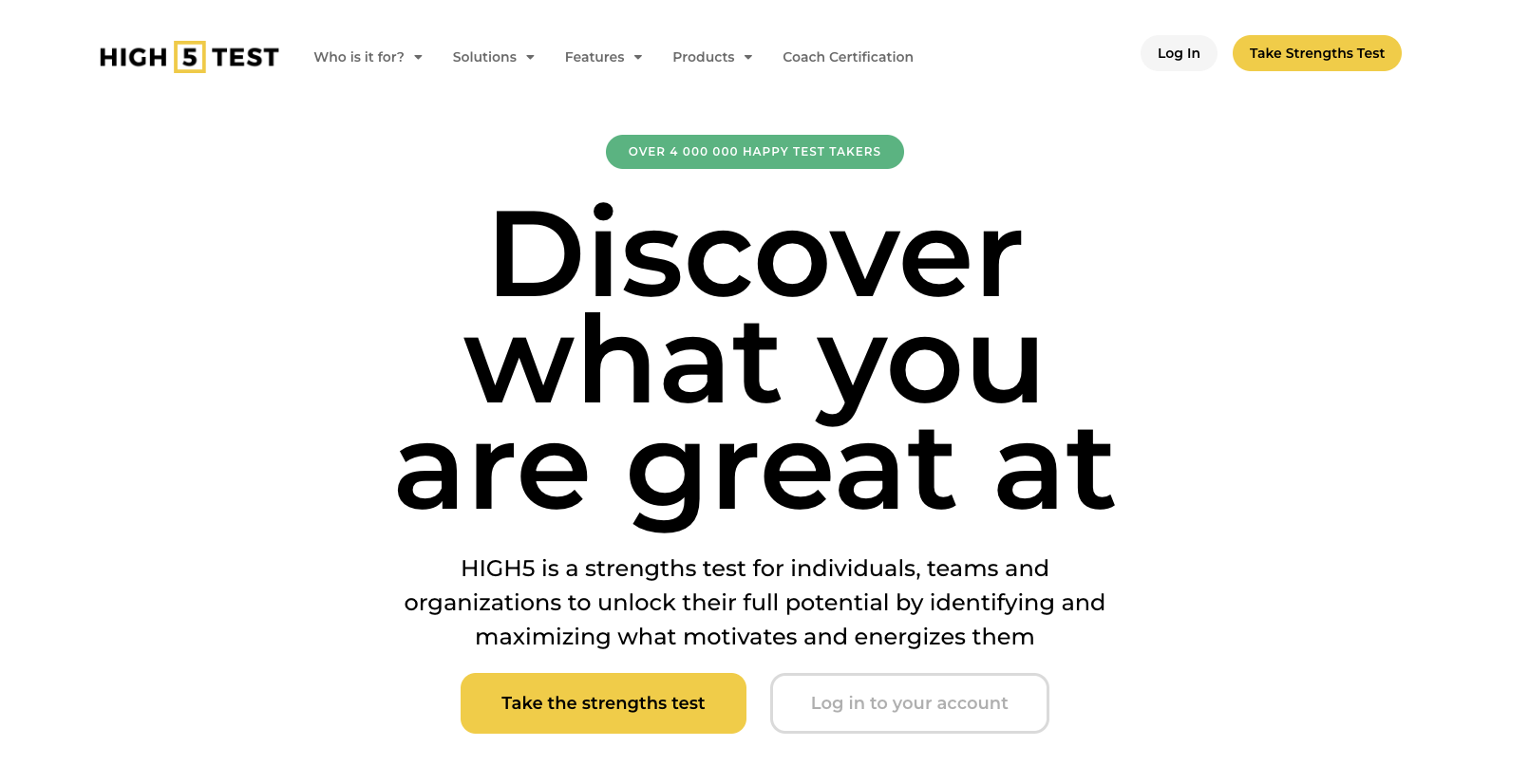
Rating: 4.5/5, supported by a reported 4 million+ completions and use by leaders at a large share of Fortune 500 companies.
Highlight: Explicitly strengths-first: the whole framework is built around what you're already good at and energized by, rather than fixing gaps.
Pros:
- Free basic report with real, usable output
- Large validation sample (millions of test-takers)
- Untimed, 15-20 minute format that doesn't feel rushed
Cons:
- Detailed career-specific guidance sits behind paid report upgrades
- Strengths framing is motivating but doesn't map as directly to specific job titles as CareerExplorer does
Best For: Students who respond better to "here's what you're good at" than "here's your type" or "here's what motivates you."
Target Region: Global, widely used in both individual and corporate/organizational settings.
Pricing: Free basic test; paid Full Strengths Report, Career Strengths Report, and coaching add-ons.
Conclusion: HIGH5 is the best pick if personality- and interest-based framing hasn't felt useful; leading with strengths can be a more energizing way into the same decision.
Official site: high5test.com
Which One Should You Take?
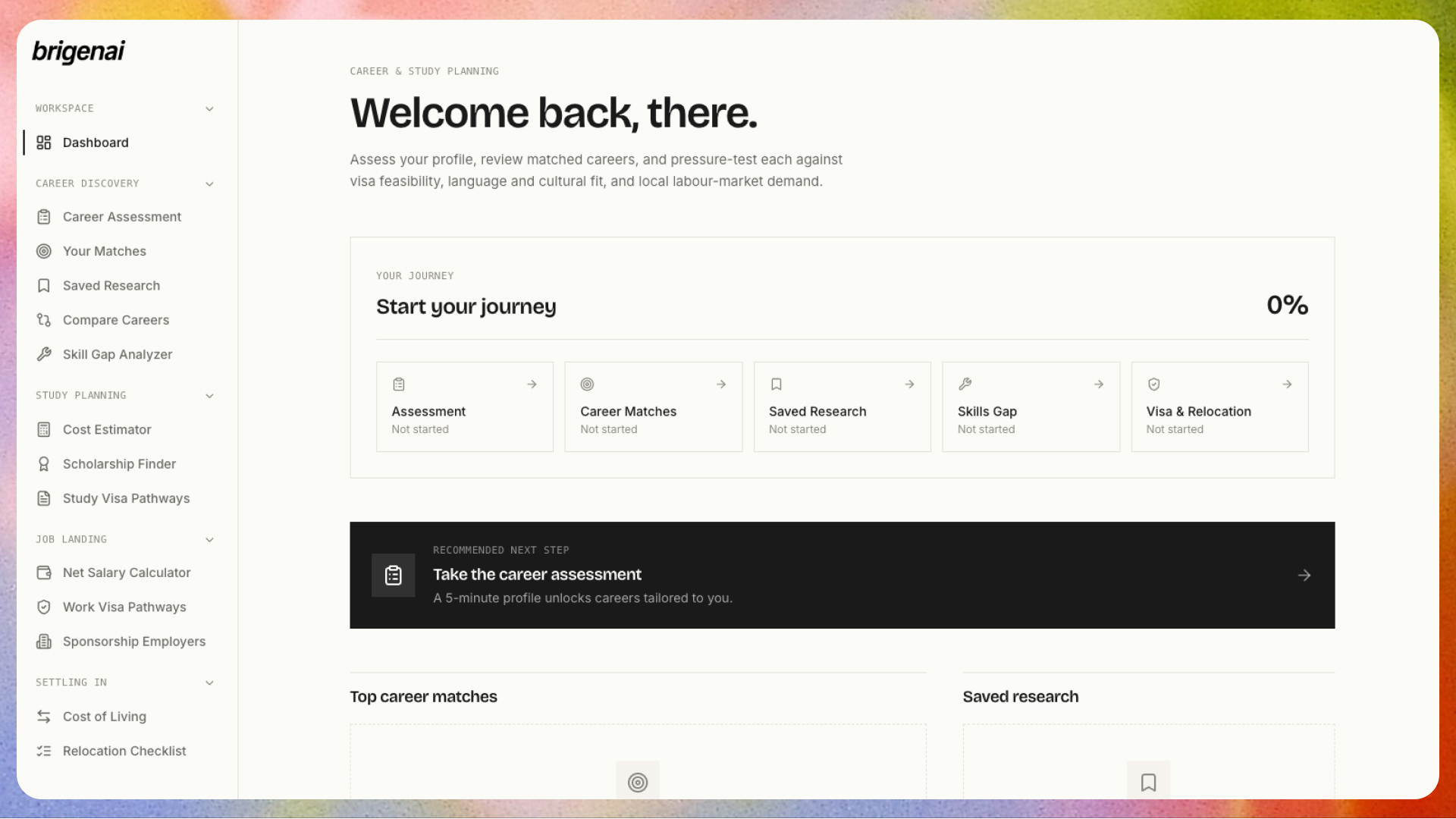
If you only have ten minutes, start with 16Personalities for a personality baseline, then move to CareerExplorer or Truity for something that actually maps to job titles. If you've already tried a personality test and still feel stuck, MAPP's motivation-first angle or HIGH5's strengths-first angle can surface a different answer. Students still narrowing down a major or a target country are usually better served starting with Princeton Review's quick quiz, then going deeper once they have a rough direction. No single test here is the final word. Treat the results as one input alongside your own research into programs, countries, and job markets. If you're specifically weighing where to study or work abroad, brigenai's free Career Assessment takes it a step further: it matches your background and interests to realistic career paths and countries, checked against real visa pathways and job markets, so you can connect "what fits me" to "what's actually available where I want to go."
FAQ
What is a career assessment test?
A career assessment test is a structured questionnaire that measures traits like personality, interests, motivation, or strengths, then matches your results to compatible career paths or work environments. None of them can guarantee a "correct" answer; they're decision-support tools, not verdicts.
Are career assessment tests accurate?
They're reasonably reliable at describing consistent patterns in how you think and work, since most of the tests on this list are built on established frameworks (Myers-Briggs-style typing, Holland Code, Big Five, positive psychology). They're less reliable at predicting a single "correct" job, so it's worth taking more than one and looking for overlap rather than trusting any single result in isolation.
What's the difference between free and paid career assessment tests?
On every test in this list, the free version gives you a real result: a type, an archetype, a top-strengths list, or a motivation profile. Paid upgrades typically unlock a longer written report, more specific career matches, or access to a coach; they don't unlock a fundamentally different or "more true" result.
How can a career assessment test help you choose a career path?
It gives you a starting vocabulary and a shortlist to research further (specific career titles, work environments, or strengths to lean on) instead of starting from a blank page. It works best as one input alongside conversations with people in the field, internships, and research into where those careers are actually in demand.
When is the best time for students to take a career assessment test?
Before finalizing a major or study-abroad program is the highest-value moment, since the results can inform which programs or countries you shortlist. It's also worth retaking a test a year or two later, since interests and motivations shift, especially after your first internship or study-abroad experience.
Conclusion
None of these six tests will hand you a final answer, but together they cover personality, interests, motivation, and strengths well enough that running one or two should give you real direction. Start free, compare a couple of results for overlap, and treat any test as a starting point for further research rather than a verdict.
Methodology note: Ratings and figures in this article are based on information published on each platform's own website (user counts, testimonials, and media mentions) as of September 2026. Pricing for paid tiers changes periodically, so always confirm current pricing on the official site before purchasing. This article contains no affiliate links; all links go directly to each provider's official site.