

Last updated: October 12, 2026. Prices and program details were checked on each school's official site, federal data, or a state workforce listing on this date. We do not use affiliate links in this article, and no school paid to be included.
Going to trade school as an adult is different from going at 18. You probably have rent, maybe kids, maybe a job you cannot quit until the new one starts. So the best trade school for you is not just the one with the best reputation. It is the one with a schedule you can keep, a price you can pay, and a clear path to a paycheck.
We compared in-person and hybrid trade schools on recognition, cost, how well they fit working adults, job outcomes, and track record. Seven made the cut, from tuition-free programs to private schools that cost close to $30,000. If you would rather learn online first, see our guide to the best online trade schools.
Quick comparison
| School | Our score | Trades | Best for | Typical cost (USD) | Length |
|---|---|---|---|---|---|
| Your local community college (example: College of DuPage) | 4.5 | HVAC, welding, electrical, more (varies) | Adults who want low cost, financial aid, and evening classes | $3,480 total for a one-semester HVACR certificate (example) | 1 semester to 2 years |
| Home Builders Institute (HBI) | 4.3 | Carpentry, electrical, plumbing, building trades | Adults who need free training and job placement | Tuition-free | About 10 to 12 weeks |
| Apex Technical School | 4.1 | Electrical, plumbing, HVAC, welding, construction, auto | New York-area adults who need evening classes | About $17,200 to $19,100 per program | 900 hours, as little as 7 months |
| Hobart Institute of Welding Technology | 3.9 | Welding | Adults committed to welding who can relocate to Ohio | $1,200 per individual course plus fees; full programs on request | Days to about a year |
| Tulsa Welding School | 3.7 | Welding, HVAC, electrical, lineworker | Fast, hands-on training in the South and Southwest | Varies by program and campus | 15 weeks to 10 months |
| Lincoln Tech | 3.7 | HVAC, electrical, welding, auto, more | Working adults who need day, afternoon, or evening schedules | $29,740 tuition for HVAC at the Mahwah, NJ campus (example) | About 1 year |
| Universal Technical Institute (UTI) | 3.5 | Welding, auto, diesel, more | Adults who want frequent start dates and a Lincoln Electric-built welding curriculum | $24,270 total for welding at the Houston campus | 36 weeks for welding |
How we ranked these schools
We looked at schools that appear for "trade schools for adults" in Google, programs listed in state workforce directories, and nonprofit training providers. We kept a school only if it has trained students for at least two years, teaches skilled trades in person or hybrid, and has costs or program details we could confirm on an official, federal, or state page. We weighted the criteria for adults, not recent high school graduates.
| Criterion | Weight | What we checked |
|---|---|---|
| Recognition | 25% | Accreditation, state licensing, DOL-recognized curriculum, or AWS test facility status |
| Cost and value | 25% | Published price and what it includes, plus free or low-cost options |
| Fit for working adults | 20% | Evening or part-time options, program length, start dates |
| Job outcomes and support | 20% | Placement services and any published outcomes |
| Track record | 10% | Years in operation and scale |
Here is how each school scored:
| School | Recognition | Cost | Adult fit | Outcomes | Track record | Total |
|---|---|---|---|---|---|---|
| Community college | 5 | 5 | 4 | 3.5 | 5 | 4.5 |
| HBI | 4.5 | 5 | 3 | 4 | 5 | 4.3 |
| Apex Technical School | 4.5 | 3.5 | 4.5 | 3.5 | 5 | 4.1 |
| Hobart Institute | 4.5 | 3.5 | 3 | 4 | 5 | 3.9 |
| Tulsa Welding School | 4 | 2.5 | 3.5 | 4.5 | 5 | 3.7 |
| Lincoln Tech | 4 | 2.5 | 4.5 | 3.5 | 5 | 3.7 |
| UTI | 4 | 2.5 | 3.5 | 3.5 | 5 | 3.5 |
Private schools score lower mainly on cost. That does not make them bad choices: they often start every few weeks and run full-time schedules built around one trade. Just compare the total price with a community college before you sign.
Before you enroll: what adults should check first
How you will pay. Accredited community colleges and many private trade schools accept federal financial aid if you file the FAFSA, and there is no age limit for it. Your state's workforce office can also fund training through WIOA if you were laid off or are changing careers, and veterans can often use the GI Bill. Some programs, like HBI's, are tuition-free.
Questions to ask any school before you sign:
- What is the total cost, including tools, books, and fees, not just tuition?
- Do you offer evening, weekend, or part-time schedules?
- What share of graduates find a job in the trade, and how do you measure it?
- Does the program count toward my state's apprenticeship or license requirements?
- Can I sit in on a class or tour the shop?
Remember the license step. For electricians and plumbers, trade school is usually the start, not the finish. Most states still require years of supervised work and an exam. For more on that path, see our guides to online electrician schools and online plumbing courses.
Which trades hold up best in the AI era?
BLS data for 2025 to 2035 favors trades done on site. Electrician jobs are projected to grow 9% and plumber jobs 7%, against 3% for all occupations, while welder jobs are projected to grow just 2%, partly because automation in manufacturing may limit demand. In May 2025, median pay was $63,190 for electricians, $63,800 for plumbers, $61,010 for HVAC mechanics and installers, and $53,750 for welders, compared with $50,980 for all workers.
[BRIGENAI DATA: insert brigenai's AI risk scores for Electrician, Plumber, HVAC Technician, and Welder from the Careers CMS as a small comparison, with links to each career page.]
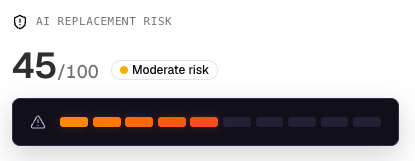
Not sure whether your current job is exposed to AI? Run it through brigenai's AI Risk Assessment before you choose a trade.
The 7 best trade schools for adults, reviewed
1. Your local community college (example: College of DuPage)
[SCREENSHOT: A community college trades program page. Alt text: "Community college trade school program for adults changing careers"]
Community colleges are the most common trade school in the US, and most run certificates in HVAC, welding, electrical, and other trades. College of DuPage in Illinois is a typical example: its Entry Level HVACR Certificate takes one 16-week semester, covers 13 credit hours, includes EPA certification, and offers day, night, and weekend classes.
Rating: 4.5 / 5
Highlight: The lowest cost per hour of hands-on training on this list, with financial aid built in.
Pros
- Regionally accredited, so credits stack toward longer certificates or degrees
- Night and weekend classes at many colleges
- Eligible for federal aid and often for state workforce funding
- Real labs and equipment
Cons
- Quality and program choice vary a lot from college to college
- Semester start dates, so you may wait months to begin
- Popular programs can have waitlists
Best for: Adults who want the most affordable route and can commit to a semester schedule.
Target region: Nationwide; this example is in Illinois
Pricing: $2,080 tuition plus about $1,400 in books, fees, and supplies, for $3,480 total, according to the Illinois workNet listing for College of DuPage.
Conclusion: Check your local community college before any private school. For most adults, it is the best mix of price, credibility, and flexibility.
Official site: cod.edu
2. Home Builders Institute (HBI)
[SCREENSHOT: HBI program finder or academy page. Alt text: "Home Builders Institute free trade school for adults"]
Home Builders Institute is a national nonprofit that runs tuition-free pre-apprenticeship training in the building trades. Its Pre-Apprenticeship Certificate Training (PACT) curriculum is one of only three pre-apprenticeship curricula recognized by the US Department of Labor. Adults can train at HBI's BuildStrong Academies in Orlando, New Orleans, Houston, Phoenix, Sacramento, Charlotte, and Puerto Rico, and transitioning service members can train on military bases.
Rating: 4.3 / 5
Highlight: Real trade school training at no tuition cost, with job placement included.
Pros
- Tuition-free for eligible students
- DOL-recognized curriculum covering carpentry, electrical, plumbing, and more
- OSHA 10 and other certifications included
- Large scale: more than 21,000 students enrolled in 2024
Cons
- Academies exist in only a handful of cities
- Eligibility rules vary by program and funding source
- Pre-apprenticeship level, so you still need an apprenticeship or job to finish your training
Best for: Adults who need to retrain without taking on debt, especially veterans and people re-entering the workforce.
Target region: United States, through academies, partner programs, and military bases
Pricing: Tuition-free.
Conclusion: If there is an HBI program near you and you qualify, start here. It is hard to beat free training with placement support.
Official site: hbi.org
3. Apex Technical School
[SCREENSHOT: Apex Technical School programs page. Alt text: "Apex Technical School adult trade school New York"]
Apex Technical School has trained New Yorkers since 1961 and describes itself as an adult vocational school. It is a nonprofit, part of The Fedcap Group, accredited by ACCSC and licensed by the New York State Education Department. Every program runs 900 hours, can be finished in as little as 7 months, and includes full-time day and part-time evening options.
Rating: 4.1 / 5
Highlight: A school built around adult learners, with evening classes in six trades.
Pros
- Nonprofit with a 60-year track record
- Part-time evening schedules for people who keep a day job
- Six trades to choose from, including electrical, plumbing, HVAC, and welding
- Financial aid and job assistance available
Cons
- New York City only (Queens, with electrical in Midtown Manhattan)
- Tuition is much higher than a community college
- Trains for entry-level jobs; licensing still comes later
Best for: New York-area adults who need evening classes and a fast, hands-on program.
Target region: New York City
Pricing: About $17,200 to $19,100 in tuition and fees per program for 2024-2025, based on federal data compiled by College Tuition Compare. Electrical, the largest program, was $18,400.
Conclusion: One of the best options in the country for adults in NYC. Compare it with CUNY community college programs before deciding.
Official site: apexschool.com
4. Hobart Institute of Welding Technology
[SCREENSHOT: Hobart Institute welding booths or course schedule. Alt text: "Hobart Institute of Welding Technology hands-on welding school"]
The Hobart Institute is a nonprofit, welding-only school in Troy, Ohio. It offers full welding programs and short individual courses in each major arc welding process, and it is an AWS Accredited Test Facility, so students can earn AWS welder certifications on site. It is accredited by ACCSC.
Rating: 3.9 / 5
Highlight: A specialist school where you can train and certify as a welder in one place.
Pros
- Welding is the only thing it teaches
- AWS certification testing on site
- Short individual courses let you pay for just what you need
- Nonprofit
Cons
- One campus, so most adults would need to relocate temporarily
- Full program prices are not as easy to find as course prices
- Welding only
Best for: Adults who have already chosen welding and want a focused, high-quality program.
Target region: United States (campus in Ohio)
Pricing: Most individual courses on the 2026-2027 schedule cost $1,200 in tuition plus a technology fee. Contact the school for full program pricing.
Conclusion: A strong pick for committed future welders who can spend time in Ohio.
Official site: welding.org
5. Tulsa Welding School
[SCREENSHOT: Tulsa Welding School campus or program page. Alt text: "Tulsa Welding School welding and HVAC training for adults"]
Tulsa Welding School has trained welders since 1949 and now also teaches HVAC, electrical, and lineworker programs. It has campuses in Tulsa, Jacksonville, Houston, the Dallas area, and Phoenix. Most programs take about 7 months, and the lineworker program takes 15 weeks.
Rating: 3.7 / 5
Highlight: Strong return on investment: a Georgetown University study ranked its Houston and Jacksonville campuses in the top 5% of 4,600 schools for 10-year ROI.
Pros
- Fast programs, mostly around 7 months
- AWS Accredited Test Facility at the Jacksonville campus
- Several trades, including a short lineworker program
- Frequent start dates
Cons
- Tuition is not posted as a single clear figure
- Campuses only in five metro areas
- Full-time, hands-on schedules can be hard to fit around a job
Best for: Adults in the South or Southwest who want to get trained and working quickly.
Target region: Oklahoma, Florida, Texas, and Arizona
Pricing: Varies by program and campus. Request a cost estimate from the campus.
Conclusion: A good choice for speed and outcomes, as long as you get the full cost in writing first.
Official site: tws.edu
6. Lincoln Tech
[SCREENSHOT: Lincoln Tech program page. Alt text: "Lincoln Tech trade school programs for working adults"]
Lincoln Educational Services was founded in 1946 and runs 22 campuses in 12 states under the Lincoln Tech brands. It teaches HVAC, electrical, welding, automotive, and other trades, and many programs run in day, afternoon, or evening sessions. Its electrical program takes about a year and includes a 32-piece tool kit.
Rating: 3.7 / 5
Highlight: Day, afternoon, and evening schedules at many campuses, which few private schools offer.
Pros
- Evening options for adults who work days
- Campuses in 12 states
- Tool kits included in some programs
- Publishes cost sheets for each campus
Cons
- Among the most expensive options on this list
- Prices differ a lot by campus
- Certificate programs, so licensed trades still need apprenticeship hours
Best for: Working adults who need an evening schedule and live near a campus.
Target region: 12 US states
Pricing: $29,740 tuition for the 1,200-hour HVAC certificate at the Mahwah, NJ campus, according to its cost sheet. Other programs and campuses differ.
Conclusion: Worth considering if the schedule fits your life, but compare the total cost carefully with a community college.
Official site: lincolntech.edu
7. Universal Technical Institute (UTI)
[SCREENSHOT: UTI welding program page. Alt text: "Universal Technical Institute welding technology program"]
Universal Technical Institute is best known for automotive and diesel training, and it also runs a 36-week welding program built with Lincoln Electric. The welding program prepares students for AWS certification tests and is offered at campuses in Arizona, California, Illinois, New Jersey, and Texas. New classes start about every six weeks, depending on the campus.
Rating: 3.5 / 5
Highlight: A welding curriculum developed with Lincoln Electric, one of the biggest names in welding equipment.
Pros
- Frequent start dates, so you will not wait long
- Books, uniforms, and safety glasses included in tuition
- Several campuses across the US
- Clear published tuition charts
Cons
- Expensive compared with community colleges
- Full-time schedule
- Some programs are not eligible for VA benefits
Best for: Adults who want a structured, full-time welding program and can start soon.
Target region: Arizona, California, Illinois, New Jersey, and Texas, among others
Pricing: $24,270 total for the welding program at the Houston campus, including tuition, registration, lab, and equipment fees.
Conclusion: A solid option if you want to start fast, but the same skills often cost far less at a community college.
Official site: uti.edu
Which trade school should you choose?
| Your situation | Start with | Why |
|---|---|---|
| Tight budget, can follow a semester schedule | Community college | Lowest cost, financial aid, credits that stack |
| Need free training and help finding a job | HBI | Tuition-free with placement support |
| Live in New York City and work days | Apex Technical School | Evening classes in six trades |
| Set on welding and willing to relocate | Hobart Institute | Specialist school with on-site AWS testing |
| Want to finish fast in the South or Southwest | Tulsa Welding School | Most programs about 7 months |
| Need evening classes outside NYC | Lincoln Tech | Day, afternoon, and evening sessions at many campuses |
| Want to start within weeks | UTI | New classes about every six weeks |
Before you pay a private school, price the same trade at your nearest community college and check whether you qualify for free training through HBI or your state workforce office. For many adults, the cheapest path and the best path are the same.
Still deciding which trade to train for? brigenai's Path Simulator lets you play through five years in a chosen career, one month at a time, so you can compare what the early years in each trade feel like before you commit.
FAQ
Is 30 or 40 too old for trade school?
No. Many trade schools are built for adults, offer evening classes, and finish in under a year. Federal financial aid has no age limit, and employers in the trades care more about skills and reliability than age. The physical side is real, so tour a shop or take a short class first if you are unsure.
Are there free trade schools for adults?
Yes. Home Builders Institute runs tuition-free pre-apprenticeship training for eligible adults, and state workforce offices can pay for training through WIOA, especially after a layoff. Some community colleges also cover tuition for qualifying adults through state programs.
What are the requirements for trade school?
Most programs ask for a high school diploma or GED and a minimum age, often 17 or 18. Some require a placement test, an interview, or a background check for certain trades. Community colleges usually have open admission.
How long does trade school take for adults?
On this list, programs run from about 10 to 12 weeks (HBI) to about a year (Lincoln Tech). Most private schools take 7 to 9 months. Licensed trades such as electrical and plumbing still require an apprenticeship afterward.
Can I go to trade school while working full time?
Yes, if you choose a school with evening or part-time schedules. Community colleges, Apex, and many Lincoln Tech campuses offer them. Full-time programs at schools like UTI and Tulsa Welding School are harder to combine with a day job.
Sources and how we checked
We checked every page below on October 12, 2026. Sources already linked in the article above are not repeated here.
- Illinois workNet listing for the College of DuPage HVACR certificate
- HBI 2024 results (enrollment, academy cities, placement rates) and HBI PACT curriculum (DOL recognition)
- Apex Technical School tuition by program and Apex electrical program (evening classes)
- Hobart Institute 2026-2027 course schedule and Hobart Institute overview
- Tulsa Welding School FAQ (history, program lengths) and Jacksonville campus page (ROI ranking)
- Lincoln Tech Mahwah cost sheet and Lincoln Tech company announcement
- UTI Houston tuition chart and UTI welding program description
- BLS Occupational Outlook Handbook: electricians, plumbers, welders