
If you've had ten browser tabs open comparing visa rules, tuition costs, and salary calculators, and you're still no closer to an answer, take a breath. This is genuinely one of the hardest questions in international career planning: how do you know if you should study abroad, work abroad, or immigrate first?
Part of why it's so hard is that there's no single "correct" answer floating out there for you to find. The right order depends on things that are specific to you: your age, your savings, whether your qualifications are recognized where you want to go, and how much time you actually have. What worked for your cousin or a stranger on Reddit might be exactly the wrong move for you.
The good news is that this decision doesn't have to stay confusing. Once you look at your situation honestly, factor by factor, a clear path usually starts to emerge. This guide walks through how to evaluate your options, when each route (study first, work first, or immigrate first) tends to make sense, and the mistakes that trip people up most often when planning an overseas career path.
Why This Decision Matters
It's easy to treat this as a "figure it out as you go" kind of decision. Unfortunately, getting the order wrong can be costly in ways that are hard to undo later.
Here's why it's worth slowing down before you commit to a path:
- Visa pathways usually build on each other. A student visa, a skilled work visa, and permanent residency often need to happen in a particular sequence. Get that sequence wrong, and you may find yourself starting over.
- Money behaves differently depending on the route. Studying abroad usually means spending before you earn. Working abroad first often means you can earn and save before taking on further study or migration costs.
- Eligibility windows close. Many migration systems score applicants on age. The same profile that qualifies comfortably at 26 might fall short at 33, simply because time passed.
- Your story matters to employers and immigration officers. A clear, connected path, study, then relevant work, then residency, is much easier to explain in an application or interview than a scattered one that doesn't obviously add up.
None of this is meant to scare you. It's just a reminder that international career planning isn't only about picking a country. It's about picking the right order to do things in.

How to Evaluate Your Goals, Budget, Age, Skills, and Timeline
Before you weigh study abroad vs work abroad against immigrating outright, sit down and answer five questions honestly. Write the answers down. Vague answers tend to lead to vague, stuck plans.
1. What do you actually want?
"A better life" is a feeling, not a plan. Try to get specific:
- a globally recognized degree
- income in a stronger currency
- a few years of international work experience on your resume
- permanent residency within five years
- a country where your future kids could grow up and study
2. What can you realistically afford?
Studying abroad usually asks for money upfront: tuition, living costs, proof of funds for the visa. Working abroad first asks for very little upfront but often pays less in the beginning than a study-then-work route eventually leads to. Be honest with yourself about what you can spend without putting yourself in unsustainable debt.
3. How does your age interact with points-based systems?
Countries like Australia, New Zealand, and Canada score skilled migration applicants partly on age. If you're in your early to mid 20s, you probably have more room to study first without it costing you points later. If you're in your mid 30s, a multi-year study detour might not be worth it, and moving straight into a work abroad first pathway could serve you better.
4. What can you actually prove, skill-wise?
Do you already hold a qualification and work experience that's recognized where you want to go? Or does your field require a local credential, a licensing exam, or a degree conversion before you can work at the level you want? This one question often decides whether studying first is genuinely necessary, or whether it would just delay you.
5. How much time do you realistically have?
Are you hoping to move in the next year, or are you okay with a five-year runway? A tight timeline usually points toward working abroad first (faster visas, faster income) or immigrating directly if you already qualify. A longer runway leaves room for study-first paths that pay off gradually.

When Study Abroad First Makes Sense
Studying first tends to be the right call when
- Your current qualification isn't recognized in your target country, and getting a local degree or diploma is genuinely the fastest way to become employable there.
- You're young enough that a one to three year study delay won't meaningfully hurt your migration eligibility later.
- A post-study work visa exists, so you can convert your student visa into work rights without leaving the country.
- You want a lower-risk way in. Getting accepted as a student is often more achievable than landing a sponsored job offer from overseas, especially in competitive fields.
- You're aiming for a field with a known study-to-residency pipeline, like nursing, IT, or engineering in countries such as Australia or New Zealand, where studying locally can add migration points and build the kind of local network that's hard to create remotely.
Example: David is 23 and holds a general business degree. She wants to move into data analytics in Australia, but her degree isn't specialized enough for sponsored roles there. A one-year postgraduate diploma at an Australian university opens up a post-study work visa, local internships, and migration points she'd never get applying from overseas. For her, studying first is the clear move.

When Work Abroad First Makes Sense
Working abroad first tends to be the stronger route when your existing qualification and experience are already recognized or in demand, so you don't need a foreign degree to become hireable. It also fits when you need income now, not in two or three years, and can't fund a full study program without taking on heavy debt, or when your industry has a clear skilled visa pathway, like IT, healthcare, trades, or engineering, that doesn't require local study. It's a good option if you want to test a country before committing years and money to it, since working there on a temporary visa lets you experience daily life, the real job market, and the culture with a much lower-stakes way to exit if it's not the right fit. And it tends to make more sense if you're a bit older, where a multi-year study detour would cost you valuable time or points relative to just going for a work visa.
Example: Daniel is 29, a software developer with five years of experience that already meets the criteria for a New Zealand skilled work visa. Going back to study wouldn't add much to his employability, it would just cost him time and money he doesn't need to spend. Working abroad first, then moving toward residency through his employer, is the faster and cheaper path for him.
When Immigrate First Makes Sense
Immigrating first, applying directly for permanent residency or a skilled migration visa without going through study or work as an intermediate step, makes sense when:
- You already meet the points threshold for a skilled migration visa based on your age, qualifications, experience, and language test scores.
- You have close family or a partner who's a citizen or permanent resident, which can open up family-sponsored pathways.
- Your occupation sits on a priority or shortage list, giving you a faster, more direct route to residency.
- You want stability right away. Permanent residency gives you work rights, healthcare access, and long-term security that temporary study or work visas simply can't offer upfront.
- You've done the homework (or had a proper assessment done) and know your profile is competitive now, so there's no real reason to delay with a study or short-term work detour you don't actually need.
Example: Sarah is 31, a registered nurse with seven years of experience and strong English test scores. She already scores well above the threshold for a points-tested skilled visa in several countries. She doesn't need to study or take a temporary job first; she can apply for permanent residency directly.

How Career Assessment Can Help You Decide
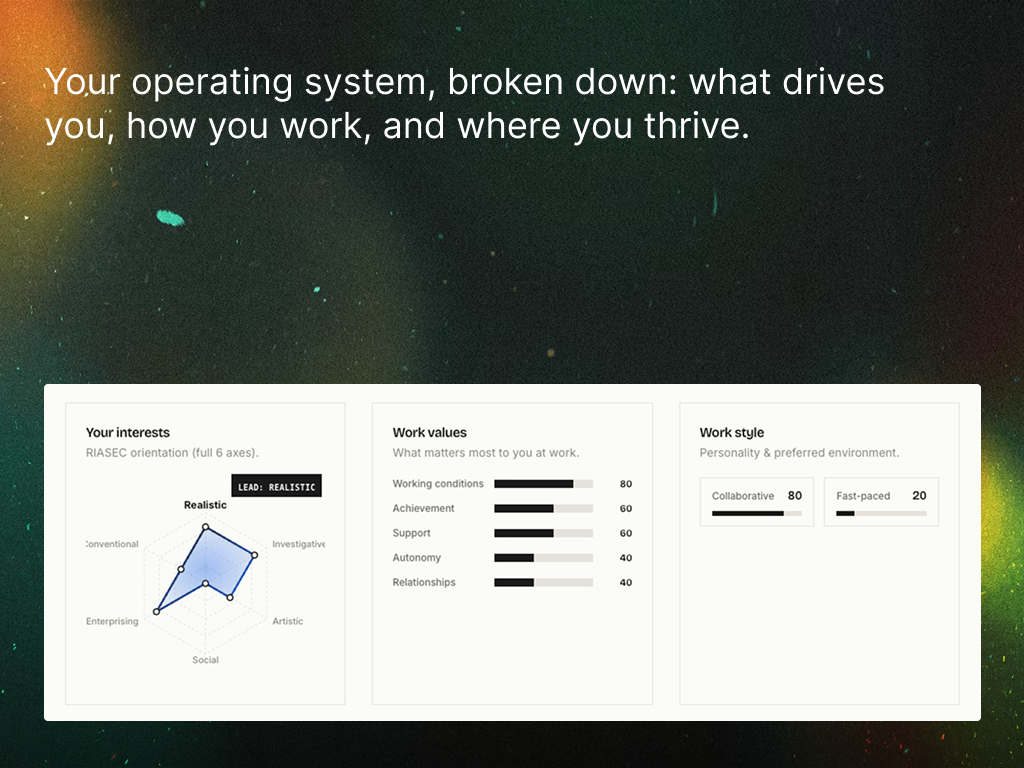
Reading general advice can only take you so far, because this decision comes down to personal details: your specific age, degree, occupation, savings, and target countries, not broad trends that apply to everyone. This is exactly where a proper career assessment for international planning becomes genuinely useful, rather than just another article to read.
A good career assessment does three things a blog post can't:
- Matches your background to real, current visa pathways, not generic advice, but what's actually open to someone with your specific qualifications and experience today.
- Flags feasibility gaps early, like an occupation not being on a skilled list, or a qualification needing local recognition before you can work in your field.
- Lets you compare countries side by side, so you're not trying to piece together Australia, New Zealand, Singapore, Hong Kong, and Taiwan from ten different sources that don't agree with each other.
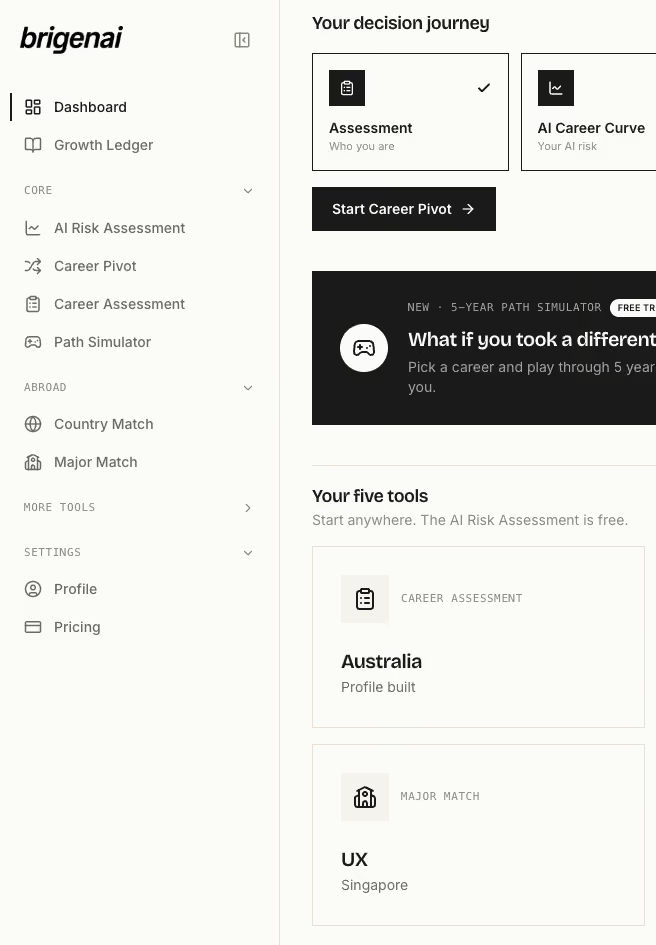
If you want a starting point grounded in your actual situation rather than general assumptions, brigenai's free Career Assessment was built for exactly this. It matches your background and goals to realistic career paths and countries, checked against real visa pathways and job markets, not a generic personality quiz.
From there, the Tools hub can help you go deeper. The Study Toolbox covers scholarship search, study cost estimates, and student visa pathways, if studying first turns out to be your route. The Work Toolbox covers salary and pay calculators, work visa research, and employers known for sponsoring international talent, if working first is a better fit. And the Choose Your Dream University and Find Your Dream Country tools help you narrow down where, once you've worked out how.
Every tool is free to use, and no sign-up is required. The numbers behind them, tax brackets, contribution schemes, visa thresholds, are kept current, so what you see reflects real figures rather than rough estimates.

Common Mistakes to Avoid
- Picking a country before picking a strategy. Deciding "I want to go to Australia" before working out whether study, work, or direct migration fits your profile often leads people into the wrong visa category entirely.
- Studying abroad "just to be safe" when you already qualify to work or immigrate directly. This can cost years and a lot of money you didn't actually need to spend.
- Taking a work visa with no real pathway to residency, assuming it'll somehow work out later. Always check whether a work visa genuinely bridges to permanent status before accepting an offer.
- Not accounting for how age affects your points over time. A study-first plan that made sense at 24 might not be the smartest move anymore at 32, so it's worth rechecking the math as your situation changes.
- Comparing countries with outdated numbers. Tax brackets, salary thresholds, and visa requirements change every year. Decisions based on last year's figures can quietly send you down the wrong path.
- Skipping a real feasibility check. Relying only on forum posts and other people's stories, instead of checking your own profile against current visa criteria, is probably the single biggest reason applications fall through.
Step-by-Step Decision Framework
If you're feeling stuck, walk through this in order. It won't make the decision for you, but it will get you unstuck.
- Write down your end goal in one sentence: a degree, income, experience, or residency.
- List your current qualifications and experience, and check whether they're recognized in your target country.
- Set a real budget for the next one to three years, separating what you can spend upfront from what you'll need to earn as you go.
- Check your age against points-based migration criteria in your top two or three target countries.
- Find out whether your occupation has a direct skilled migration or shortage-list pathway that skips the need for local study altogether.
- Run a proper career assessment so you're validating your assumptions against real visa data, not just general advice you've picked up online.
- Choose your primary path, study abroad first, work abroad first, or immigrate first, based on what you found in steps one through six, not on what someone else happened to do.
- Map out your next two concrete steps (shortlisting universities, researching sponsoring employers, or gathering documents for a direct visa application) and give each one a deadline.
FAQ
How do I know if I should study abroad, work abroad, or immigrate first?
Start by checking your age against points-based migration criteria, and find out whether your existing qualifications are recognized in your target country. Be honest about your budget and timeline too. If your qualification isn't recognized where you want to go, studying first often makes sense. If it already is, working abroad first or immigrating directly is usually faster and cheaper.
Is it cheaper to work abroad first or study abroad first?
Working abroad first is almost always cheaper upfront, since you're earning rather than paying tuition. Studying abroad first asks for more money at the start, but it can unlock post-study work visas and migration points that pay off over a longer timeline.
Can I immigrate first without studying or working abroad?
Yes, if you already meet the points threshold or occupation requirements for a skilled migration visa, or if you qualify through a family or partner pathway. In that case, an intermediate study or work step isn't necessary and might just slow you down.
Does age affect whether I should study abroad or work abroad first?
It does. Many skilled migration systems score age directly, so younger applicants generally have more room to study first without losing points. Older applicants often benefit more from moving straight into working abroad first, or an immigrate-first path if they already qualify.
What's the best way to compare study abroad vs work abroad for my specific situation?
General articles can only tell you so much. A career assessment that checks your specific qualifications, age, occupation, and target countries against current visa data will give you a far more accurate answer than piecing together other people's stories.
Conclusion
There's no universal answer to how to know if you should study abroad, work abroad, or immigrate first, and if you've been searching for one, that's probably why it's felt so frustrating. But there is a clear answer for you, once you look honestly at your goals, budget, age, skills, and timeline against real visa pathways instead of general advice.
Study first if your qualifications need local recognition and you have the time and budget to invest in that. Work abroad first if you're already employable and want income and experience sooner rather than later. Immigrate first if you already meet the criteria and don't need an extra step in between.
If you're not sure which of these describes you yet, that's completely normal, and it's exactly what a proper assessment is for. Brigenai's free Career Assessment and Tools hub were built to take a decision that usually eats up weeks of scattered research, and turn it into a single, guided starting point for your overseas career path.