
.png)
Picking where to study abroad is one of those decisions that quietly shapes the next ten years of your life. It's not just where you sit in a lecture hall, but which visa rules you'll navigate, what your rent will look like, and whether there's a realistic path to a job (and maybe residency) once you graduate. It's a lot to weigh, and most of the "top study abroad" lists out there rank countries by prestige alone, which isn't all that useful once you're the one paying tuition and signing a lease.
This guide looks at the ten destinations international students are actually choosing in 2026, and why: tuition, cost of living, work rights, and what day-to-day life is really like once the excitement of "I got in!" wears off.
What Actually Matters When You're Choosing a Destination
Before the country-by-country breakdown, it's worth being honest about the four things that end up mattering most, usually in this order:
Academic reputation and program fit. A world-ranked university is only useful if it offers the program you actually want, taught in a language you can study in. This is also the part that's hardest to judge from a university's own marketing page. Course structures, elective flexibility, and how internship-friendly a program actually is tend to come out in conversation with someone who's already sat through it, which is the whole idea behind a Uni Guide built from real graduates' experience rather than admissions copy.
Tuition and cost of living, together. A "cheap" tuition fee in a city where rent eats your entire budget isn't actually cheap. The two numbers need to be looked at side by side.
Language barrier. English-taught programs are widely available now even in non-English-speaking countries, but the number of programs, and how easy day-to-day life is outside class, varies a lot by country.
Visa policy and what happens after graduation. This is the one people underweight the most. A degree is worth more if there's a legitimate post-study work visa attached to it: a stepping stone into a job, and potentially long-term residency. It's worth being blunt about this one: enrollment popularity and career payoff are two different rankings. Italy and Spain draw the largest numbers of exchange students from a lot of source countries, largely on the strength of culture and language immersion, but that says very little about employer sponsorship infrastructure or how long you're legally allowed to stay and work afterward. If the goal is a life abroad rather than a semester abroad, post-study work rights deserve more weight in the decision than they usually get.
The Top 10 Destinations to Study Abroad in 2026
1. Germany: Best for Tuition-Free Public Universities and STEM
Germany remains one of the very few countries where a public university degree, including for international students, comes with no tuition fee in nearly every federal state. You'll pay a semester contribution of roughly €150 to €400 rather than tuition itself. Baden-Württemberg is the one notable exception, charging non-EU students around €1,500 per semester. The trade-off is that free tuition doesn't mean free living: budgeting for rent, health insurance, and the blocked-account requirement tied to the student visa matters as much as the university application. Berlin and Munich are the main student hubs, with strong programs in engineering and computer science. Scholarship options like the DAAD scholarship database are worth checking early, since funding decisions often happen before the university's own admissions deadline.

Top 5 universities (QS World University Rankings 2026):
- Technical University of Munich (TUM)
- Ludwig Maximilian University of Munich (LMU)
- Heidelberg University
- Free University of Berlin
- Karlsruhe Institute of Technology (KIT)
2. United Kingdom: Best for Prestige and Fast-Track Degrees
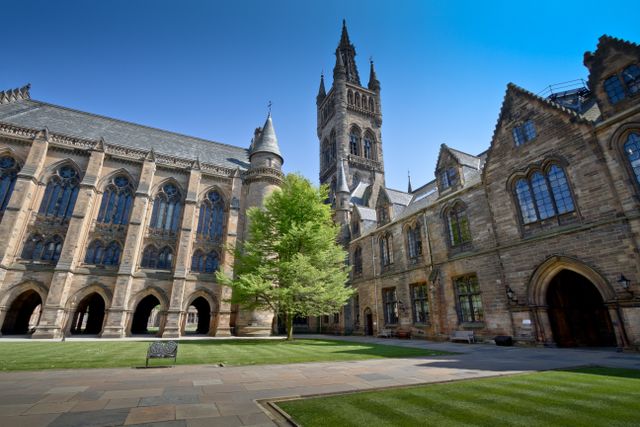
The UK's three-year bachelor's and one-year master's degrees are shorter than most countries' equivalents, which can meaningfully cut both tuition and years of lost income. London, Edinburgh, and Manchester host some of the world's most recognized universities, and the Graduate Route visa currently lets international graduates stay and work for two years after finishing their degree (three for PhD holders). Details worth confirming directly through UK Government student visa guidance, since visa rules here shift periodically.
Top 5 universities (QS World University Rankings 2026):
- Imperial College London
- University of Oxford
- University of Cambridge
- University College London (UCL)
- University of Edinburgh
3. Australia: Best for Post-Study Work Rights and Quality of Life
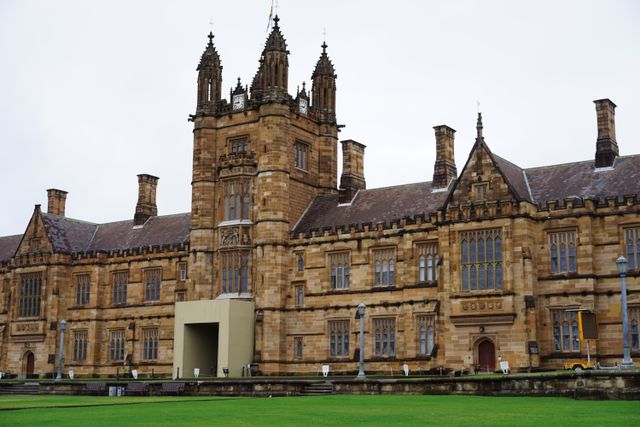
Australia consistently ranks near the top of student satisfaction surveys, and for good reason: strong research output, high safety standards, and a temporary graduate visa pathway that gives many graduates two to four years to work locally after finishing their degree, depending on qualification level. Under the current Subclass 485 rules, a bachelor's degree or a coursework master's qualifies for two years of open work rights, a research master's or PhD qualifies for three, and graduating from a regional campus can add another one to two years on top. None of this requires a job offer or employer sponsorship lined up in advance. You get the time first, then build the case for sponsorship or permanent residency while you're already working. During study itself, the student visa allows up to 48 hours of paid work per fortnight in term time and unlimited hours during scheduled breaks, which is generous by international standards and genuinely helps offset living costs. Melbourne, Sydney, and Brisbane are the main student cities. If Australia is on your shortlist, it's worth reading through what actually happens after graduation for international students in Australia and comparing real cost-of-living numbers for Australia before locking in a city, since Sydney and a regional campus town can differ by a huge margin. Official visa detail lives on Study Australia.
Top 5 universities (QS World University Rankings 2026):
- University of Melbourne
- UNSW Sydney
- University of Sydney
- Australian National University (ANU)
- Monash University
4. Canada: Best for Multicultural Life and a Path to Residency
Canada's Post-Graduation Work Permit (PGWP) is one of the more direct bridges from "international student" to "permanent resident" of any major destination, and Toronto, Vancouver, and Montreal all offer large, established international student communities. Official permit rules are managed through IRCC's study in Canada guidance, and it's genuinely worth reading the fine print, since PGWP length depends on program length and has changed more than once in recent years.
.jpg)
Top 5 universities (QS World University Rankings 2026):
- McGill University
- University of Toronto
- University of British Columbia (UBC)
- University of Alberta
- McMaster University
5. Netherlands: Best for English-Taught Programs in Mainland Europe
If the idea of studying in continental Europe appeals but a new language doesn't, the Netherlands is probably the easiest entry point. It offers one of the largest catalogues of English-taught bachelor's and master's programs anywhere in the EU, centered in Amsterdam, Utrecht, and Rotterdam. The Study in Holland portal, run by Nuffic, is the most reliable source for program search and the orientation-year visa that lets graduates stay on to job hunt.
Top 5 universities (QS World University Rankings 2026):
- Delft University of Technology (TU Delft)
- University of Amsterdam
- Utrecht University
- Leiden University
- Erasmus University Rotterdam
6. Japan: Best for Technology, Safety, and Cultural Immersion
Japan's appeal isn't purely academic. It's one of the safest countries in the world with a student visa process that's well documented through Study in Japan, the official government portal. Student visa holders can generally work up to 28 hours a week during term (with extended hours during school breaks, once the right permission is in place), which helps manage Tokyo's cost of living. Tokyo and Kyoto are the two hubs most international students land in. English-taught programs exist but are still a minority compared to Japanese-taught ones, so this destination suits students genuinely interested in learning the language alongside their degree. It's worth thinking of Japan less as "study abroad for the credential" and more as a platform for anyone specifically targeting a career with Japanese or regional Asian employers, where language ability doubles as a career differentiator.

Top 5 universities (QS World University Rankings 2026):
- University of Tokyo
- Kyoto University
- Osaka University
- Tohoku University
- Institute of Science Tokyo (formerly Tokyo Institute of Technology)
7. Spain: Best for Affordable Living and Language Learning
Spain rarely tops prestige rankings, but it wins on lifestyle and cost. Barcelona and Madrid offer a lower cost of living than most Western European capitals, plus built-in immersion for anyone wanting to pick up Spanish. It's a strong option for students who want the "study abroad experience" itself, not just the credential, and it pairs well with EU exchange programs like Erasmus+ if you're coming from a partner university.
Top 5 universities (QS World University Rankings 2026):
- Universitat de Barcelona
- Universitat Autònoma de Barcelona
- Complutense University of Madrid
- Universidad Autónoma de Madrid
- Pompeu Fabra University
8. France: Best for Business, Art, and Cultural Heritage
Beyond the obvious cultural pull, France has quietly built one of Europe's strongest networks of business schools and public universities with low tuition for both EU and non-EU students at the bachelor's and master's level. Paris and Lyon dominate as student cities, and the post-study "APS" residence permit gives graduates up to a year to find qualifying work.

Top 5 universities (QS World University Rankings 2026):
- Université PSL (Paris Sciences & Lettres)
- Institut Polytechnique de Paris
- Université Paris-Saclay
- Sorbonne Université
- Université Paris Cité
9. South Korea: Best for Innovation and Affordable Tech-Focused Education
South Korea has become a genuine contender for students focused on technology, gaming, and design, with government scholarship schemes actively recruiting international applicants and tuition that's noticeably lower than comparable US or UK programs. Seoul and Busan are the main hubs, and the K-culture wave has made adjusting to daily life easier than it might have been a decade ago, thanks to a much larger existing international student community.
Top 5 universities (QS World University Rankings 2026):
- Seoul National University
- KAIST (Korea Advanced Institute of Science and Technology)
- Yonsei University
- Korea University
- POSTECH (Pohang University of Science and Technology)
10. New Zealand: Best for Research Quality and an Outdoor Lifestyle
New Zealand pairs genuinely strong research universities with one of the more student-friendly post-study work visa systems in the world. Most degree-level graduates qualify for an open work visa of up to three years, detailed on New Zealand Now. What makes New Zealand worth a closer look rather than a footnote to Australia is what happens after that work visa: its Skilled Migrant Category gives graduates a structured, points-based route to residency, and it rewards the degree itself as much as the job title. A master's graduate working in a skill-shortage role for around a year can typically reach the points threshold; a PhD graduate can often get there on the qualification alone. Health, engineering, and tech graduates tend to have the clearest run at this, since those fields consistently sit on the skill-shortage lists. Auckland and Wellington are the primary student cities. It's a smaller, quieter option than Australia or the UK, which suits some students and doesn't suit others. It's worth reading a first-hand account of what it's actually like after graduating in New Zealand before assuming it's simply "Australia's smaller neighbor." It's also worth comparing New Zealand's cost of living against Australia and Singapore side by side, since the gap is bigger than most rankings suggest.

Top 5 universities (QS World University Rankings 2026):
- University of Auckland
- University of Otago
- Victoria University of Wellington
- University of Canterbury
- Massey University
What About Singapore?
It didn't make the original top ten, but it deserves a mention for a specific type of student: anyone specifically targeting a corporate career in Asia rather than an academic exchange. English is an official language, the university system is globally competitive, and Singapore's role as a regional headquarters hub for tech and financial services means graduate employment pathways into APAC roles are real, not theoretical. The catch is cost: Singapore is one of the more expensive student cities in Asia, and post-study work authorization is more limited than Australia's or New Zealand's. It's less a "top 10 by volume" destination and more a deliberate choice for students who already know they want a Southeast Asia-based career.
Top universities (QS World University Rankings 2026):
- National University of Singapore (NUS), ranked #8 globally
- Nanyang Technological University (NTU), ranked #12 globally
A Quick Cost Comparison
Tuition headlines rarely tell the full story, since living costs vary so much by city within the same country. As a rough yearly range for tuition plus modest living costs (excluding Germany and Norway-style free-tuition outliers):
- Cheapest overall: Germany (tuition-free) and South Korea tend to come out lowest once tuition is factored in.
- Mid-range: Spain, France, and the Netherlands sit in the middle, with tuition manageable but city living costs (especially Amsterdam and Paris) pulling the total up.
- Higher cost, higher earning potential after graduation: Australia, the UK, Canada, and New Zealand cost more upfront but tend to pay back faster through stronger post-study work visas and salaries.
If your decision genuinely comes down to numbers rather than preference, it's worth running the actual figures rather than trusting a ranking. A salary-vs-cost-of-living comparison for your target country and role gives a far more honest picture than any "cheapest countries to study abroad" listicle, this one included.
Practical Tips Before You Apply
Start scholarship applications early. Many of the best-funded options (DAAD in Germany, Erasmus+ in the EU, national scholarships in Korea and Japan) close months before the university's own admissions deadline. U.S. students specifically have a few funding routes worth knowing by name: the Gilman International Scholarship for undergraduates with financial need, which covers a wide range of destinations; the Freeman Awards, aimed squarely at study in East and Southeast Asia; and the Bridging Scholarship, which is Japan-specific for semester and year-long programs. Country-specific pages like the ones on scholarships for international students heading to New Zealand and Australia are a faster starting point than searching from scratch.
Read the visa fine print, not just the headline. "Post-study work visa" means very different things in different countries: some are open work rights, others are tied to a specific job offer or salary threshold. Tools built specifically to check this, rather than general search, save a lot of back-and-forth. A visa eligibility checker is a faster way to see where you'd actually qualify than reading twelve government PDFs.
Budget for the adjustment period, not just the flight. Housing deposits, health insurance, and the first month before any part-time income kicks in are the costs that catch people off guard. It's also worth being honest that culture shock is real and fairly predictable in its stages: what culture shock actually looks like and how people cope with it abroad is a more useful read before departure than after you're already homesick. For the day-to-day questions that don't have a clean government answer (what a flat-share actually costs, how to make friends when you don't speak the local language yet, whether a neighborhood is worth the commute), a Local Living Guide built from people who've actually lived there tends to be more useful than another forum thread.
Final Thoughts
There isn't a single "best" country to study abroad. There's a best fit for your program, your budget, and what you want your life to look like five years after graduation. Germany and South Korea win on affordability. Australia, Canada, and New Zealand win on the bridge from study to work to residency. The UK and France win on speed and prestige. The honest way to choose is to compare the two or three that fit your field of study, then dig into the visa and cost details specific to each, not the marketing copy.
That last part is where most students get stuck, because visa policy, tuition figures, and "what it's really like" are scattered across dozens of government sites, forums, and outdated blog posts. This is the exact gap brigenai was built to close. You can ask an AI advisor anything, at any hour, in more than 30 languages, but the answers themselves are grounded in real journeys, not generic web copy: real stories, real timelines, real trade-offs from students, migrants, and professionals who've actually made the move. The AI does the organizing and the answering; the substance comes from people who've lived it. Depending on where you are in the decision, that means:
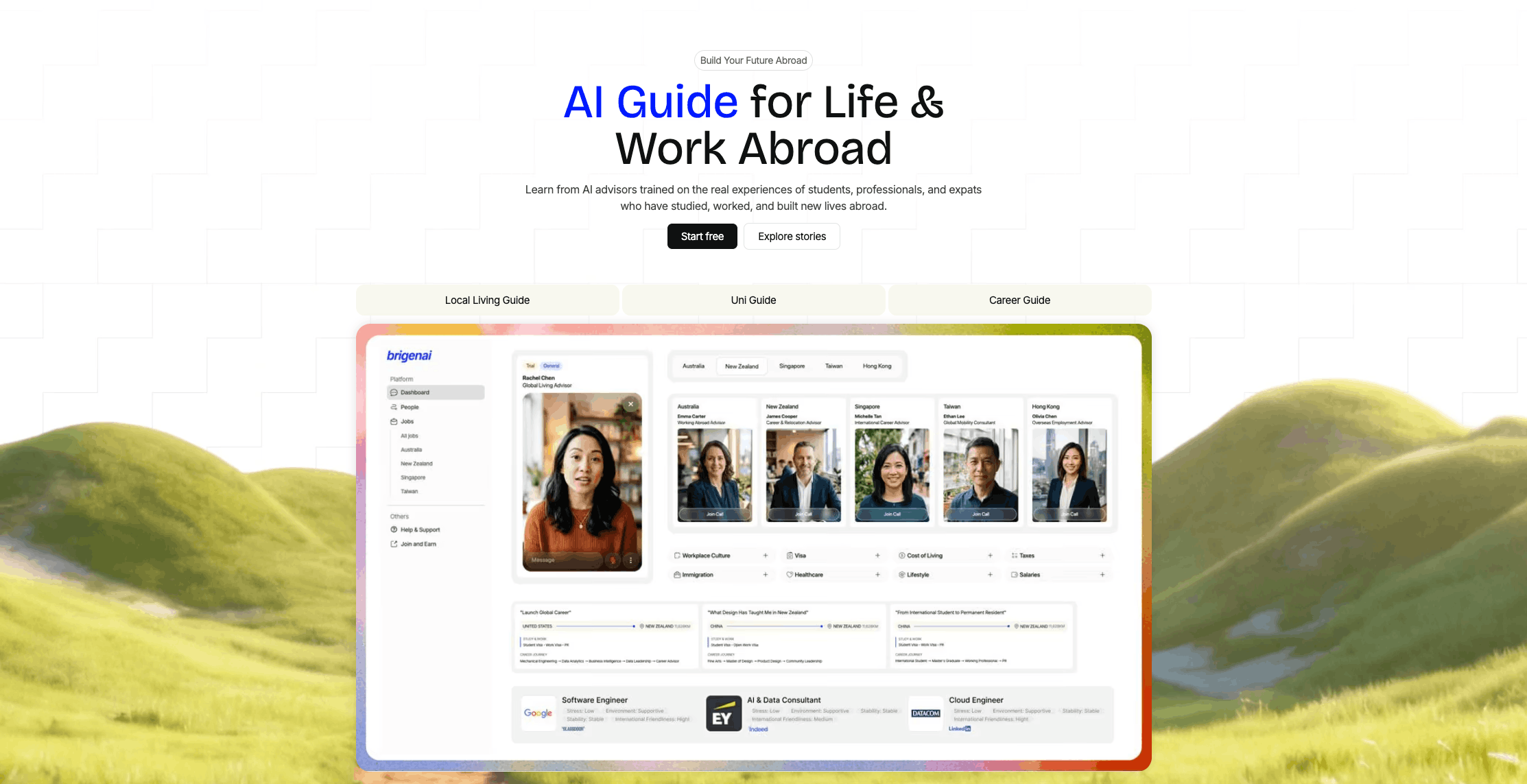
- Still choosing a university or degree? Talk to the Uni Guide for course, campus, and internship advice from people who've sat through the same programs.
- Trying to picture daily life once you land? The Local Living Guide is built from real relocation, housing, and culture-shock stories, not tourism-board copy.
- Thinking past graduation, toward a job or residency? The Career Guide covers visa transitions, employer sponsorship, and workplace culture from people who've actually navigated them.
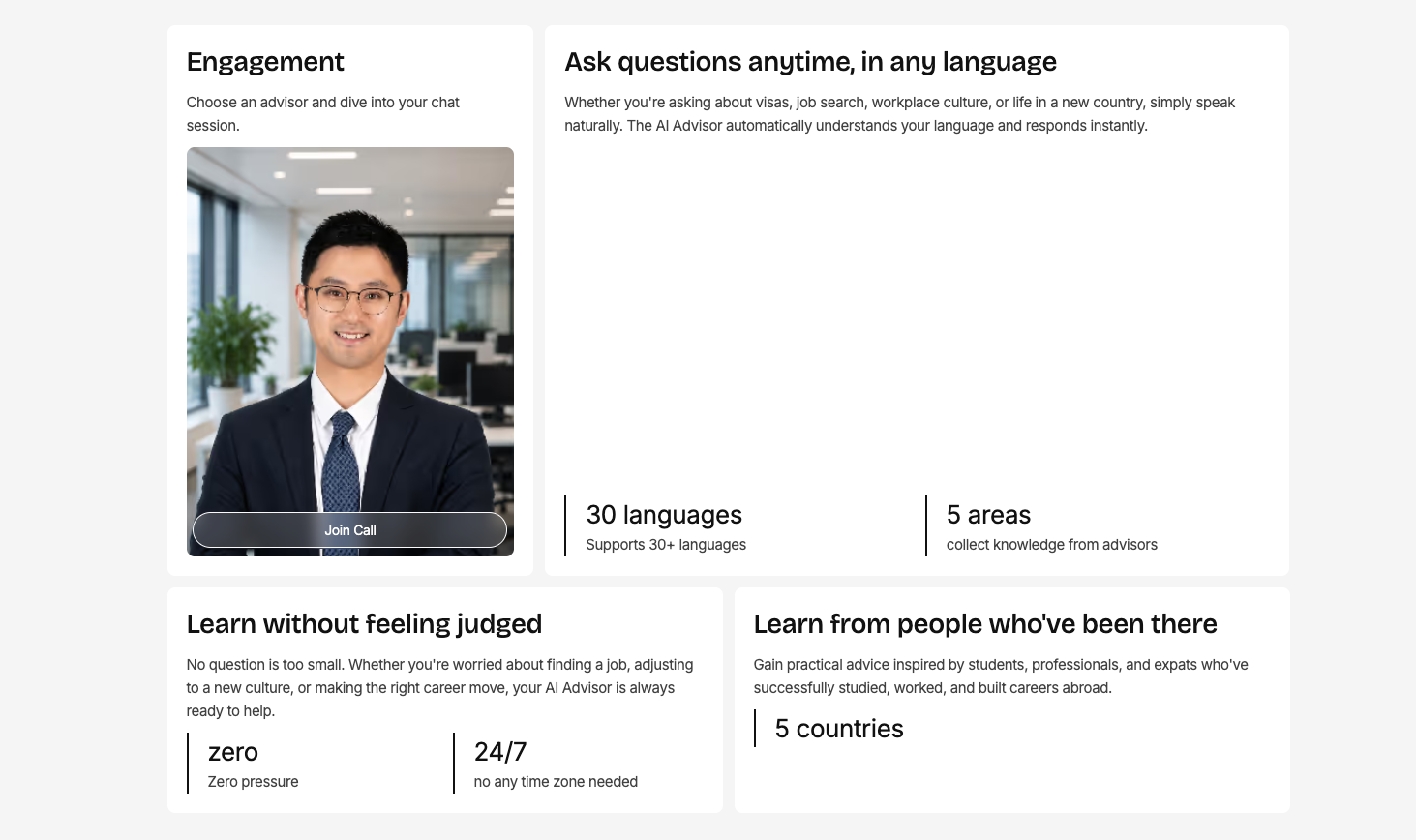
No sales pitch, no commission pushing you toward one country over another. Just honest, AI-plus-human guidance for people trying to build a real life abroad, not just get through an application form.
Frequently Asked Questions
Which country is best to study abroad?
There's no single best country: it depends on what you're optimizing for. Australia and New Zealand lead on post-study work rights and a path to residency. Germany and South Korea lead on affordability. The UK leads on prestige and speed (three-year bachelor's degrees). The right approach is to rank the two or three factors that matter most to you (cost, visa outcome, program fit), then compare destinations against those, not against a generic "best of" list.
Is it possible to study abroad for free?
Close to free, in a few specific cases. Germany's public universities charge no tuition at nearly any degree level, even for international students, so your only real cost is a semester contribution of a few hundred euros plus living expenses. Fully-funded scholarships (DAAD in Germany, government scholarships in South Korea and Japan, Fulbright for eligible destinations) can cover tuition and a living stipend, but they're competitive and need to be applied for six to twelve months ahead of enrollment, not after you've already been accepted.
Can I study abroad if I don't have much money?
Yes, but it takes more planning than a well-funded applicant needs. Start with tuition-free or low-tuition destinations (Germany, Norway, and several countries in South America) to remove the biggest cost, then stack a needs-based scholarship on top. Part-time work rights during study (Australia allows up to 48 hours a fortnight, Japan up to 28 hours a week) can cover living costs once you're there, though they rarely cover the upfront costs of flights, visas, and the first month's rent.
Which countries offer full (100%) scholarships to international students?
A genuine 100% scholarship, tuition plus living stipend, exists but is rare and competitive. Germany's DAAD, Japan's MEXT scholarship, and Korea's Global Korea Scholarship are the most reliable full-ride options, alongside Chevening (UK) and Fulbright (US-administered, for study in eligible partner countries) for graduate study. These typically require strong academics, a clear research or career proposal, and an application timeline that starts a year before your intended start date.
Does FAFSA cover study abroad?
Yes, for a semester or year abroad through your home university's approved program, FAFSA-eligible aid (grants, work-study, and federal loans) generally transfers over as long as you stay enrolled at your home institution and the credits transfer back. For a full degree at a foreign university, it's more limited: Pell Grants don't apply, but federal loans can, and only at the roughly 600 international institutions (mostly in Europe) that the US Department of Education has approved for federal aid.
What is the safest country to study abroad?
Safety rankings shift slightly year to year, but countries like New Zealand, Japan, Ireland, Austria, and Singapore consistently score near the top of global safety and peace indices, and all of them also happen to have well-established international student communities. "Safe" is also relative to what you're used to: low crime doesn't mean zero culture shock, and it's worth reading about the day-to-day adjustment as much as the safety statistics.
Where do most US students study abroad?
According to Open Doors/IIE data, Italy and Spain draw the largest numbers of American exchange students by a wide margin (each over 35,000 a year), with the UK and France rounding out the top four. That volume reflects short-term exchange and language-immersion culture more than career infrastructure. Students planning a longer stay or a full degree, rather than a semester exchange, tend to land in different destinations, usually Australia, Canada, or the UK.
What does it actually mean to "study abroad"?
It covers two very different things people often lump together: a short-term exchange (a semester or year abroad through your home university, after which you return to graduate) and a full degree program at a foreign university (where you're enrolled there from day one). The visa, cost, and credit-transfer rules are completely different between the two, so it's worth being specific about which one you mean before researching further.
Is it really expensive to study abroad?
It depends far more on destination than on the fact of studying abroad itself. Germany and South Korea can cost less than staying in-state at many US public universities once tuition is factored in. Australia, the UK, and the US-adjacent destinations run higher, but often come with stronger part-time work rights and post-study earning potential that offset the upfront cost over a few years. A salary-vs-cost-of-living comparison for your specific destination and field gives a more honest number than any general "study abroad is expensive" claim.