

Global hiring can feel like solving a puzzle with pieces from a dozen different countries. Whether you’re a professional eyeing a role in Singapore, a student planning to work abroad after graduation, or an employer trying to build a cross-border team, the process involves far more than just submitting a resume. Visa rules, labor law differences, cultural expectations, and onboarding logistics all compete for your attention at once. The good news is that breaking the process into clear, manageable steps makes it far less intimidating. This guide walks you through everything, from pre-hire preparation to long-term success abroad, so you can move forward with confidence.
Table of Contents
-
What you need before starting: Key requirements for international hiring
-
Our take: Why international hiring success starts before the offer
Key Takeaways
| Point | Details |
|---|---|
| Understand prerequisites | Gather all required documents and research local laws before starting your international hiring journey. |
| Follow proven steps | Use a step-by-step process for hiring, including preparation, compliance, and onboarding, to reduce delays. |
| Prioritize compliance | Stay informed about changing visa and labor requirements in your destination country for legal peace of mind. |
| Leverage digital tools | AI and smart platforms streamline hiring, paperwork, and relocation for both employers and candidates. |
| Focus on long-term success | Effective onboarding, cultural integration, and clear performance expectations drive lasting results after the move. |
What you need before starting: Key requirements for international hiring
Before anyone sends a single application or posts a job listing, there’s groundwork to lay. Skipping this phase is one of the most common and costly mistakes in global hiring. Both candidates and employers need to arrive at the table prepared.
For candidates, the core documents you’ll need include:
-
A valid passport with at least 6 months of remaining validity
-
Certified copies of educational qualifications and professional certifications
-
Proof of work experience, such as employment letters or pay stubs
-
A clean criminal background check (required in most countries)
-
Medical clearance documents, depending on the destination
For employers, the requirements look different. You need to decide how you’ll legally employ someone abroad. The 8-11 step hiring process typically starts with defining your needs and selecting a hiring model, which usually falls into one of three categories:
| Hiring model | Best for | Key consideration |
|---|---|---|
| Employer of Record (EOR) | Fast market entry | EOR handles compliance |
| Independent contractor | Short-term projects | Less control, lower cost |
| Local entity setup | Long-term operations | High setup cost, full control |
Researching the target country’s labor market is non-negotiable. Minimum wage laws, mandatory benefits, termination rules, and union requirements differ dramatically between Australia, New Zealand, Singapore, Hong Kong, and Taiwan. Ignoring these can result in fines or legal disputes. You can also check relocation support services to understand what assistance is available once you’ve chosen your destination, and review the skills list for visas to confirm your qualifications align with local demand.
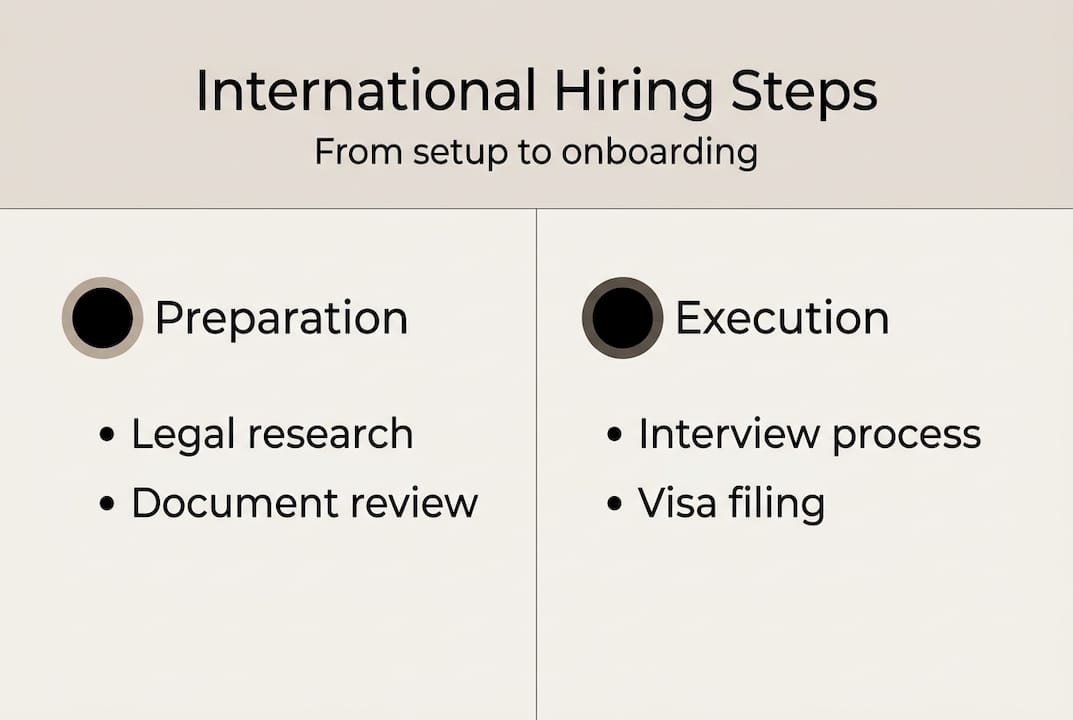
Pro Tip: Build a pre-hire checklist that separates candidate documents from employer compliance tasks. Review it weekly as your timeline progresses to catch gaps early.
Step-by-step international hiring process explained
With your prerequisites in order, here’s how the full process actually unfolds. Think of it as a relay race where each stage hands off cleanly to the next.
-
Define your goals. Candidates should identify target roles, industries, and countries. Employers should clarify the skills gap they’re filling.
-
Choose your hiring model. Decide between EOR, contractor, or direct entity. Each has different legal, financial, and operational implications.
-
Research local laws. Labor regulations, tax obligations, and visa categories vary by country. This step prevents expensive surprises later.
-
Source talent or find opportunities. Use global platforms, specialized job boards, and professional networks. Employers should look beyond their home market.
-
Screen and interview. The global hiring steps emphasize culturally sensitive interviewing. What reads as confidence in one culture may seem aggressive in another.
-
Extend an offer. Include visa sponsorship terms, relocation allowances, and local salary benchmarks in the offer package.
-
Manage compliance and onboarding. Register the employee correctly, handle tax setup, and begin structured onboarding.
One of the biggest decisions in this process is EOR versus direct entity. Here’s a quick comparison:
| Factor | EOR | Direct entity |
|---|---|---|
| Setup time | Days to weeks | Months |
| Compliance burden | Handled by EOR | Handled by you |
| Cost | Monthly service fee | High upfront investment |
| Flexibility | High | Lower |
Cross-cultural communication during interviews deserves special attention. Silence, eye contact norms, and directness all carry different meanings across cultures. Employers who train their hiring teams on this consistently report better candidate experiences. You can use AI-powered expat tools to streamline scheduling and paperwork, and explore workplace culture insights to prepare your team for cultural differences.

Pro Tip: Use AI scheduling tools to coordinate interviews across time zones. A candidate in Sydney interviewing with a team in London shouldn’t have to take a call at 2 a.m.
Visa applications and compliance: Staying legal and safe
Visa compliance is where many international moves fall apart. The rules are strict, the timelines are real, and the consequences of getting it wrong range from deportation to employer fines.
The main visa categories you’ll encounter in international hiring include:
-
Skilled worker visas: For professionals with in-demand qualifications, often tied to employer sponsorship
-
Intracompany transfer visas: For employees moving within the same multinational organization
-
Student visas with work rights: Allow limited hours of paid work during study
-
Dependent visas: For spouses and children accompanying the primary visa holder
-
Working holiday visas: Short-term work rights for younger travelers in participating countries
Eligibility criteria typically include a job offer from a licensed sponsor, proof of qualifications, language proficiency scores, and financial solvency. Processing times range from two weeks for some skilled worker visas to six months or more for complex cases. Researching labor laws and visas early in the process is critical because delays in visa approval can push back your entire start date.
Common compliance failures include working beyond permitted hours on a student visa, missing renewal deadlines, and accepting employment from an unlicensed sponsor. These aren’t minor technicalities. They can result in visa cancellation and bans from re-entry.
Never travel to a new country for work without confirmed legal work authorization in hand. Verbal offers and pending applications do not protect you if authorities ask for documentation.
You can explore detailed visa guides for specific destinations and cross-reference the eligible skills lists to confirm your occupation qualifies for sponsorship.
Relocation, onboarding, and long-term success
Visa approved. Offer signed. Now comes the part most guides skip: actually moving your life to another country and building a sustainable career there.
Relocation involves more than booking a flight. Here’s what to plan for:
-
Housing: Research neighborhoods before you arrive. Short-term rentals give you flexibility while you learn the local market.
-
Banking: Open a local bank account as early as possible. Many employers require it for payroll.
-
Cost of living: Singapore and Hong Kong rank among the world’s most expensive cities. Budget carefully before accepting a salary offer.
-
Healthcare: Understand what your employer’s plan covers and what you’ll pay out of pocket.
-
Cultural adjustment: Give yourself 90 days before drawing conclusions about whether the move was the right call.
Effective onboarding for international hires goes beyond handing over a laptop. The best onboarding programs include cultural orientation, a dedicated mentor, and regular HR check-ins during the first six months. Employers who invest here see faster productivity and lower early attrition.
Long-term success is also being redefined. Research increasingly questions the ‘expat failure’ concept, arguing that early assignment endings are better understood through a performance management lens rather than as personal failure. Measuring contribution, wellbeing, and growth gives a fuller picture than tracking who stayed versus who left.
Pro Tip: Schedule a 30-day, 60-day, and 90-day check-in between the new hire and their manager. These structured touchpoints catch problems before they become reasons to quit.
Explore destination insights for city-specific cost and lifestyle data, and use relocation tools to organize your move efficiently.
Our take: Why international hiring success starts before the offer
Most conversations about global hiring focus on contracts, compensation packages, and recruitment channels. We think that’s looking at the problem from the wrong end.
The professionals who thrive in international roles almost always share one trait: they did serious research before accepting anything. They understood the local job market, the cultural expectations of their new workplace, and the realistic cost of living. They didn’t just chase a title or a salary bump.
For employers, the same logic applies. The debate around expat failure reveals something uncomfortable: many early assignment endings aren’t failures of the individual. They’re failures of the pre-hire process. Poor culture matching, unrealistic expectations, and inadequate support structures are the real culprits.
We also believe AI and digital tools have genuinely changed the game. Using an overseas career advisor powered by real data means you’re not guessing about visa eligibility or salary benchmarks. You’re making decisions grounded in evidence. The organizations and candidates who use these tools move faster and make fewer expensive mistakes. Preparation isn’t just a nice-to-have. It’s the actual strategy.
Unlock your global job or talent solution with BRIGENAI
You now have a clear picture of what international hiring actually involves, from documents and visa timelines to onboarding and long-term performance. The next step is putting that knowledge to work.
BRIGENAI combines AI-driven guidance with real human expertise to help professionals, students, and employers navigate every stage of the international career journey. Whether you’re searching for marketing jobs abroad, need end-to-end relocation services, or want clear answers on visas and immigration assistance, BRIGENAI connects you with the right tools and the right people. Stop guessing and start moving with confidence.
Frequently asked questions
What are the main options for hiring internationally?
Employers can hire via an Employer of Record (EOR), engage workers as independent contractors, or establish their own local entity, each with different costs, timelines, and compliance responsibilities.
How long does it take to secure a work visa for a new country?
Visa timelines depend heavily on the destination and visa type. Most skilled worker visas process in 2 weeks to several months, so apply as early as possible to avoid delays.
What is ‘expat failure’ and why is it debated?
The term describes international assignments that end before their planned completion. Researchers now argue the expat failure concept oversimplifies what is really a performance management and support issue.
Are digital tools or AI used in the international hiring process?
Yes. At least 43% of employers now use AI for administrative hiring tasks like scheduling, document management, and compliance tracking.
What support do candidates get during relocation?
Support typically includes housing and documentation assistance, cultural orientation, and structured HR check-ins to help new hires adjust professionally and personally.