

Job Hunt: Your Step-by-Step Guide to Landing Work with BRIGENAI
Start your job hunt today
Finding work abroad in 2025–2026 requires more than sending applications and hoping for the best. The job market has shifted dramatically, with 72% of employers now prioritising demonstrable skills over credentials, and competition for visa-friendly roles is intense.
This guide gives you a concrete, step-by-step plan to find a job in New Zealand, Australia, Singapore, or Hong Kong. There are lots of different places to search for job opportunities, both online and offline, including job boards, company websites, and networking events. BRIGENAI helps global talent match with visa-friendly roles and plan relocation to APAC—something generic job boards simply cannot do. If you're interested in discovering the best relocation platforms for jobs in Australia and New Zealand, check out our detailed guide.
You will learn how to clarify your goals, prepare documents that stand out, find job vacancies efficiently, prepare for interviews, handle offers confidently, and plan your international relocation. Whether you are an international student or a mid-career professional, this practical roadmap will save you time and reduce costly mistakes. Thousands of job seekers use these strategies to successfully land roles abroad.

Figure out what jobs you want (and where)
A scattered approach to your job search rarely works. When you apply everywhere without clear targets, your applications become generic, your CV lacks focus, and employers sense you have no real commitment to their role or location. In contrast, candidates who shortlist 2–3 specific cities and job titles can tailor every application, research each market properly, and demonstrate genuine intent.
Start by identifying where your skills are in demand and where you have realistic work rights. For example, a software engineer might target Auckland for its growing tech sector, Melbourne for its startup ecosystem, or Singapore for its regional tech hubs. A registered nurse would prioritise markets like New Zealand, where healthcare roles appear on the Green List, or Australia, where aged care demand remains strong.
Research actions to complete this week:
- Check official immigration sites for current skilled occupation lists: Immigration New Zealand, Australian Department of Home Affairs, Singapore Ministry of Manpower
- Review salary guides from the last 6–12 months to understand realistic pay ranges
- Browse job listings on local platforms (Seek, Trade Me Jobs, JobStreet) to see which roles appear frequently
- Match job titles to your profile—be specific (e.g. “Data Analyst” not just “tech role”)
- Note visa sponsorship requirements for each market
BRIGENAI’s AI matching can propose realistic job titles and locations based on your CV and visa profile, helping you avoid wasted applications on roles where you have no pathway.
Work out your strengths, skills, and relocation value
Understanding the difference between strengths and skills helps you communicate your value clearly to employers.
Strengths are your natural abilities and how you work—things like problem-solving, adaptability, communication, attention to detail, or leadership. Skills are specific, teachable competencies—Python, aged-care procedures, financial modelling, AutoCAD, barista training, or Salesforce administration.
To prepare for your job hunt, list 5–7 strengths and 8–10 specific skills that are in demand in your target markets. In 2025–2026, New Zealand and Australia are actively recruiting in healthcare, technology, construction, and hospitality. Singapore and Hong Kong value finance, tech, and professional services skills.
Your international experience creates “relocation value” that local candidates may lack. This includes:
- Multilingual ability (especially Mandarin, Hindi, Tagalog, or European languages)
- Prior remote work with APAC clients or across time zones
- Familiarity with international standards (ISO, GDPR, healthcare protocols)
- Cross-cultural communication experience
Example mini-profiles:
International IT student (recent graduate): Strengths include analytical thinking and adaptability. Skills include Python, SQL, cloud platforms (AWS), and agile methodologies. Relocation value: worked on group projects with students from 5 countries, comfortable with remote collaboration tools.
Nurse with 5 years’ experience: Strengths include empathy, composure under pressure, and teamwork. Skills include patient assessment, medication administration, wound care, and electronic health records. Relocation value: trained in WHO protocols, speaks two languages, and has experience in high-volume hospital settings.
Hospitality worker: Strengths include customer focus, problem-solving, and communication. Skills include point-of-sale systems, food safety certification, inventory management, and event coordination. Relocation value: worked in international hotel chains, familiar with diverse guest expectations.
Questions to answer about your strengths:
- What do colleagues consistently praise you for?
- What tasks do you find easy that others find difficult?
- When do you perform best under pressure?
- What interests you most about your work?
BRIGENAI can analyse your profile and highlight skills that are attractive for visas—such as skills on Australia’s skilled occupation lists or New Zealand’s Green List.
Get your CV ready for APAC employers
Before you start your job hunt, you need to create or update your CV with your current strengths, skills, qualifications, and work experience. A CV that works in your home country may fail in New Zealand, Australia, Singapore, or Hong Kong. APAC employers expect concise, results-focused documents without unnecessary personal details like marital status, religion, or national ID numbers.
The ideal CV structure includes:
Formatting guidance:
- Keep to 1–2 pages for most roles
- Use reverse chronological order (most recent job first)
- Include clear headings that ATS systems can read easily
- Start bullet points with action verbs: “Improved,” “Managed,” “Delivered,” “Reduced”
- Add metrics where possible: Quantifying impact (e.g., “Increased sales by 30%”) is more effective than simply listing duties
- Using a simple, single-column layout for your CV helps prevent ATS data scrambling
Country-specific norms:
- New Zealand and Australia: Generally no photo, date of birth, or personal details. Focus on achievements.
- Singapore and Hong Kong: Some employers still expect a photo, but it is not mandatory. Keep personal details minimal.
Tailoring for specific vacancies:
When you apply for a specific role, mirror key phrases from the job ad. If the listing says “stakeholder management,” use that exact phrase—not a synonym. Prioritise relevant experience and remove unrelated roles if your CV is too long. To pass ATS filters, roughly 15–25 keywords from the job description should be incorporated into your resume.
With 98% of Fortune 500 companies using Applicant Tracking Systems, your CV must pass algorithmic screening before a human ever sees it. Save your file as .docx or PDF, use standard headings, and avoid graphics or complex tables that confuse ATS software.
BRIGENAI can automatically generate local-style CV versions for each target market based on one master profile, saving you time and ensuring you match regional expectations. You can access and edit your CV on any computer with internet access, making it easy to update your documents from anywhere.

Write a targeted cover letter (and short messages recruiters actually read)
Not every application requires a full cover letter. Formal job applications through company portals usually expect one. However, when reaching out via LinkedIn or email to a recruiter, a short, personalised message often works better.
Simple 3-paragraph cover letter structure:
- Why you’re applying: Name the role and company. Show you understand what they do and why you want this specific opportunity.
- Why you’re a strong fit: Highlight 3–4 aligned skills or achievements. Use specifics from your experience that match the job description.
- Why the location and timing work: Clarify your visa status, preferred start date, and readiness to relocate. Address this directly but positively.
Example sentences for New Zealand or Australian employers:
- “I am applying for the Data Analyst role at [Company] because your focus on evidence-based decision-making aligns with my experience improving reporting accuracy by 30% at [Previous Employer].”
- “I hold a valid post-study work visa and am ready to relocate to Auckland by July 2026.”
- “My experience coordinating projects across time zones has prepared me to work effectively in hybrid teams.”
Addressing relocation directly:
Employers appreciate honesty about your situation. Clarify:
- Your current visa status or the visa you intend to apply for
- Whether you need sponsorship
- Your preferred or realistic start date
- Your commitment to the move (e.g. “I have researched cost of living in Melbourne and am prepared for the transition”)
Templates to develop:
Applicant type
Key emphasis
Onshore applicant (already in-country)
Current work rights, availability, local experience
Offshore applicant seeking sponsorship
Skills match, visa pathway awareness, realistic timeline
Recent graduate
Relevant projects, internships, eagerness to learn
BRIGENAI’s tools can draft and adapt cover letters automatically based on different roles and visas, helping you send polished applications faster.
Search for job vacancies efficiently
Your job search needs a plan. Without one, it is easy to burn out, lose track of applications, or waste time on roles that were never realistic.
Set weekly application targets—5 to 10 quality applications is often more effective than 50 generic ones. Track every role you apply for and follow up systematically.
There are many different places to search for job vacancies, including online job boards, company websites, and local organisations that may support job seekers or list opportunities.
Where to search in 2025–2026:
Up to 70% of jobs are never publicly advertised, so it's important to explore multiple places and not rely solely on job boards.
Additionally, connect with local recruitment agencies that specialise in your sector. Many roles—especially those open to sponsorship—are filled through agencies before they are listed publicly.
Many jobs aren't advertised, so asking an employer to meet with you or conducting informational interviews with organisations can reveal unadvertised openings and help you get yourself known.
Filtering for visa-friendly roles:
- Search for terms like “visa sponsorship,” “open to overseas candidates,” or “willing to sponsor”
- Many listings do not mention sponsorship even when it is possible—contact recruiters directly to clarify
- Check the company’s careers page for explicit statements about international hiring
Cold online applications have a success rate as low as 0.1–2%, and applying within the first 24-48 hours of a job posting increases your chances of getting noticed.
Create a simple tracking system:
The average applications per role reached 175–242 by mid-2025, and Applicant Tracking Systems (ATS) filter approximately 75% of resumes before they reach a recruiter.
You can use a spreadsheet or BRIGENAI’s dashboard to track your applications and stay organised.
How BRIGENAI differs from generic job boards:
- Shows only realistic, visa-aware job opportunities
- Filters out roles where you have no pathway
- Matches based on your skills, experience, and visa profile
- Saves time by avoiding mismatched listings
When millions of people are job hunting globally, efficiency matters. BRIGENAI helps you find jobs that actually fit your situation.
Use your networks and online profile
In smaller markets like New Zealand or specialised sectors in Australia, 50% or more of roles are filled through networks. Many new jobs never appear on public job boards—they are filled internally or through referrals.
Optimising your LinkedIn profile:
Your LinkedIn headline should include target job titles and preferred location. For example: “Data Analyst | Seeking Roles in Auckland & Wellington | Skilled in SQL, Python, Tableau”
Your summary should focus on achievements, not just responsibilities. Mention your openness to relocation and relevant visa status if appropriate.
Key LinkedIn sections to update:
- Headline: Role + location + key skills
- About section: 3–5 sentences on your experience, what you are looking for, and your availability
- Experience: Achievements with metrics, not just job duties
- Skills: At least 10 relevant skills, prioritised by demand in your target market
Networking actions for the next 30 days:
- Connect with alumni from your university who are now in NZ, Australia, Singapore, or Hong Kong
- Join sector-specific LinkedIn groups and participate in discussions
- Attend online meetups, webinars, or industry events in your target market
- Reach out to 3–5 people per week for informational chats
Asking for advice vs. asking for a job:
Networking works best when you ask for advice, not a job. People are more willing to help if you are genuine and curious.
Sample outreach message:
“Hi [Name], I noticed you work as a [Role] at [Company] in Auckland. I am currently based in [Country] and exploring opportunities in New Zealand. Would you have 15 minutes for a chat about your experience working in the NZ market? I would really appreciate any insights.”
BRIGENAI mentors and advisors can provide introductions, profile reviews, and region-specific networking tips to help you connect with the right people.

Using AI tools for job applications
AI tools can improve your job search process and help you compete more effectively. These platforms create professional CVs that update as you gain skills or experience, keeping your profile current for employers. The tools help you customise cover letters for specific roles, making it easier to highlight relevant experience that matches job requirements.
AI job matching systems analyse your experience and preferences beyond basic keyword searches. They connect you with opportunities that align with your skills and career direction. This approach reduces time spent on unsuitable applications and increases your focus on relevant positions. The tools streamline application processes and help you present your qualifications more effectively to potential employers.
AI integration in your job search process—whether you're starting out or advancing your career—can make applications more efficient and targeted. The technology helps you prepare better materials and identify suitable opportunities more quickly, potentially shortening your search timeline.
Prepare thoroughly for interviews (online and onsite)
Interviews in New Zealand, Australia, Singapore, and Hong Kong typically combine behavioural questions, technical or case questions, job interview scenarios, and culture fit checks. Employers want to see how you think, how you handle challenges, and whether you will work well with their team.
Key preparation steps:
- Research the company: Read recent news, check their 2024–2025 projects, and understand their values
- Practise behavioural questions using the STAR method: Situation, Task, Action, Result
- Prepare examples showing adaptability and cross-cultural communication
- Know your CV inside out: Be ready to discuss any role or project listed
- Prepare thoughtful questions to ask the interviewer
When preparing for an interview, you want to show an employer that you're the best person for the job.
Online interview essentials:
- Test your audio and video before the call
- Use a neutral, uncluttered background
- Confirm the interview time in both your local time zone and the employer’s
- Have a backup plan if your internet fails (e.g. phone number to call)
Social media is an important part of the job searching process, and employers often look candidates up online before interviews.
Cultural expectations:
- Be honest about your visa status—employers appreciate transparency
- Be direct but polite when answering questions
- Demonstrate initiative without overselling
- Show genuine interest in the role and location
Common interview questions and sample approaches:
“Tell me about yourself” Focus on your relevant experience, key achievements, and why you are interested in this role and location. Keep it to 60–90 seconds.
Example: “I am a registered nurse with 5 years’ experience in acute care settings in the Philippines. I have led teams of 6 nurses and implemented a patient handover protocol that reduced errors by 20%. I am relocating to New Zealand because I want to contribute to a healthcare system I admire, and my skills align with roles on the Green List.”
“Why do you want to move to New Zealand?” Be specific and positive. Mention career opportunities, lifestyle factors, and your research on the market.
Example: “I have been researching the tech sector in Auckland for the past year. The combination of a growing startup ecosystem, quality of life, and New Zealand’s approach to work-life balance is highly recommended by professionals I have spoken with. I am ready to contribute my skills in data analysis and commit to building my career here.”
BRIGENAI offers mock interviews and role-specific question banks tailored for APAC markets, helping you prepare confidently.
Remember, you should create or update your CV with your current strengths, skills, qualifications, and work experience before an interview.
Overcoming job search challenges
Every international job search presents specific challenges, but a data-informed approach reduces uncertainty and keeps you focused on realistic opportunities. Start by targeting roles that match your visa eligibility and salary thresholds, rather than applying broadly without checking migration requirements. Research employers who sponsor international workers and analyse salary ranges for your profession in different regions—this prevents wasting months on unsuitable pathways.
Networking remains your strongest tool for accessing the 70% of roles never advertised publicly, particularly when targeting employers familiar with visa processes. Connect directly with hiring managers at companies with established international hiring programs, and attend industry events where global mobility is discussed. Exploring adjacent roles within your field often reveals better salary matches for visa requirements or faster pathways to permanent residency.
International job searches typically take 4-6 months longer than domestic applications, so expect extended timelines and prepare accordingly. Each application teaches you about local hiring practices and salary expectations, while building networks that may benefit future opportunities. Maintaining consistent outreach and staying informed about policy changes positions you to recognise genuine opportunities when visa pathways align with market demand.
Plan for visas, relocation, and cost of living
An international job hunt is not just about landing an offer. You also need to figure out visas, moving timelines, and realistic cost-of-living expectations before you commit.
Main visa pathways (high-level overview):
Note: Visa rules change frequently. Always check official government sources for current requirements.
Understanding what you will actually spend each month is important before accepting an offer. Here are approximate 2025 ranges for key cities:
Creating a basic relocation budget:
- Flights: NZD $1,000–$3,000 depending on origin
- Initial accommodation (4–8 weeks): NZD $2,000–$5,000
- Bond/deposit for rental: Usually 2–4 weeks’ rent
- Setup costs (SIM card, transport card, basic furniture): NZD $500–$1,500
- Emergency buffer: At least 1 month’s living expenses
BRIGENAI includes relocation tools for cost-of-living comparisons, salary benchmarking, and connecting users to housing and insurance partners—so you can make informed decisions before your move.

Staying organized and focused
Organisation and focus determine job search success rates. Set specific goals for your next role and break your search into clear, measurable tasks. Track applications, interview dates, and follow-up actions using calendars, spreadsheets, or dedicated platforms. This system shows exactly where you've applied, which employers you've contacted, and what actions come next.
Allocate 2-3 hours daily or 10-15 hours weekly to core job search activities. Update your CV, prepare for interviews, and research potential employers during these focused sessions. A dedicated workspace reduces distractions and increases productivity by 25-30% compared to working from multiple locations.
Prioritise high-impact tasks first—tailor your CV for specific roles, practice interview responses, and follow up within 48 hours of applications. Schedule 30-minute breaks every 2 hours and maintain regular exercise to prevent burnout. Organised job seekers typically secure interviews 40% faster than those using ad-hoc approaches, so systematic effort directly improves your employment prospects.
Manage offers, contracts, and next steps
When an offer arrives, resist the urge to accept immediately. Review the details carefully to ensure the role, salary, and conditions match your expectations.
Key items to review in an employment agreement:
- Base salary (check it meets visa income thresholds if applicable)
- Hours of work and overtime or loadings
- Probation period (usually 3–6 months)
- Notice period (typically 2–4 weeks)
- Relocation assistance (flights, accommodation support)
- Visa sponsorship details (who pays fees, what happens if you leave early)
- Remote/hybrid work options
Questions to ask if you need sponsorship:
- Who covers visa application fees?
- Is there support with temporary accommodation on arrival?
- Can the start date shift if visa processing takes longer than expected?
- What happens to sponsorship if I leave during probation?
Negotiating with data:
Use salary guides and benchmarking tools to understand realistic pay for your role and location. BRIGENAI’s salary benchmarking can help you assess whether an offer is competitive before you commit.
According to expert guidance, aim for 3–4 value-linked asks in negotiations—not just base salary, but also bonuses, additional leave, benefits, and flexibility.
Final checks before you sign:
- Confirm the salary meets any visa income thresholds
- Ensure visa sponsorship terms are clearly stated in writing
- Verify start date aligns with your visa processing timeline
- Keep a copy of the signed contract and all visa-related correspondence
- Update your tracking system and notify other employers if you are withdrawing applications
Once you agree to the terms and conditions, sign the employment contract to formalize your new role.
Starting a new job and making a good impression
Starting a new role requires preparation—not just enthusiasm. Spend 2-3 days before your start date reviewing your CV and researching your employer's recent projects, key clients, and company structure. Gather all required documents (tax forms, bank details, emergency contacts) and test your commute timing or remote setup. This groundwork prevents first-day chaos.
Arrive 10-15 minutes early on day one. Dress appropriately for your workplace culture, introduce yourself to immediate colleagues, and ask direct questions about your responsibilities. Take detailed notes during orientation sessions—you'll reference these for weeks. Focus on practical information: who approves your work, what systems you'll use daily, and when you'll receive feedback.
In your first 3 weeks, prioritise learning your role's core requirements and building working relationships with your direct team. Demonstrate competence through consistent work quality rather than trying to impress with big ideas. Track your progress against initial expectations and seek clarification when processes seem unclear. Solid preparation and steady performance establish your credibility faster than grand gestures.
Career development and growth
Career development requires consistent investment to remain competitive in today's global job market. Regularly updating your skills through targeted training, industry certifications, or online courses positions you for better opportunities and salary growth. In New Zealand, platforms like careers.govt.nz provide practical tools to research roles, analyse market demand, and plan your next career move with real data.
Building professional networks delivers measurable returns for your career progression. Connecting with industry professionals and potential employers gives you direct insight into hiring trends, salary expectations, and emerging opportunities that match your skill set. These relationships often reveal roles before they're publicly advertised and help you understand what employers actually value in candidates.
Setting specific career goals and tracking your progress keeps you focused on outcomes that matter. Regular feedback from managers, mentors, or industry professionals identifies skill gaps and development priorities that directly impact your earning potential. Taking a data-driven approach to your career growth—whether you're building expertise in New Zealand or exploring international opportunities—positions you to make informed decisions about roles, locations, and the investment required to achieve your professional objectives.
How BRIGENAI can support your job hunt end-to-end
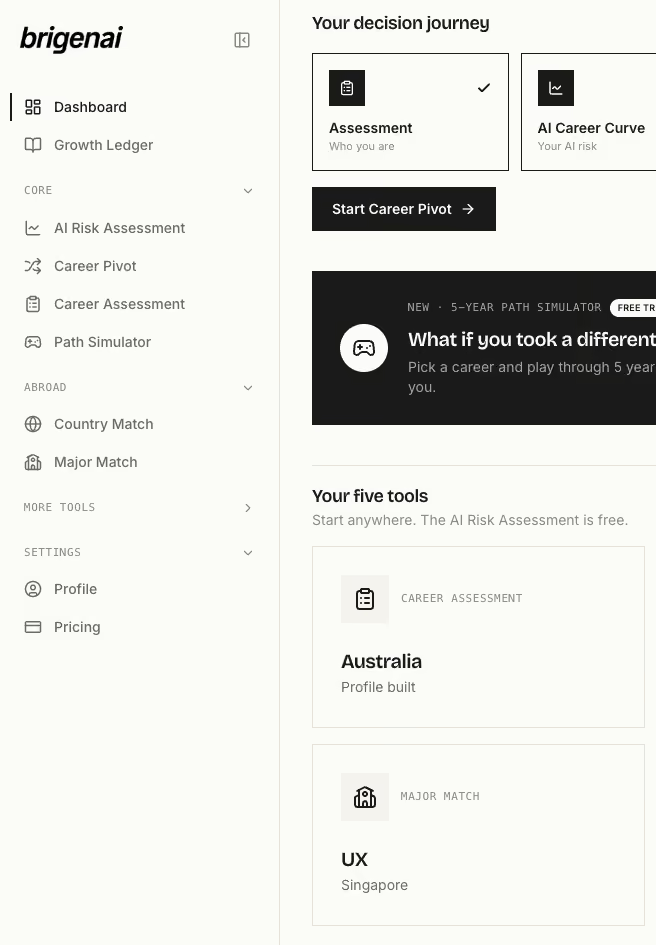
BRIGENAI is a B2C platform built specifically for international candidates targeting New Zealand, Australia, Singapore, and Hong Kong. Unlike generic job boards, BRIGENAI combines AI-powered job matching with human support to help you through the full relocation journey.
Main product features:
- AI job matching: Focused on visa-friendly roles that match your skills and experience
- Local-style CV and cover letter generation: AI CV tools that create versions tailored for each target market
- Mentor consultations: Verified advisors who provide region-specific career and migration guidance
- Relocation planning tools: Cost of living calculators, salary benchmarking, and tax comparisons
- Settlement support: Connections to housing and insurance partners in your destination city
For those who may face barriers in their job hunt due to health issues like a disability, mental health condition, or being neurodiverse, organisations such as Workbridge offer free support with job searching and interviews.
Typical user journey:
- Sign up and create your account
- Upload your CV and complete your profile
- Get matched to realistic, visa-aware roles
- Chat with advisors about your options
- Plan your visa pathway and relocation budget
- Access settlement support when you arrive
BRIGENAI offers free starter credits so you can test the platform before committing. Paid options provide deeper consultations, more matches, and personalised relocation planning.
BRIGENAI Insight:
At BRIGENAI, we analyse salary data, visa thresholds, and skills demand together—because looking at only one of these rarely leads to good migration decisions. Our tools help you see the full picture before you commit to a country or role.
Your job hunt does not have to be overwhelming. With clear targets, prepared documents, efficient searching, and realistic expectations about visas and relocation, you can find your next job in APAC with confidence.
Create a BRIGENAI profile today to see how your skills match visa-friendly roles across New Zealand, Australia, Singapore, and Hong Kong.