I. Introduction
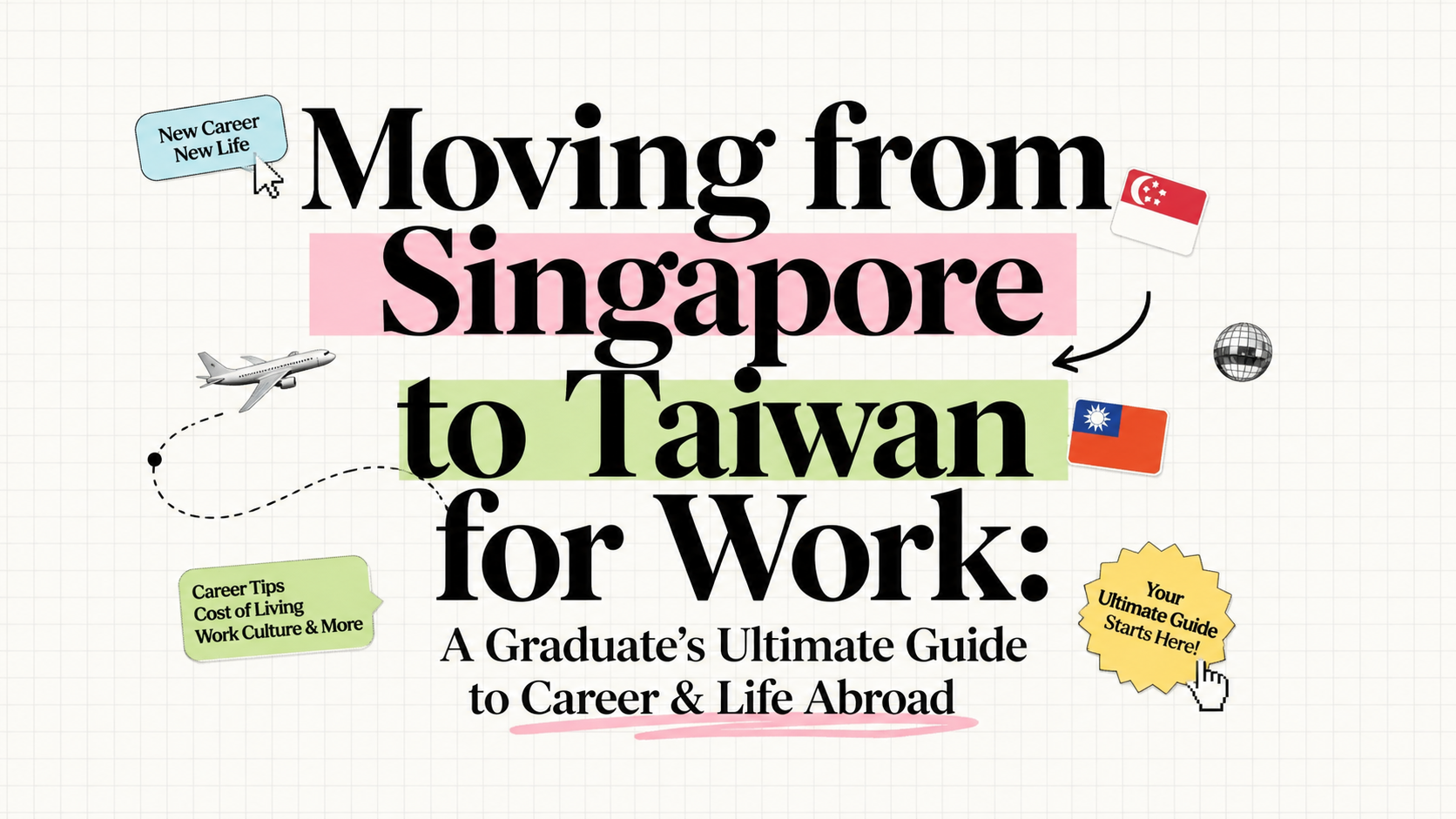
Are you a recent graduate in Singapore feeling the pinch of a competitive job market and the ever-rising cost of living in Singapore? Perhaps you're yearning for new horizons, a vibrant culture, and a career path that offers both growth and a better quality of life. If so, destination: Taiwan might just be the hidden gem you've been searching for. Often overshadowed by its more prominent neighbors, Taiwan is rapidly emerging as an attractive destination for young professionals, particularly those from Singapore, seeking to work abroad. Understanding why you should move abroad for work is the first step in this transformative journey. This guide will delve into why Taiwan presents a compelling alternative, offering insights into its burgeoning job market, streamlined visa processes, and a lifestyle that promises more bang for your buck.
II. Taiwan's Job Market: A Fresh Perspective for Graduates
Taiwan's economy is dynamic and diversified, presenting a wealth of opportunities for fresh graduates, especially in high-growth sectors. While Singapore's job market can be challenging for new entrants, Taiwan's talent pipeline is swelling, with a low unemployment rate of 3.35% in 2025, the lowest in 25 years . This indicates a robust demand for skilled professionals across various industries, and your international career in Asia Pacific could very well begin here.
Key Industries Hiring Foreigners:
Technology: Taiwan is a global leader in technology, particularly in hardware manufacturing and semiconductor industries. Companies like TSMC (Taiwan Semiconductor Manufacturing Company) and MediaTek are constantly seeking talent. The tech sector also includes a growing number of startups and established firms in software development, AI, and data science.
Semiconductor: As the heart of global chip production, Taiwan's semiconductor industry offers unparalleled opportunities. Companies like ASML also have a significant presence, providing roles in engineering, research, and development.
Manufacturing: Beyond semiconductors, Taiwan has a strong manufacturing base in electronics, machinery, and precision instruments.
Finance: International banks and financial institutions have a presence in Taiwan, offering roles in banking, investment, and financial analysis.
Education: While not the primary focus for many graduates, opportunities in English language education remain available.
Many multinational corporations in Taiwan operate with English as a primary business language, especially in tech and R&D departments, making it accessible for non-Mandarin speakers. Exploring relocation jobs in Taiwan is a great way to start your search. Platforms like 104 Job Bank (go.104.com.tw/expats/) specifically cater to international talents, listing foreigner-friendly jobs and providing resources on visa options and language requirements.
Top Companies for Career Growth:For graduates seeking strong career development, consider leading companies such as TSMC, MediaTek, and ASML in the tech and semiconductor sectors. Other notable employers include Foxconn, Winbond, Wistron, and ASE Group in manufacturing, and international financial institutions like HSBC, Citi, and Standard Chartered. These companies often offer structured career paths and opportunities for professional advancement.
III. Navigating Visa and Work Permit Options
Securing the right visa and work permit is crucial for any international move. Taiwan offers several pathways for foreign professionals, with some particularly advantageous for graduates.
A. The Taiwan Employment Gold Card:
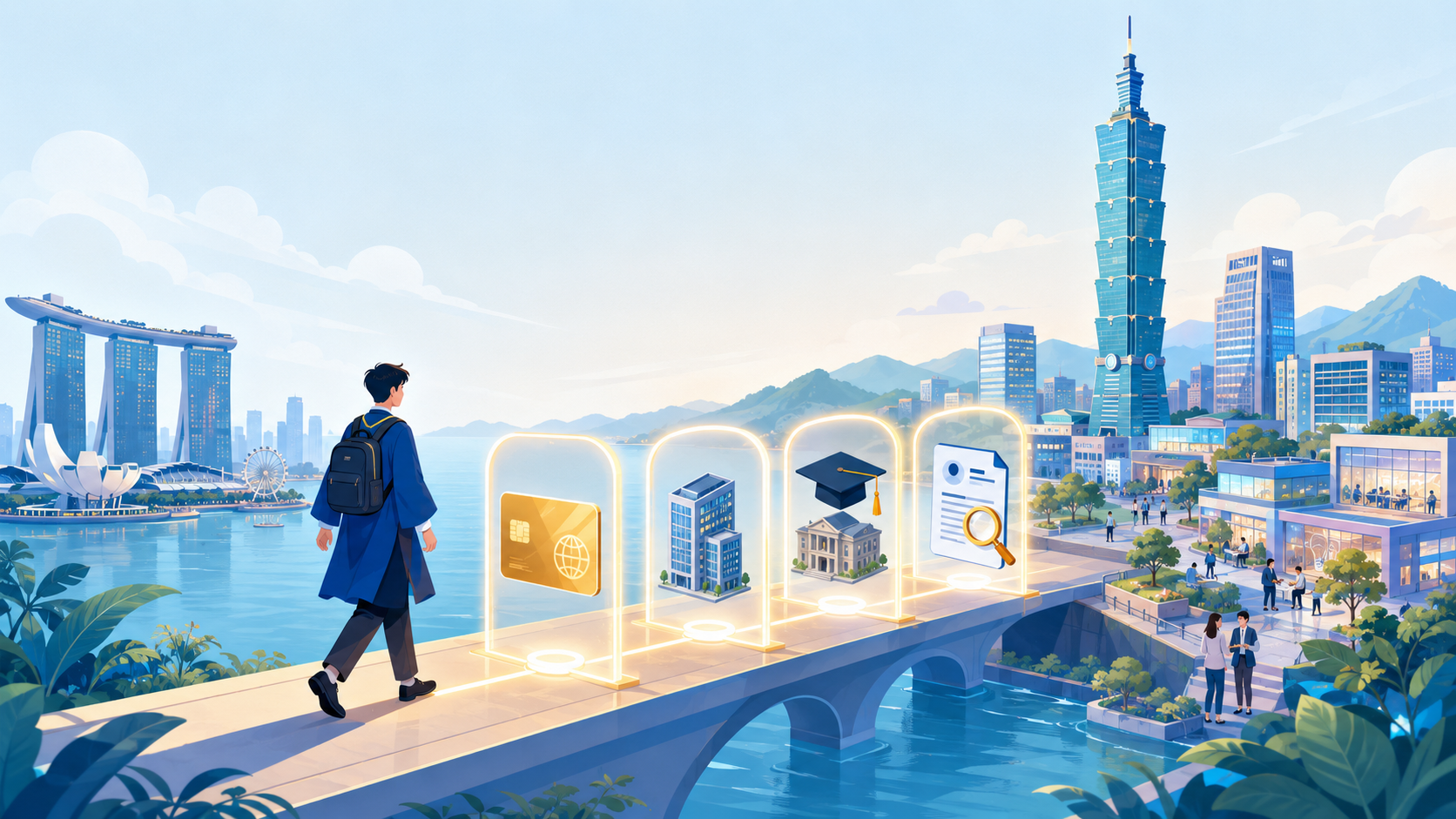
This is a highly attractive option for high-skilled professionals. The Gold Card is a 4-in-1 card that includes a resident visa, work permit, Alien Resident Certificate (ARC), and re-entry permit . It allows holders to work for any company, start their own business, and stay for up to three years, with eligibility for tax benefits . Eligibility often depends on professional qualifications, such as holding a PhD from a top 500 university or having significant professional experience in specific fields .
B. General Work Permits:
For those who don't qualify for the Gold Card, a general work permit is the standard route. Employers typically sponsor these permits. The Ministry of Labor has an evaluation points system for foreign and overseas Chinese students. Applicants must score at least 70 points out of a possible 200, with points awarded for education, language proficiency, professional experience, and other factors . Understanding the international hiring process can help you navigate these requirements more effectively.
C. Special Provisions for Graduates from Top Universities:
Taiwan has specific policies to attract graduates from top global universities. A foreign national who has obtained a bachelor's degree or higher in the past five years from one of the top 200 universities worldwide (as announced by the Ministry of Education) can directly apply to the Ministry of Labor for a permit to engage in professional work. This permit is valid for a maximum of two years and cannot be extended or a repeat application made . This provides a valuable window for recent graduates to gain experience and establish themselves in Taiwan.
D. Employment-Seeking Visa:
This visa allows eligible individuals to enter Taiwan to seek employment. It's a temporary solution that can be converted into a work permit once a job offer is secured.
IV. Finding Your Dream Job: Strategies and Resources
Your job search in Taiwan will benefit from a multi-pronged approach and a solid guide to landing work and relocating.
A. Online Job Portals:
• 104 Job Bank (go.104.com.tw/expats/): A leading Taiwanese job portal with a dedicated section for international talents.
• LinkedIn: Essential for professional networking and finding roles in multinational companies.
• Careerjet.com.tw: Aggregates job listings from various sources in Taiwan.
• CakeResume: Popular for tech and design roles, often featuring English-friendly positions.
• Facebook Groups: Groups like "Foreigners In Taiwan" and "Jobs in Taiwan for Foreign Talents" are good resources for community insights and job postings.
B. Professional Networking and Recruitment Agencies:
Networking is crucial. Attend industry events, connect with professionals on LinkedIn, and consider exploring mentoring platforms for graduates to gain insider knowledge. Companies often work with headhunters to find suitable candidates, especially for specialized roles. Look out for events like the Global Talent Expo, which brings together top-tier companies actively hiring international talent.
C. Crafting a Taiwan-Ready Resume and Cover Letter:
Tailor your resume to highlight skills and experiences relevant to the Taiwanese job market. While English is common in multinational firms, having a Mandarin version or a professional translation can be an advantage. Emphasize any international experience or cross-cultural communication skills.
D. Interview Tips and Cultural Nuances:
Taiwanese workplace culture values respect, humility, and teamwork. Be prepared for multiple interview rounds, which may include technical assessments and behavioral questions. Research the company thoroughly and demonstrate genuine interest in their operations and the Taiwanese market.
V. Workplace Culture: Singapore vs. Taiwan
While both Singapore and Taiwan are Asian societies, their workplace cultures have distinct differences that Singaporean graduates should be aware of.
A. Hierarchy and Communication Styles:
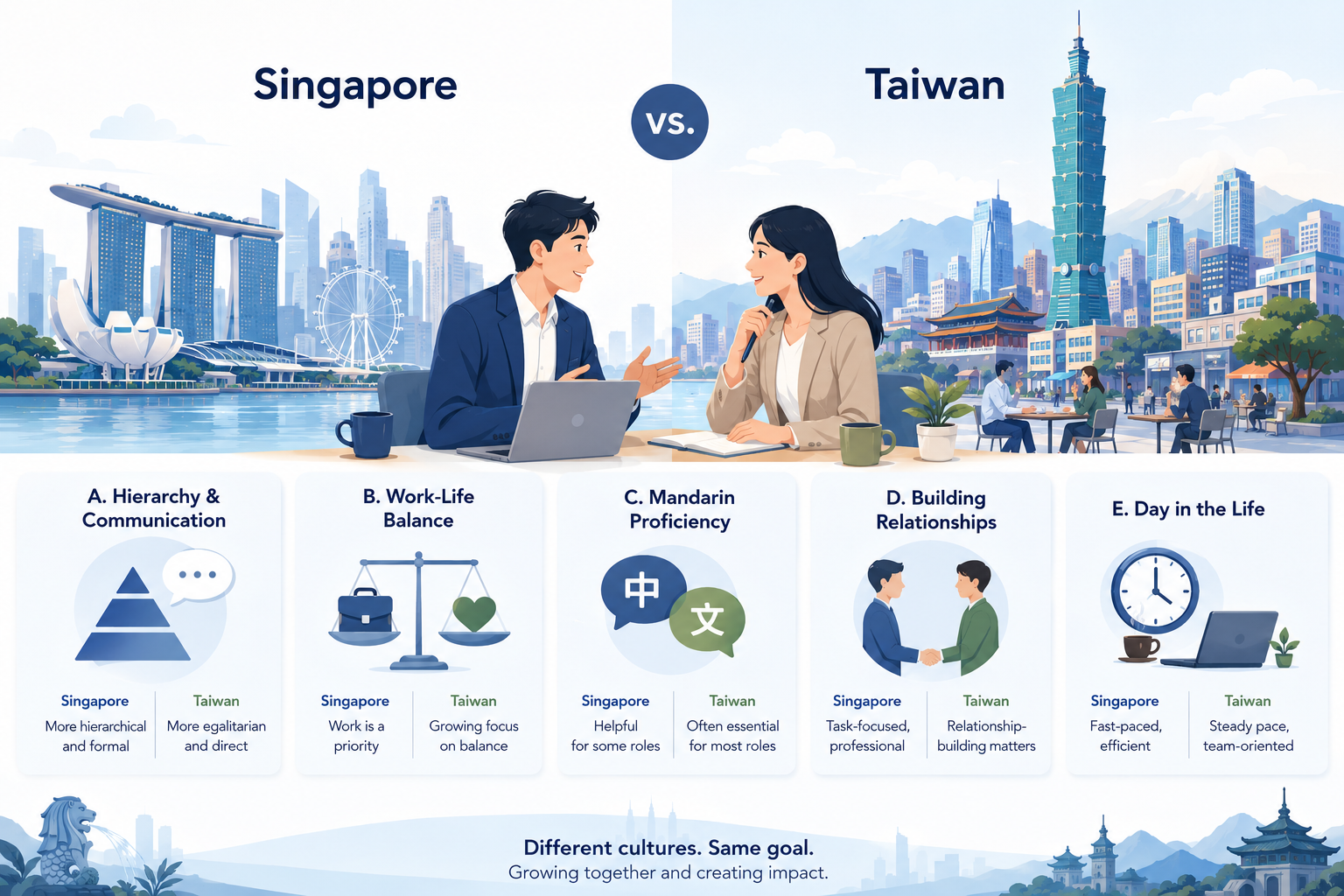
Taiwanese workplaces tend to be more hierarchical than Singaporean ones, with a strong emphasis on respecting seniority. Communication can be indirect, and maintaining harmony is often prioritized. Singapore, while also hierarchical, often has a more direct communication style, especially in multinational corporations.
B. Work-Life Balance Expectations:
Singapore is known for its demanding work culture and long hours. While Taiwan also has its share of hard-working professionals, there's a growing emphasis on work-life balance, particularly among younger generations and in certain industries. The overall pace of life outside of work can feel more relaxed in Taiwan compared to the fast-paced environment of destination: Singapore.
C. Importance of Mandarin Proficiency:
While English is spoken in many international companies, basic Mandarin proficiency will significantly enhance your daily life and career prospects. It demonstrates a commitment to integrating into the local culture and can open doors to a wider range of opportunities, especially in roles that require interaction with local clients or colleagues.
D. Building Professional Relationships:
Building strong interpersonal relationships, known as Guanxi (關係), is paramount in Taiwanese business culture. This often involves socializing with colleagues outside of work, showing respect and consideration in all interactions, and fostering long-term trust. Understanding and nurturing Guanxi can significantly impact your career progression and overall integration into the workplace.
E. A Day in the Life: A Typical Work Scenario:
Imagine starting your day with a quick and affordable breakfast from a local street vendor, then taking Taiwan's efficient MRT to your office in Taipei's Xinyi District. Your workday might involve collaborative meetings with colleagues, often conducted in a mix of Mandarin and English, followed by focused individual work. Lunch could be a delicious and inexpensive bento box with colleagues. After work, you might join co-workers for dinner or explore one of Taipei's vibrant night markets. The emphasis is often on collective effort and harmony, with a noticeable shift towards valuing personal time outside of work compared to Singapore's often all-consuming corporate environment.
VI. Cost of Living & Salary Insights: Making Your Income Go Further
One of the most significant advantages of moving to Taiwan from Singapore is the drastically lower cost of living. This can translate into a much higher quality of life, even with potentially lower salaries in some entry-level positions. For a deeper dive, check out this cost of living in Taiwan guide.
According to Numbeo, the cost of living in Taipei is 41.0% lower than in Singapore (excluding rent), and the cost of living including rent is 54.0% lower . Rent prices in Taipei are a staggering 74.2% lower than in Singapore .
Note: Data based on Numbeo comparison between Singapore and Taipei as of July 2026 . Exchange rate used: 1 SGD = 24.89 NTD (approximate).
This significant difference means that your salary, even if numerically lower than in Singapore, can afford you a more comfortable lifestyle, better housing, and more disposable income. Groceries are also 18.0% lower in Taipei than in Singapore .
Average Salaries in Taiwan (2026):The average gross monthly salary in Taiwan is approximately NT$58,000, with a median closer to NT$45,000. Including bonuses, total monthly compensation can often reach NT$70,000+ .
Note: Salaries are for mid-level professionals in 2026, excluding bonuses .
Salary by City:Salaries can also vary significantly by location. Hsinchu, a major semiconductor hub, often offers higher salaries for technical roles (NT$65,000-90,000) compared to Taipei (NT$55,000-75,000 for capital, financial, and services center roles), though Taipei has a higher cost of living in some aspects .
VII. Understanding Taxes in Taiwan
Navigating the tax system is an important part of working abroad. Taiwan's income tax system differentiates between residents and non-residents.
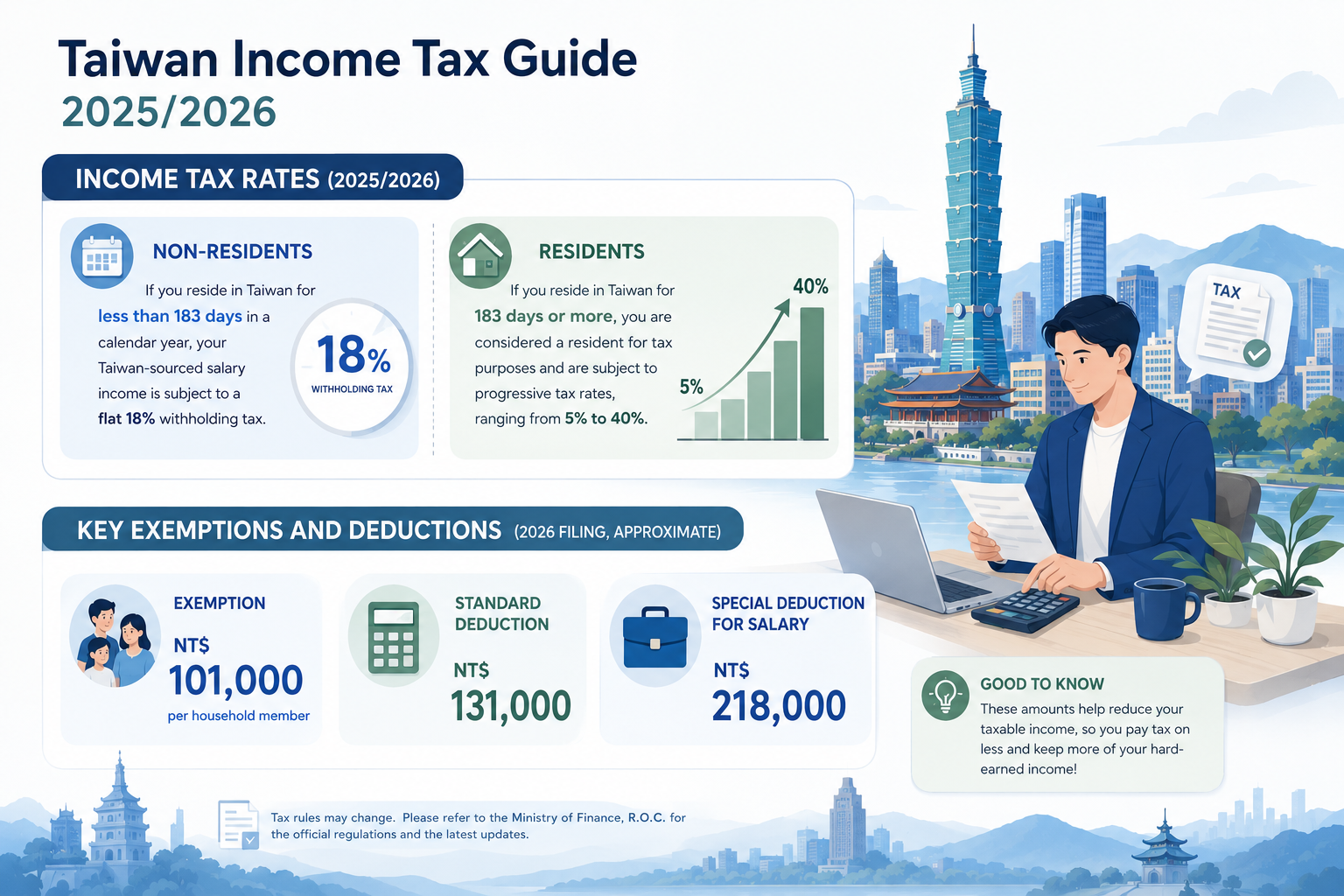
Income Tax Rates (2025/2026):
•Non-residents: If you reside in Taiwan for less than 183 days in a calendar year, your Taiwan-sourced salary income is subject to a flat 18% withholding tax .
•Residents: If you reside in Taiwan for 183 days or more, you are considered a resident for tax purposes and are subject to progressive tax rates, ranging from 5% to 40% .
Key Exemptions and Deductions (2026 Filing, approximate):
•Exemption: NT$101,000 per household member.
•Standard Deduction: NT$131,000.
•Special Deduction for Salary: NT$218,000 .
Employer Contributions:In addition to your gross salary, employers in Taiwan typically contribute an additional 14-19% towards mandatory benefits such as Labor Insurance, National Health Insurance (NHI), and pension . These contributions are important to understand when comparing total compensation packages.
VIII. Practical Relocation Guide
A. Housing: Finding Accommodation and Popular Neighborhoods:
Finding the right place to live is crucial for a smooth transition. Online platforms like 591.com.tw (primarily in Mandarin) are popular for rental listings, but working with a local real estate agent can be beneficial, especially for English speakers. Consider staying in temporary accommodation upon arrival to give yourself time to explore and find a suitable long-term rental. Typically, renting in Taiwan requires a deposit of two months' rent.
Popular Neighborhoods in Taipei for Young Professionals:
•Xinyi District: Known for its modernity, skyscrapers (Taipei 101), shopping, and vibrant nightlife. It's a prime business district and offers excellent public transport links.
•Da'an District: A highly sought-after residential area with green spaces like Da'an Park, numerous cafes, boutiques, and a more relaxed, local feel. It's well-connected and popular with both locals and expats.
•Songshan District: Offers a good balance of residential comfort and urban amenities, with easy access to business areas and recreational spots.
•Zhongzheng District: Home to many government buildings and historical sites, it's central and well-served by public transport, offering a mix of traditional and modern living.
•Nangang District: An emerging tech hub, offering newer housing options and a slightly less crowded environment, with good connections to central Taipei.
For those working in Hsinchu's Semiconductor Hub:
•Consider areas close to the Hsinchu Science Park for shorter commutes. Hsinchu offers a more suburban feel compared to Taipei, with a focus on technology and research.
B. Banking and Finances:
Opening a bank account in Taiwan typically requires your Alien Resident Certificate (ARC), passport, and sometimes proof of employment or address. Major banks like Cathay United Bank, CTBC Bank, and E.SUN Bank are generally foreigner-friendly. It's advisable to research international transfer fees and consider multi-currency accounts if you plan to send money back to Singapore.
C. Healthcare System and Insurance: NHI Enrollment and Benefits:
Taiwan boasts one of the best healthcare systems globally, the National Health Insurance (NHI). Enrollment is mandatory for all residents, including foreigners, after six months of continuous residence. If you are employed, your employer will typically handle your NHI enrollment immediately upon starting work. The NHI provides comprehensive and affordable coverage for clinics, hospitals, dental care, and even traditional Chinese medicine. This ensures peace of mind regarding your health needs.
D. Transportation: Public Transport and Getting Around:
Taiwan's public transportation system is highly efficient, extensive, and affordable. Major cities like Taipei have an excellent MRT (subway) system, complemented by a vast network of buses. The High-Speed Rail (HSR) connects major cities along the west coast, making inter-city travel fast and convenient. Purchasing an EasyCard or iPass is essential for seamless travel on public transport, including MRT, buses, and even some convenience store purchases.
E. Mobile and Internet Services:
Setting up mobile and internet services is straightforward. Major telecommunication providers include Chunghwa Telecom, Taiwan Mobile, and FarEasTone. All offer competitive plans for 4G and 5G services, with widespread coverage. You'll typically need your ARC and passport to sign up for a mobile contract. Home internet services are also reliable and affordable.
IX. Long-term Stay and Career Progression
For those who fall in love with Taiwan and wish to make it a long-term home, understanding the path to permanent residency and career growth is vital.
A. Path to Permanent Residency (APRC) for Gold Card Holders and Professionals:
Taiwan offers the Alien Permanent Resident Certificate (APRC) for foreign professionals. The standard requirement is to have legally resided continuously in Taiwan for five years, with an average stay of more than 183 days per year. However, for Gold Card holders, this path is significantly accelerated; you can apply for APRC after just three years of continuous residence, provided you meet the 183-day per year requirement . This fast-track option makes Taiwan particularly attractive for high-skilled individuals. Additionally, international students who graduate from Taiwanese universities can also shorten their required stay for APRC by 1 to 3 years, depending on their degree level . Other requirements include being an adult, having no criminal record, possessing considerable assets or skills, and aligning with Taiwan's national interest .
B. Career Development and Growth Opportunities:
Taiwan's dynamic economy, especially in tech and advanced manufacturing, offers robust opportunities for career development. Many multinational companies provide structured career paths, training programs, and opportunities for international exposure. Continuous learning, adapting to local business practices, and leveraging your unique international perspective can lead to significant career growth. The emphasis on innovation and R&D in key industries means there's always room for skilled professionals to advance.
C. Entrepreneurship and Starting a Business:
Taiwan has a supportive ecosystem for startups and entrepreneurs, particularly in the tech sector. The government actively promotes innovation and offers various incentives and programs for new businesses. For Gold Card holders, the flexibility to start your own business without additional work permits is a major advantage. This can be an exciting avenue for graduates with innovative ideas and an entrepreneurial spirit.
X. Cultural Adaptation and Social Life
Embracing a new culture is part of the adventure, though you should be prepared to cope with culture shock. Taiwan offers a rich cultural experience, from its vibrant night markets and delicious street food to stunning natural landscapes and historical temples.
A. Embracing Local Customs and Traditions:
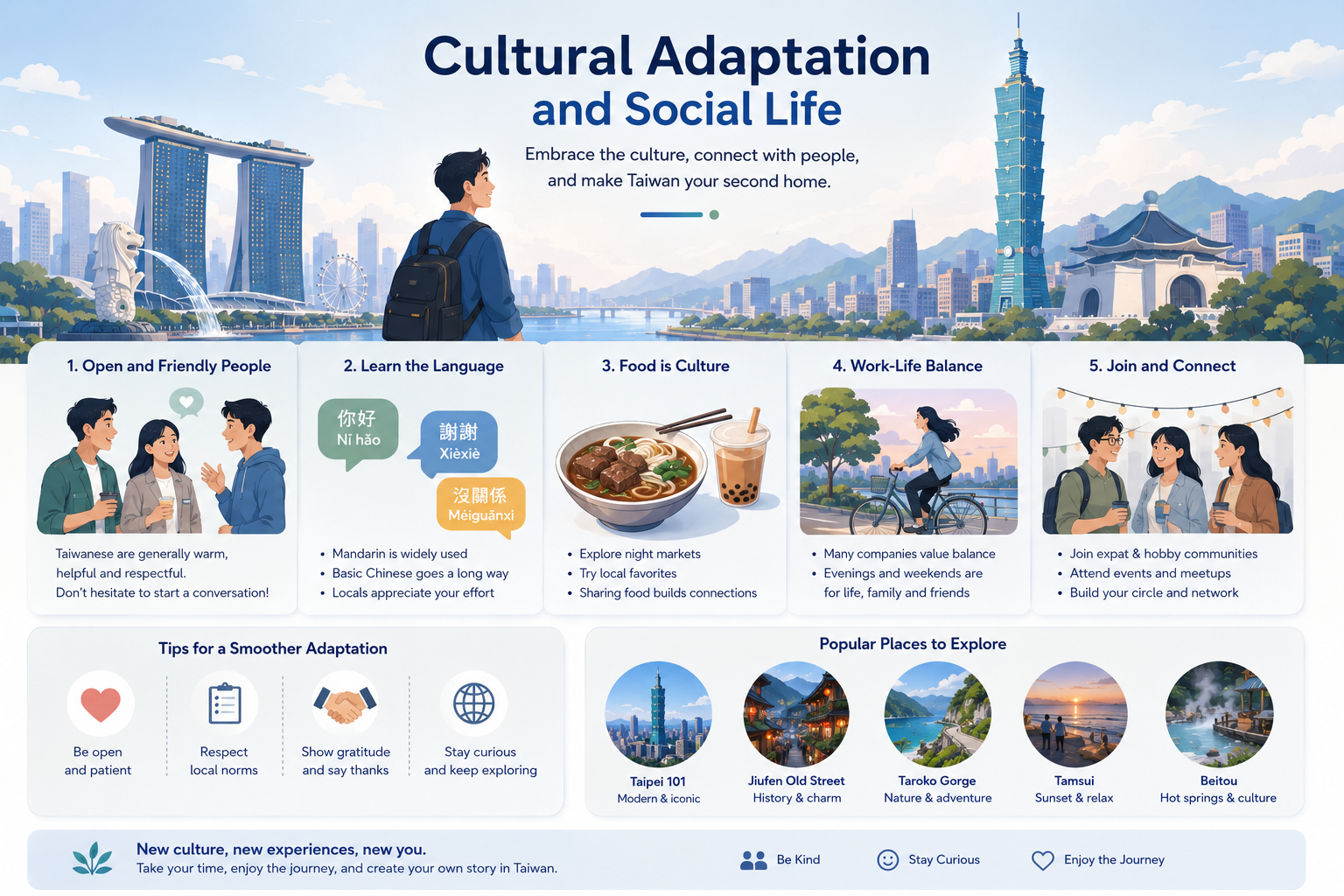
Learning basic Mandarin phrases, understanding local etiquette, and being open to new experiences will significantly enrich your time in Taiwan. Taiwanese people are generally friendly, polite, and welcoming. Making an effort to engage with the local culture, such as participating in traditional festivals or trying local customs, will be greatly appreciated and help you integrate more smoothly.
B. Building a Social Network:
Building a social network is key to feeling at home. Join expat groups on social media platforms like Facebook, participate in local clubs or activities (e.g., hiking groups, language exchange meetups, sports teams), and connect with colleagues outside of work. Many cities have active international communities that organize events and provide support for newcomers, making it easier to forge new friendships.
C. Exploring Taiwan: Food, Nature, and City Life:
Taiwan is a treasure trove of experiences. Indulge in its world-renowned culinary scene, from night market snacks like stinky tofu and oyster omelets to Michelin-starred restaurants. Explore the breathtaking natural beauty of places like Taroko Gorge, Alishan, and Sun Moon Lake. Discover the bustling energy of Taipei, the historical charm of Tainan, or the industrial innovation of Kaohsiung. Taiwan offers a unique blend of tradition and modernity, ensuring there's always something new to explore.
XI. Conclusion
Moving from Singapore to Taiwan for work as a graduate is a significant decision, but one that holds immense potential for personal and professional growth. By exploring various career pathways for moving abroad and understanding the future of jobs for students, you can make an informed choice. With a thriving job market, particularly in high-tech sectors, accessible visa pathways, a significantly lower cost of living, and a rich cultural tapestry, Taiwan offers a compelling alternative for those seeking a fulfilling career and a vibrant life abroad. While challenges exist, the opportunities for a rewarding experience are abundant. Take the leap, prepare thoroughly, and embark on an exciting new chapter in the heart of Asia.
Frequently Asked Questions (FAQs)
Q1: Is it easy for Singaporean graduates to find jobs in Taiwan?
A1: While competition exists, Taiwan's dynamic economy, especially in tech and manufacturing, offers significant opportunities for foreign graduates. Specialized visa programs and a lower unemployment rate compared to Singapore make it an attractive option. Networking and tailoring your resume are key.
Q2: What are the main differences in workplace culture between Singapore and Taiwan?
A2: Taiwanese workplaces tend to be more hierarchical and value indirect communication and harmony, with a strong emphasis on Guanxi. While Singapore also has hierarchy, communication can be more direct. Work-life balance is often perceived as better in Taiwan, though this can vary by industry and company.
Q3: How does the cost of living in Taipei compare to Singapore?
A3: The cost of living in Taipei is significantly lower than in Singapore. Rent prices, in particular, are drastically lower (around 74% less), and groceries and dining are also considerably more affordable. This means a higher purchasing power for your salary.
Q4: Do I need to speak Mandarin to work in Taiwan?
A4: While many multinational companies, especially in tech, operate in English, basic Mandarin proficiency is highly recommended. It will greatly enhance your daily life, integration into the local culture, and career prospects, opening up more job opportunities.
Q5: What is the Taiwan Employment Gold Card?
A5: The Taiwan Employment Gold Card is a special visa that combines a resident visa, work permit, Alien Resident Certificate (ARC), and re-entry permit. It's designed for highly skilled foreign professionals and offers flexibility to work for any company or start a business, along with potential tax benefits.
Q6: What are the average salaries in Taiwan for graduates?
A6: The average gross monthly salary in Taiwan is approximately NT$58,000, with a median of NT$45,000. Salaries vary significantly by sector and city, with tech and semiconductor roles in Hsinchu generally offering higher compensation.
Q7: How are foreign professionals taxed in Taiwan?
A7: Non-residents (less than 183 days in Taiwan) face a flat 18% tax on Taiwan-sourced income. Residents (183 days or more) are subject to progressive tax rates ranging from 5% to 40%, with various exemptions and deductions available.
Q8: What is the path to permanent residency (APRC) in Taiwan?
A8: The standard path to APRC requires 5 years of continuous legal residence with over 183 days per year. However, Gold Card holders can apply after just 3 years. International graduates from Taiwanese universities can also shorten this requirement by 1-3 years.
Q9: What are some popular neighborhoods for expats in Taipei?
A9: Popular neighborhoods include Xinyi (modern, business, nightlife), Da'an (green spaces, local feel, well-connected), Songshan (balanced amenities), Zhongzheng (central, historical), and Nangang (tech hub, newer housing).
Q10: How does Taiwan's healthcare system work for foreigners?
A10: Taiwan has an excellent National Health Insurance (NHI) system. Enrollment is mandatory for residents after six months of continuous stay, or immediately if employed. It provides comprehensive and affordable medical coverage.